
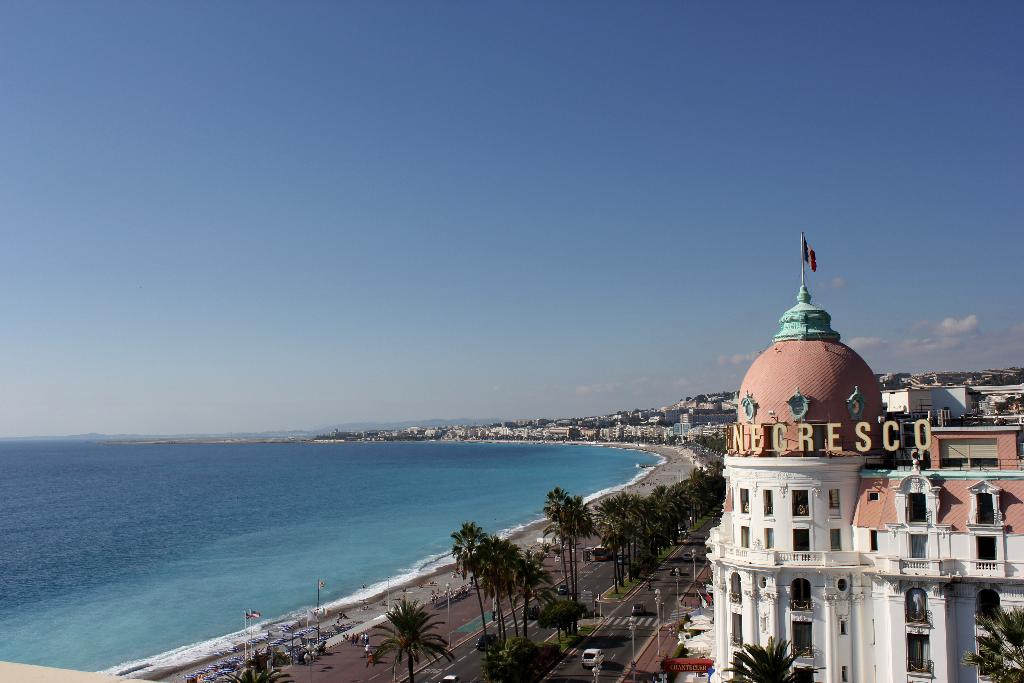
The Côte d'Azur has been the Mediterranean's grand stage for well over a century. Painters came for the light, film stars for the festival, and yacht owners for the harbours, and the result is a coastline where a medieval village on a rock, a Belle Époque promenade and a Michelin-starred beach club can all appear in the same hour.
It's easy to explore. The coast road and the little regional trains connect Nice, Monaco and Menton in the east with Antibes, Cannes and the Esterel in the west, and the hilltop villages and perfume workshops sit just behind. Pick a base and treat the rest as day trips, and leave a little time for doing nothing on a pebble beach.
Don't miss
Nice to Menton
The eastern Riviera: sea cliffs, palaces and gardens, one small country and a lot of lemons.
Nice
Neighbourhood

Photo: Uhooep, CC BY-SA 4.0 The Riviera's biggest city is also its most easygoing: a curve of pebble beach along the Promenade des Anglais, an old town of ochre lanes, and the flower and food stalls of the Cours Saleya. Climb Castle Hill for the view across the bay.
It has serious art too, with museums devoted to Matisse and Chagall, and it's the most practical base for the whole coast.
Villa Ephrussi de Rothschild
Landmark

Photo: Velvet, CC BY-SA 4.0 A pink Belle Époque villa on Cap Ferrat, built by Baroness Béatrice de Rothschild, and surrounded by themed gardens that stretch down to the sea. The musical fountains play in front of the villa, and the views reach both sides of the peninsula.
Èze
Neighbourhood

Photo: Tobi 87, CC BY-SA 3.0 A medieval village balanced on a rocky peak high above the sea, with stone lanes, tiny galleries and a cactus garden at the summit. Views run from Cap Ferrat to the Esterel on a clear day.
The steep Nietzsche Path winds down to the coast, as the philosopher is said to have done while writing part of Thus Spoke Zarathustra.
Monaco and Monte-Carlo
Landmark

Photo: Diego Delso, CC BY-SA 4.0 The world's second-smallest country packs a cliff-top palace, a Belle Époque casino, a harbour of superyachts and the Oceanographic Museum into barely two square kilometres. You can walk almost everywhere and the streets are spotless.
Watch the harbour from the old Rock, stroll the gardens in front of the casino, and imagine the cars roaring through the streets at Grand Prix time.
Menton
Neighbourhood

Photo: Prekmarg, CC BY-SA 4.0 The last stop before Italy is a pastel-coloured town with a mild climate, a lemon festival every winter and an old town stacked up the hillside to the Baroque basilica of Saint-Michel. It feels quieter and more old-fashioned than its neighbours.
Cannes, Antibes and the islands
Cannes
Neighbourhood

Photo: Kazimierz Mendlik, CC BY-SA 3.0 Home to the film festival, the Palais des Festivals and the palm-lined Boulevard de la Croisette, with its grand hotels and private beaches. Behind it, Le Suquet is the old hill town, with a church, a medieval tower and views over the bay.
Browse the covered market at Forville for lunch, and stay for sunset on the Croisette.
Antibes
Neighbourhood
A walled old port town with a daily Provençal market and the Picasso Museum in the old castle, where the artist worked in 1946. Next door, Juan-les-Pins has sandy beaches and a long jazz tradition, and the Cap d'Antibes coast path winds past rocky coves.
The Lérins Islands
Day trip

Photo: Rüdiger Stehn from Kiel, Deutschland, CC BY-SA 2.0 A short ferry ride from Cannes, the two little islands offer pine forest, quiet coves and clear water. On Sainte-Marguerite, Fort Royal is where the Man in the Iron Mask was held, and on Saint-Honorat, monks still make wine.
Tip: Take a picnic and swimming gear, and avoid the middle of the day in July and August.
Villages, art and perfume
Saint-Paul-de-Vence
Neighbourhood

Photo: Berthold Werner, CC BY-SA 3.0 A walled hilltop village that has drawn artists since the 1920s, with galleries in every alley and views over the hills to the sea. Chagall is buried in its cemetery, and the Fondation Maeght on the edge of the village holds modern art, including Miró and Giacometti, in a garden of sculptures.
Nearby Vence has Matisse's Chapelle du Rosaire, a small chapel he designed in light and simple lines.
Tip: Come early or late in the day, because the village is very busy at midday.
Grasse
Day trip

Photo: Patrick Rouzet, CC BY-SA 4.0 The perfume capital of the world sits in the hills behind Cannes, among fields of jasmine and roses. The big perfumeries, such as Fragonard, Molinard and Galimard, run tours and let you blend your own scent, and the International Perfume Museum tells the history.
Saint-Tropez and the Esterel
Saint-Tropez
Neighbourhood

Photo: Henk Monster, CC BY 3.0 A former fishing village turned international playground, with a harbour packed with yachts and pastel houses behind. Early in the morning, with the market setting up on the Place des Lices, it still feels like a village.
The long beaches of Pampelonne are a short drive away, and the Citadel gives a fine view over the bay.
The Esterel Massif
Nature

Photo: Einaz80, CC BY-SA 4.0 Between Cannes and Saint-Raphaël, rust-red volcanic rock plunges into blue water along the Corniche d'Or coast road, with little coves tucked between the cliffs. Hiking trails climb through the pine and cork-oak forests behind.
Eat and drink
Socca
Food

Photo: Myrabella, CC BY-SA 3.0 Nice's street food: a thin, crisp pancake of chickpea flour baked in a wood-fired oven, torn into pieces and eaten hot with plenty of black pepper. Find it in the old town and wash it down with a glass of rosé.
Salade niçoise
Food
Tomatoes, olives, anchovies or tuna, hard-boiled egg and basil, with olive oil and no cooked potatoes if the locals have a say. Order it in Nice and you'll see how good it can be.
Pissaladière
Food
A slow-cooked onion tart with anchovies and black olives on a bread base, sold by the slice at bakeries across the region. It's simple, salty and sweet, and perfect on a beach picnic.
Where to stay in Nice
Not sure which area suits you? Read our guide: Where to stay on the French Riviera →
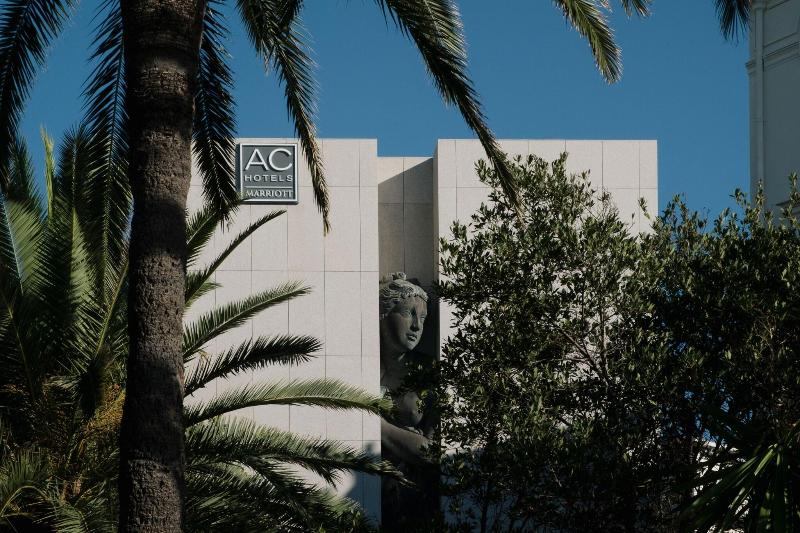
★★★★
AC Nice
Nice
Beach 10 m · Pool · Parking
From £284 a night, taxes incl.2 adults · checked 1 Oct, 17:23
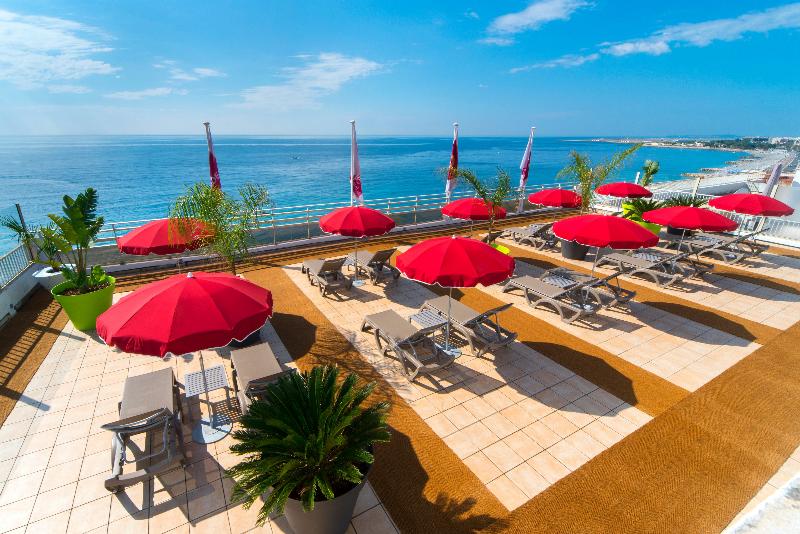
★★★★
Adagio Aparthotel Nice Promenade des Anglais
Nice
Beach 10 m · 73 rooms · Parking
From £151 a night, taxes incl.2 adults · checked 1 Oct, 17:23
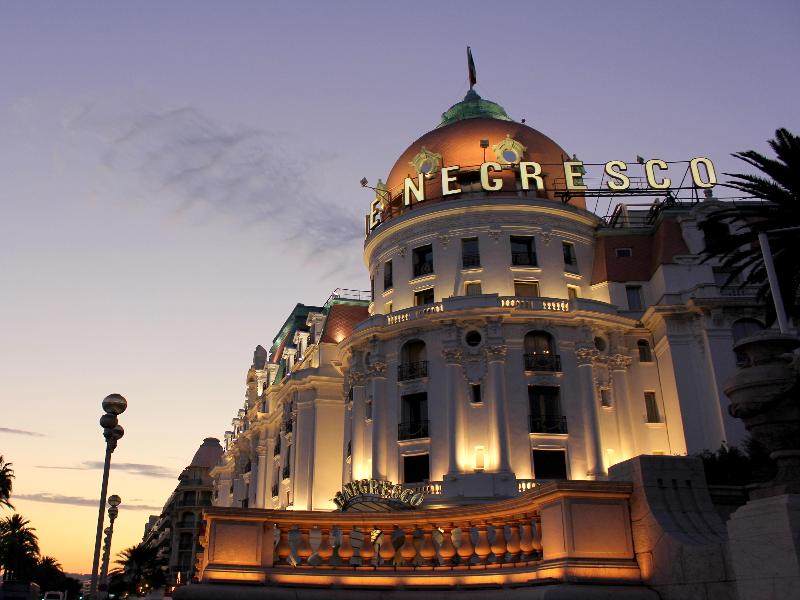
★★★★★
Negresco
Nice
Beach 10 m · All-inclusive option · Parking
From £813 a night, taxes incl.2 adults · checked 1 Oct, 17:23

★★★★
Albert Premier
Nice
Beach 200 m · 72 rooms
From £358 a night, taxes incl.2 adults · checked 1 Oct, 17:23

★★★★
Ambassador Nice
Nice
35 rooms
See prices and rooms →

★★★★★
Le Domaine Du Mas De Pierre
Saint Paul de Vence
Spa · Pool · Family-friendly
From £410 a night, taxes incl.2 adults · checked 1 Oct, 17:23
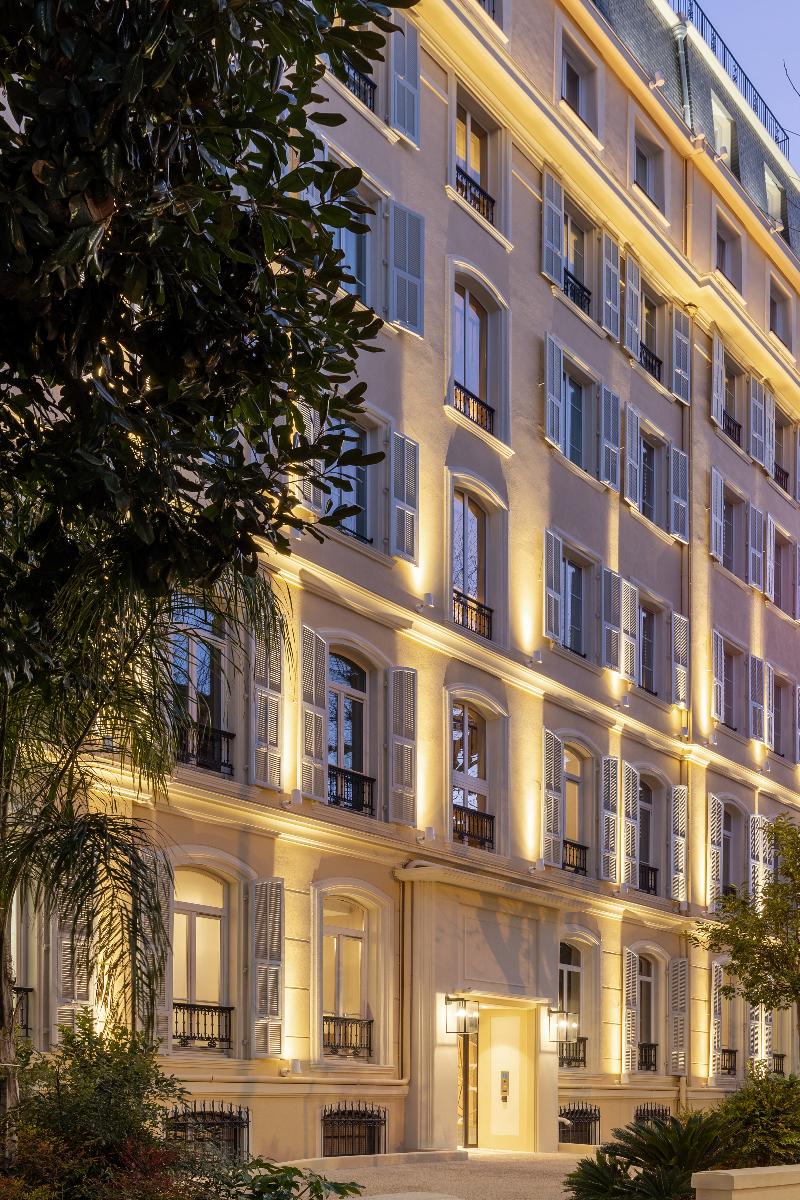
★★★★
Apollinaire Nice, WorldHotels Distinctive
Nice
Beach 900 m · Pets allowed
From £448 a night, taxes incl.2 adults · checked 1 Oct, 17:23
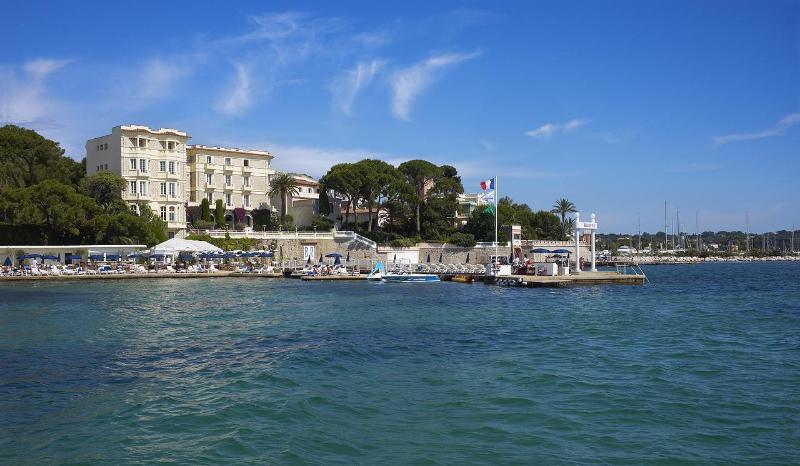
★★★★★
Belles Rives
Juan les Pins
Beach 10 m · Pool · Parking
See prices and rooms →
Getting around
A regional train runs along the coast from Menton to Saint-Raphaël, with frequent stops, and buses reach the hill villages. Roads along the coast are slow in summer, so use the train when you can. Hire a car for the hinterland and Saint-Tropez, where trains don't go.
When to go
Late spring and early autumn have warm sea, soft light and fewer crowds. July and August are hot, packed and expensive, while winter is mild and quiet, with the lemon festival in Menton and mimosa blossom.
Questions about visiting Nice
- What is the French Riviera best known for?
- Glamour and scenery: Nice, Monaco, Cannes and its film festival, Saint-Tropez, and hilltop villages above a blue sea.
- How many days do you need on the French Riviera?
- A week lets you see Nice, Monaco, Èze and Cannes, with a hilltop village and a beach day. Four days gives you a good taste.
- Do you need a car on the French Riviera?
- Not for the coast, where trains and buses are good. A car helps for the hill villages and for Saint-Tropez.
- Is the French Riviera worth visiting?
- Yes, for its mix of beaches, art, villages and food. It's pricey in summer, but spring and autumn are good value.
More guides
- Where to stay on the French Riviera
- Where to stay in Nice
- The best things to do in London
- The best things to do in Edinburgh
- The best things to do in Amsterdam
- The best things to do in Barcelona
- The best things to do in Budapest
- The best things to do in Dublin
- The best things to do in Krakow
- The best things to do in Prague
- The best things to do in Berlin
- The best things to do in Lisbon
- The best things to do in Milan
- The best things to do in Paris