
Liverpool faces the water, and it always has. For two centuries this was one of the great ports of the world, and the wealth that flowed up the Mersey paid for a skyline of domes, clock towers and warehouses that still stops you in your tracks. Then four local lads picked up guitars, and the city became famous all over again.
What makes it special now is the people. Scousers are funny, proud and incapable of letting a stranger stay a stranger for long. Add some of the best museums outside London, two wildly different cathedrals, two football clubs and a nightlife that starts early and finishes late, and you have a city that punches well above its size.
Don't miss
The big sights
A waterfront built on trade, and a pair of cathedrals at either end of one street.
Royal Albert Dock
Landmark

Photo: 瑞丽江的河水, CC BY-SA 4.0 A great square of water ringed by five-storey Victorian warehouses in brick, granite and cast iron, opened in 1846 and built without a stick of structural timber so that it could not burn. Ships once unloaded tea, silk and tobacco straight into the buildings. Restored in the 1980s, it is now the city's most visited spot, with museums, restaurants and bars under the colonnades. It looks best at dusk, when the lights reflect in the dock.
Pier Head and the Three Graces
Landmark

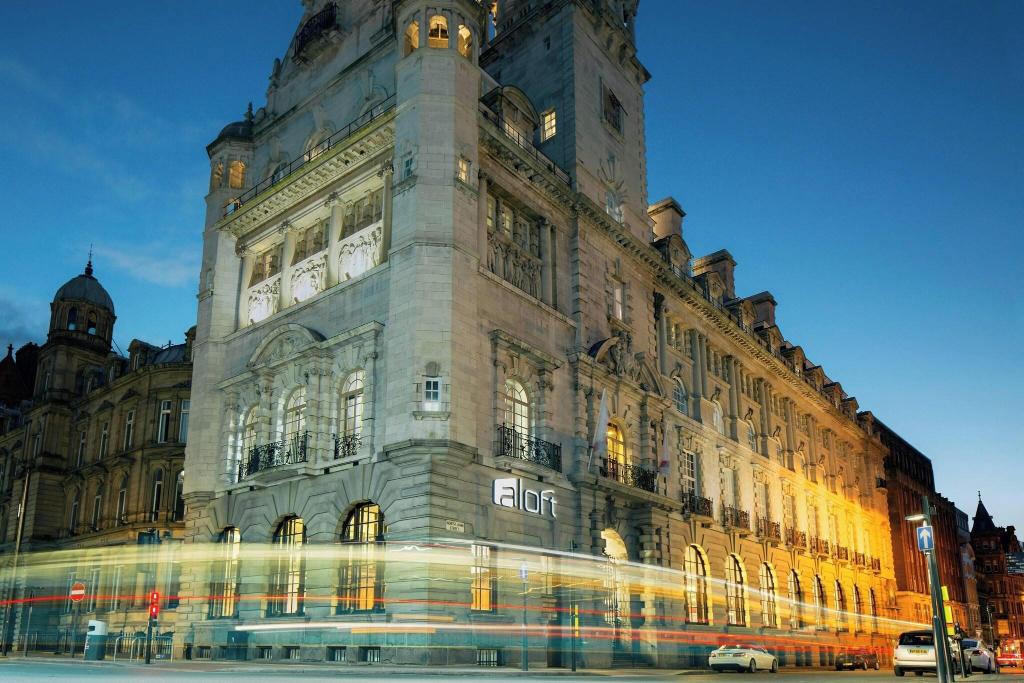
Photo: Rept0n1x, CC BY-SA 3.0 Liverpool's signature view. Three grand Edwardian buildings line the waterfront side by side: the Royal Liver Building, the Cunard Building and the Port of Liverpool Building. On top of the Liver Building's clock towers sit the Liver Birds, the mythical creatures that are the symbol of the city. The broad plaza in front is the place for a riverside walk. Look for the bronze statue of the four Beatles striding towards the Mersey, which has become an essential photo stop.
Liverpool Cathedral
Landmark

Photo: Rodhullandemu, CC BY-SA 4.0 The largest cathedral in Britain, and one of the largest in the world: a vast red sandstone mountain on St James's Mount designed by Giles Gilbert Scott, who also gave the country its red telephone box. It took most of the 20th century to finish. The interior is overwhelming in its height and space. Take the lifts and stairs up the tower for a view that stretches across the city and the river to the hills of Wales on a clear day.
Metropolitan Cathedral
Landmark

Photo: Chowells, CC BY 2.5 At the other end of Hope Street stands the Catholic cathedral, and it could hardly be more different. Built in the 1960s, it is a great concrete tent topped with a crown of spikes, known affectionately to locals as Paddy's Wigwam. Step inside. The circular nave is bathed in deep blue light from the stained-glass lantern overhead, and the effect is unexpectedly moving. Walking between the two cathedrals takes about ten minutes.
The Beatles
The city wears its most famous sons proudly, and fans could fill a whole weekend.
The Beatles Story
Museum

Photo: Lipinski, CC BY-SA 3.0 In the basement vaults of Royal Albert Dock, this museum walks you through the band's rise from Liverpool teenagers to the most famous group on earth. You pass through recreations of the Cavern, the Hamburg clubs and Abbey Road studios, with instruments, clothes and memorabilia along the way. It is the best starting point for anyone new to the story, and the audio guide does a lot of the work.
The Cavern Club and Mathew Street
Nightlife

Photo: Jen Hunter, CC BY 2.0 The Beatles played the Cavern nearly 300 times in the early 1960s. The original cellar was filled in during the 1970s; the club you visit today was rebuilt on much of the same site, with the same brick arches and the same sweaty closeness. Live music runs from the afternoon into the night, and Mathew Street outside is lined with Beatles-themed bars and a statue of John Lennon leaning against a wall. It is touristy, loud and great fun.
Penny Lane and Strawberry Field
Activity

Photo: Rodhullandemu, CC BY-SA 4.0 The suburbs of south Liverpool are where the songs come from. Penny Lane is a real street with a real barber shop; Strawberry Field, once a children's home whose garden John Lennon played in, has its famous red gates and a visitor centre. The easy way to see them is on a guided bus tour, which also passes the childhood homes of Lennon and McCartney. Both houses are looked after by the National Trust and can be visited on its own tours.
Tip: Tours of the two childhood homes have limited places and should be booked well ahead.
Museums and football
Museum of Liverpool
Museum

Photo: Acediscovery, CC BY 4.0 A sleek white building on the waterfront beside the Three Graces, devoted to the city itself: its port, its people, its music, its football and its famously sharp sense of humour. Big windows at either end frame the river and the Liver Building. It is a good first stop, because everything else you see afterwards makes more sense. Children get plenty to press, pull and climb on.
Walker Art Gallery
Museum

Photo: The original uploader was Chowells at English Wikipedia., CC BY-SA 3.0 One of the finest art collections in England outside London, housed in a columned building on William Brown Street next to the city's library and museum. The rooms run from medieval altarpieces and Rembrandt to the Pre-Raphaelites, Hockney and Lucian Freud. Opposite stands St George's Hall, a colossal neoclassical concert hall and courthouse. Together they make this one of the grandest streets in the north.
Anfield
Activity

Photo: Mike Pennington, CC BY-SA 2.0 Home of Liverpool FC, and one of the most famous football grounds in the world. Stadium tours take you into the dressing rooms, down the tunnel beneath the This Is Anfield sign and out to the edge of the pitch in front of the Kop. Everton fans have their own pilgrimage to make, with the club's new stadium standing on the old docks to the north of the centre.
Neighbourhoods to wander
Bold Street
Food
Liverpool's best street for eating, and its most independent. Bold Street climbs from the shopping centre towards the bombed-out shell of St Luke's church, and almost every doorway is a café, a restaurant or a small shop. The range is the point: Middle Eastern, Indian street food, Caribbean, vegan, bakeries and coffee, most of it reasonably priced and all of it busy. Turn up hungry and take your pick.
The Baltic Triangle
Neighbourhood
A district of old warehouses just south of the centre that has become the city's creative playground. Street art covers the walls, including a much-photographed pair of Liver Bird wings, and the buildings hold breweries, food markets, studios and late-night venues. It is quiet by day and lively at the weekend. This is where younger Liverpool goes out.
The Georgian Quarter
Neighbourhood
Around Hope Street, on the hill between the two cathedrals, lies one of the largest collections of Georgian townhouses in the country. The terraces are so handsome and so intact that they regularly appear in period films and television dramas. Hope Street itself has the Philharmonic Hall, some of the city's smartest restaurants and the Philharmonic Dining Rooms, an extravagantly decorated Victorian pub.
On the water and beyond
Mersey Ferry
Activity

Photo: Kizzy Clyne / Sosokizzy490, CC BY 4.0 There has been a ferry across the Mersey for centuries, and Gerry and the Pacemakers made sure nobody would forget it. The river cruise from Pier Head loops across to the Wirral and back, with a commentary and, yes, the song. The real reward is the view of the waterfront from the water, with the Three Graces lined up exactly as arriving sailors once saw them.
Tip: Stand on the open deck on the way back in for the best photographs.
Crosby Beach
Beach

Photo: Chris Howells, CC BY 2.5 A wide, windswept beach north of the city, home to Another Place, Antony Gormley's installation of 100 life-size iron figures. They stand scattered along the shore, all staring out to sea, and the tide slowly covers and uncovers them through the day. It is eerie, beautiful and easy to reach by local train. Stay near the promenade: the mud and the incoming tide further out are dangerous.
Port Sunlight
Day trip
Across the river on the Wirral, a model village built by the soap magnate William Hesketh Lever for his factory workers. Its tree-lined streets of Arts and Crafts cottages, no two blocks alike, feel a world away from the docks. At its centre the Lady Lever Art Gallery holds his personal collection of paintings, furniture and Wedgwood. A calm half-day out by train.
Where to stay in Liverpool
Not sure which area suits you? Read our guide: Where to stay in Liverpool →

★★★★
Pullman Liverpool
Liverpool
Parking
From £128 a night, taxes incl.2 adults · checked 14 Nov, 15:52

★★★★
Hilton Liverpool City Centre
Liverpool
Pets allowed · Parking
From £167 a night, taxes incl.2 adults · checked 14 Nov, 15:52

★★★★★
Aloft Liverpool
Liverpool
Pets allowed · Parking
From £177 a night, taxes incl.2 adults · checked 14 Nov, 09:37
★★★★
Hard Days Night Hotel Liverpool
Liverpool
From £131 a night, taxes incl.2 adults · checked 14 Nov, 09:37

★★★★
The Halyard Liverpool, Vignette Collection
Liverpool
Pets allowed
From £127 a night, taxes incl.2 adults · checked 14 Nov, 15:52

★★★★★
DoubleTree by Hilton Hotel & Spa Liverpool
Liverpool
Spa · Pool · Parking
From £166 a night, taxes incl.2 adults · checked 14 Nov, 09:37

★★★★
Hope Street Hotel
Liverpool
Spa
See prices and rooms →

★★★★★
The Municipal Hotel & Spa Liverpool - Mgallery
Liverpool
Spa · Pool · Pets allowed
From £139 a night, taxes incl.2 adults · checked 14 Nov, 09:37
Getting around
The centre is compact: you can walk from Lime Street station to the waterfront in about 15 minutes. Merseyrail trains run to Crosby, Southport and across to the Wirral, and buses or tours cover Anfield and the Beatles sites in the suburbs. A car is unnecessary.
When to go
Liverpool is a year-round city, with most of its big attractions indoors. Late spring and summer are best for the waterfront and the beaches. Hotels fill up on home match days and for big events, so book early for those weekends. The wind off the Mersey is brisk in any season.
Questions about visiting Liverpool
- What is Liverpool best known for?
- The Beatles, football and its historic waterfront. The city is home to Liverpool FC and Everton, the Royal Albert Dock and the Three Graces, and more museums and galleries than almost any British city outside London.
- Is Liverpool worth visiting?
- Yes. It combines grand architecture, excellent museums, music history and a famously friendly welcome, all in a centre small enough to explore on foot.
- How many days do you need in Liverpool?
- Two days covers the waterfront, the cathedrals and the main Beatles sights. A third gives you time for Anfield, Crosby Beach or Port Sunlight.
- What is there to do in Liverpool with kids?
- The Museum of Liverpool, a ride on the Mersey Ferry and the iron men on Crosby Beach all work well for families. Young football fans will want a stadium tour.
- Do you need a car in Liverpool?
- No. The centre is walkable and local trains reach the coast and the Wirral. Guided tours are the simplest way to see the Beatles sites in the suburbs.
More guides
- Where to stay in Liverpool
- The best things to do in London
- The best things to do in Edinburgh
- The best things to do in Manchester
- The best things to do in York
- The best things to do in Amsterdam
- The best things to do in Birmingham
- The best things to do in Bristol
- The best things to do in Barcelona
- The best things to do in Budapest
- The best things to do in Cambridge
- The best things to do in Dublin
- The best things to do in Krakow
- The best things to do in Oxford