
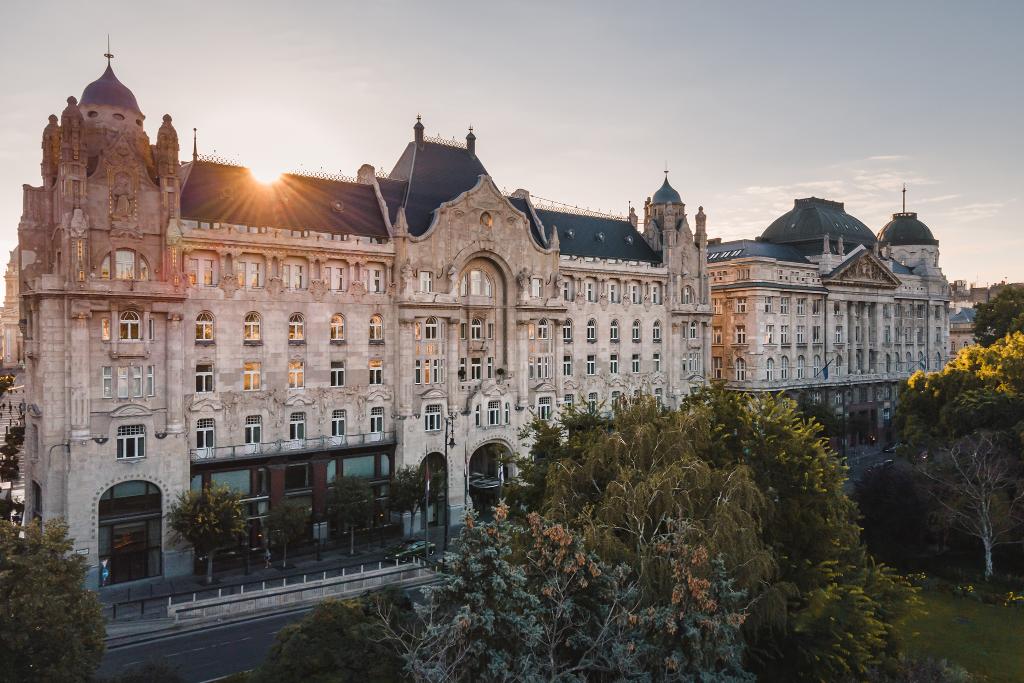
Budapest is two cities in one, and both are showing off. On the hilly Buda side, a royal palace and the fairy-tale turrets of Fisherman's Bastion look down on the Danube; across the water, flat, grand Pest has the neo-Gothic Parliament, café-lined boulevards and a nightlife scene built in the shells of crumbling courtyards. In between, the river and its bridges glow gold every night.
Then there's the water. The city sits on thermal springs, and soaking in a steaming outdoor pool while locals play chess around you is a Budapest rite of passage. Give yourself three days: one for each bank, one for the baths, the markets and a sunset cruise, and longer if you want to explore the Danube Bend.
Don't miss
The big sights
Palaces, domes and spires on both banks of the Danube.
The Hungarian Parliament
Landmark

Photo: Florian Fèvre, CC BY-SA 4.0 The great neo-Gothic Parliament stretches along the Pest riverbank in a frenzy of spires, arches and a soaring central dome, and it's one of Europe's most photographed buildings. Inside, guided tours take in the gilded staircases, the chambers and the Holy Crown of Hungary, displayed beneath the dome.
Tip: Visits are by guided tour only and slots in English go quickly: book online in advance. For the best photo, cross to the Buda bank.
Buda Castle and Fisherman's Bastion
Landmark

Photo: Perituss, CC0 Castle Hill is Buda at its most romantic: cobbled lanes, Baroque houses and the vast Royal Palace, home to the Hungarian National Gallery and the Budapest History Museum. A short stroll north, the white turrets and terraces of Fisherman's Bastion frame a postcard view of the Parliament, beside the colourful tiled roof of Matthias Church.
Tip: Ride the old funicular up from the Chain Bridge, and come early or at sunset for the bastion without the crowds.
St Stephen's Basilica
Landmark

Photo: Jules Verne Times Two, CC BY-SA 4.0 Budapest's largest church is a Neoclassical giant in the heart of Pest. The interior glows with marble and gold, and a side chapel holds the mummified right hand of St Stephen, Hungary's first king. Climb to the dome's balcony for one of the best views over the city's rooftops.
Shoes on the Danube Bank
Landmark

Photo: Marek Mróz, CC BY-SA 4.0 A short walk south of the Parliament, sixty pairs of iron shoes stand at the water's edge. The memorial honours the Jews who were shot into the river by Arrow Cross militiamen in 1944 and 1945, ordered first to take off their shoes. It's a simple, profoundly moving place.
The thermal baths
Budapest sits on more than a hundred hot springs, and the locals make the most of them.
Széchenyi Baths
Activity

Photo: Marc Ryckaert (MJJR), CC BY 3.0 The grandest bath in town is a yellow neo-Baroque palace in City Park, with outdoor pools that steam on even the coldest winter day and a warren of indoor thermal pools and saunas. The sight of old men playing chess on floating boards while snow falls around them is pure Budapest.
Tip: Bring flip-flops and a towel, and go early on a weekday for the calmest water.
Rudas Baths
Activity
At the foot of Gellért Hill, Rudas has a 16th-century Ottoman pool beneath a domed roof pierced with coloured light, plus a rooftop hot pool with views straight down the Danube. It's more atmospheric, and more local, than the big-name baths.
Tip: The historic Turkish pool has single-sex days, so check before you go.
Neighbourhoods and nights out
The Jewish Quarter and ruin bars
Nightlife

Photo: Yelkrokoyade, CC BY-SA 3.0 District VII is Budapest's liveliest neighbourhood, and the home of the ruin bar: pubs squatting in derelict courtyards and tenements, filled with mismatched furniture, odd art and fairy lights. Szimpla Kert, the original, is a rambling maze of rooms with a Trabant in the yard.
By day the same streets are full of street art, cafés and some of the city’s best casual restaurants.
Dohány Street Synagogue
Landmark

Photo: Suicasmo, CC BY-SA 4.0 The largest synagogue in Europe is a magnificent Moorish Revival building with twin onion-domed towers. In the garden behind, a metal weeping willow whose leaves carry the names of Holocaust victims stands as a memorial.
Tip: Closed on Saturdays and Jewish holidays; dress modestly.
Andrássy Avenue and the Opera
Neighbourhood

Photo: Mike is Michi, CC BY-SA 4.0 Budapest's grandest boulevard runs from the centre to Heroes' Square, lined with elegant mansions, embassies and the neo-Renaissance Hungarian State Opera House. Beneath it rattles the little yellow Millennium Underground, continental Europe's oldest metro line.
Margaret Island
Nature
A long, leafy island in the middle of the Danube, almost free of traffic, where locals run, cycle and picnic. There's a rose garden, a musical fountain that dances to music, a rubbery running track around the edge and big open-air pools in summer. It's the perfect breather from the city.
Gellért Hill
Nature
The steep, wooded hill on the Buda side is crowned by the Liberty Statue, a bronze woman holding aloft a palm leaf. Walk up for the finest panorama in Budapest, with the bridges, the Parliament and the whole of Pest laid out below.
Eat and drink
The Great Market Hall
Market

Photo: P. Hughes, CC BY 4.0 Budapest's central market is a cathedral of food under a roof of colourful Zsolnay tiles. Downstairs, stalls are piled high with paprika, salami, strings of dried peppers and goose liver; upstairs, food counters serve hot lángos and stews.
Tip: Come on a weekday morning, when locals do their shopping.
Goulash
Food

Photo: Top Budapest from Budapest, Hungary, CC BY 2.0 Real Hungarian gulyás is a soup, not a stew: beef, potatoes and peppers in a rich broth red with paprika, traditionally cooked in a kettle over an open fire. Follow it with chicken paprikash and a glass of Bull's Blood from Eger or sweet Tokaji, or a shot of fiery pálinka, fruit brandy.
Lángos
Food
Hungary's favourite snack is a disc of deep-fried dough rubbed with garlic and topped with sour cream and grated cheese. It's gloriously unhealthy, wonderfully filling and best eaten hot from a market stall, with plenty of napkins to hand.
On the river and beyond
A Danube cruise
Activity

Photo: Wilfredor, CC0 See Budapest from the water after dark, when the Parliament, Buda Castle and the Chain Bridge are lit up in gold. Evening cruises leave from the Pest embankment, and it's the moment many visitors fall for the city.
Szentendre
Day trip
North of the city on the Danube, Szentendre is a little artists' town of cobbled lanes, galleries and Serbian Orthodox church spires. It's a pleasant place to browse and linger over lunch, and the HÉV suburban train gets you there easily from Batthyány tér.
The Danube Bend
Day trip

Photo: Pudelek, CC BY-SA 4.0 Beyond Szentendre, the Danube swings through wooded hills. Climb to the hilltop citadel at Visegrád for the view of the river bending below, then continue to Esztergom, whose vast domed basilica is the largest church in Hungary. In summer, boats from Budapest make a lovely day of it.
Where to stay in Budapest
Not sure which area suits you? Read our guide: Where to stay in Budapest →

★★★★
Abacus Business & Wellness Hotel
Herceghalom - Budapest
Spa · Pool · Family-friendly
See prices and rooms →
★★★★
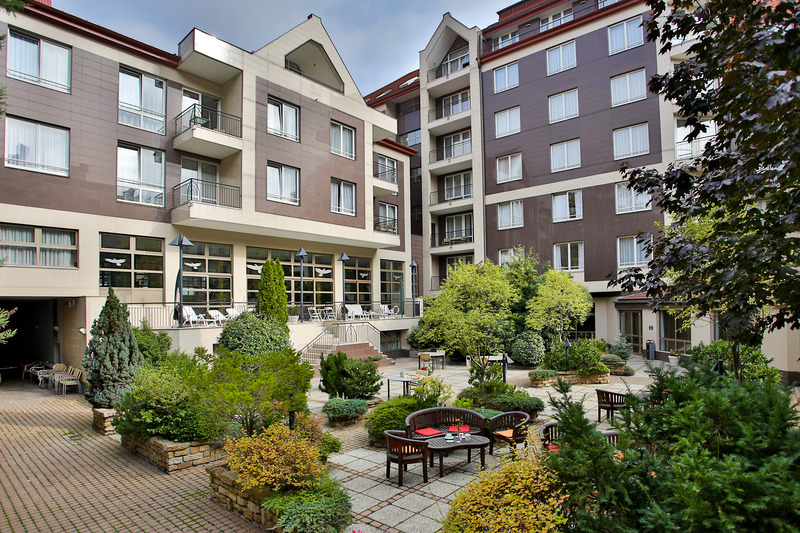
Adina Apartment Hotel Budapest
Budapest
Pool · Parking
See prices and rooms →
★★★★★
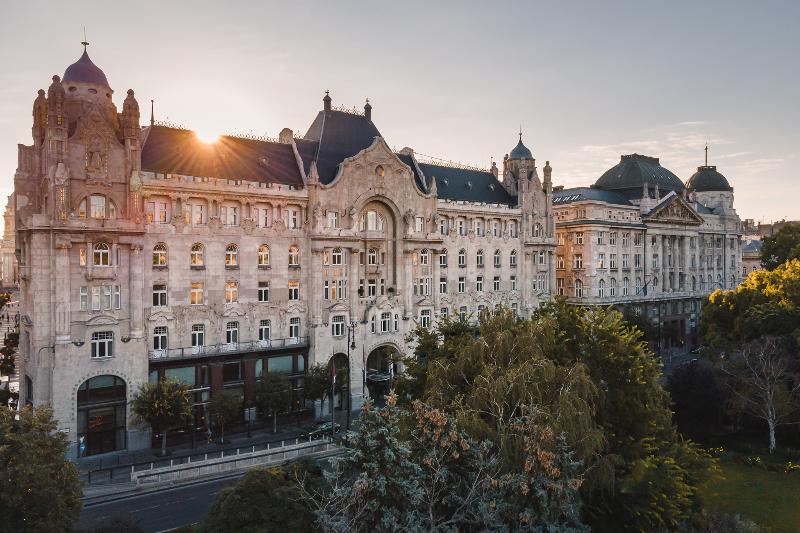
Four Seasons Hotel Gresham Palace Budapest
Budapest
Spa · Pool · Pets allowed
From £853 a night, taxes incl.2 adults · checked 1 Oct, 17:52
★★★★
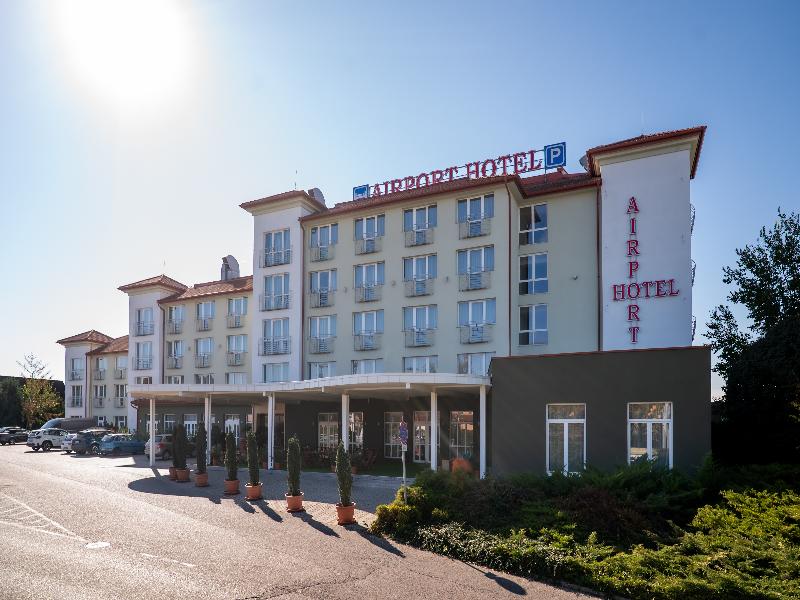
Airport Hotel Budapest
Budapest
Parking
From £83 a night, taxes incl.2 adults · checked 1 Oct, 17:52
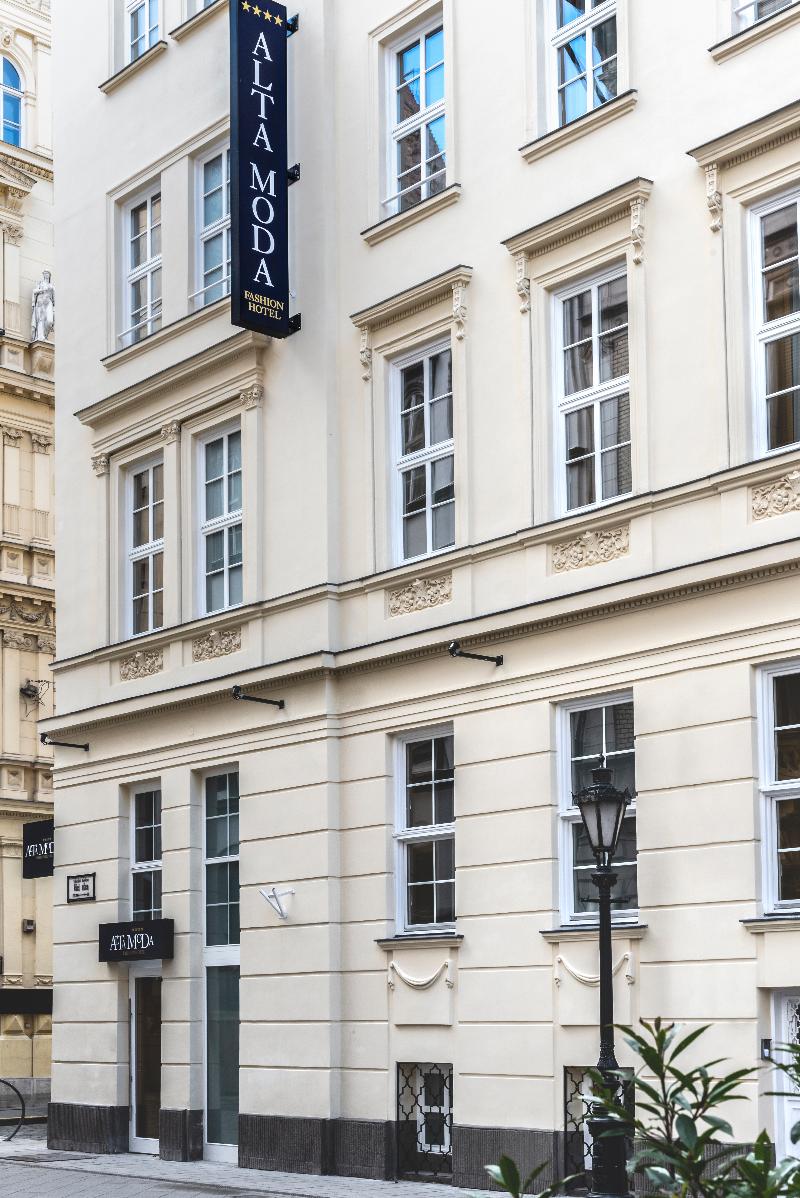
★★★★
Alta Moda Hotel by Mellow Mood Hotels
Budapest
48 rooms
See prices and rooms →
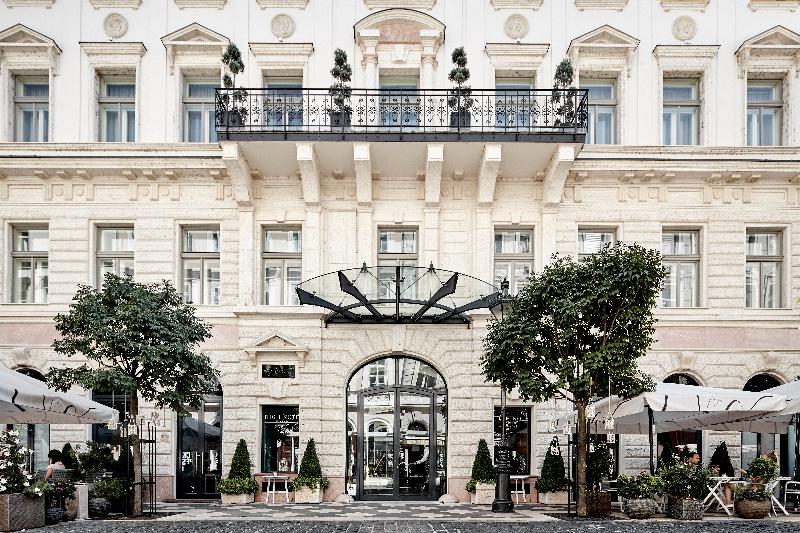
★★★★★
Aria Hotel Budapest by Library Hotel Collection
Budapest
Spa · Pool · 49 rooms
From £542 a night, taxes incl.2 adults · checked 1 Oct, 17:52
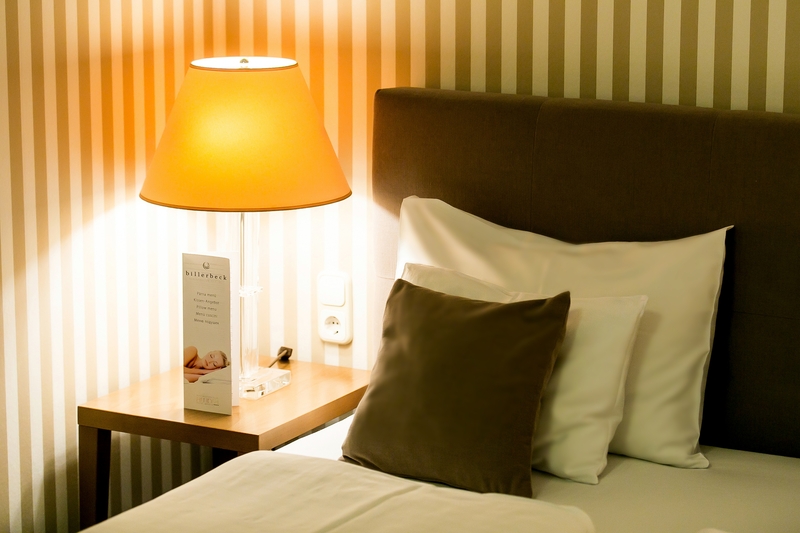
★★★★
Ambra Hotel
Budapest
From £223 a night, taxes incl.2 adults · checked 1 Oct, 17:52
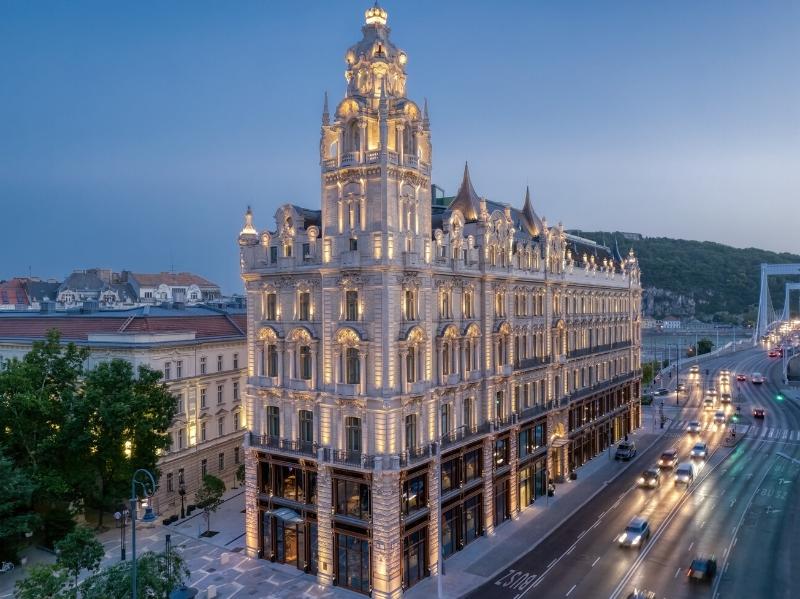
★★★★★
Matild Palace, a Luxury Collection Hotel, Budapest
Budapest
Spa · Pets allowed · Parking
From £471 a night, taxes incl.2 adults · checked 1 Oct, 17:52
Getting around
Central Budapest is walkable, and the metro, trams and buses are frequent and easy. Tram 2 runs along the Pest riverbank with views of Buda all the way. A car is more trouble than it's worth in the city; use the HÉV train or summer boats for Szentendre and the Danube Bend.
When to go
Spring and autumn are ideal for walking. Summer is hot and lively, with festivals and riverside bars. Winter is cold but magical, with Christmas markets and the outdoor thermal pools steaming in the frosty air.
Questions about visiting Budapest
- What is Budapest best known for?
- Its thermal baths, the Hungarian Parliament on the Danube, Buda Castle and Fisherman's Bastion, ruin bars in the Jewish Quarter and hearty Hungarian food.
- How many days do you need in Budapest?
- Three days covers Buda and Pest, a thermal bath and an evening cruise. Add a day for Szentendre or the Danube Bend.
- Which thermal bath is best in Budapest?
- Széchenyi is the grandest and most famous, with big outdoor pools in City Park. Rudas is smaller and more atmospheric, with a 16th-century Turkish pool and a rooftop pool overlooking the Danube.
- Is it better to stay in Buda or Pest?
- Most visitors stay in Pest, which is flatter and livelier, with most of the restaurants, bars and the Parliament. Buda is quieter and more romantic, with the castle on the doorstep.
More guides
- Where to stay in Budapest
- The best things to do in London
- The best things to do in Edinburgh
- The best things to do in Amsterdam
- The best things to do in Barcelona
- The best things to do in Dublin
- The best things to do in Krakow
- The best things to do in Prague
- The best things to do in Berlin
- The best things to do in Lisbon
- The best things to do in Milan
- The best things to do in Paris
- The best things to do in Rome
- The best things to do in Madrid