

Agadir is Morocco with its shoes off. Where Marrakech and Fes are all alleys and intensity, this is a modern city built around one enormous sweep of Atlantic sand, with a palm-lined promenade, a marina and sunshine most days of the year. An earthquake in 1960 destroyed the old town, and what replaced it is open, easy-going and made for holidays.
So yes, the beach comes first. But the hills start right behind the hotels, and within an hour you can be surfing at Taghazout, swimming in a palm-filled gorge, watching flamingos on an estuary or walking the ramparts of a walled desert town. Agadir is a better base than it gets credit for.
Don't miss
The city
Agadir Beach
Beach

Photo: Ideophagous, CC0 The reason the resort exists: a broad crescent of fine golden sand that runs for miles around the bay, sheltered by the headland to the north. The water is Atlantic-cool, the waves are usually gentle, and there is room for everyone, from footballers at low tide to camel-ride touts at the southern end.
Behind it runs the corniche, a long paved promenade of cafés and restaurants that fills at dusk as the whole city turns out for a stroll.
Tip: The Atlantic breeze disguises the strength of the sun. Use more sun cream than you think you need.
Agadir Oufella
Landmark

Photo: Mwintirew, CC BY-SA 4.0 High on the hill at the northern end of the bay stand the walls of the old kasbah, almost all that survived the 1960 earthquake. The hillside below carries the words God, Country, King in giant Arabic letters, lit up at night.
The site has been restored, and a cable car now runs up from near the marina. The view is the point: the full curve of the beach, the port and the city, at its best towards sunset.
Souk El Had
Market

Photo: Krzysztof Belczyński, CC BY-SA 2.0 Agadir's walled market is one of the biggest in Morocco, with thousands of stalls behind a ring of numbered gates. One section is piled with olives, dates, spices and mountains of oranges; others sell leather slippers, lanterns, pottery, argan oil and household everything.
It is where locals shop, so it is less hard-sell than the souks of the imperial cities. Haggle anyway. It is expected, and half the fun.
Tip: The market closes one day a week, traditionally Monday. Check before you go.
Agadir Marina
Neighbourhood

Photo: michiel1972, CC BY-SA 3.0 At the northern end of the beach, the marina is a neat horseshoe of white apartments, yachts, boutiques and waterside restaurants. It is the smartest place in town for a coffee or dinner, and the starting point for boat trips along the coast. Polished, calm and a good first-evening stroll.
La Médina d'Agadir
Landmark

Photo: ZAINEB HACHAMI, CC BY-SA 4.0 With the original medina lost, an Italian-Moroccan craftsman, Coco Polizzi, set about building a new one on the southern edge of the city using traditional methods and materials. The result is a small walled village of earth-coloured lanes, carved doors, mosaics and artisans' workshops. It is a reconstruction, and it does not pretend otherwise. Come for a quiet hour of craftsmanship and mint tea in the courtyard.
Surf and coast
North of the city the road hugs a coastline that surfers have known about for decades.
Taghazout
Activity

Photo: Jimbobbailey312, CC BY-SA 4.0 A former fishing village turned surf capital of Morocco, Taghazout is a tumble of blue and white houses above a small beach of fishing boats. The point breaks around it, Anchor Point above all, are famous among experienced surfers, while gentler beaches nearby suit beginners.
Surf schools and board hire are everywhere, and the café terraces are a fine place to watch the sets roll in if you would rather stay dry.
Tip: The bigger swells arrive in the cooler months. Summer waves are smaller and friendlier for first-timers.
Tamraght and Devil's Rock
Beach
Between Agadir and Taghazout, the village of Tamraght looks down on a run of sandy beaches split by a rocky outcrop known as Devil's Rock. The waves are mellow, which makes it a favourite for surf lessons, and the sunsets from the rock draw a small crowd every evening.
Imsouane
Day trip

Photo: Mounir Neddi, CC BY-SA 4.0 Further up the coast, the fishing village of Imsouane sits on a bay with one of the longest waves in Africa: a slow, peeling right-hander that longboarders ride for hundreds of metres. The village is simple and windswept, and lunch is whatever the boats brought in, grilled.
Nature and wildlife
Paradise Valley
Nature

Photo: Younes GOUSSYRA, CC BY-SA 4.0 In the foothills of the High Atlas north-east of the city, a river has cut a palm-lined gorge dotted with rock pools. A short walk from the road brings you to the pools, where people swim, sunbathe on the boulders and eat tagine at simple cafés with their tables set in the stream.
The drive up through argan country is half the pleasure. Water levels depend on the rains, so the pools are fullest in winter and spring.
Tip: Wear proper shoes for the path, and ask locally about water levels in late summer.
Souss-Massa National Park
Wildlife

Photo: This Photo was taken by Timothy A. Gonsalves. Feel free to use my photos, but pl, CC BY-SA 4.0 South of Agadir, this stretch of dunes, cliffs and river estuaries is one of Morocco's most important nature reserves. Birdwatchers come for flamingos, spoonbills and, above all, the northern bald ibis, a rare bird that has one of its last wild colonies here. It is a peaceful half-day, best with a local guide who knows where to look.
Crocoparc
Wildlife
A short drive inland, this landscaped park is home to a large number of Nile crocodiles, which bask around a series of pools set in well-kept botanical gardens. Raised walkways give you a close look from a safe height. It is an easy family outing when the children have had enough sand.
Eat and drink
Grilled fish at the port
Food
Agadir is one of Morocco's biggest fishing ports, and sardines are its speciality. Near the harbour, rows of no-frills stalls grill the day's catch to order: sardines, sole, prawns, squid, eaten at shared tables with bread, salad and a wedge of lemon. Nothing fancy, and all the better for it.
Tagine, argan oil and amlou
Food
The Souss region around Agadir is the home of the argan tree, and its nutty oil turns up drizzled over salads and couscous. At breakfast, look for amlou, a spread of ground almonds, argan oil and honey that is eaten with bread and tastes like the best peanut butter you never had. For dinner, the local Berber tagine is slow-cooked with vegetables stacked in a cone over the meat.
Day trips
Taroudant
Day trip

Photo: Bjørn Christian Tørrissen, CC BY-SA 3.0 Inland along the Souss valley, Taroudant is a market town ringed by miles of crenellated, honey-red ramparts, with the Atlas mountains as a backdrop. It is often called a smaller Marrakech, with two souks, a pair of main squares and far fewer tourists. Circle the walls by horse-drawn carriage, then dive into the market.
Essaouira
Day trip

Photo: Kayaky, CC BY 3.0 A long but scenic drive north along the coast leads to Essaouira, a whitewashed, wind-blown port whose fortified medina is a UNESCO World Heritage Site. Walk the sea ramparts lined with old cannon, watch the blue boats in the harbour and browse the woodworkers' workshops. It suits anyone missing a proper old town.
Legzira Beach
Day trip

Photo: Roy Egloff, CC BY-SA 4.0 Well to the south, beyond Tiznit, Legzira is a wild beach of red cliffs where the sea has carved a vast natural arch out of the rock. Walk along the sand at low tide to stand under it. The colours at sunset are extraordinary.
Tip: Time your visit for low tide, when you can walk right through the arch.
Where to stay in Agadir
Not sure which area suits you? Read our guide: Where to stay in Agadir →
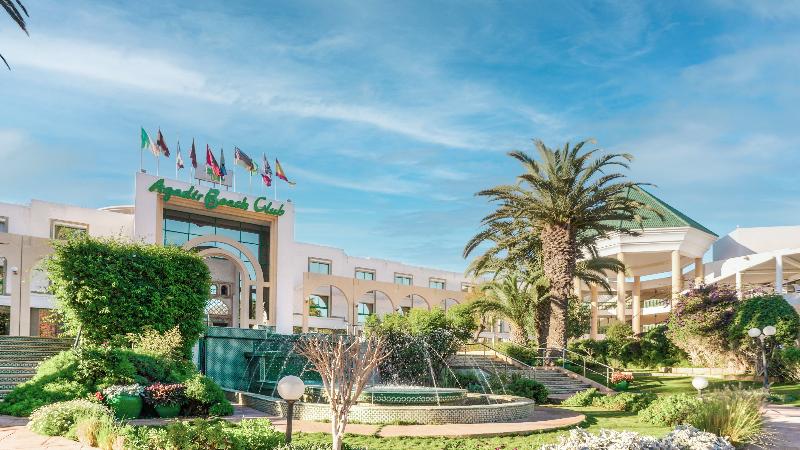
★★★★
Agadir Beach Club
Agadir
Beach 10 m · All-inclusive option · Spa
From £128 a night, taxes incl.2 adults · checked 14 Nov, 05:22
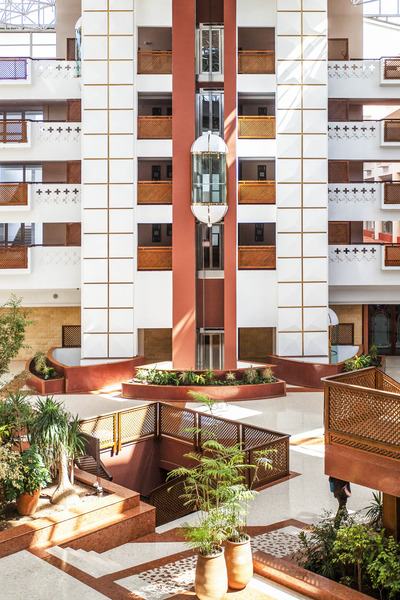
★★★★
Amadil Ocean Club
Agadir
All-inclusive option · Spa · Pool
From £124 a night, taxes incl.2 adults · checked 14 Nov, 11:37

★★★★★
Sofitel Agadir Thalassa
Agadir
Beach 2.7 km · All-inclusive option · Spa
From £186 a night, taxes incl.2 adults · checked 14 Nov, 11:37
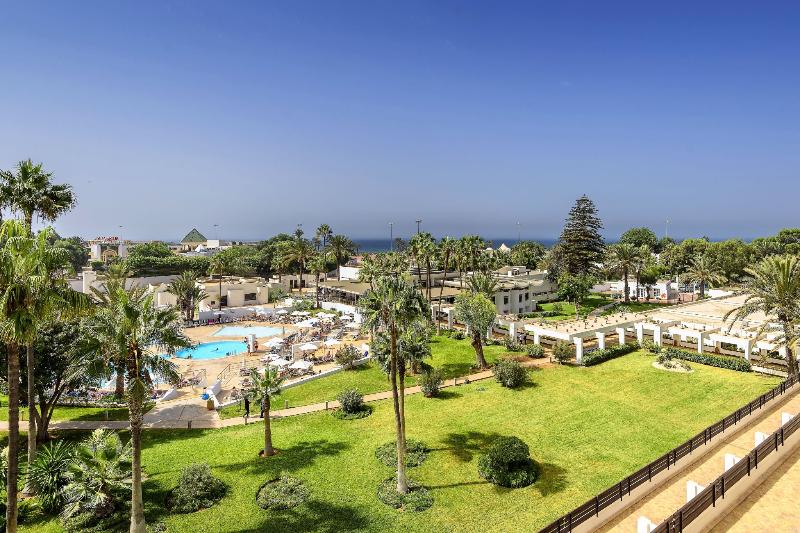
★★★★
Allegro Agadir
Agadir
All-inclusive option · Pool · Family-friendly
From £97 a night, taxes incl.2 adults · checked 14 Nov, 05:22

★★★★
Atlantic Hotel Agadir
Agadir
Spa · Pool · 44 rooms
From £76 a night, taxes incl.2 adults · checked 14 Nov, 11:37

★★★★★
Fairmont Taghazout Bay
Agadir
Spa · Family-friendly · Parking
From £375 a night, taxes incl.2 adults · checked 14 Nov, 05:22

★★★★
Atlantic Palm Beach
Agadir
Beach 600 m · All-inclusive option · Pool
From £54 a night, taxes incl.2 adults · checked 14 Nov, 11:37

★★★★★
Paradis Plage Surf Yoga & Spa Resort
Imi Ouaddar
Spa · Pool · Family-friendly
From £146 a night, taxes incl.2 adults · checked 14 Nov, 11:37
Getting around
The beachfront, marina and centre are walkable, and the small orange petits taxis are plentiful for hops across town such as Souk El Had. For Taghazout, Paradise Valley and the national park, book an excursion, hire a taxi for the day or rent a car. The coast road north is straightforward to drive.
When to go
Agadir is a year-round destination, with mild, sunny winters that make it a popular escape from the British cold. Summers are warm but tempered by the Atlantic breeze, and often start with morning sea mist. The sea stays on the cool side all year.
Questions about visiting Agadir
- What is Agadir best known for?
- A long, sandy Atlantic beach with sunshine for most of the year, the hilltop kasbah of Agadir Oufella, the huge Souk El Had market and the surf villages of Taghazout and Tamraght just up the coast.
- Is Agadir worth visiting?
- Yes, if you want a relaxed beach holiday with a Moroccan flavour. It is a modern city, so come for the sand, the surf and the day trips, and visit Taroudant or Essaouira for old-town atmosphere.
- What is there to do in Agadir with kids?
- The beach is wide and gently shelving, Crocoparc is an easy half-day, the cable car up to Agadir Oufella is fun in itself, and the surf schools at Tamraght take beginners.
- Do you need a car in Agadir?
- Not for the city and the beach. For the coast to the north, Paradise Valley and the national park, a hire car gives you freedom, but taxis and organised excursions cover them all.
More guides
- Where to stay in Agadir
- The best things to do in London
- The best things to do in Edinburgh
- The best things to do in Manchester
- The best things to do in York
- The best things to do in Amsterdam
- The best things to do in Birmingham
- The best things to do in Liverpool
- The best things to do in Bristol
- The best things to do in Barcelona
- The best things to do in Budapest
- The best things to do in Cambridge
- The best things to do in Dublin
- The best things to do in Krakow