
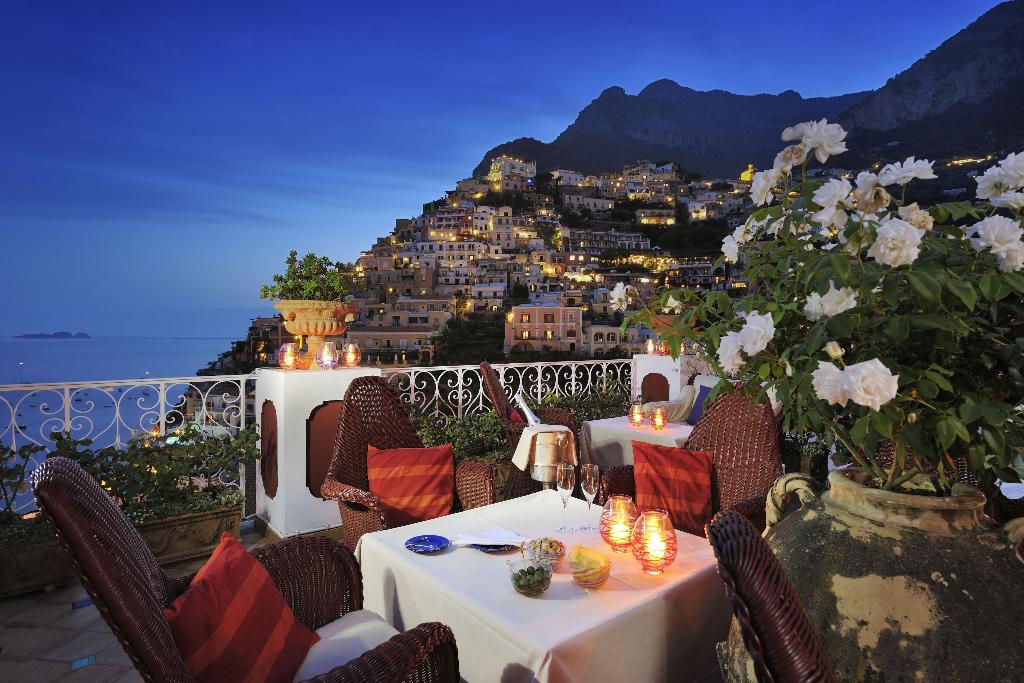
The Amalfi Coast is a single road clinging to a cliff above the sea, strung with villages in every shade of sorbet. Lemon groves climb terraces behind them. The sea is a deep, inky blue below. The scenery is outrageous, the food is superb, and the whole thing is much less simple to get around than the postcards suggest.
That is part of the charm. Stay in one village and treat the others as day trips by ferry or bus. Hike a clifftop path, eat seafood at a table over the water, then spend the afternoon being very unproductive indeed. The coast is too beautiful to be rushed.
Don't miss
The towns
Each has a distinct personality. Visit at least three.
Positano
Neighbourhood

Photo: Alexis Lours, CC BY 4.0 The coast's most famous village is a pyramid of pink, peach and terracotta houses stacked up a ravine to the sea, with a tiled church dome at the bottom and a steep, shop-lined lane running down to the beach. It's gorgeous, glamorous and crowded. Spend your days climbing the lanes and your evenings at a table with a view.
The main beach, Spiaggia Grande, is a pebbly, sunbed-covered sweep, and quieter Fornillo is a short walk along the coast.
Tip: Wear comfortable shoes: everything is up or down a flight of steps.
Amalfi and its Duomo
Landmark

Photo: Bernard Gagnon, CC BY 4.0 The town that gave the coast its name was once a powerful maritime republic, and its Duomo, an Arab-Norman cathedral with a golden mosaic facade at the top of a broad staircase, is a reminder. Inside you can see the peaceful Cloister of Paradise.
Behind the main square, narrow lanes climb into the hills past paper shops, lemon stalls and tiny cafés, and Amalfi is the main hub for ferries and buses.
Ravello
Neighbourhood
High above Amalfi, Ravello is the coast's calm, cultured corner. It's a hilltop village of quiet squares, cafés and gardens, a long way from the crowds below, and it's famous for its summer music festival. Reach it by bus or taxi from Amalfi, or walk up from Atrani by a stepped path.
Praiano
Neighbourhood

Photo: Gilbert Bochenek, CC BY-SA 3.0 Between Positano and Amalfi, Praiano is a quieter, more local village that many people prefer. It has terraced houses, a small cove at Marina di Praia with a tiny beach and fishing boats, and some of the coast's best sunsets.
Atrani
Neighbourhood

Photo: Paolo Costa Baldi, CC BY 3.0 A few minutes' walk around the headland from Amalfi, Atrani is a tiny village of arches and stairways squeezed into a gorge, with a small square on the beach and a church at the top of a flight of steps. It's one of the coast's most charming little places, and much quieter than its neighbour.
Cetara
Neighbourhood
Towards Salerno, Cetara is a working tuna and anchovy fishing village with a small harbour and a very local feel. It's famous for colatura di alici, a dark, intensely savoury anchovy sauce, and a plate of pasta dressed with it's a coastal classic.
Gardens and viewpoints
Villa Rufolo
Landmark

Photo: Istvánka, CC BY-SA 3.0 A medieval villa and garden in the heart of Ravello, with a Moorish-style tower, a cloister and flowerbeds spilling over a terrace above the sea. It's said to have inspired Wagner, and in summer its terrace hosts concerts above the coast.
Villa Cimbrone
Landmark

Photo: Wa at German Wikipedia, Public domain A little way along from Ravello's square, the gardens of Villa Cimbrone end in the Terrace of Infinity, a balcony lined with marble busts that hangs over the sea. Few views in Italy are so dramatic.
Tip: Come early in the day or late in the afternoon for softer light and fewer people.
Walks and water
The Path of the Gods
Nature

Photo: This Photo was taken by Wolfgang Moroder. Feel free to use my photos, but please, CC BY-SA 3.0 The Sentiero degli Dei runs high above the sea from Bomerano, in the hills above Praiano, to the village of Nocelle above Positano. It follows old mule tracks past terraces, goat pastures and cliff edges with views of the sea and the island of Capri. It takes several hours.
It ends with a long flight of steps down into Positano, so save some energy for the finish.
Tip: Start early, wear proper shoes and carry water and a hat: there is almost no shade.
Fiordo di Furore
Nature

Photo: Ugeorge, CC BY-SA 3.0 A narrow gorge cuts down to the sea at Furore, ending in a small pebble beach tucked beneath a high road bridge. It's one of the coast's most dramatic little spots, and the village above has painted murals and a strong sense of calm.
A boat along the coast
Activity
The best views of the coast are from the water. Ferries link Amalfi, Positano, Minori, Maiori and Salerno, and small boats can be hired for a day. Look for the Emerald Grotto at Conca dei Marini, a sea cave with green-lit water, and stop to swim in a quiet cove.
Eat and drink
Delizia al limone
Food

Photo: dags 1974, CC BY 2.0 The coast's lemons are huge, fragrant and grown on terraces under wooden pergolas. They go into everything: limoncello, granita, lemon-scented pasta and delizia al limone, a lemon sponge dome filled with lemon cream. Eat one on a terrace with a coffee.
Seafood pasta
Food
Spaghetti alle vongole, tossed with clams, garlic and olive oil, is the dish to order by the sea, and scialatielli ai frutti di mare, a thick fresh pasta with mixed seafood, is a local favourite. Pair it with a chilled white from the Campanian hills.
Days out
Capri
Day trip

Photo: Berthold Werner, CC BY-SA 3.0 The famous island is a short ferry ride from the coast, and in season boats run from Amalfi, Positano and Sorrento. Take a boat round the Faraglioni rock stacks, ride the chairlift up Monte Solaro for the view, and wander the car-free lanes of Capri town.
Tip: Book your return ferry in advance in summer.
Pompeii
Day trip

Photo: Jebulon, CC0 The Roman city buried by the eruption of Vesuvius in AD 79 is one of the world's great archaeological sites, with paved streets, villas, a forum and an amphitheatre. Plan at least half a day and bring a hat and water.
Paestum
Day trip
South of Salerno, Paestum has three superb Greek temples standing on a flat plain, some of the best preserved in the world. It's quieter than Pompeii, and the nearby buffalo mozzarella dairies make a good lunch stop.
Where to stay in Amalfi Coast
Not sure which area suits you? Read our guide: Where to stay on the Amalfi Coast →
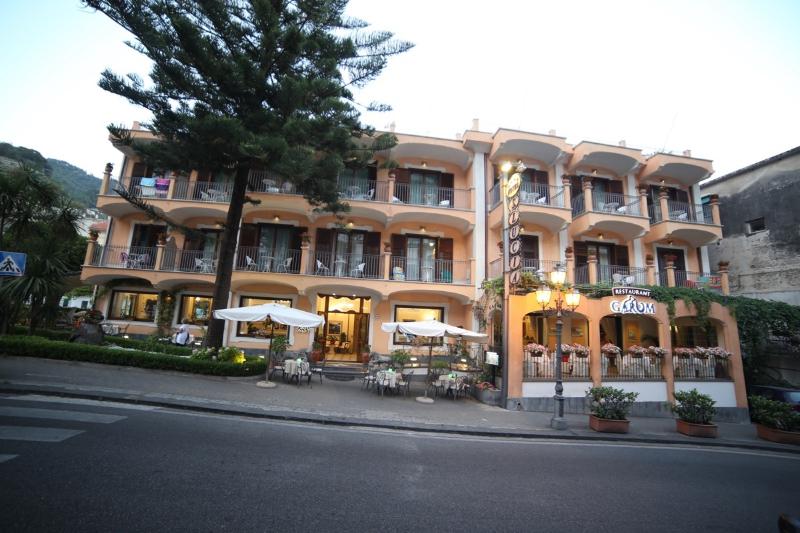
★★★★
Hotel Santa Lucia
Minori -Amalfi Coast
Beach 100 m · Parking
See prices and rooms →

★★★★
Aurora
Amalfi / Amalfi Coast
29 rooms · Parking
See prices and rooms →

★★★★★
Le Sirenuse
Positano
56 rooms
See prices and rooms →
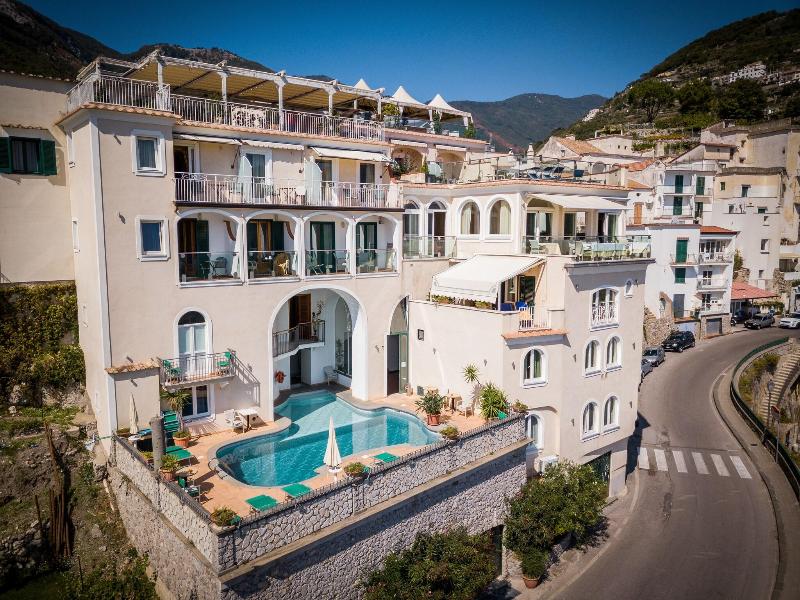
★★★★
Bonadies
Ravello
Pool · 33 rooms · Parking
See prices and rooms →
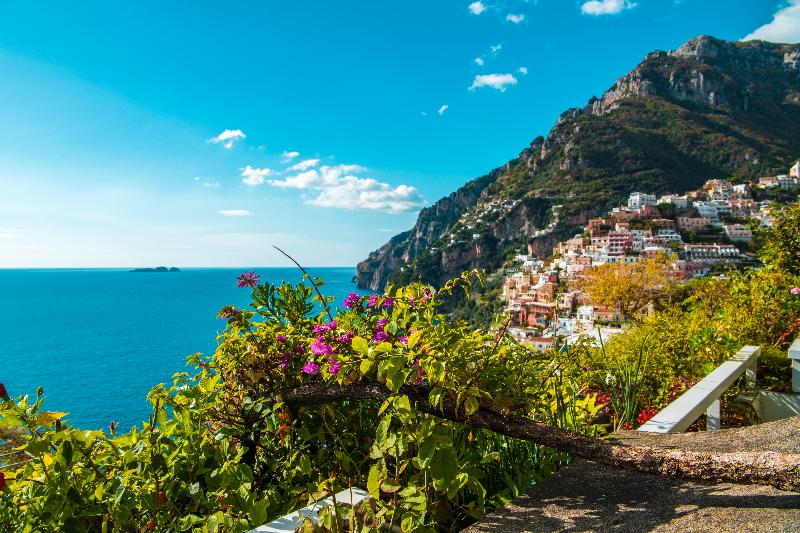
★★★★
Eden Roc Positano
Positano
Beach 700 m · Spa · Pool
See prices and rooms →
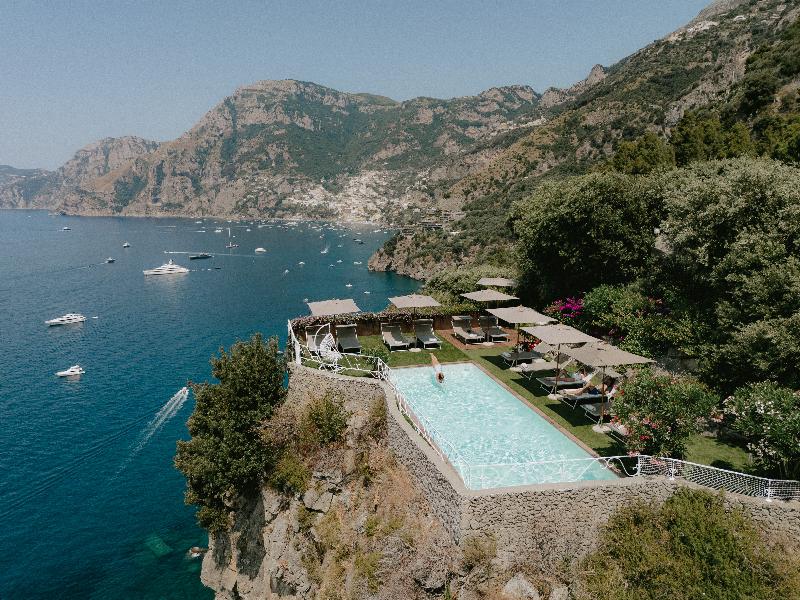
★★★★★
Hotel Piccolo Sant'Andrea
Praiano
Spa · Pool · 27 rooms
See prices and rooms →
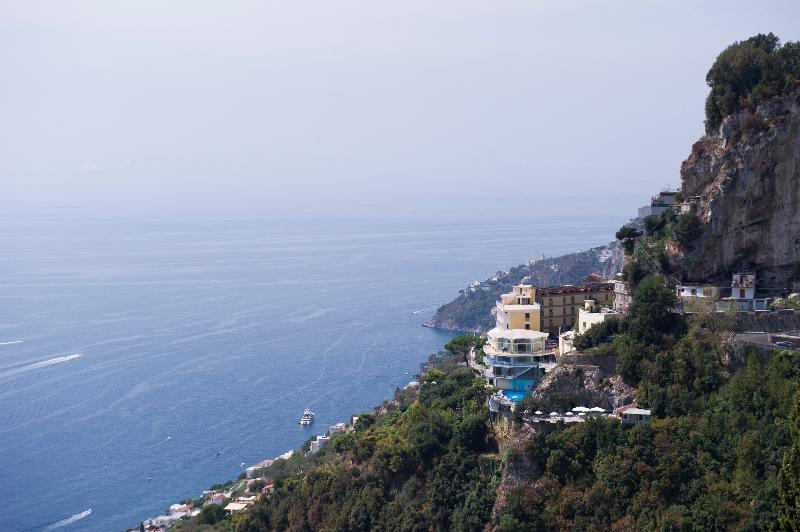
★★★★
Grand Hotel Excelsior
Amalfi
Beach 3 km · Pool · 66 rooms
See prices and rooms →
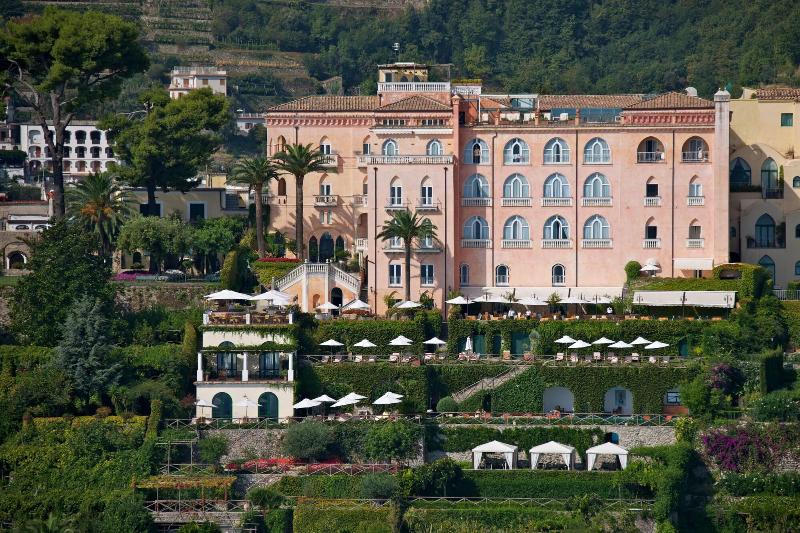
★★★★★
Palazzo Avino
Ravello
Pool · 43 rooms · Pets allowed
See prices and rooms →
Getting around
The coast road is narrow, winding and often jammed in summer, so a car is more trouble than it's worth. Use the SITA buses along the road and, from spring to autumn, the ferries between the main towns, which are quicker and far more scenic. Salerno and Sorrento are the main transport gateways.
When to go
Late spring and early autumn are ideal, with warm sea, good walking weather and fewer crowds. July and August are hot and very busy, and many hotels and restaurants close in winter.
Questions about visiting Amalfi Coast
- What is the Amalfi Coast best known for?
- Its dramatic cliffs and colourful villages such as Positano and Amalfi, lemon groves, clifftop walks like the Path of the Gods, and some of the best seafood in Italy.
- How many days do you need on the Amalfi Coast?
- Four or five days lets you visit Positano, Amalfi and Ravello, walk the Path of the Gods and take a day trip to Capri. A long weekend works if you pick two or three places.
- Do you need a car on the Amalfi Coast?
- No, and it's best to avoid one. The road is narrow and busy, parking is scarce, and buses and ferries link the main towns.
- Is the Amalfi Coast worth visiting?
- Yes. It's crowded in peak summer, but the scenery, walks and food are exceptional, and spring and autumn are far calmer.
More guides
- Where to stay on the Amalfi Coast
- The best things to do in London
- The best things to do in Edinburgh
- The best things to do in Amsterdam
- The best things to do in Barcelona
- The best things to do in Budapest
- The best things to do in Dublin
- The best things to do in Krakow
- The best things to do in Prague
- The best things to do in Berlin
- The best things to do in Lisbon
- The best things to do in Milan
- The best things to do in Paris
- The best things to do in Rome