
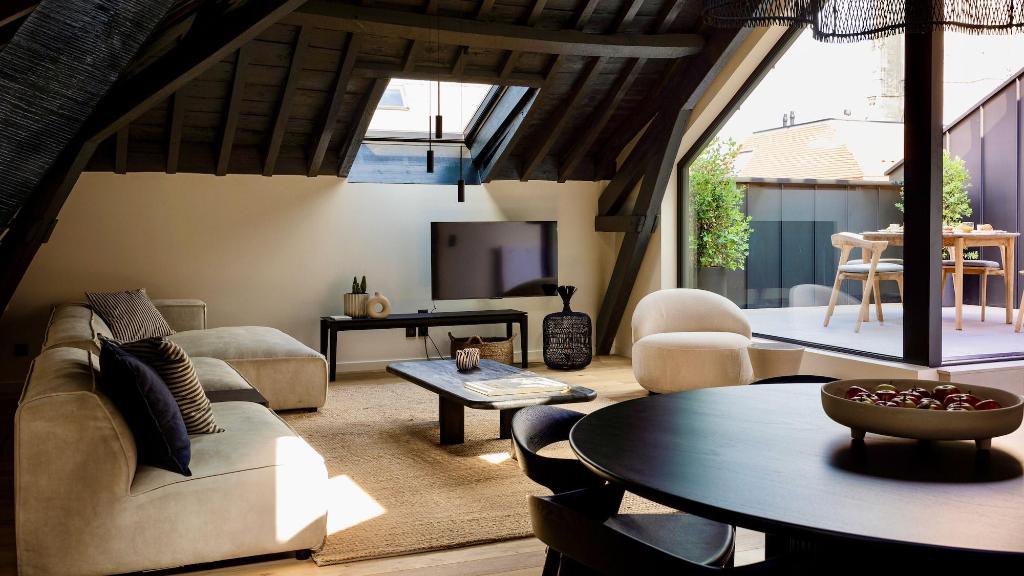
Antwerp has always had money and has never been shy about it. In the sixteenth century it was the richest trading city in Europe; in the seventeenth it had Rubens; today it has one of the continent's biggest ports, most of the world's diamond trade and a fashion scene that punches far above the city's size. The result is a place with swagger: gilded guildhalls, a railway station built like a palace and shop windows you could look at all day.
It is also a great deal of fun. The centre is compact and walkable, the bars are numerous and unpretentious, and the locals take their beer and their chips entirely seriously. Brussels may be the capital, but plenty of Belgians will tell you Antwerp is the better weekend.
Don't miss
The big sights
The Cathedral of Our Lady
Landmark

Photo: Julien Grandgagnage, CC BY-SA 4.0 The lacy Gothic spire of Antwerp's cathedral soars over the old town, the tallest church tower in the Low Countries and visible from almost everywhere. It took well over a century and a half to build, and the planned second tower was never finished, which gives the west front its lopsided charm.
Inside, the tall white nave is a gallery for the city's greatest son. Four huge paintings by Rubens hang here, including the Raising of the Cross and the Descent from the Cross, exactly where they were meant to be seen.
The Grote Markt
Landmark

Photo: Julien Grandgagnage, CC BY-SA 4.0 Antwerp's main square is a show of civic pride: a grand Renaissance city hall hung with flags along one side, and a row of tall, narrow guildhalls topped with gilded statues along the others. Café terraces fill the cobbles in between.
In the middle is a fountain showing Brabo, the legendary Roman soldier who cut off the hand of a toll-collecting giant and hurled it into the river. The story is said to have given the city its name, and explains the hand-shaped biscuits and chocolates in every shop.
Antwerp Central Station
Landmark

Photo: Trougnouf, CC BY 4.0 If you arrive by train, the sightseeing starts on the platform. Antwerp's station, finished in the early twentieth century, is routinely listed among the most beautiful in the world: a vast iron and glass train shed leading into a domed, marble-clad hall with sweeping staircases, gilding and a great clock. Locals call it the Railway Cathedral.
Trains now run on several levels, the lowest far underground, which makes the view up through the building all the more dramatic. Even if you are not travelling, go in and look.
Het Steen
Landmark

Photo: Maros M r a z (Maros), CC BY-SA 3.0 The oldest building in Antwerp is a small, turreted stone castle on the bank of the River Scheldt, once part of the fortifications that guarded the medieval port. Outside the gate stands a statue of Lange Wapper, a mischievous giant from local folklore.
The castle has been restored as a visitor centre with a rooftop viewing platform over the river. It marks the start of the quayside, a good place for a breezy walk and a look at the passing barges.
St Anna's Tunnel
Activity

Photo: Mark Ahsmann, CC BY-SA 3.0 There are no bridges over the Scheldt in central Antwerp. Instead, pedestrians and cyclists cross underneath it, through a tiled tunnel that opened in the 1930s and has barely changed since. You go down on the original wooden escalators, which clatter and creak beautifully.
It is a fair walk to the far side, but the reward is the best view of the city skyline, cathedral spire and all, from the left bank. A favourite with children and anyone fond of old machinery.
Tip: Go across towards sunset, when the skyline is lit from the west.
Museums
The Museum Plantin-Moretus
Museum

Photo: Riopelle, Public domain In the sixteenth century, Christophe Plantin ran one of the most important printing houses in Europe from this rambling house around a courtyard garden. His family kept the business going for three hundred years and threw almost nothing away. It is now a UNESCO World Heritage Site.
You walk through panelled rooms hung with gilded leather and Rubens portraits into the workshop itself, where the oldest surviving printing presses in the world still stand beside cases of original type. Quiet, dark, creaking and completely absorbing, even if you think you have no interest in printing.
The MAS
Museum

Photo: Zinneke, CC BY-SA 3.0 The Museum aan de Stroom is a striking tower of red sandstone and rippling glass, stacked like a pile of shipping crates in the middle of the old docks. Inside, each floor tells part of the story of Antwerp, its port and its connections with the rest of the world.
Many people come for the building alone. Escalators spiral up through the glass walls, with a wider view at every turn, to an open rooftop that looks over the city, the river and the cranes of the port.
Tip: The rooftop and the walk up to it are open to everyone, without a museum ticket, and stay open into the evening.
The Royal Museum of Fine Arts
Museum

Photo: Ad Meskens, CC BY-SA 3.0 Antwerp's great art museum, known as the KMSKA, reopened in 2022 after more than a decade of rebuilding, and the wait was worth it. The grand nineteenth-century galleries, in deep reds and greens, hold the Flemish masters: Van Eyck, Memling and a whole hall of enormous canvases by Rubens.
Hidden inside the old building is a set of dazzling white modern galleries for later art, including a major collection of James Ensor. Allow a long morning.
The Red Star Line Museum
Museum
Between the 1870s and the 1930s, around two million people sailed from Antwerp to North America with the Red Star Line, hoping for a better life. This museum occupies the very sheds on the quayside where they were examined, disinfected and processed before boarding.
It follows individual passengers from villages across Europe to Ellis Island, among them a young Albert Einstein and the boy who became Irving Berlin. It is thoughtful and often moving, and a very human counterpart to the city's grander collections.
Neighbourhoods to wander
The fashion district
Neighbourhood
In the 1980s, a group of graduates from Antwerp's fashion academy, the Antwerp Six, put the city on the style map, and it has stayed there. The streets south of the old town, around Nationalestraat and Kammenstraat, are lined with designer flagships, vintage shops and concept stores.
The district's anchor is MoMu, the city's fashion museum, which stages changing exhibitions. Even if you are only window-shopping, this is the most stylish stroll in Belgium.
Zurenborg
Neighbourhood

Photo: TobyJ, CC BY-SA 4.0 A short tram ride from the centre, this residential quarter was built around 1900 for the city's newly rich, who competed to commission the most extravagant house on the street. The result, especially along the Cogels-Osylei, is an astonishing jumble of art nouveau, neo-Gothic turrets, Greek temples and mosaic facades.
There are no museums and no tickets, just streets to stroll. Finish on Dageraadplaats, a tree-shaded square ringed with neighbourhood bars and restaurants.
Het Zuid
Neighbourhood
The South is Antwerp's arty, well-heeled quarter: wide nineteenth-century avenues radiating from the fine arts museum, lined with galleries, antique dealers, good restaurants and bars that fill up late. The contemporary art and photography museums are both here.
Come in the late afternoon, look at some art, then stay for dinner. It is where locals go for an evening out, and a pleasant change from the busier streets around the cathedral.
The Diamond District
Neighbourhood
A few plain streets beside the Central Station handle a huge share of the world's rough and polished diamonds, as they have for centuries. The serious business happens behind closed doors in guarded trading halls, but the shop windows along the station side glitter with rings and loose stones.
It is a curious, businesslike quarter rather than a pretty one, worth ten minutes on your way to or from the train.
Eat and drink
Belgian frites
Food
Belgians will tell you, firmly, that chips are theirs and not French. The proper version is thick-cut, fried twice so it is crisp outside and fluffy within, served in a paper cone from a frietkot with a large dollop of mayonnaise or one of a dozen other sauces.
You will find chip shops all over the centre. Eat them hot, standing up, with a little wooden fork. Mussels with chips, when in season, is the sit-down alternative.
A bolleke
Food

Photo: Robbylancel, CC BY-SA 4.0 Antwerp's house beer is an amber ale from the De Koninck city brewery, served in a rounded, stemmed glass called a bolleke. Ask for one by that name in any brown café and you will get a nod of approval.
The city's old pubs are worth seeking out for their own sake: dark wood, tiled floors, beer lists as long as your arm. The brewery itself, south of the centre, has a visitor tour for those who want to see how it is made.
Day trips
Mechelen
Day trip

Photo: T Dewin, CC BY-SA 4.0 A short train ride south, Mechelen was once the capital of the Low Countries and still has the grand buildings to show for it, without the crowds. The main square is dominated by the massive, flat-topped tower of St Rumbold's Cathedral, which you can climb for a view that reaches Antwerp and Brussels on a clear day.
The town is famous for its carillon bells, and makes an easy, unhurried half-day.
Ghent
Day trip

Photo: Martinvl, CC BY-SA 4.0 Under an hour away by train, Ghent is a medieval city of canals, stepped gables and three great towers in a row. A moated castle sits in the middle of town, and the cathedral holds the Van Eyck brothers' Ghent Altarpiece, one of the most celebrated paintings in Europe.
It is a university city, so it is lively as well as lovely, with plenty of places to eat and drink along the waterside.
Where to stay in Antwerp
Not sure which area suits you? Read our guide: Where to stay in Antwerp →

★★★★
Hilton Antwerp Old Town
Antwerp
All-inclusive option · Family-friendly · Parking
From £148 a night, taxes incl.2 adults · checked 14 Nov, 07:22

★★★★
NH Collection Antwerp Centre
Antwerp
Pets allowed · Parking
From £100 a night, taxes incl.2 adults · checked 14 Nov, 07:22
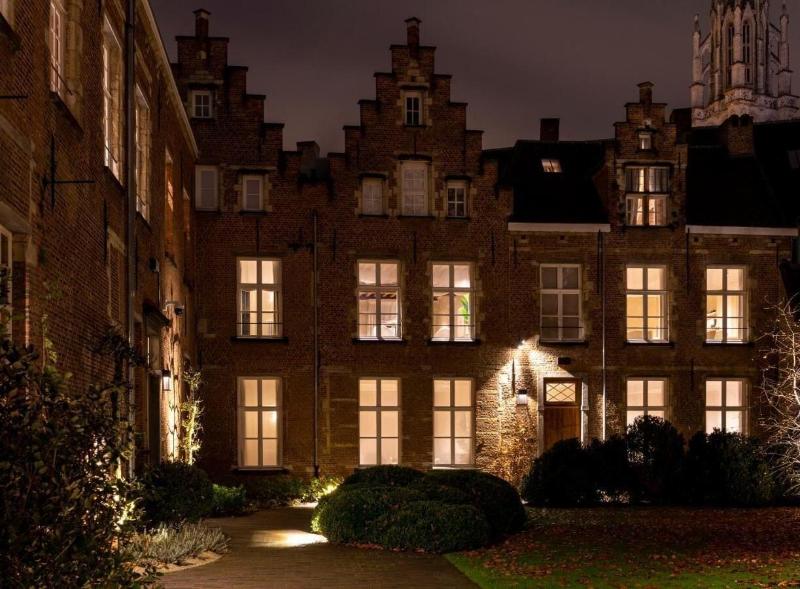
★★★★★
Botanic Sanctuary Antwerp
Antwerp
Spa · Pool · Parking
From £370 a night, taxes incl.2 adults · checked 14 Nov, 07:22
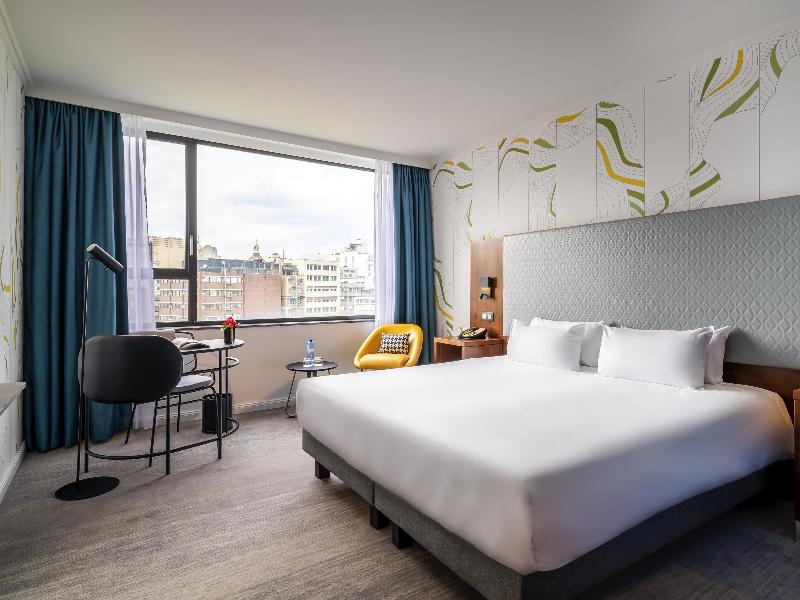
★★★★
Maek Antwerp Central - Handwritten Collection
Antwerpen
Pets allowed · Parking
From £86 a night, taxes incl.2 adults · checked 14 Nov, 07:22

★★★★
Adagio Antwerp City Center
Antwerp
70 rooms · Parking
From £93 a night, taxes incl.2 adults · checked 14 Nov, 07:22
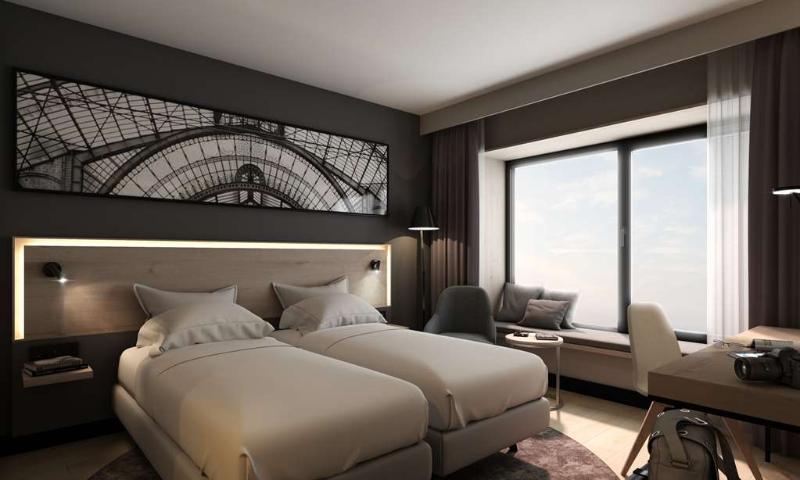
★★★★★
Radisson Hotel Antwerp Berchem
Antwerp
Parking
From £128 a night, taxes incl.2 adults · checked 14 Nov, 07:22
★★★★
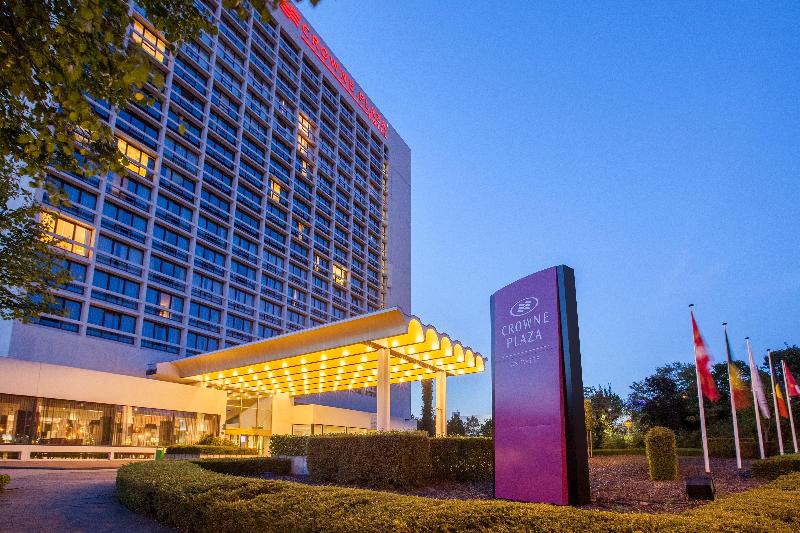
Crowne Plaza Antwerp
Antwerp
Spa · Pool · Pets allowed
From £86 a night, taxes incl.2 adults · checked 14 Nov, 07:22

★★★★★
De Gulden Poorte
Antwerpen
6 rooms · Parking
From £228 a night, taxes incl.2 adults · checked 14 Nov, 07:22
Getting around
The old town, the shopping streets and Central Station are all within walking distance of one another. Trams and buses reach Zurenborg, the South and the docks, and the city is flat and well set up for hired bicycles. Fast trains link Antwerp with Brussels, Ghent and Mechelen.
When to go
Antwerp works in any season, since so much of what is best here is indoors. Late spring to early autumn is the time for café terraces and the riverside. Winters are grey and damp, but December brings a Christmas market and plenty of cosy pubs.
Questions about visiting Antwerp
- What is Antwerp best known for?
- Diamonds, fashion, the painter Rubens, a huge port, the Gothic Cathedral of Our Lady and one of the most beautiful railway stations in the world.
- Is Antwerp worth visiting?
- Yes. It has outstanding museums, handsome historic streets, excellent shopping and a lively bar and restaurant scene, all in a centre small enough to explore on foot.
- How many days do you need in Antwerp?
- Two days is enough for the main sights and a couple of museums. A third lets you explore Zurenborg and the South properly, or add a day trip to Ghent or Mechelen.
- What is there to do in Antwerp with kids?
- Ride the wooden escalators down to St Anna's Tunnel and walk under the river, climb to the rooftop of the MAS, look around the little castle of Het Steen and eat chips from a paper cone.
- Do you need a car in Antwerp?
- No. The centre is walkable, trams cover the rest of the city and trains reach other Belgian cities quickly. Much of the centre is a low-emission zone, so driving in is best avoided.
More guides
- Where to stay in Antwerp
- The best things to do in London
- The best things to do in Edinburgh
- The best things to do in Manchester
- The best things to do in York
- The best things to do in Amsterdam
- The best things to do in Birmingham
- The best things to do in Liverpool
- The best things to do in Bristol
- The best things to do in Barcelona
- The best things to do in Budapest
- The best things to do in Cambridge
- The best things to do in Dublin
- The best things to do in Krakow