
Athens does not ease you in. It is hot, noisy, covered in graffiti and paved with marble worn slippery by a few million pairs of sandals. Then you look up, and there is the Parthenon, sitting on its rock above the traffic exactly as it has for two and a half thousand years. Few cities put their headline act so squarely in the middle of everything.
The trick is not to stop at the ruins. Athens is also a city of rooftop bars and smoky grills, of flea markets, hilltop sunsets and neighbourhoods that only wake up after dark. And when the heat gets too much, the sea is a tram ride away. Give it three days and it will win you round; give it four and you can add an island.
Don't miss
The big sights
The ancient city, most of it within a short walk of the rock.
The Acropolis
Landmark

Photo: A.Savin, CC BY-SA 3.0 The rock that started it all. You climb through the monumental gateway of the Propylaea, past the tiny Temple of Athena Nike, and come out in front of the Parthenon, the great marble temple built in the fifth century BC. Nearby stands the Erechtheion, its porch held up by six stone maidens, the Caryatids.
It is busy, it is exposed and the marble underfoot is polished like glass. None of that matters once you are up there with the whole city spread out below, all the way to the sea.
Tip: Go as early as you can or late in the afternoon. There is almost no shade at the top, so bring water, a hat and shoes with grip.
Acropolis Museum
Museum
At the foot of the hill, this light-filled modern museum holds the sculptures found on the Acropolis. Glass floors let you look down on the excavated streets of an ancient neighbourhood beneath your feet, and five of the original Caryatids stand on a balcony inside.
The top floor is the showstopper: a gallery laid out to the exact dimensions of the Parthenon, with the temple itself framed in the windows. It makes far more sense of the ruins than any guidebook.
Tip: Visit after the Acropolis if you can. It is air-conditioned, which in July feels like a gift from the gods.
Ancient Agora
Landmark

Photo: Jebulon, CC0 This was the marketplace and meeting ground of ancient Athens, where Socrates argued and democracy took its first steps. Today it is a green, quiet sprawl of foundations and olive trees below the Acropolis, with the Temple of Hephaestus on a low rise, one of the best-preserved Greek temples anywhere.
The long, colonnaded Stoa of Attalos was rebuilt in the twentieth century and now houses a small museum. It suits anyone who wants ruins with room to breathe.
Temple of Olympian Zeus
Landmark

Photo: A.Savin, CC BY-SA 3.0 Only a handful of its columns still stand, but they are enormous, and that is the point. This was once among the largest temples in the ancient world, begun in the sixth century BC and finished centuries later under the Roman emperor Hadrian. His arch still stands at the edge of the site, right beside a busy main road.
Museums
National Archaeological Museum
Museum

Photo: Thomas Wolf, www.foto-tw.de, CC BY-SA 3.0 de Greece's national collection of ancient art, and one of the great museums of the world. The gold funeral mask known as the Mask of Agamemnon is here, along with towering bronze gods pulled from the sea, delicate Cycladic figures and the Antikythera mechanism, a corroded lump of gears often described as an ancient computer.
It sits a little north of the centre, so it is quieter than the Acropolis sights. History lovers should set aside half a day.
Benaki Museum
Museum
A handsome neoclassical mansion on the edge of Kolonaki, filled with one family's collection of Greek art and craft from prehistory to the twentieth century: icons, island costumes, gold jewellery, whole panelled rooms. It tells the long story of Greece after the ancients, which most visitors skip entirely. The rooftop café looks over the National Gardens.
Neighbourhoods and viewpoints
Plaka and Anafiotika
Neighbourhood

Photo: Zde, CC BY-SA 4.0 Plaka is the old town under the Acropolis: ochre houses, stairways hung with bougainvillea and taverna tables set out on the steps. It is touristy and lovely in equal measure.
Keep climbing and you reach Anafiotika, a cluster of whitewashed cottages built in the nineteenth century by workers from the island of Anafi, who made themselves a little piece of the Cyclades on the side of the rock. It is tiny, quiet and full of sleeping cats.
Tip: Come early in the morning, before the souvenir shops open, when you will have the lanes almost to yourself.
Monastiraki Flea Market
Market
Monastiraki Square is Athens at full volume, and the lanes running off it are one long bazaar: leather sandals, worry beads, old vinyl, brass, backgammon boards and a great deal of cheerful tat. Sundays are the big day, when the antique and junk dealers spread out around Avissynias Square. Good for browsers, hagglers and anyone who needs a present.
Lycabettus Hill
Nature

Photo: Jakub Hałun, CC BY 4.0 The pointed, pine-covered hill rising out of Kolonaki is the highest spot in central Athens. A funicular runs up through the rock, or you can walk the zigzag path. At the top there is a small white chapel of St George and a view that takes in the Acropolis, the whole concrete sea of the city and the real sea beyond.
Tip: Sunset is the classic time. Arrive a little before to find a place on the wall.
Syntagma Square and the Changing of the Guard
Landmark

Photo: Marshallhenrie, CC BY-SA 4.0 In front of the Greek Parliament, the Evzones of the presidential guard stand watch over the Tomb of the Unknown Soldier in pleated kilts and pompom shoes. The changing of the guard is a slow, high-kicking ritual that is oddly hypnotic to watch. Afterwards, slip into the shady National Gardens next door, a good place to recover from the heat.
Eat and drink
Souvlaki
Food
The great Athenian fast food: skewers of grilled pork or chicken, or shavings of gyros, wrapped in warm pitta with tomato, onion, chips and a slick of tzatziki. You eat it standing up or at a pavement table, usually with a cold beer. The streets around Monastiraki Square are thick with grill houses and the smell will find you before you find them.
Varvakios Central Market
Market

Photo: athenswalk, CC0 The city's main food market, on Athinas Street between Monastiraki and Omonia. Butchers shout across the meat hall, fishmongers pile up the morning's catch on ice, and the streets outside sell olives, spices, cheese and dried herbs by the sackful. It is loud, wet underfoot and entirely real. Not one for the squeamish, but food lovers will be in heaven.
Tip: Go in the morning, when the market is at its busiest, and wear closed shoes.
Psyrri
Nightlife
A few steps from Monastiraki, Psyrri is a tangle of backstreets covered in street art and packed with meze bars, cocktail spots and tavernas with live music. Athenians eat late and go out later, so things get going well after ten. Nearby, the rooftop bars around Monastiraki serve their drinks with the floodlit Acropolis hanging in the sky above.
The coast and day trips
Beaches, a temple on a cliff and an island with no cars.
Cape Sounion
Day trip

Photo: Berthold Werner, CC BY-SA 3.0 At the southern tip of Attica, the Temple of Poseidon stands on a headland high above the Aegean, its white columns visible to sailors for miles. The ancient Athenians built it for the god of the sea, and Lord Byron carved his name into the marble. The coast road down from the city is a fine drive in itself.
Tip: Time it for sunset, when the columns turn gold and then pink. Tours from the city are built around it.
The Athens Riviera
Beach

Photo: Salwa Farwaneh, CC0 South of the centre, the coast runs through Glyfada and Vouliagmeni in a string of sandy bays, beach clubs and marinas. This is where Athens goes to cool off. Lake Vouliagmeni, a mineral lake set under a cliff a short walk from the sea, is known for water that stays warm enough for swimming all year.
It suits families, and anyone who has reached their limit of ruins.
Hydra
Day trip

Photo: Matti Blume (MB-one), CC BY-SA 3.0 Ferries from Piraeus run to Hydra, a small Saronic island with no cars at all. Stone mansions climb in an amphitheatre around a horseshoe harbour, donkeys carry the luggage, and the only thing on the agenda is lunch by the water followed by a swim off the rocks. It is the easiest taste of island life from the capital.
Delphi
Day trip

Photo: Bernard Gagnon, CC BY-SA 4.0 The ancient Greeks believed this was the centre of the world. On the slopes of Mount Parnassus, the sanctuary of Apollo was home to the oracle whose riddling prophecies shaped wars and kingdoms. The ruins, a UNESCO World Heritage Site, climb a steep hillside above a valley of olive trees, and the setting is as memorable as the stones.
It is a long day from Athens, best done on an organised tour or with a hire car.
Where to stay in Athens
Not sure which area suits you? Read our guide: Where to stay in Athens →

★★★★
Ace Hotel & Swim Club Athens
Glyfada
Beach 700 m · Pool · Pets allowed
From £190 a night, taxes incl.2 adults · checked 14 Nov, 06:53

★★★★
Acharnis Kavallari Hotel Suites
Acharnes
Family-friendly · Parking
From £55 a night, taxes incl.2 adults · checked 14 Nov, 06:53

★★★★★
Grande Bretagne, A Luxury Collection Hotel
Athens
Spa · Pool · Parking
From £417 a night, taxes incl.2 adults · checked 14 Nov, 06:53

★★★★
Acropolian Spirit Boutique Hotel
Athens
40 rooms
From £87 a night, taxes incl.2 adults · checked 14 Nov, 06:53
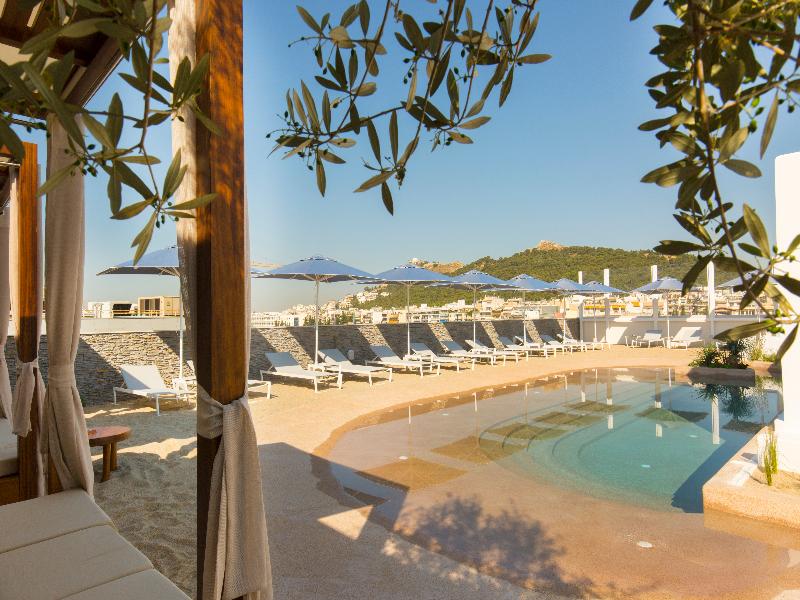
★★★★
Alexandros Hotel,Athens
Athens
Family-friendly
From £99 a night, taxes incl.2 adults · checked 14 Nov, 06:53
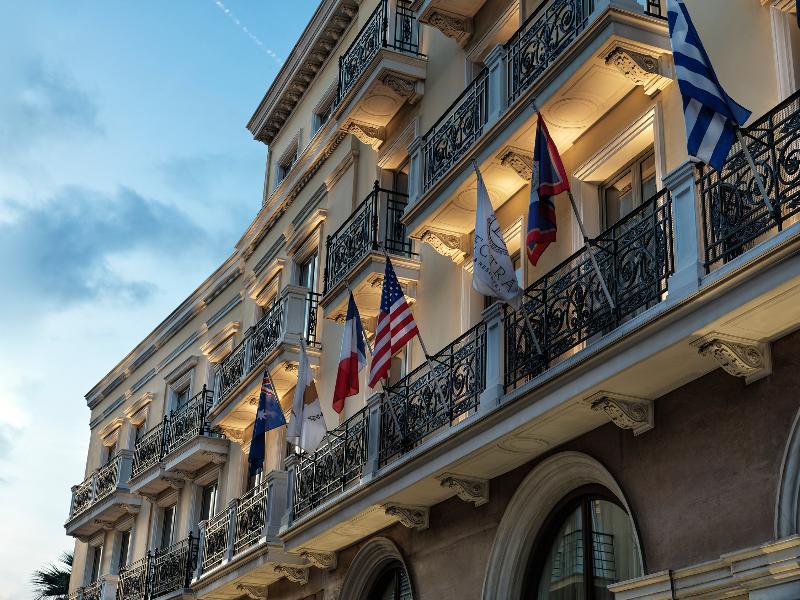
★★★★★
Electra Palace Athens
Athens
Spa · Pool · Parking
From £195 a night, taxes incl.2 adults · checked 14 Nov, 06:53

★★★★
Amalia Athens
Athens
From £132 a night, taxes incl.2 adults · checked 14 Nov, 06:53

★★★★★
Perianth Hotel
Athens
47 rooms · Pets allowed · Parking
From £178 a night, taxes incl.2 adults · checked 14 Nov, 06:53
Getting around
The historic centre is compact and best seen on foot: a pedestrian promenade links the Acropolis, the Agora and Plaka. The metro runs from the airport to Syntagma and Monastiraki and on to Piraeus for the ferries, and a tram follows the coast to Glyfada. You do not need a car in the city.
When to go
Spring and autumn are the best times for sightseeing, warm and bright without the fierce heat. July and August can be very hot, so do the ruins early and spend the afternoons in museums or by the sea. Winters are mild and the sights are blissfully quiet.
Questions about visiting Athens
- What is Athens best known for?
- The Acropolis and the Parthenon above all, along with the Ancient Agora, the old lanes of Plaka and its place as the birthplace of democracy. It is also known for rooftop bars, souvlaki and easy access to the Greek islands.
- How many days do you need in Athens?
- Two full days cover the Acropolis, its museum, the Agora and Plaka. Three gives you time for the National Archaeological Museum and Lycabettus Hill, and a fourth allows a day trip to Cape Sounion, Hydra or Delphi.
- Is Athens worth visiting?
- Yes. It is scruffier than some European capitals, but few cities offer so much ancient history within walking distance, and the food, nightlife and nearby coast make it much more than a stopover on the way to the islands.
- What is there to do in Athens with kids?
- The Acropolis is a hit with most children if you go early, and the changing of the guard at Syntagma is fun to watch. The National Gardens offer shade and space to run, and the beaches of the Athens Riviera make an easy break from sightseeing.
- Do you need a car in Athens?
- No. The centre is walkable and the metro and tram cover the rest, including the airport, the port and the coast. A hire car or an organised tour only helps for day trips such as Delphi and Cape Sounion.
More guides
- Where to stay in Athens
- The best things to do in London
- The best things to do in Edinburgh
- The best things to do in Manchester
- The best things to do in York
- The best things to do in Amsterdam
- The best things to do in Birmingham
- The best things to do in Liverpool
- The best things to do in Bristol
- The best things to do in Barcelona
- The best things to do in Budapest
- The best things to do in Cambridge
- The best things to do in Dublin
- The best things to do in Krakow