
Beijing does scale like nowhere else. The palace has nearly a thousand buildings. The square in front of it holds a small city's worth of people. The wall on the hills to the north runs for thousands of miles. For eight centuries emperors, and then their successors, built this place to impress, and it still stops first-time visitors in their tracks.
Yet the Beijing people fall for is often the small one: a bowl of noodles in a grey-brick lane, old men flying kites by a frozen lake, a courtyard where someone has hung songbirds in the tree. Give the big sights their due, they have earned it, then leave time to get a little lost in the hutongs.
Don't miss
The imperial city
The heart of old Beijing, laid out on a single north-south line.
The Forbidden City
Landmark

Photo: Reinhold Möller Ermell, CC BY-SA 4.0 For five hundred years this was the home of China's emperors and off limits to almost everyone else. Today it is the Palace Museum, the largest palace complex in the world: courtyard after courtyard of vermilion walls, marble terraces and golden-tiled roofs, running north from the Meridian Gate to the rockeries of the Imperial Garden.
The great ceremonial halls on the central axis draw the crowds. Slip into the side palaces, where the concubines and courtiers lived, for quieter corners and the museum's collections of clocks, jade and ceramics.
Tip: Tickets are sold in advance for a named day and need your passport, so book before you travel and bring it with you.
Tiananmen Square
Landmark
The enormous paved square at the centre of the capital, overlooked by the Gate of Heavenly Peace and its famous portrait of Mao. The Great Hall of the People, the National Museum of China and Mao's mausoleum stand around its edges. It is a place to feel the sheer size of the Chinese state more than somewhere to linger.
Tip: Expect security checks on the way in, and carry your passport.
Jingshan Park
Nature

Photo: Pixelflake, CC BY-SA 3.0 Directly behind the Forbidden City rises a hill made from the earth dug out of the palace moat. Climb to the pavilion on top and the whole palace lies below you, a sea of golden roofs stretching south. It is the single best view in Beijing, and on weekend mornings the park fills with locals singing, dancing and practising tai chi.
Tip: Go straight here when you leave the palace by the north gate.
Temple of Heaven
Landmark

Photo: xiquinhosilva, CC BY 2.0 Emperors came here each year to pray for a good harvest, and the Hall of Prayer for Good Harvests, a triple-roofed circular hall in deep blue tiles built without a single nail, is one of the loveliest buildings in China. The surrounding park is just as good: retired Beijingers gather under the old cypress trees to play cards, sing opera and exercise with real commitment.
The Great Wall
Several restored sections lie within a day trip of the city.
The Great Wall at Mutianyu
Day trip

Photo: Velatrix, CC0 Mutianyu, in Huairou district north of the city, is the section most visitors should pick. The wall here is fully restored, studded with watchtowers and draped over thickly forested ridges, and it is generally calmer than Badaling. A cable car and chairlift take the strain out of the climb, and a toboggan run offers a memorable way back down.
Tip: Set off early and go on a weekday. Autumn, when the hills turn red and gold, is the most beautiful season.
The Great Wall at Badaling
Day trip

Photo: CEphoto, Uwe Aranas, CC BY-SA 3.0 The most famous and most visited stretch of the wall, north-west of the city, and the easiest to reach by public transport, including by high-speed train. It is broad, steep and impressively restored. It is also very busy, especially on Chinese public holidays, so come here for convenience and choose Mutianyu if you want more space.
The Ming Tombs
Day trip

Photo: Gary Todd from Xinzheng, China, CC0 Thirteen emperors of the Ming dynasty are buried in a quiet valley on the way to the wall. The approach is the highlight: the Sacred Way, a long avenue lined with stone statues of officials, lions, camels and elephants. Many tours pair the tombs with Badaling or Mutianyu to make a full day.
Palaces, temples and gardens
Summer Palace
Landmark

Photo: xiquinhosilva, CC BY 2.0 The imperial court's summer retreat in the north-west of the city is a vast landscaped park wrapped around Kunming Lake. Walk the Long Corridor, a covered walkway painted with thousands of scenes, climb Longevity Hill for the view, and look for the Empress Dowager Cixi's notorious marble boat. In warm weather you can cross the lake by boat.
Tip: Allow at least half a day. It is big, and the subway ride out takes a while.
Lama Temple
Landmark

Photo: Ermell, CC BY-SA 4.0 Yonghe Temple, to give it its proper name, is the most important Tibetan Buddhist temple in Beijing and a working place of worship, thick with incense smoke. Its halls grow taller as you go, ending with an enormous standing Buddha carved from a single sandalwood trunk. The Confucius Temple and some pleasant café-lined lanes are just across the road.
Beihai Park
Nature

Photo: Bjoertvedt, CC BY-SA 4.0 A former imperial garden just north-west of the Forbidden City, built around a lake with an island in the middle and a white Tibetan-style dagoba on top. Hire a pedal boat in summer, watch calligraphers writing on the paving stones with water, and walk out of the north gate straight into the Houhai lakes.
Neighbourhoods to wander
The hutongs and Nanluoguxiang
Neighbourhood

Photo: Anagoria, CC BY 3.0 Hutongs are the narrow lanes of single-storey courtyard houses that once covered the whole of old Beijing. The best surviving ones lie around the Drum and Bell Towers. Nanluoguxiang is the busy, commercial one, lined with snack shops and boutiques; turn off down any side alley and it goes quiet within a few steps, all bicycles, washing lines and doorway chess games.
Tip: Explore on foot or by bike, and climb the Drum Tower for a view over the rooftops.
Houhai
Neighbourhood

Photo: Morio, CC BY-SA 4.0 A chain of willow-fringed lakes north of Beihai Park, ringed by bars, restaurants and old mansions. By day it is a place to stroll, cycle or rent a boat; in winter the ice becomes a public skating rink; after dark the lakeside bars turn up the music. It is touristy, cheerful and very Beijing.
798 Art District
Neighbourhood
A complex of 1950s factory buildings in the north-east of the city, reborn as the centre of China's contemporary art scene. Galleries, studios, design shops and cafés fill the old workshops, with their saw-tooth roofs and fading slogans still in place. Even if modern art leaves you cold, the setting is striking and the coffee is good.
Sanlitun
Nightlife
Beijing's best-known district for going out, in the embassy quarter east of the centre. The open-air Taikoo Li shopping complex is its hub, surrounded by cocktail bars, craft-beer pubs and restaurants serving everything from Yunnan cooking to pizza. Come here when you want an easy evening and a menu in English.
Eat and see
Peking duck
Food

Photo: Mr Wabu, CC BY-SA 2.0 The city's great dish. The duck is roasted until the skin is glassy and crisp, then carved at the table into thin slices, which you wrap in a paper-thin pancake with spring onion, cucumber and sweet bean sauce. Every Beijinger has an opinion on which restaurant does it best. Book a table, order a whole bird and do not rush.
Wangfujing
Market
Beijing's most famous shopping street, a largely pedestrianised avenue of department stores and malls a short walk east of the Forbidden City. It is at its liveliest in the evening, when the neon comes on and the snack sellers do a brisk trade. Good for a stroll, a bookshop browse and a look at modern China out shopping.
Olympic Park
Landmark
The site of the 2008 Games, north of the centre, is worth the subway ride for two buildings: the National Stadium, known as the Bird's Nest for its tangle of steel, and the bubble-wrapped National Aquatics Centre, the Water Cube. They are at their best after dark, when both are lit up.
Where to stay in Beijing
Not sure which area suits you? Read our guide: Where to stay in Beijing →

★★★★
Aloft Beijing
Beijing
Spa · Pool · Family-friendly
See prices and rooms →

★★★★
Asia Pacific Garden
Beijing
Parking
See prices and rooms →

★★★★★
Regent Beijing
Beijing
Spa · Pool · Parking
See prices and rooms →

★★★★
Beijing Continental Grand Hotel
Beijing
Parking
See prices and rooms →

★★★★
Beijing Landmark Hotel
Beijing
Spa · Pool · Parking
See prices and rooms →
★★★★★
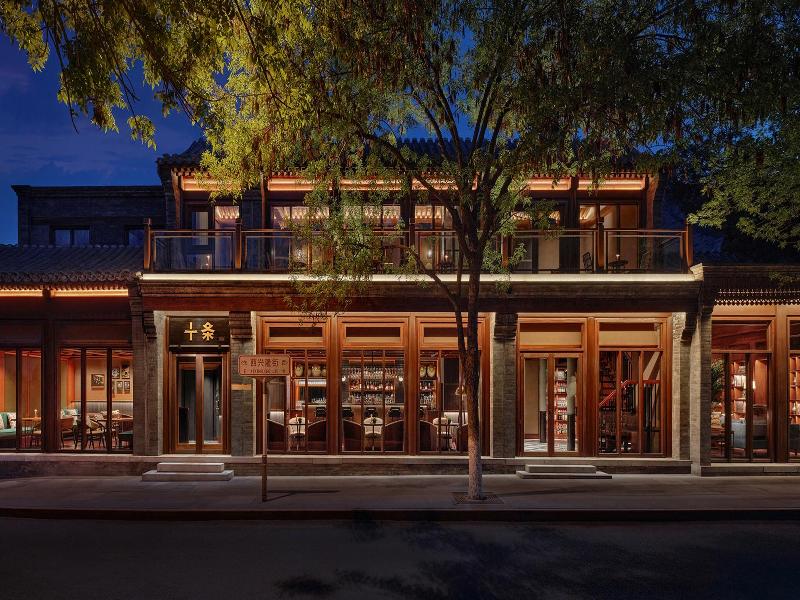
Mandarin Oriental Qianmen Beijing
Beijing
42 rooms · Pets allowed · Parking
See prices and rooms →

★★★★
Beijing Xinqiao Hotel
Beijing
Spa · Family-friendly · Parking
See prices and rooms →

★★★★★
China World Summit Wing Beijing
Beijing
Spa · Pool · Parking
See prices and rooms →
Getting around
The subway is the best way to cross the city: it is cheap, frequent, signed in English and reaches nearly every sight in town. Taxis and ride-hailing cars are plentiful but traffic is heavy. Distances are bigger than they look on a map, so group your sightseeing by area. For the Great Wall, join a tour or hire a car and driver.
When to go
Autumn, in September and October, is the best time: warm days, clear skies and golden leaves. Spring is pleasant too. Summers are hot and humid, and winters are dry and bitterly cold, though the sights are quieter. Avoid the national holiday week at the start of October, when the whole country is on the move.
Questions about visiting Beijing
- What is Beijing best known for?
- The Forbidden City, the Great Wall of China, Tiananmen Square, the Temple of Heaven and Peking duck. It has been the capital of China for most of the past eight centuries.
- How many days do you need in Beijing?
- Four days is a good minimum: one for the Forbidden City and Tiananmen, one for the Great Wall, one for the Summer Palace and Temple of Heaven, and one for the hutongs and the Lama Temple.
- Which part of the Great Wall is best to visit from Beijing?
- Mutianyu suits most visitors: it is beautifully restored, set among forested hills and usually less crowded than Badaling. Badaling is the easiest to reach by public transport.
- What is there to do in Beijing with kids?
- Ride the toboggan down from the Great Wall at Mutianyu, take a boat on Kunming Lake at the Summer Palace, pedal around Beihai Park and see the Bird’s Nest stadium lit up at night.
- Is Beijing worth visiting?
- Yes. Few cities have so many world-famous sights so close together, and the food and the old hutong neighbourhoods are a pleasure in their own right.
More guides
- Where to stay in Beijing
- The best things to do in London
- The best things to do in Edinburgh
- The best things to do in Manchester
- The best things to do in York
- The best things to do in Amsterdam
- The best things to do in Birmingham
- The best things to do in Liverpool
- The best things to do in Bristol
- The best things to do in Barcelona
- The best things to do in Budapest
- The best things to do in Cambridge
- The best things to do in Dublin
- The best things to do in Krakow