
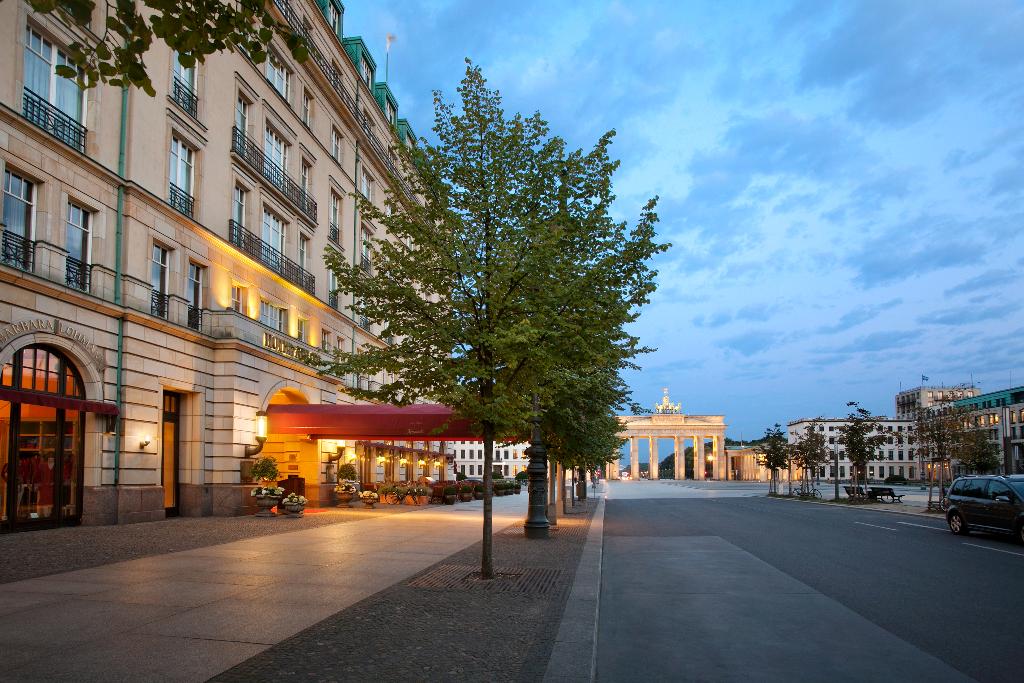
Few cities have lived through as much history in a single century as Berlin, and fewer still are so honest about it. Here you can walk the line where the Wall once split the city, stand beneath the Brandenburg Gate where crowds celebrated its fall, and reflect at memorials to the darkest chapters of the past, then step into a world-class museum, a canal-side beer garden or a club that won't close until Monday.
Berlin is big and spread out, so think in neighbourhoods: Mitte for the landmarks and Museum Island, Kreuzberg and Friedrichshain for street life and nightlife, Prenzlauer Berg for cafés and Sunday flea markets. The U-Bahn and S-Bahn tie it all together. Give it four days if you can, plus one for Potsdam.
Don't miss
History and landmarks
A divided city, reunited, and still telling its story.
The Brandenburg Gate
Landmark

Photo: Thomas Wolf, www.foto-tw.de, CC BY-SA 3.0 Berlin's great Neoclassical gate, crowned by a chariot drawn by four horses, stood marooned beside the Wall for nearly three decades. When the border opened in 1989, it became the symbol of a reunited Germany. Come at night, when it's floodlit and Pariser Platz is quiet.
The Reichstag dome
Landmark

Photo: Ank Kumar, CC BY-SA 4.0 Germany's parliament meets in the restored Reichstag building, crowned by Norman Foster's glass dome. A spiral ramp winds up inside it past a mirrored cone, with views over the city and down into the debating chamber below, a powerful symbol of open democracy.
Tip: Entry is free but you must register online in advance and bring photo ID.
Memorial to the Murdered Jews of Europe
Landmark

Photo: Dietmar Rabich, CC BY-SA 4.0 A short walk south of the Brandenburg Gate, Peter Eisenman's memorial covers a whole city block with thousands of grey concrete slabs of varying heights on undulating ground. Walk into it and the city noise fades as the slabs rise above you. The underground information centre tells individual stories of victims and families.
Tip: This is a place of remembrance: please don’t climb or jump on the slabs.
The Berlin Wall Memorial
Museum

Photo: Ansgar Koreng, CC BY-SA 4.0 On Bernauer Strasse, where the Wall ran down the middle of a street and people leapt from windows to escape, the memorial preserves a stretch of wall, a watchtower and the death strip between them. Outdoor exhibits trace escape tunnels and the lives cut in half, and the viewing platform shows the whole border system laid bare.
The East Side Gallery
Landmark

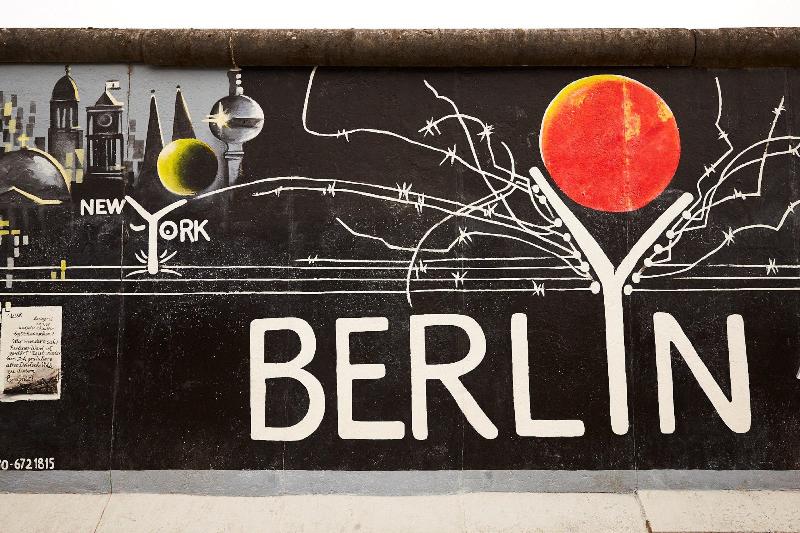
Photo: Ank Kumar, CC BY-SA 4.0 The longest surviving stretch of the Wall runs along the River Spree in Friedrichshain, painted by artists from around the world after it fell. Among the murals is Dmitri Vrubel's famous image of Brezhnev and Honecker locked in a fraternal kiss.
Tip: Walk it end to end, then cross the red-brick Oberbaum Bridge into Kreuzberg.
Museums and views
Museum Island
Museum

Photo: DXR, CC BY-SA 3.0 Five great museums share an island in the Spree, a UNESCO World Heritage Site. The Neues Museum holds the famous bust of Nefertiti, the Altes Museum has classical antiquities, the Alte Nationalgalerie is full of 19th-century painting, and the domed Bode Museum is filled with sculpture. The fifth, the Pergamon, is closed for a long renovation. The grand Berlin Cathedral stands alongside.
Tip: Pick one or two museums per visit, and book timed tickets for the Neues Museum.
The Jewish Museum
Museum

Photo: Jorge Royan, CC BY-SA 3.0 Daniel Libeskind's zigzagging, zinc-clad building in Kreuzberg is a work of art in itself, with sloping floors, empty voids and a disorienting Garden of Exile. Inside, it tells the story of Jewish life in Germany over many centuries, and one of its voids is carpeted with thousands of iron faces that clank underfoot.
The TV Tower
Landmark

Photo: Diego Delso, CC BY-SA 4.0 Built by East Germany as a show of strength, the Fernsehturm on Alexanderplatz is the tallest structure in Germany and visible from almost everywhere. Ride the lift to the observation deck in the steel sphere for the best panorama in town. When the sun hits the sphere it reflects a cross of light, to the old regime's lasting embarrassment.
Tip: Book a timed ticket online to skip the queue, and go on a clear day.
Neighbourhoods and green spaces
Kreuzberg
Neighbourhood

Photo: A.Savin, CC BY-SA 3.0 Once a scruffy corner hemmed in by the Wall, Kreuzberg is now Berlin's most vibrant district: Turkish bakeries, street art, late-night bars and tree-lined cafés along the Landwehr Canal. On a summer evening, the bridges over the canal fill with people sitting with a beer and watching the sun go down.
Prenzlauer Berg
Neighbourhood
Handsome 19th-century apartment blocks, leafy squares, brunch cafés and boutiques make Prenzlauer Berg a favourite for a slow morning. On Sundays, everyone heads to the Mauerpark for its flea market and open-air karaoke.
Tempelhofer Feld
Nature

Photo: Olivier Cleynen, CC BY 4.0 The old Tempelhof airport, famous for the Berlin Airlift, closed to flights and opened to the public as one of the city's most unusual parks. Its vast runways are now taken over by cyclists, skaters, kite-surfers, picnickers and community gardens.
The Tiergarten
Nature
Berlin's great central park stretches west from the Brandenburg Gate, with woodland paths, lakes and a lakeside beer garden. At its heart, the golden Victory Column offers another fine view to anyone willing to climb the steps.
Eat, drink and dance
Currywurst and döner
Food

Photo: Richard Mischau, Britta Mischau, CC BY-SA 4.0 Berlin's two street-food legends: currywurst, sliced pork sausage drowned in curry ketchup and dusted with curry powder, invented in the city just after the war; and the döner kebab in bread, which Berliners proudly claim was perfected by the city's Turkish community. Grab both from an Imbiss on the way home.
Markthalle Neun
Market
A 19th-century market hall in Kreuzberg reborn as a hub for local producers, bakeries, coffee and craft beer, with regular street-food evenings that draw the whole neighbourhood. Come hungry and graze, then wander the streets of Kreuzberg around it.
Clubbing
Nightlife
Berlin's techno clubs, many in former power stations and warehouses, are legendary, and the party often runs right through the weekend. The most famous doors are notoriously selective; dress down, go in a small group and don't take it personally if you're turned away.
Tip: Many clubs ban photos on the dance floor, and some cover phone cameras with a sticker at the door.
Day trips
Potsdam
Day trip

Photo: Flocci Nivis, CC BY 4.0 Just south-west of Berlin and easily reached by S-Bahn or regional train, Potsdam is the city of Prussian kings. Frederick the Great's rococo Sanssouci Palace sits atop terraced vineyards in a vast UNESCO-listed park dotted with palaces and follies, and the old town has a charming Dutch Quarter of red-brick houses.
Sachsenhausen Memorial
Day trip
In Oranienburg, north of the city, the former Sachsenhausen concentration camp is now a memorial and museum. It's a sobering visit, best taken with a guide or audio guide, and reached by S-Bahn.
Where to stay in Berlin
Not sure which area suits you? Read our guide: Where to stay in Berlin →
★★★★
Hotel Indigo Berlin - East Side Gallery
Berlin
Pets allowed · Parking
From £166 a night, taxes incl.2 adults · checked 1 Oct, 18:23

★★★★
Abacus Tierpark
Berlin
Parking
From £105 a night, taxes incl.2 adults · checked 1 Oct, 18:23
★★★★★
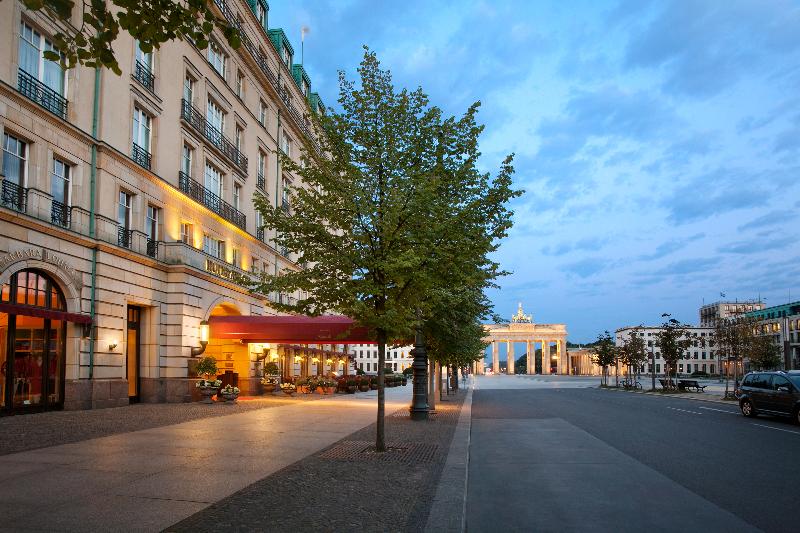
Hotel Adlon Kempinski Berlin
Berlin
Spa · Pool · Pets allowed
From £693 a night, taxes incl.2 adults · checked 1 Oct, 18:23

★★★★
Adagio Aparthotel Berlin Kurfurstendamm
Berlin
Parking
See prices and rooms →
★★★★
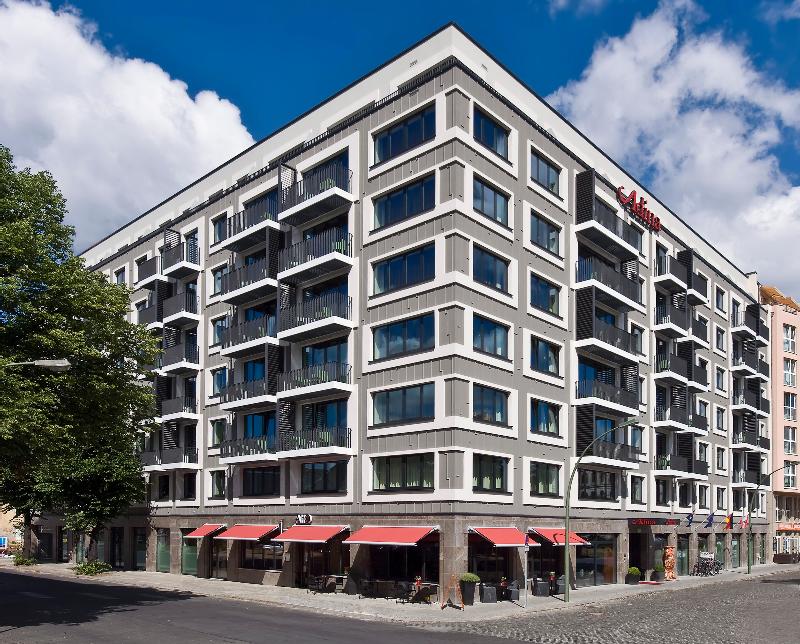
Adina Apartment Hotel Berlin Mitte
Berlin
Pool · Parking
From £143 a night, taxes incl.2 adults · checked 1 Oct, 18:23

★★★★★
Regent Berlin
Berlin
Spa · Pets allowed · Parking
See prices and rooms →

★★★★
Arcotel John F
Berlin
Parking
From £180 a night, taxes incl.2 adults · checked 1 Oct, 18:23

★★★★★
Radisson Collection Hotel, Berlin
Berlin
Spa · Pool · Parking
From £260 a night, taxes incl.2 adults · checked 1 Oct, 17:21
Getting around
The U-Bahn, S-Bahn, trams and buses cover the whole city and run all night at weekends. Bus 100 passes many of the big sights between Alexanderplatz and the Zoo. Berlin is flat and full of bike lanes, so cycling is a great way to explore. You won't need a car.
When to go
Late spring and summer are glorious, with long evenings, beer gardens and open-air life. Autumn is mild and colourful. Winter is cold and grey, but the Christmas markets and museums keep the city cosy.
Questions about visiting Berlin
- What is Berlin best known for?
- Its 20th-century history, including the Berlin Wall and the Brandenburg Gate, world-class museums on Museum Island, street art, a famously wild club scene and laid-back neighbourhoods.
- How many days do you need in Berlin?
- Three or four days covers the main landmarks, Museum Island, the Wall sites and a couple of neighbourhoods. Add a day for Potsdam.
- Do you need to book the Reichstag dome?
- Yes. Entry is free, but you must register online in advance and bring photo ID on the day.
- What is there to do in Berlin with kids?
- The TV Tower, the Berlin Wall Memorial, cycling on Tempelhofer Feld, boat trips on the Spree, and playgrounds and picnics in the Tiergarten.
More guides
- Where to stay in Berlin
- The best things to do in London
- The best things to do in Edinburgh
- The best things to do in Amsterdam
- The best things to do in Barcelona
- The best things to do in Budapest
- The best things to do in Dublin
- The best things to do in Krakow
- The best things to do in Prague
- The best things to do in Lisbon
- The best things to do in Milan
- The best things to do in Paris
- The best things to do in Rome
- The best things to do in Madrid