
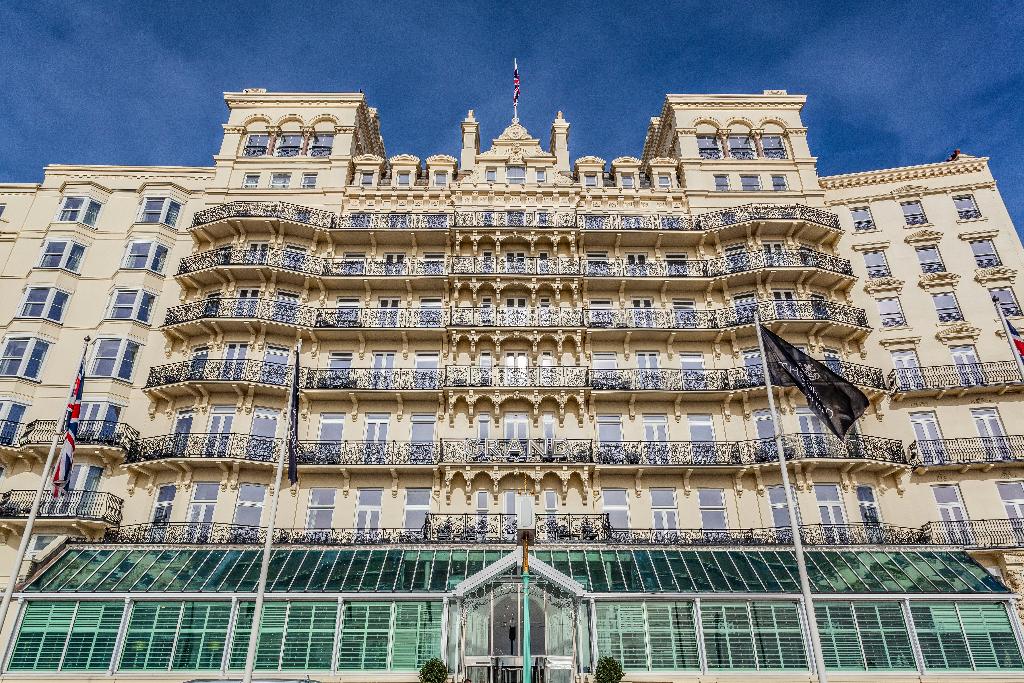
Brighton has been where London comes to misbehave for more than two hundred years. A pleasure-loving prince started it, building himself an Indian palace by the sea, and the city has never looked back. Today it is the most colourful, liberal and gleefully eccentric place on the south coast: part Regency resort, part student town, part year-round festival.
Do not come for golden sand. The beach is pebbles, the sea is bracing and the seagulls are thieves. Come for the pier, the alleyway shops, the food, the nightlife and the feeling that nobody here will mind what you wear. When you need air, the chalk hills of the South Downs begin at the edge of town.
Don't miss
The big sights
A prince, a pier and several miles of pebbles.
Royal Pavilion
Landmark

Photo: Fenliokao, CC BY-SA 3.0 Nothing prepares you for it. In the middle of an English seaside town stands a palace of onion domes and minarets, built for the Prince Regent, later George IV, and given its Indian-inspired exterior by the architect John Nash. The inside is even wilder: a riot of Chinese-style decoration, with painted dragons, bamboo-patterned staircases and a banqueting room hung with a colossal chandelier held in a dragon's claws. It is extravagant, slightly mad and utterly Brighton.
Tip: Take the audio guide: the gossip about the prince and his parties is half the pleasure.
Brighton Palace Pier
Landmark

Photo: Arild Vågen, CC BY-SA 4.0 The classic British pleasure pier, open since 1899 and striding out over the sea on a forest of iron legs. It has everything a pier should: deckchairs, arcades full of penny-pushers, doughnuts, candyfloss, sticks of rock and a funfair with rides at the far end. It is cheerfully tacky and all the better for it. Walk to the end at sunset, when the lights come on and the starlings sometimes swirl overhead in winter.
Brighton Beach
Beach
A long bank of shingle running the length of the city, backed by a wide promenade. On a sunny day it is one of the liveliest beaches in Britain, with swimmers, paddleboarders, volleyball courts and crowds settled in for the afternoon. Beneath the promenade, the old seafront arches hold bars, galleries, fish stalls and clubs. Bring something soft to sit on, and keep a firm grip on your chips.
The West Pier
Landmark

Photo: Arild Vågen, CC BY-SA 4.0 Brighton's other pier, or what is left of it. Once a rival to the Palace Pier, the West Pier closed in the 1970s and was later wrecked by storms and fire. Its blackened iron skeleton still stands out in the sea, stubborn and strangely beautiful. Photographers love it, particularly at dusk. On the seafront opposite rises the slim observation tower of the i360, with a glass pod that glides up for views along the coast.
Neighbourhoods to wander
The Lanes
Neighbourhood

Photo: Paul Gillett, CC BY-SA 2.0 The tight knot of alleyways between the seafront and the Pavilion follows the street plan of the fishing village Brighton used to be. Some passages are barely wide enough for two people to pass. They are famous for jewellers and antique dealers, mixed with chocolate shops, cafés and old pubs. Getting lost is inevitable and entirely the point. You will pop out somewhere familiar within five minutes.
North Laine
Neighbourhood

Photo: Andy Li, CC0 Not to be confused with the Lanes, and quite different in spirit. North Laine is a grid of narrow streets below the station with hundreds of independent shops: vintage clothing, vinyl, comics, vegan bakeries, flea markets and things you did not know you needed. It is the bohemian heart of the city, bright with murals and busy with buskers. Saturday is the liveliest day, when some streets close to traffic and tables spill onto the road.
Tip: Walk down from the station through North Laine to the Pavilion and the sea: it is the best introduction to the city.
Kemptown
Neighbourhood
East of the pier, Kemptown is the centre of Brighton's LGBTQ+ life and one of its most characterful areas. St James's Street is lined with bars, cafés and independent shops, and the seafront below is where the big Pride celebrations take place each August. Further along, the mood turns grand, with sweeping Regency crescents and squares facing the sea. It is a good area for brunch and for an unhurried evening out.
Hove
Neighbourhood

Photo: Jim Osley, CC BY-SA 2.0 Brighton's calmer, more grown-up neighbour begins where the seafront widens into broad lawns. Locals joke that it is 'Hove, actually', and it does feel like a different town: stately cream terraces, rows of brightly painted beach huts and far more space to breathe. Walk or cycle west along the promenade for coffee by the beach huts. It suits families and anyone who likes their seaside quieter.
Museums and rides
Brighton Museum and Art Gallery
Museum

Photo: PAUL FARMER, CC BY-SA 2.0 In the Pavilion gardens, in buildings that were once part of the royal stables, the city's museum is a good-humoured mix: 20th-century furniture and design, fashion, ancient Egypt and galleries that tell the story of Brighton itself, from fishing village to party town. It is a manageable size and a natural partner to the palace next door. The gardens outside are a popular place to sit with a coffee and listen to the buskers.
Volk's Electric Railway
Activity

Photo: Peter Trimming, CC BY-SA 2.0 The oldest operating electric railway in the world has been rattling along the seafront since 1883. Built by the local inventor Magnus Volk, its little open-sided carriages run just above the beach from near the Palace Pier towards the marina. It is a short, charming ride, loved by small children and anyone with a soft spot for Victorian ingenuity. Trains run in the warmer months.
Eat and drink
Fish and chips on the seafront
Food

Photo: Andy Li, CC0 You cannot come to Brighton and not do it. Buy fish and chips wrapped in paper, add salt and vinegar, and eat them on the pebbles with the sea in front of you. The seafront arches also sell fresh seafood: cockles, whelks, crab sandwiches and oysters. Beyond the beach, Brighton is one of the best cities in Britain for vegetarian and vegan food, with long-established restaurants that convert even committed meat-eaters.
Tip: Shield your food. The gulls are bold, fast and experienced.
Brighton after dark
Nightlife
Brighton has one of the liveliest night scenes on the south coast. There are traditional pubs in the Lanes, cocktail bars in North Laine, clubs under the seafront arches and cabaret, comedy and drag in Kemptown. Live music is a speciality, with small venues that have launched plenty of bands. Each May the Brighton Festival and its Fringe fill the city with theatre, music and street performance for weeks.
Day trips
Devil's Dyke
Nature

Photo: mattbuck (category), CC BY-SA 4.0 A few miles north of the city, the South Downs fall away in a deep, dry, steep-sided valley, the largest of its kind in Britain. Legend says the devil dug it to flood the churches of Sussex. The painter John Constable called the panorama from the top the grandest view in the world. On a clear day you can see far across the Weald. It is a favourite spot for walkers, kite flyers and paragliders, with a pub at the summit.
The Seven Sisters
Day trip

Photo: Arild Vågen, CC BY-SA 4.0 East along the coast, the South Downs meet the sea in a line of brilliant white chalk cliffs that rise and fall in seven great waves. They are wilder and less developed than the cliffs at Dover, and many people think them finer. The classic view is from Seaford Head, looking over the coastguard cottages at Cuckmere Haven. You can walk the clifftops all the way to Birling Gap and Beachy Head.
Tip: Stay well back from the cliff edge, which is crumbly and unfenced, and away from the base of the cliffs.
Lewes
Day trip

Photo: Arild Vågen, CC BY-SA 4.0 The county town of East Sussex is a short train ride away, tucked into a gap in the Downs. A Norman castle looks over a steep high street of bookshops, antique dealers and tile-hung houses, with narrow lanes called twittens dropping away on either side. It is a town of independent spirit, with its own brewery by the river and, every 5 November, the biggest and most raucous Bonfire Night celebrations in the country.
Where to stay in Brighton
Not sure which area suits you? Read our guide: Where to stay in Brighton →

★★★★
Hotel Du Vin Brighton
Brighton
49 rooms · Pets allowed
From £166 a night, taxes incl.2 adults · checked 14 Nov, 10:07

★★★★
My Brighton
Brighton
Beach 1.5 km · Parking
From £185 a night, taxes incl.2 adults · checked 14 Nov, 16:22

★★★★★
The Grand Brighton
Brighton
Beach 10 m · Parking
From £146 a night, taxes incl.2 adults · checked 14 Nov, 10:07

★★★★
Drakes Hotel
Brighton
Spa · 20 rooms · Pets allowed
From £120 a night, taxes incl.2 adults · checked 14 Nov, 10:07

★★★★
Brighton Harbour Hotel
Brighton
Beach 50 m · Spa · Pool
From £123 a night, taxes incl.2 adults · checked 14 Nov, 10:07

★★★★★
The Charm Brighton Boutique Hotel & Spa
Brighton
From £88 a night, taxes incl.2 adults · checked 14 Nov, 10:07

★★★★
DoubleTree by Hilton Brighton Metropole
Brighton
Spa · Pets allowed · Parking
From £123 a night, taxes incl.2 adults · checked 14 Nov, 10:07

★★★★
Leonardo Hotel Brighton
Brighton
Beach 1 km
From £76 a night, taxes incl.2 adults · checked 14 Nov, 10:07
Getting around
Brighton is compact and best on foot: the station is about 15 minutes' walk downhill from the sea. Buses cover the city and run out to Devil's Dyke and along the coast towards the Seven Sisters, and trains reach Lewes quickly. Parking is expensive and hard to find, so come by train if you can.
When to go
Summer is when Brighton is at full volume, with packed beaches and Pride in August. May brings the arts festival. Sunny weekends are very busy, so book ahead. Winter is quieter and windier, but the pubs are cosy, the starlings gather over the piers at dusk and the city never really shuts.
Questions about visiting Brighton
- What is Brighton best known for?
- The Royal Pavilion, the Palace Pier and its pebble beach, along with independent shopping in the Lanes and North Laine, a big LGBTQ+ community and a lively arts and nightlife scene.
- Is Brighton worth visiting?
- Yes. It is one of the most entertaining seaside cities in Britain and an easy trip from London, with plenty to do whatever the weather.
- How many days do you need in Brighton?
- Two days is ideal for the Pavilion, the pier, the shops and a night out. Add a third to walk on the South Downs or along the Seven Sisters.
- What is there to do in Brighton with kids?
- The rides and arcades on the Palace Pier, the beach, Volk's Electric Railway and the Royal Pavilion all go down well. Hove's quieter seafront and lawns are good for younger children.
- Does Brighton have a sandy beach?
- No. Brighton Beach is shingle, made up of smooth pebbles. It is fine for swimming and sunbathing, but bring beach shoes and something to sit on.
More guides
- Where to stay in Brighton
- The best things to do in London
- The best things to do in Edinburgh
- The best things to do in Manchester
- The best things to do in York
- The best things to do in Amsterdam
- The best things to do in Birmingham
- The best things to do in Liverpool
- The best things to do in Bristol
- The best things to do in Barcelona
- The best things to do in Budapest
- The best things to do in Cambridge
- The best things to do in Dublin
- The best things to do in Krakow