
Bruges looks like a film set, and yes, it knows. Stepped gables lean over green canals, horses clop across cobbles, a carillon rings out from a medieval tower, and the whole place smells faintly of warm waffles. In the Middle Ages this was one of the richest trading cities in Europe. Then its channel to the sea silted up, the money moved to Antwerp and Bruges dozed for centuries, which is exactly why so much of it survives.
The entire old town is a UNESCO World Heritage site and small enough to cross on foot in half an hour. That makes it a brilliant weekend, and a busy one: day-trippers fill the main squares from mid-morning. The trick is to stay the night. Early and late, the canals are quiet, the swans have the water to themselves and the city is yours.
Don't miss
The big sights
Two squares, one tower and a lot of water.
The Markt
Landmark

Photo: Marc Ryckaert (MJJR), CC BY 3.0 The main square has been the city's marketplace for a thousand years. One side is a row of tall, brightly painted guild houses with stepped gables, now cafés with terraces; another is taken up by the neo-Gothic Provincial Court; and over it all rises the Belfry. Horse-drawn carriages wait in the middle beside a statue of two local heroes of a medieval uprising against the French.
The Belfry
Landmark

Photo: Ank Kumar, CC BY-SA 4.0 Bruges's medieval bell tower stands 83 metres above the Markt and leans very slightly, if you look hard. A narrow staircase of 366 steps winds up past the old treasury and the mechanism of the carillon, whose 47 bells still play over the rooftops. The view from the top stretches across red roofs and church spires to the flat Flemish countryside.
Tip: Numbers in the tower are limited, so go first thing or towards the end of the day to avoid a long wait.
The Burg and the Basilica of the Holy Blood
Landmark

Photo: Emily van der Bom, CC0 A minute from the Markt, the Burg is the older and more elegant of the two squares. Its showpiece is the Gothic town hall, one of the oldest in the Low Countries, with a façade like carved lace and a gloriously painted hall upstairs.
Tucked in the corner is the Basilica of the Holy Blood: a dark, plain Romanesque chapel below, a richly decorated one above, where a relic said to hold drops of Christ's blood has been venerated since the Middle Ages.
A canal boat trip
Activity

Photo: Szilas, CC BY 4.0 The canals, or reien, are why Bruges gets called the Venice of the North, and seeing the city from the water is the one touristy thing nobody should skip. Open boats leave from several landing stages in the centre and nose under low stone bridges, past hidden gardens, almshouses and brick walls that rise straight from the water.
Tip: Boats generally don't run in the depths of winter or in bad weather. Go early in the day in summer, when queues build fast.
Rozenhoedkaai
Landmark

Photo: Marc Ryckaert (MJJR), CC BY 3.0 The Quay of the Rosary is the view on every postcard: two canals meeting beneath a huddle of old brick houses, with the Belfry rising behind. It is lovely at any hour, but come at dusk, when the lights come on and the reflections settle, or at sunrise, when you might have it almost to yourself.
Museums and churches
Groeningemuseum
Museum
A small museum with a world-class collection. In the 15th century Bruges's wealth drew the painters now known as the Flemish Primitives, and their jewel-bright, minutely detailed panels are the heart of the Groeninge. Jan van Eyck's Madonna with Canon van der Paele is the star, with works by Hans Memling, Gerard David and Hieronymus Bosch close behind.
Church of Our Lady
Landmark

Photo: Giles Laurent, CC BY-SA 4.0 The brick spire of the Onze-Lieve-Vrouwekerk is the tallest thing in Bruges and one of the tallest brick towers in the world. People come for a single sculpture: Michelangelo's Madonna and Child, in white marble, bought by a Bruges merchant and one of the few works by the artist to leave Italy in his lifetime. The gilded tombs of Mary of Burgundy and Charles the Bold are here too.
St John's Hospital
Museum
One of the oldest surviving hospital buildings in Europe, where nuns and monks nursed the sick for centuries. The medieval wards are now a museum, and in the old chapel hang several masterpieces by Hans Memling, who painted them for this very place, including the exquisite Shrine of St Ursula. Don't miss the old pharmacy.
Quiet corners
Where to go when the Markt gets too busy.
The Begijnhof
Landmark

Photo: Marc Ryckaert, CC BY-SA 4.0 Cross a small bridge, pass through a gateway and the noise of the city drops away. The Begijnhof is a ring of whitewashed houses around a green planted with tall trees, founded in the 13th century for the beguines, lay religious women who lived in community. Benedictine nuns live here now, and visitors are asked to keep their voices down. In spring the lawn is covered in daffodils.
Minnewater
Nature

Photo: Marc Ryckaert (MJJR), CC BY 3.0 Just beyond the Begijnhof, the so-called Lake of Love is a long, still stretch of water with a park along one bank, a bridge at the end and swans, always swans, which have been a symbol of Bruges for centuries. It is the most romantic walk in a city that is not short of them.
The windmills of Kruisvest
Landmark

Photo: Marc Ryckaert (MJJR), CC BY 3.0 The line of the old city ramparts is now a ring of grassy banks and footpaths, and on the eastern side stand a handful of windmills. One of them, the Sint-Janshuismolen, has stood on its mound since the 18th century and still grinds grain. Few visitors get this far, which makes it a peaceful place for a walk or a bike ride.
Eat and drink
Belgian chocolate
Food

Photo: Dietmar Rabich, CC BY-SA 4.0 Bruges has chocolate shops the way other towns have newsagents: dozens of them, from big names to small workshops where you can watch pralines being made by hand. Quality varies, so follow your nose to the makers who produce on the premises. Choco-Story, a museum in a medieval house, tells the story from cocoa bean to bar, with tastings.
Belgian beer and De Halve Maan
Food
Beer here is served with the ceremony of wine, each brew in its own glass. The old-town pubs carry lists that run to hundreds, from golden ales to dark Trappists. De Halve Maan, a family brewery in the centre, makes the local Brugse Zot and runs tours that end on the roof with a view. Famously, it sends its beer to the bottling plant through an underground pipeline.
Frites and waffles
Food
Belgians will tell you firmly that chips are theirs, not France's. They are fried twice, served in a paper cone and eaten with mayonnaise or one of a dozen other sauces; the green stands at the foot of the Belfry are an institution. For afters, a warm waffle from a street window, dusted with sugar. Bruges even has a museum devoted to the chip.
Day trips
Damme
Day trip

Photo: Marc Ryckaert, CC BY 3.0 A few kilometres north-east, the tiny town of Damme was once Bruges's outer port. Today it is a cluster of old houses, bookshops and restaurants around a Gothic town hall. Getting there is the pleasure: a dead-straight, poplar-lined canal runs between the two, with a flat towpath made for cycling.
Tip: Hire a bike in Bruges and ride out along the canal. It is flat all the way.
Ghent
Day trip

Photo: Martinvl, CC BY-SA 4.0 A short train ride away, Ghent is Bruges's bigger, livelier, more lived-in sibling: a university city with its own canals, guild houses and medieval skyline, plus a moated castle in the middle of town. In St Bavo's Cathedral hangs the Van Eycks' Adoration of the Mystic Lamb, one of the most important paintings in European art.
The Belgian coast
Day trip
The North Sea is a short train ride from Bruges. Blankenberge and Ostend are traditional seaside towns with wide sandy beaches and long promenades; Knokke-Heist is smarter, with galleries and a nature reserve at the Zwin. A coastal tram runs the whole length of the shore, so you can hop from one resort to the next.
Where to stay in Bruges
Not sure which area suits you? Read our guide: Where to stay in Bruges →
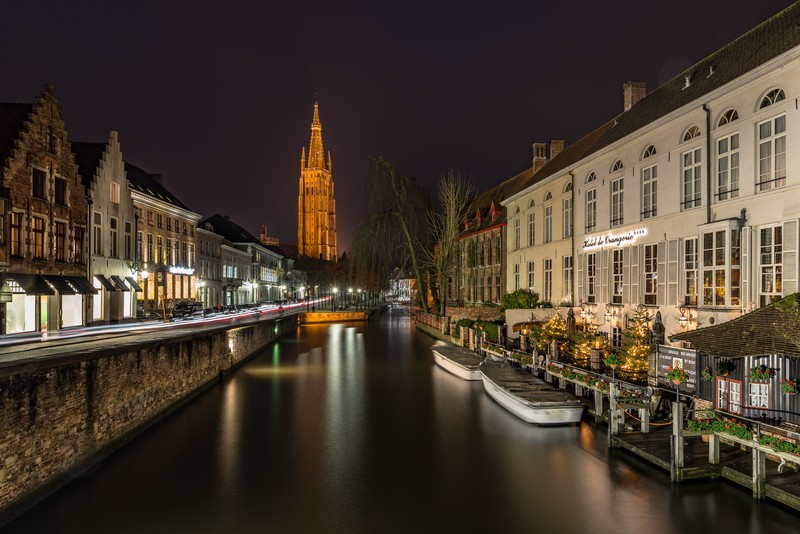
★★★★
Hotel de Orangerie by CW Hotel Collection
Bruges
Pets allowed · Parking
From £271 a night, taxes incl.2 adults · checked 14 Nov, 04:37
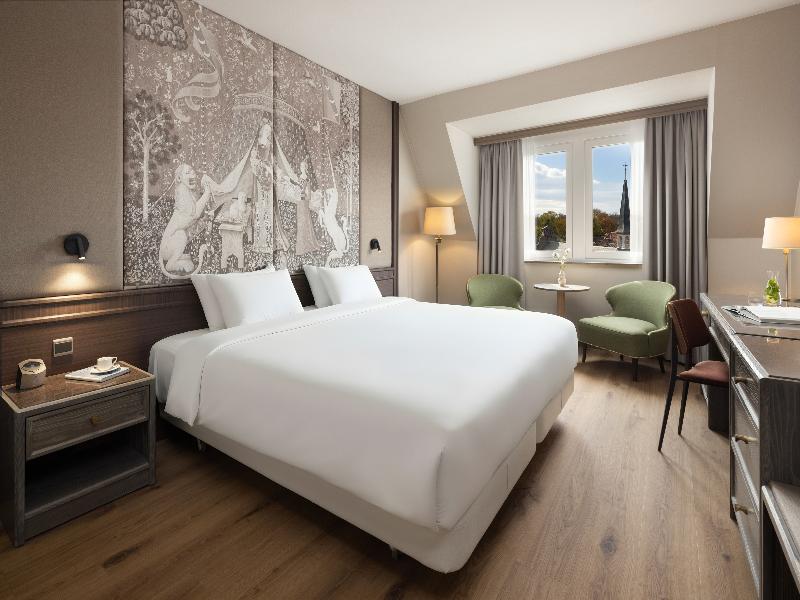
★★★★
NH Brugge
Bruges
Pets allowed · Parking
From £135 a night, taxes incl.2 adults · checked 14 Nov, 04:37
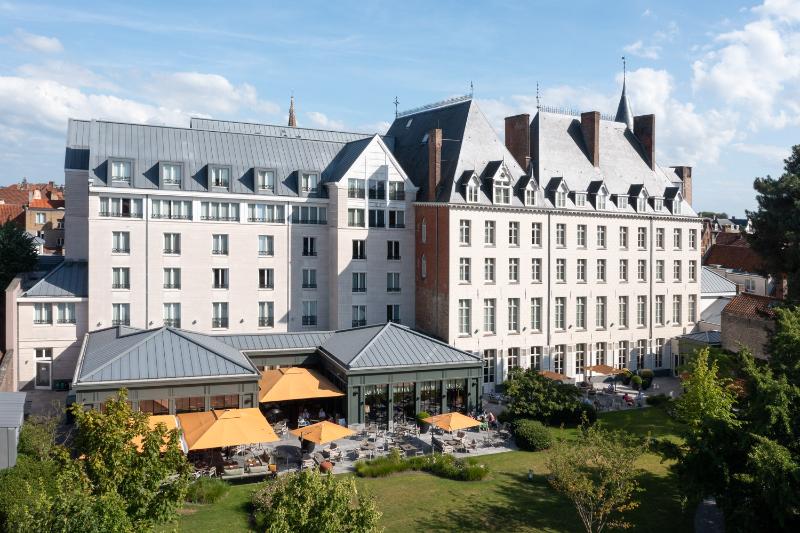
★★★★★
Dukes' Palace Hotel Bruges
Bruges
Spa · Parking
From £268 a night, taxes incl.2 adults · checked 14 Nov, 04:37
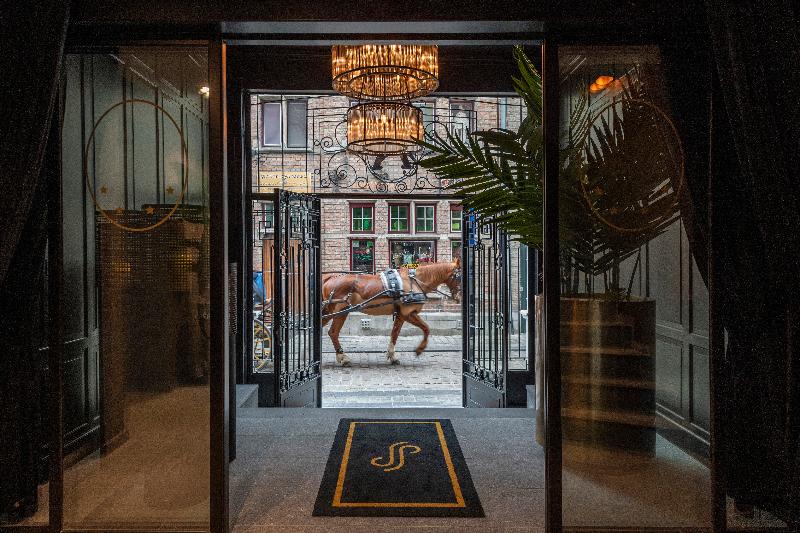
★★★★
Dukes' Academie
Bruges
Parking
From £233 a night, taxes incl.2 adults · checked 14 Nov, 04:37

★★★★
Martin's Relais
Brugge
46 rooms · Parking
From £165 a night, taxes incl.2 adults · checked 14 Nov, 04:37
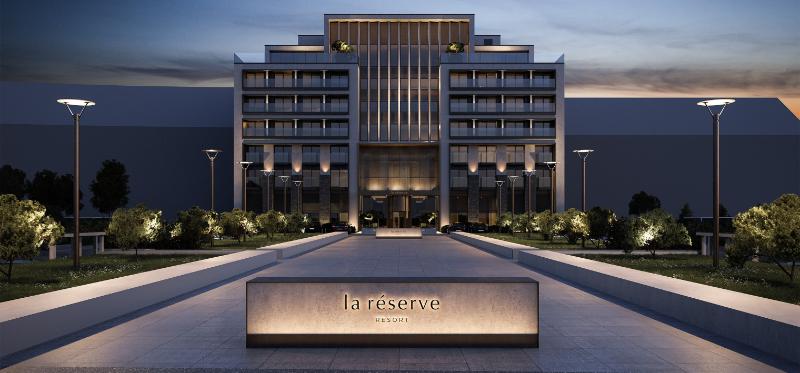
★★★★★
La Reserve Resort
Knokke
Pool · Pets allowed · Parking
From £298 a night, taxes incl.2 adults · checked 14 Nov, 04:37

★★★★
Hotel Velotel Bruges
Brugge
Spa · Family-friendly · Parking
From £130 a night, taxes incl.2 adults · checked 14 Nov, 04:37
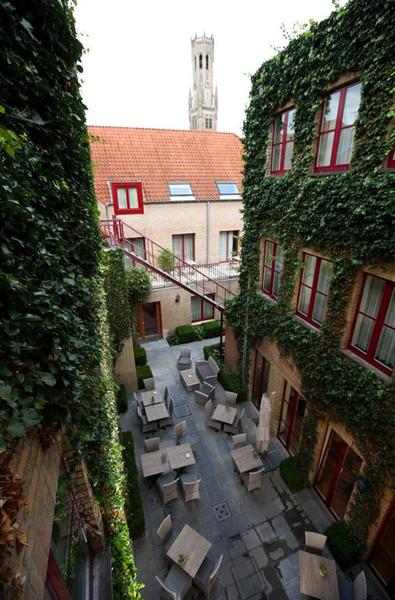
★★★★
Acacia
Brugge
41 rooms · Parking
From £176 a night, taxes incl.2 adults · checked 14 Nov, 04:37
Getting around
You walk. The old town is small, largely traffic-calmed and cobbled, so bring comfortable shoes. The railway station is on the southern edge, a pleasant stroll or a short bus ride from the Markt. Bikes are ideal for the ramparts and the canal path to Damme.
When to go
Bruges is busiest in summer and at weekends. Spring and early autumn are milder on the crowds, and December brings a Christmas market and lights to the squares. The weather is changeable in every season, so a waterproof is never a bad idea.
Questions about visiting Bruges
- What is Bruges best known for?
- A remarkably well preserved medieval centre of canals, cobbled lanes and gabled houses, the Belfry on the Markt, paintings by the Flemish Primitives, and chocolate, beer and lace.
- Is Bruges worth visiting?
- Yes. It is one of the best preserved medieval cities in Europe and easy to see on foot. It does get crowded by day, so it is at its best if you stay overnight and explore early and late.
- How many days do you need in Bruges?
- Two days covers the main sights at a relaxed pace, with time for a boat trip and a museum or two. A third day lets you cycle to Damme or visit Ghent or the coast.
- What is there to do in Bruges with kids?
- A canal boat trip, climbing the Belfry, the chocolate and chip museums, a horse-drawn carriage ride and the windmills on the ramparts all go down well. The beaches of the coast are a short train ride away.
- Do you need a car in Bruges?
- No. The old town is best on foot or by bike, and trains run to Ghent, Brussels and the coast. If you drive, leave the car at your hotel or in a car park on the edge of the centre.
More guides
- Where to stay in Bruges
- The best things to do in London
- The best things to do in Edinburgh
- The best things to do in Manchester
- The best things to do in York
- The best things to do in Amsterdam
- The best things to do in Birmingham
- The best things to do in Liverpool
- The best things to do in Bristol
- The best things to do in Barcelona
- The best things to do in Budapest
- The best things to do in Cambridge
- The best things to do in Dublin
- The best things to do in Krakow