

Brussels has a reputation for bureaucrats and grey skies, and it enjoys proving people wrong. Step into the Grand Place for the first time and the gilded guildhalls stop you dead. Around the corner, a city's most beloved monument turns out to be a very small boy having a wee. Brussels does grandeur and silliness in the same breath, and that is its charm.
It is also a city that eats and drinks supremely well. Chips come in paper cones, waffles are sold from hatches in the wall, and the beer list in an ordinary bar runs to several pages. Add Art Nouveau houses, comic-strip murals and a museum dedicated to a man in a bowler hat, and a weekend fills itself.
Don't miss
The big sights
Start in the old centre, where most of them are a few cobbled streets apart.
Grand Place
Landmark

Photo: Diego Delso, CC BY-SA 4.0 One of the most beautiful squares in Europe, and a UNESCO World Heritage Site. The Gothic Town Hall, with its needle of a spire, faces the King's House across the cobbles, and the other sides are lined with the tall, ornate houses of the old trade guilds, their gables trimmed with gold.
It changes through the day: flower stalls in the morning, café terraces at lunch, and floodlit splendour after dark. Every two years in August the square is laid with a vast carpet of begonias.
Tip: See it twice, once by day and once at night when the façades are lit and the crowds have thinned.
Manneken Pis
Landmark

Photo: Trougnouf, CC BY 4.0 A bronze statue of a little boy peeing into a fountain, on a street corner a few minutes from the Grand Place. He is barely knee-high, which surprises everyone, and he is the mascot of the city. He also has a wardrobe of hundreds of costumes, given by visiting dignitaries and societies, and is regularly dressed up for the occasion.
It takes two minutes and you will smile. That is quite enough to ask of a statue.
The Atomium
Landmark

Photo: Diego Delso, CC BY-SA 4.0 Built for the 1958 World's Fair, the Atomium is a giant model of an iron crystal: nine gleaming steel spheres linked by tubes, towering over the north of the city. Escalators run through the tubes between exhibition spaces, and the top sphere has a panorama over Brussels. It is gloriously odd, a piece of space-age optimism that the city could not bring itself to pull down.
Tip: It is out by the Heysel exhibition grounds, an easy metro ride from the centre. Mini-Europe, a park of model landmarks, is next door for families.
Galeries Royales Saint-Hubert
Landmark

Photo: Diego Delso, CC BY-SA 4.0 A grand glass-roofed shopping arcade from the 1840s, among the earliest of its kind in Europe. Under the arched skylight are chocolatiers, glove makers, bookshops, a cinema and old cafés with marble tables. It is where Brussels comes when it rains, which is often, and a fine place to choose a box of pralines to take home.
Museums
Magritte Museum
Museum
René Magritte, painter of bowler-hatted men, floating apples and pipes that are not pipes, spent most of his life in Brussels. This museum on the Place Royale holds the world's largest collection of his work, arranged across several floors. It is part of the Royal Museums of Fine Arts, whose Old Masters galleries, with their Bruegels, are right next door.
Belgian Comic Strip Center
Museum
Belgium takes comics seriously: this is the land of Tintin and the Smurfs. The museum celebrates the art form in a handsome Art Nouveau warehouse designed by Victor Horta, with original drawings, life-size models and a good shop. Out in the streets, look for the comic-strip murals painted on gable walls across the centre.
Musical Instruments Museum
Museum

Photo: Ad Meskens, CC BY-SA 4.0 Housed in the former Old England department store, a soaring Art Nouveau building of black ironwork and glass on the hill above the old town. Inside are thousands of instruments from around the world, with headphones that let you hear them played. Even if you skip the collection, the rooftop café has one of the best views in Brussels.
Neighbourhoods to wander
Sablon
Neighbourhood

Photo: Flocci Nivis, CC BY 4.0 The smartest corner of the old city, on the slope between the palace and the lower town. The sloping Place du Grand Sablon is ringed with antique dealers, café terraces and the shops of Belgium's best-known chocolatiers, with a weekend antiques market beside the lovely Gothic church of Notre-Dame du Sablon. Across the road, the Petit Sablon is a small formal garden ringed with bronze statues.
Marolles Flea Market
Market

Photo: DimiTalen, CC0 Downhill from Sablon, the Marolles is the city's old working-class quarter, earthy and proud of it. Every morning the Place du Jeu de Balle fills with a sprawling flea market: boxes of crockery, old postcards, lamps, records and furniture spread out over the cobbles. The surrounding streets are full of vintage shops and no-frills cafés.
Tip: Arrive early for the best rummaging. Much of it is junk, which is half the fun.
Parc du Cinquantenaire
Landmark

Photo: Marc Ryckaert, CC BY 3.0 A formal park in the European Quarter, laid out to mark fifty years of Belgian independence and crowned by a triumphal arch with a bronze chariot on top. The wings on either side hold museums, including Autoworld, with its hall of vintage cars. On sunny days the lawns fill with joggers, picnickers and off-duty officials from the EU buildings nearby.
Eat and drink
Three things Belgium does better than anywhere, and knows it.
Belgian chocolate
Food

Photo: BrokenSphere, CC BY-SA 3.0 The praline, a chocolate shell with a soft filling, was invented in Brussels, and the city has been perfecting it ever since. Famous houses and small artisan makers have shops around the Grand Place, in the Galeries Saint-Hubert and up on the Sablon. Most will let you choose a handful one by one, which is the best way to shop.
Frites and waffles
Food
Belgian chips are fried twice, served in a paper cone and eaten with mayonnaise or one of a dozen other sauces. Buy them from a friterie, a chip stand, not a restaurant.
For pudding there are two kinds of waffle: the light, crisp, rectangular Brussels waffle, dusted with icing sugar, and the denser, sweeter Liège waffle, studded with caramelised sugar. Locals eat them plain, without the mountain of cream.
Belgian beer
Food
Belgium brews hundreds of beers, from golden Trappist ales made in monasteries to dark, strong brown ones, each served in its own glass. Brussels' own speciality is lambic, a sour beer fermented by wild yeast, and its sparkling cousin gueuze. The old cafés around the centre, all dark wood and mirrors, are the place to work through the list. Slowly: these are stronger than they look.
Day trips
Belgium is small and its trains are frequent, so the best of Flanders is within easy reach.
Bruges
Day trip

Photo: Ank Kumar, CC BY-SA 4.0 A medieval city preserved almost whole: canals, humpbacked bridges, gabled brick houses and a great market square under a tall belfry. Its historic centre is a UNESCO World Heritage Site. Take a boat along the canals, climb the tower, and eat far too much chocolate. It is extremely popular, and extremely pretty, and both facts are obvious by lunchtime.
Tip: Take an early train to enjoy the canals before the day-trip crowds arrive.
Ghent
Day trip

Photo: Martinvl, CC BY-SA 4.0 Livelier and less polished than Bruges, Ghent is a university city with a medieval heart. A moated castle, the Gravensteen, sits in the middle of town, rows of guildhouses line the quays of the Graslei, and St Bavo's Cathedral holds the Van Eyck brothers' Ghent Altarpiece, a landmark of European painting. It is roughly halfway between Brussels and Bruges by train.
Waterloo
Day trip

Photo: Myrabella, CC BY-SA 3.0 Just south of Brussels lies the battlefield where Napoleon was finally defeated in 1815. The Lion's Mound, a grassy man-made hill topped with an iron lion, gives a view over the fields where the armies met, and a museum at its foot explains how the day unfolded. A must for history enthusiasts, and an easy half day from the city.
Where to stay in Brussels
Not sure which area suits you? Read our guide: Where to stay in Brussels →

★★★★
NH Collection Brussels Grand Sablon
Brussels
Pets allowed · Parking
From £181 a night, taxes incl.2 adults · checked 14 Nov, 00:07

★★★★
Pullman Brussels Centre Midi
Brussels
Spa · Parking
From £112 a night, taxes incl.2 adults · checked 14 Nov, 00:07

★★★★★
Hotel Amigo
Bruxelles
Parking
From £352 a night, taxes incl.2 adults · checked 14 Nov, 12:37

★★★★
9Hotel Chelton
Bruxelles
49 rooms · Family-friendly · Pets allowed
From £116 a night, taxes incl.2 adults · checked 14 Nov, 00:07

★★★★
9Hotel Sablon
Bruselas
Spa · Pool · 34 rooms
From £184 a night, taxes incl.2 adults · checked 14 Nov, 00:07
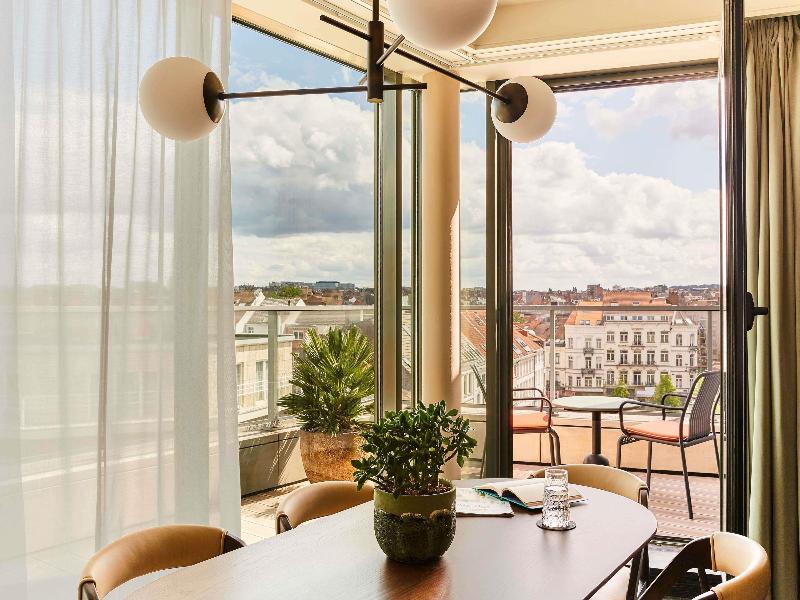
★★★★★
Sofitel Brussels Europe
Bruxelles
Spa · Pets allowed · Parking
From £135 a night, taxes incl.2 adults · checked 14 Nov, 00:07

★★★★
A&O Brussels Centrum
Brussels
Parking
From £87 a night, taxes incl.2 adults · checked 14 Nov, 00:07

★★★★★
Le Plaza
Bruxelles
Pets allowed · Parking
From £152 a night, taxes incl.2 adults · checked 14 Nov, 00:07
Getting around
The old centre is compact and best explored on foot, though the cobbles and the hill up to Sablon call for sensible shoes. The metro and trams cover the rest, including the Atomium and the European Quarter. Trains to Bruges and Ghent leave from the main stations throughout the day, so you do not need a car.
When to go
Brussels is a year-round city. Late spring and summer are mildest, with café terraces full. December brings Christmas markets and a light show on the Grand Place. Rain is possible in any month, so pack a waterproof and plan a museum or a long lunch for when it arrives.
Questions about visiting Brussels
- What is Brussels best known for?
- The Grand Place, the Manneken Pis and the Atomium, along with chocolate, waffles, chips and beer. It is also the home of the European Union's main institutions, of Tintin, and of some of Europe's finest Art Nouveau architecture.
- How many days do you need in Brussels?
- Two days are enough for the main sights, a museum or two and plenty of eating. Stay three or four and you can add day trips by train to Bruges, Ghent or Waterloo.
- Is Brussels worth visiting?
- Yes. The Grand Place alone justifies the trip, and the food, beer, museums and quirky sense of humour make it a rewarding weekend, especially as it is so easy to reach by train from London.
- What is there to do in Brussels with kids?
- The Atomium and Mini-Europe next door are the big family outing. Children also enjoy the Comic Strip Center, spotting comic murals around town, the Manneken Pis and, unsurprisingly, the waffles and chocolate shops.
- Do you need a car in Brussels?
- No. The centre is walkable, public transport is good, and Belgium's trains make day trips to Bruges and Ghent simple.
More guides
- Where to stay in Brussels
- The best things to do in London
- The best things to do in Edinburgh
- The best things to do in Manchester
- The best things to do in York
- The best things to do in Amsterdam
- The best things to do in Birmingham
- The best things to do in Liverpool
- The best things to do in Bristol
- The best things to do in Barcelona
- The best things to do in Budapest
- The best things to do in Cambridge
- The best things to do in Dublin
- The best things to do in Krakow