
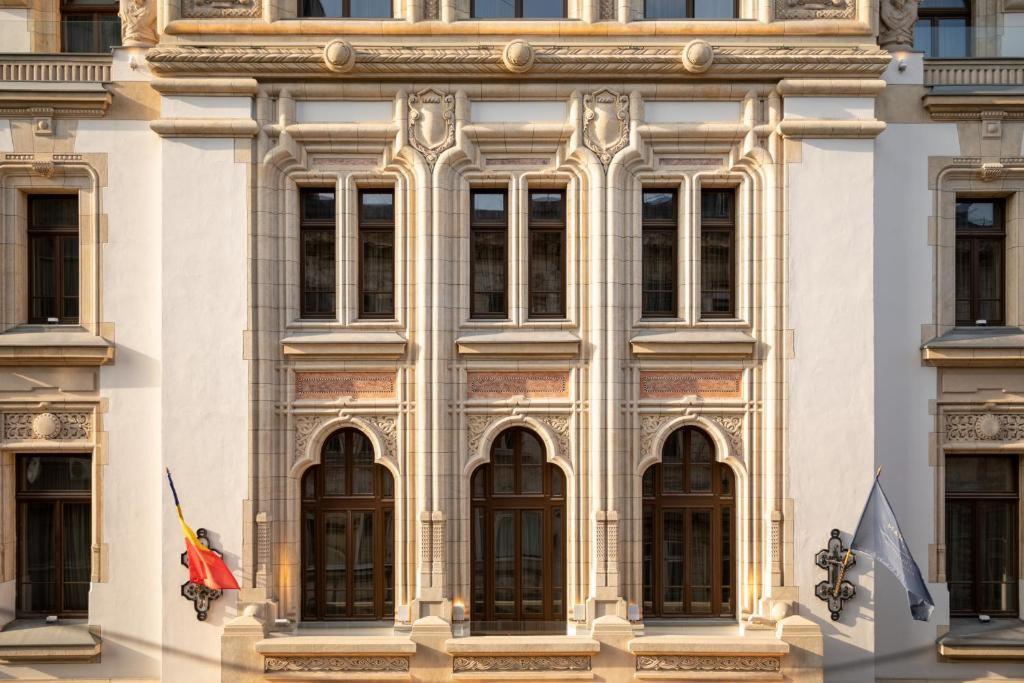
Bucharest takes a little effort, and repays it. This is a city of collisions: Belle Époque mansions with peeling stucco beside concrete blocks, tiny Orthodox churches hidden behind them, and at the end of a colossal boulevard, a palace so big it has to be seen to be believed. Between the wars they called it the Paris of the East. Then came an earthquake, a dictator and a revolution, and the result is rough-edged, full of stories and never dull.
It is also great fun. The Old Town is wall-to-wall bars and terraces, the parks are huge and leafy, the cafés are excellent and the prices are gentle. Spend your days on palaces and museums, your evenings over grilled meat and local wine, and keep one day free for the castles of the Carpathians.
Don't miss
The big sights
Palace of the Parliament
Landmark

Photo: William John Gauthier from Denmark, CC BY-SA 2.0 Nicolae Ceaușescu's monument to himself is one of the largest buildings in the world: a mountain of marble, crystal and carved oak that swallowed a whole historic quarter of the city. He did not live to see it finished. Today it houses Romania's parliament, and guided tours lead through a fraction of its vast halls, staircases and chandeliers.
Whatever you make of it, the scale is staggering. Stand on the balcony and look down the long boulevard laid out to rival the Champs-Élysées.
Tip: Tours must be booked in advance and you will need your passport to get in.
The Old Town
Neighbourhood

Photo: Ștefan Jurcă from Munich, Germany, CC BY 2.0 The lanes around Lipscani street are what remain of the old merchants' quarter, and they survived Ceaușescu's bulldozers by luck. By day you can pick out the ruins of the Old Princely Court, linked with Vlad the Impaler, grand old bank buildings and glass-roofed arcades. By night the whole district turns into one large open-air bar.
Call in at Cărturești Carusel, a bookshop set in a restored 19th-century building with white balconies spiralling up to a skylight. It is one of the most photographed interiors in the city.
Stavropoleos Monastery
Landmark

Photo: Neoclassicism Enthusiast, CC BY-SA 4.0 A tiny 18th-century church in the middle of the Old Town, and a perfect example of the Brâncovenesc style that is Romania's own: carved stone columns, a painted porch, frescoes darkened by candle smoke. Behind it is a quiet cloistered courtyard lined with old tombstones. Step in from the noise outside and the contrast is wonderful.
Romanian Athenaeum
Landmark

Photo: Diego Delso, CC BY-SA 4.0 The city's loveliest building is a 19th-century concert hall with a columned portico and a great dome, paid for in part by public subscription. Inside, a circular auditorium is ringed by a long fresco telling the history of Romania. It is home to the George Enescu Philharmonic, and hearing a concert here is the best way to see it.
Calea Victoriei and Revolution Square
Neighbourhood
Bucharest's grandest avenue runs north from the river past palaces, old hotels, churches and smart cafés. Halfway along is Revolution Square, where the 1989 uprising against the regime came to a head. The balcony from which Ceaușescu gave his last speech is still there, opposite the former royal palace, and a tall white memorial honours those who died.
Arcul de Triumf
Landmark
Bucharest has its own triumphal arch, standing on a roundabout on the leafy boulevard that leads north out of the centre. Built in stone in the 1930s to honour Romania's soldiers of the First World War, it is one of the reasons for that old Paris comparison. The avenues around it are lined with embassies and handsome villas.
Museums
Village Museum
Museum

Photo: DimiTalen, CC0 On the shore of Herăstrău lake, the Dimitrie Gusti National Village Museum gathers real houses, farmsteads, windmills and wooden churches brought from every region of Romania and rebuilt among the trees. You walk from a thatched Danube Delta cottage to a steep-roofed church from Maramureș in a few minutes. It is one of the oldest open-air museums of its kind in Europe, and a delight on a sunny day.
National Museum of Art of Romania
Museum
The former royal palace on Revolution Square now holds the country's main art collection. The Romanian galleries are the reason to come: glowing medieval icons and carved church doors, then the painters of the 19th and 20th centuries and sculpture by Constantin Brâncuși. A separate European wing has works by El Greco, Rembrandt and Monet.
Ceaușescu Mansion
Museum
For a quarter of a century the dictator and his family lived in this villa in the quiet Primăverii district, also known as the Spring Palace. Guided tours take you through rooms left much as they were: silk wallpaper, gilded bathroom fittings, a private cinema, an indoor pool lined with mosaics. It is a strange, revealing counterpart to the enormous palace across town.
Parks and time out
Herăstrău Park
Nature

Photo: Diego Delso, CC BY-SA 4.0 The city's biggest park, officially named after King Michael I, wraps around a large lake in the north of Bucharest. There are rowing boats and pleasure cruises on the water, cycle paths, rose gardens and a long string of lakeside restaurant terraces. On a hot weekend it seems as if the whole city has come here to cool off.
Cișmigiu Gardens
Nature
The oldest public garden in Bucharest sits right in the centre, a few minutes from Calea Victoriei. It is a place of winding paths, old plane trees, chess players and a small boating lake that becomes a skating rink in cold winters. Come with a coffee and watch the city go by.
Therme București
Activity

Photo: Daniele Napolitano, CC BY-SA 4.0 Just north of the city, near the airport, is one of the largest spa and wellness complexes in Europe: thermal pools indoors and out, a wave pool, water slides, saunas and a forest of palm trees under glass. It has zones for families and adults-only areas for peace and quiet, and it is a popular way to end a trip.
Eat and drink
Sarmale and mămăligă
Food

Photo: User:Themightyquill, CC BY-SA 2.5 Romania's national dish is sarmale: cabbage leaves stuffed with minced pork and rice, simmered slowly and served with sour cream and mămăligă, a golden cornmeal porridge much like polenta. It is rich, homely and best with a glass of local red. Start with ciorbă, a sour soup, and finish with papanași, fried cheese doughnuts with jam and cream.
Caru' cu Bere
Food

Photo: Jaimrsilva, CC BY-SA 4.0 The most famous restaurant in Bucharest is a beer hall that has been pouring since the 19th century. The interior is the draw: vaulted ceilings painted in dark greens and golds, stained glass, carved wooden balconies and a spiral stair. Expect traditional Romanian food, house beer, live music and dancers, and a full house most nights.
Tip: Reserve a table for dinner, and ask to sit inside rather than on the terrace.
Obor Market
Market

Photo: Joe Mabel, CC BY-SA 3.0 The biggest and liveliest market in the city, east of the centre, is where Bucharest shops for vegetables, cheese, preserves and honey. People also come for mici: small, skinless grilled sausages of minced meat and garlic, eaten hot off the charcoal with mustard, bread and a cold beer. It is a slice of everyday city life.
Day trips
Peleș Castle
Day trip

Photo: Myrabella, CC BY-SA 3.0 In the mountain resort of Sinaia, reached by train or road from Bucharest, stands the summer palace of Romania's first king. Peleș is a fairy-tale confection of spires, timbering and carved wood set against the forested Carpathians, and the interiors are just as rich, with an armoury, stained glass and a hall with a retractable glass ceiling.
Bran Castle and Brașov
Day trip

Photo: Calatorinlume, CC0 Across the mountains in Transylvania, Bran Castle perches on a rock above a pass and trades cheerfully on its association with Dracula. Nearby Brașov is a handsome medieval town of Saxon merchants' houses around a broad square, with the Gothic Black Church at its heart. Many organised tours combine both with Peleș in a single long day.
Where to stay in Bucharest
Not sure which area suits you? Read our guide: Where to stay in Bucharest →

★★★★
Pullman Bucharest World Trade Center
Bucharest
Pets allowed · Parking
See prices and rooms →

★★★★
Hilton Garden Inn Bucharest Airport
Bucharest Airport
Parking
See prices and rooms →

★★★★★
The Marmorosch Bucharest, Autograph Collection
Bucharest
Spa · Pool · Parking
See prices and rooms →

★★★★
Athina Suites Hotel
Bucharest
41 rooms · Parking
See prices and rooms →

★★★★
Atrium Hotel Bucharest City Center
Bucharest
33 rooms · Parking
See prices and rooms →

★★★★★
InterContinental Athenee Palace Bucharest
Bucharest
Spa · Pool · Pets allowed
See prices and rooms →

★★★★
Berthelot
Bucharest
Parking
See prices and rooms →

★★★★★
Epoque Hotel Relais & Chateaux Bucuresti
Bucharest
Spa · Pool · 45 rooms
See prices and rooms →
Getting around
The metro is fast and simple and links the centre with the north of the city. The Old Town and Calea Victoriei are best on foot. Ride-hailing apps are widely used and are the easiest way to reach the Village Museum, the parks and Therme.
When to go
Spring and early autumn are the most pleasant times, warm enough for terraces and parks. July and August can be very hot, and winters are cold with occasional snow. The George Enescu classical music festival fills the Athenaeum in late summer in the years when it is held.
Questions about visiting Bucharest
- What is Bucharest best known for?
- The enormous Palace of the Parliament built under Ceaușescu, the bars and lanes of the Old Town, Belle Époque architecture along Calea Victoriei and the Romanian Athenaeum concert hall.
- Is Bucharest worth visiting?
- Yes. It is an energetic, affordable capital with striking architecture, good museums, big parks and lively nightlife, and it is a handy base for visiting the castles of Transylvania.
- How many days do you need in Bucharest?
- Two days covers the main city sights. Allow a third for a day trip to Peleș Castle, Bran and Brașov.
- What is there to do in Bucharest with kids?
- The Village Museum, boats and playgrounds in Herăstrău Park, Cișmigiu Gardens and the pools and slides at Therme București all work well for families.
- Do you need a car in Bucharest?
- No. The metro, ride-hailing apps and your feet will get you round the city, and trains and organised tours run to Sinaia and Brașov.
More guides
- Where to stay in Bucharest
- The best things to do in London
- The best things to do in Edinburgh
- The best things to do in Manchester
- The best things to do in York
- The best things to do in Amsterdam
- The best things to do in Birmingham
- The best things to do in Liverpool
- The best things to do in Bristol
- The best things to do in Barcelona
- The best things to do in Budapest
- The best things to do in Cambridge
- The best things to do in Dublin
- The best things to do in Krakow