
Cartagena de Indias is the Caribbean at full saturation. Behind thick coral-stone walls built to keep out pirates lies a city of mustard, tangerine and cobalt houses, their wooden balconies dripping with bougainvillea. Horse-drawn carriages clatter over the cobbles, fruit sellers in bright dresses balance bowls on their heads, and by late afternoon the whole place glows.
It is hot, humid and best taken slowly. Walk the old town in the morning, retreat for a long lunch, and come out again at sunset when the walls fill with people and the squares with music. Then give a day to the sea: the islands offshore have the white sand the city's own beaches lack.
Don't miss
The old city
Cartagena's port, fortresses and monuments are a UNESCO World Heritage Site.
The walled city
Neighbourhood

Photo: Pedro Szekely from Los Angeles, USA, CC BY 2.0 The historic centre is the reason to come: a tight grid of colonial streets inside the ramparts, where every corner turns up another carved doorway, shaded square or church tower. The districts of Centro and San Diego hold the grandest mansions, many now hotels and restaurants set around cool courtyards.
There is no route to follow. Enter through the Clock Tower gate, the Torre del Reloj, and get pleasantly lost. Look out for the huge iron door knockers shaped like lizards, lions and sea creatures.
Tip: Sightsee early or after four. The midday heat is fierce and the streets offer little shade.
Castillo San Felipe de Barajas
Landmark

Photo: Bernard Gagnon, CC BY-SA 4.0 On a hill just outside the walls squats the greatest fortress the Spanish built in the Americas, a mass of sloping stone ramparts designed so that each level could fire on the one below. It guarded the landward approach to the city and was never taken.
You can climb all over it and duck into the network of tunnels inside, built so that the slightest footstep would echo. The view back to the old town and the towers of Bocagrande is superb.
Tip: There is almost no shade on the ramparts. Take water and a hat, and go first thing.
The city walls at sunset
Landmark

Photo: Joe Ross from Lansing, Michigan, CC BY-SA 2.0 Cartagena's defensive walls, Las Murallas, run for kilometres around the old town, and you can walk along the top of long stretches of them. The western side faces the open Caribbean, and at the end of the day it becomes the city's grandstand.
Find a spot on the ramparts, by a cannon if you can, and watch the sun drop into the sea. Bars up here do a brisk trade in cocktails, and the breeze is the coolest air you will feel all day.
Plaza Santo Domingo
Landmark

Photo: Bernard Gagnon, CC BY-SA 4.0 The liveliest square in the old town spreads out in front of the city's oldest church. Café tables cover the cobbles, musicians work the crowd, and in one corner reclines a famously voluptuous bronze nude by the Colombian artist Fernando Botero. It suits a long, people-watching drink at dusk.
San Pedro Claver Church
Landmark

Photo: Bernard Gagnon, CC BY-SA 4.0 This handsome stone church and its leafy cloister are named after a 17th-century Jesuit priest who spent his life ministering to enslaved Africans arriving at the port, and who is buried beneath the altar. The cloister, with its quiet garden and small museum, is a cool refuge and a sobering reminder of how the city's wealth was made.
Neighbourhoods, shops and views
Getsemaní
Neighbourhood

Photo: Bernard Gagnon, CC BY-SA 4.0 Just outside the main walls, the old working-class quarter of Getsemaní has become the most creative corner of the city. Its narrow streets are covered in murals and strung with flags and umbrellas, and neighbours still pull chairs onto the pavement in the evening.
The heart of it is Plaza de la Trinidad, a small church square that turns into an open-air party every night, with street food, dancers and half the neighbourhood. Come for the atmosphere, and for some of the best bars in town.
Bocagrande
Beach
South of the old town, a narrow peninsula bristles with white high-rises, the Caribbean on one side and the bay on the other. This is modern Cartagena, with shopping malls, big hotels and a long city beach of greyish sand lined with sunshades and vendors. It is lively and convenient for a dip, though it is not the postcard. For clear water and pale sand, take a boat.
Convento de la Popa
Landmark

Photo: Mariordo (Mario Roberto Durán Ortiz), CC BY-SA 4.0 The highest point in Cartagena is a hill crowned by a whitewashed 17th-century convent with a flower-filled cloister and a chapel to the city's patron, the Virgin of La Candelaria. The terrace outside gives the widest view there is: old town, bay, skyscrapers and sea.
Tip: Go up by taxi and ask the driver to wait. It is not a walk to attempt on foot.
Las Bóvedas
Market

Photo: Joe Ross from Lansing, Michigan, CC BY-SA 2.0 Built into the northern walls in the last years of Spanish rule, this row of vaulted chambers behind a long yellow arcade served as storerooms and later as prison cells. Today each vault is a craft shop selling hammocks, woven bags, hats and emerald jewellery. Handy for souvenirs, with a walk on the walls thrown in.
Islands, beaches and day trips
Rosario Islands
Day trip

Photo: SebastianGalvis, CC BY-SA 4.0 About an hour by boat from the city, the Islas del Rosario are a scatter of small coral islands in a protected national park, with clear turquoise water and reefs to snorkel over. Day trips leave from the docks beside the old town each morning and return mid-afternoon.
Most include lunch at an island beach club. It is the classic Cartagena day out, and an overnight stay lets you enjoy the islands once the boats have gone.
Tip: The sea is calmer in the morning. The ride back can be bumpy, so sit towards the stern.
Playa Blanca, Barú
Beach

Photo: Felipeortegag, CC BY-SA 4.0 On the Barú peninsula south of the city, Playa Blanca lives up to its name: a long strip of white sand and bright, shallow sea. It can be reached by road or boat, which also makes it busy, with rows of beach shacks, sunbeds and persistent vendors. Walk away from the main arrival point for more space, or stay overnight to see it empty in the early morning.
El Totumo mud volcano
Day trip
North-east of the city, a small conical mound rises beside a lagoon. Climb the wooden steps to the top and you can lower yourself into a crater of warm, thick grey mud, so dense that you float without trying. Afterwards you rinse off in the lagoon. It is silly, messy and a lot of fun. Half-day tours run from Cartagena.
Eat and drink
Arepa de huevo and street fritters
Food

Photo: Jdvillalobos, CC BY 3.0 The Caribbean coast runs on fried things, and the queen of them is the arepa de huevo: a corn cake fried, split, filled with a raw egg and fried again until the egg sets inside. Street stalls sell them alongside carimañolas, torpedo-shaped cassava fritters stuffed with meat or cheese. Eat them hot, standing up, with a splash of chilli sauce.
Ceviche and coconut rice
Food
Seafood is the thing to order. Cartagena's ceviche and prawn cocktails come sharp with lime, and the classic plate is fried whole fish with patacones, flattened fried plantain, and arroz con coco, rice cooked in coconut milk until sweet, nutty and faintly caramelised. Wash it down with a limonada de coco, an iced blend of lime and coconut that tastes like the tropics in a glass.
Fruit from the palenqueras
Food

Photo: JD Lasica from Pleasanton, CA, US, CC BY 2.0 The women in brilliant ruffled dresses selling fruit in the old town are palenqueras, from San Basilio de Palenque, a village founded by people who escaped slavery. Their bowls hold mango, papaya, pineapple and watermelon, cut to order. Buy a cup of fruit, and ask before taking a photograph.
Where to stay in Cartagena
Not sure which area suits you? Read our guide: Where to stay in Cartagena →
★★★★
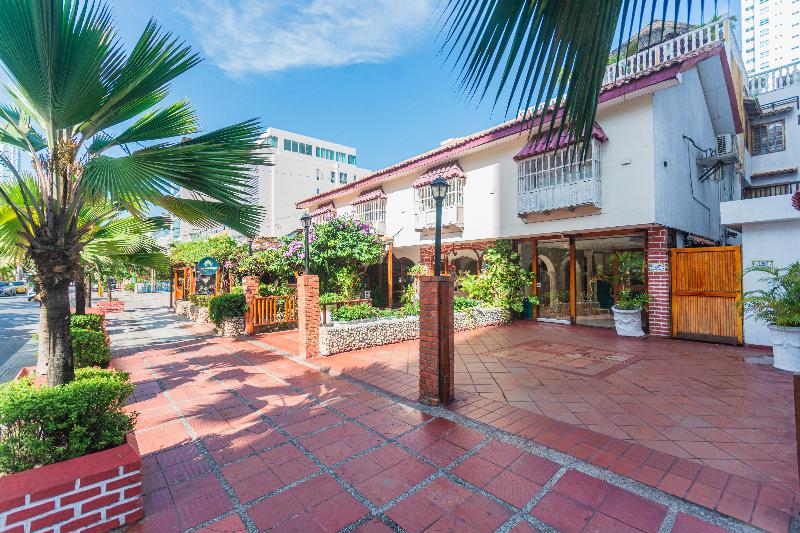
Baluarte Cartagena Hotel Boutique
Cartagena
Beach 200 m · 39 rooms · Pets allowed
See prices and rooms →

★★★★
Barlovento
Cartagena
52 rooms · Parking
See prices and rooms →

★★★★★
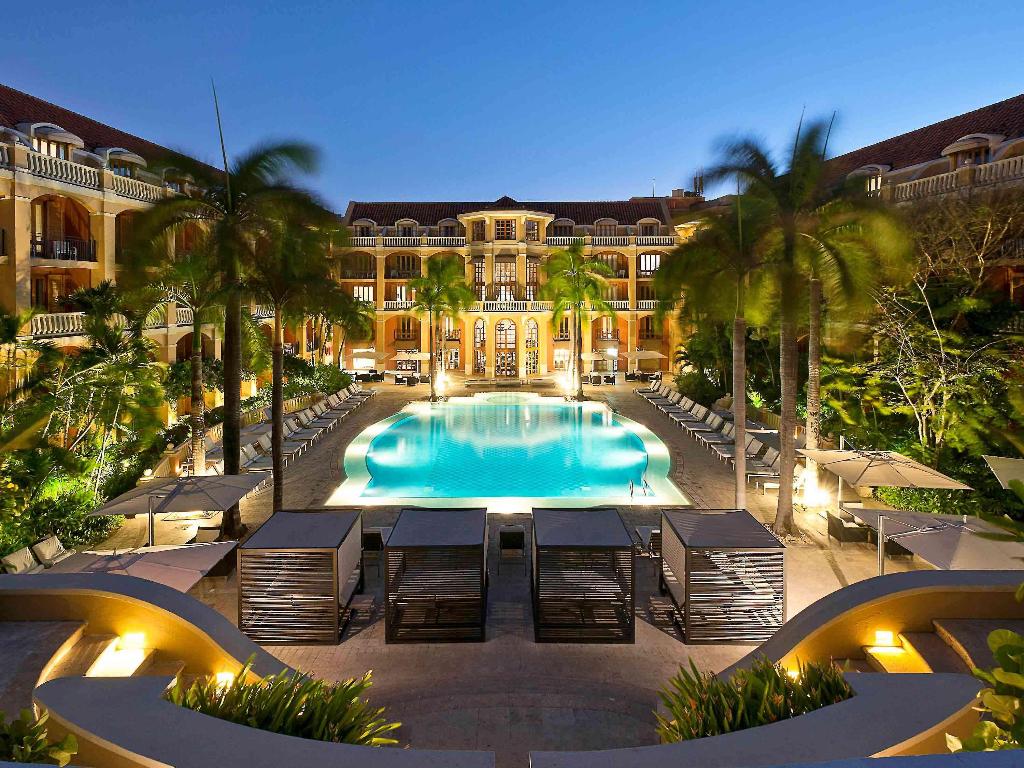
Sofitel Legend Santa Clara
Cartagena
Spa · Pool · Parking
See prices and rooms →
★★★★
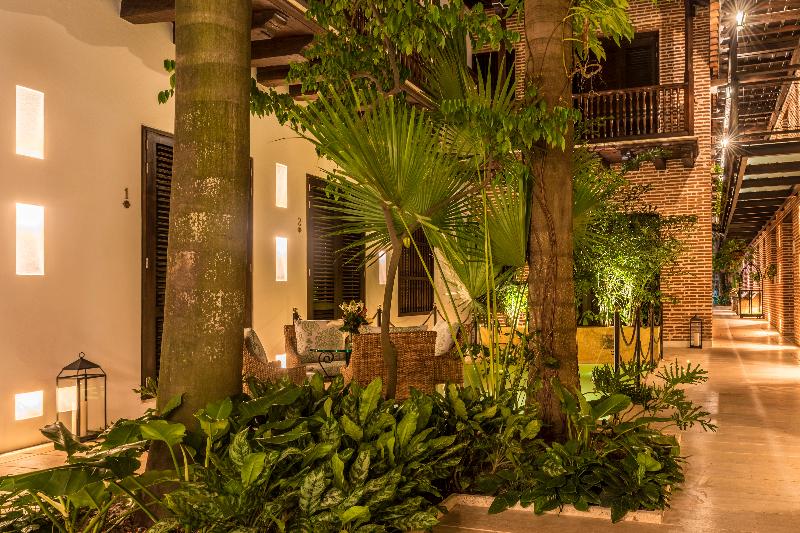
Capellan De Getsemani
Cartagena
Spa · Pool
See prices and rooms →

★★★★
Cartagena Plaza
Cartagena
Beach 50 m · All-inclusive option · Spa
See prices and rooms →
★★★★★
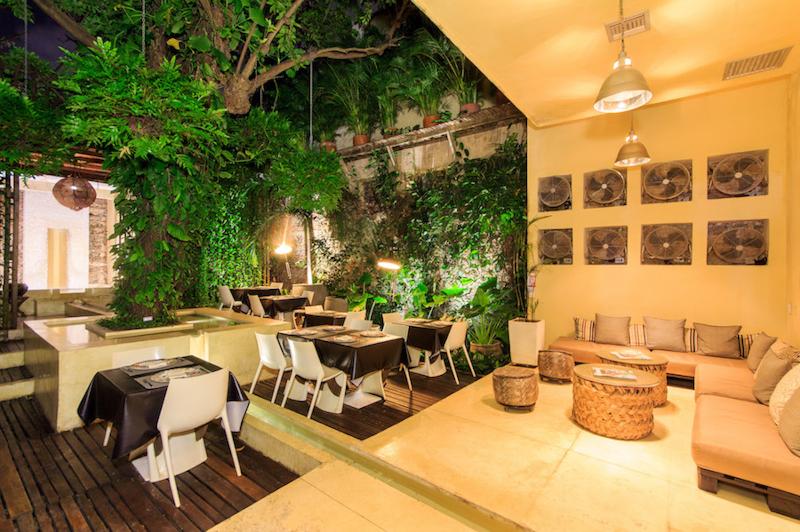
Hotel Casa Lola Deluxe Gallery
Cartagena
Beach 500 m · Spa · Pool
See prices and rooms →

★★★★
Casa La Fe
Cartagena de Indias
Beach 3 km · Adults only · Pool
See prices and rooms →
★★★★★
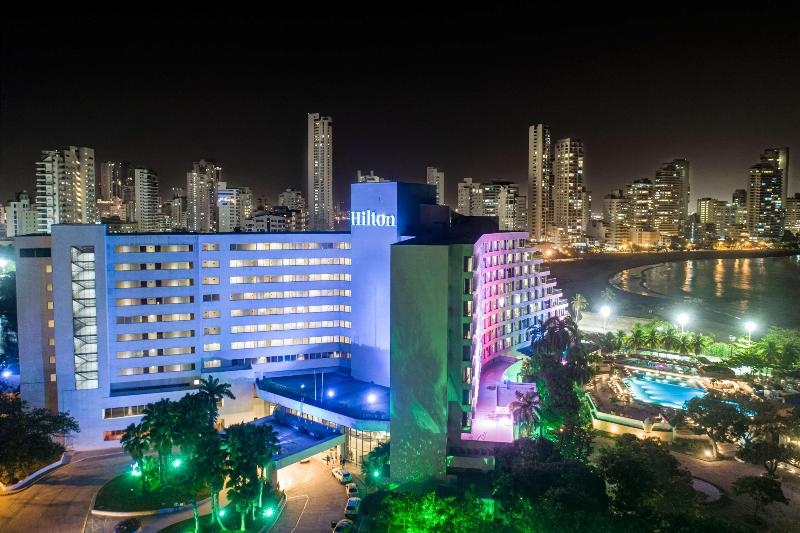
Hilton Cartagena
Cartagena
Beach 100 m · All-inclusive option · Spa
See prices and rooms →
Getting around
The walled city and Getsemaní are small and best explored on foot. Taxis are plentiful for trips to Bocagrande, the castle and La Popa; agree the fare before you set off. Boats for the Rosario Islands and Barú leave from the docks beside the old town.
When to go
Cartagena is hot and humid all year. The driest, breeziest months run roughly from December to April and are the most popular. The autumn months tend to be the wettest, with heavy but often short downpours.
Questions about visiting Cartagena
- What is Cartagena best known for?
- Its walled colonial old town, a UNESCO World Heritage Site of colourful houses and wooden balconies; the fortress of San Felipe de Barajas; and the Caribbean islands and beaches just offshore.
- How many days do you need in Cartagena?
- Three days works well: one for the walled city, one for the castle and Getsemaní, and one for a boat trip to the Rosario Islands or Barú.
- Is Cartagena worth visiting?
- Yes. It is one of the best-preserved colonial cities in the Americas, with lively streets, good food and easy access to Caribbean islands.
- Does Cartagena have good beaches?
- The city beaches at Bocagrande are fine for a swim but not the main draw. For white sand and clear water, take a boat to the Rosario Islands or go to Playa Blanca on Barú.
More guides
- Where to stay in Cartagena
- The best things to do in London
- The best things to do in Edinburgh
- The best things to do in Manchester
- The best things to do in York
- The best things to do in Amsterdam
- The best things to do in Birmingham
- The best things to do in Liverpool
- The best things to do in Bristol
- The best things to do in Barcelona
- The best things to do in Budapest
- The best things to do in Cambridge
- The best things to do in Dublin
- The best things to do in Krakow