
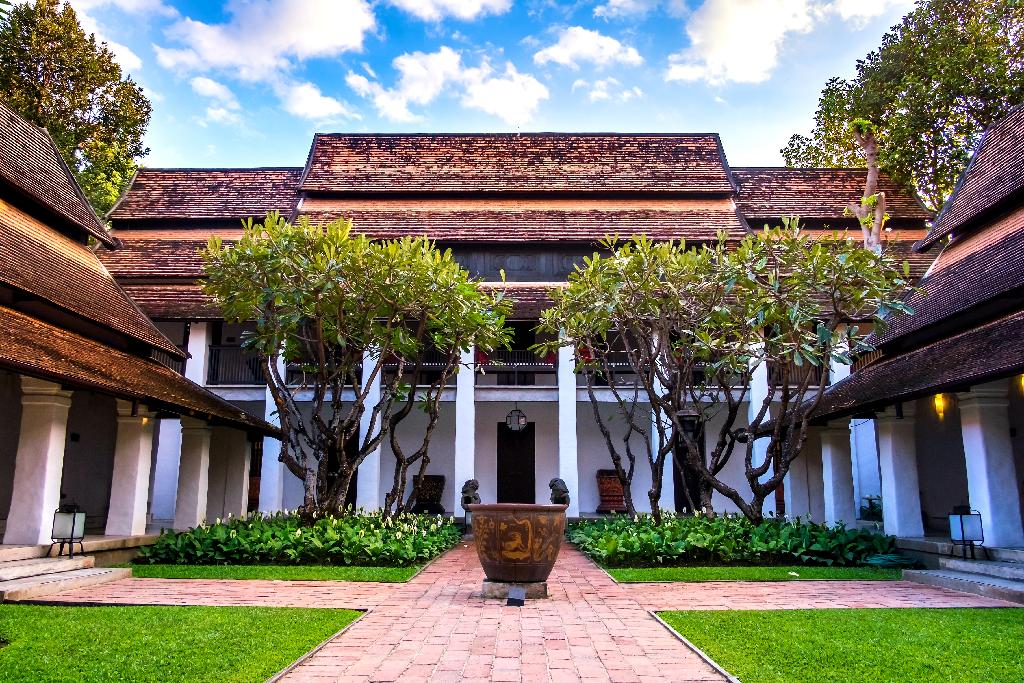
Chiang Mai is the Thailand people come to after Bangkok has worn them out. The old capital of the Lanna kingdom sits in a bowl of green mountains, its square Old City still wrapped in a moat and crumbling brick walls. Inside are dozens of gilded temples, monks in saffron robes, and lanes where the loudest sound is a wind chime.
It is a city for slowing down. Mornings are for temples, afternoons for coffee or a massage, evenings for markets and bowls of curry noodles. And when you want more, the mountains are right there: waterfalls, hill villages and the highest peak in the country.
Don't miss
Temples
There are hundreds. These are the ones to see first.
Wat Phra That Doi Suthep
Landmark

Photo: Vyacheslav Argenberg, CC BY 4.0 The temple that watches over the city from the mountain to the west. A staircase of more than 300 steps, flanked by long serpent balustrades, climbs to a terrace where a golden chedi blazes in the sun, ringed by bells, shrines and worshippers circling with lotus flowers.
From the edge of the terrace the whole of Chiang Mai is laid out below. Locals say you have not really visited the city until you have been up here.
Tip: Go early in the morning for clear views and cooler air, and dress to cover shoulders and knees.
Wat Chedi Luang
Landmark

Photo: Vyacheslav Argenberg, CC BY 4.0 In the middle of the Old City stands the ruin of a colossal brick chedi, once the tallest structure in the Lanna kingdom before an earthquake brought down its top centuries ago. What is left is still enormous, guarded by stone elephants and naga staircases, and wonderfully atmospheric towards dusk.
Wat Phra Singh
Landmark

Photo: Stefan Fussan, CC BY-SA 3.0 The most revered temple inside the walls, home to the Phra Singh Buddha image. Its small Lai Kham chapel is a jewel of classic Lanna architecture: low sweeping roofs, carved gables, gold-on-red lacquer and old murals of everyday northern life. Everything gleams.
Wat Umong
Landmark

Photo: Vano111ru, CC BY-SA 4.0 A forest temple at the foot of Doi Suthep, quite unlike the gilded ones in town. Old brick tunnels burrow into a mound beneath a weathered chedi, with Buddha images in the niches, and the wooded grounds have a pond and signs carrying Buddhist proverbs. Come here for quiet.
Markets and neighbourhoods
The Old City
Neighbourhood

Photo: Jakub Hałun, CC BY-SA 4.0 A neat square a mile or so across, bounded by a moat and the remains of the city walls, with Tha Phae Gate on the eastern side as the main way in. Inside, temples sit between guesthouses, cafés and massage shops on quiet lanes. It is flat, compact and best explored on foot or by bicycle.
Sunday Walking Street
Market

Photo: Takeaway, CC BY-SA 3.0 Every Sunday evening, Ratchadamnoen Road through the heart of the Old City closes to traffic and fills with stalls from Tha Phae Gate onwards. This is the best market in the north for handmade things: textiles, silver, wood carving, paper lanterns. Temple courtyards along the way turn into open-air food courts.
Tip: Arrive as it opens in the late afternoon. By mid-evening it is shoulder to shoulder.
Night Bazaar
Market

Photo: Christophe95, CC BY-SA 4.0 The nightly market on Chang Klan Road, east of the Old City, has been a fixture for decades. Stalls line the pavements and fill covered arcades with clothes, bags, carvings and souvenirs, and there are food courts with live music. It is more commercial than the Sunday market, but it is on every night.
Warorot Market
Market

Photo: Christophe95, CC BY-SA 4.0 Where Chiang Mai does its own shopping. This multi-storey market near the river is the place for northern specialities: spicy sai ua sausage, crisp pork crackling, chilli dips, dried fruit and tea. The flower market spills along the road outside, fragrant with jasmine and marigolds.
Nimmanhaemin
Neighbourhood
Nimman, as everyone calls it, is the modern face of the city: a grid of small lanes west of the Old City packed with speciality coffee shops, design boutiques, galleries, restaurants and bars. It draws students, creatives and remote workers, and it is the liveliest area after dark.
Eat and do
Khao soi
Food

Photo: Takeaway, CC BY-SA 3.0 The dish of northern Thailand: soft egg noodles in a rich, mildly spicy coconut curry broth, usually with a chicken leg or beef, topped with a nest of crispy fried noodles. It comes with pickled mustard greens, shallots and lime to stir in. Eat it for lunch, as locals do.
Thai cooking classes
Activity
Chiang Mai is the cooking-school capital of Thailand. A typical class starts with a tour of a local market, then moves to a kitchen, often on an organic farm outside town, where you pound curry paste and cook several dishes to eat together. It suits families and solo travellers alike.
Thai massage
Activity
Traditional Thai massage is practised everywhere here, from temple grounds to smart spas. It is done clothed, on a mat, with stretching and firm pressure rather than oil. After a morning of temple steps it feels like exactly the right idea.
Day trips
Doi Inthanon
Day trip

Photo: Vyacheslav Argenberg, CC BY 4.0 Thailand's highest mountain lies south-west of the city in a national park of cloud forest, waterfalls and hill-tribe villages. Near the top stand two modern pagodas built in honour of the late king and queen, surrounded by flower gardens. The summit is noticeably cold by Thai standards.
Tip: Bring a jumper, especially in the cool season.
Chiang Rai and the White Temple
Day trip

Photo: Ddalbiez, CC BY-SA 3.0 A long day north, but a memorable one. Wat Rong Khun, the White Temple, is a contemporary artist's vision of a Buddhist temple: dazzling white, studded with mirrors, and reached by a bridge over a sea of sculpted hands. Most tours pair it with other sights around Chiang Rai.
Bua Tong Sticky Waterfalls
Nature
North of the city, spring water rich in minerals has coated a series of cascades in pale, grippy limestone. The result is a waterfall you can walk straight up, barefoot, against the flow. It is set in forest, it is great fun, and children love it.
Where to stay in Chiang Mai
Not sure which area suits you? Read our guide: Where to stay in Chiang Mai →

★★★★
Aruntara Riverside Boutique Hotel
Chiang Mai
Spa · Pool · 28 rooms
From £90 a night, taxes incl.2 adults · checked 14 Nov, 17:07

★★★★
At Chiang Mai
Chiang Mai
Pool · 37 rooms · Parking
From £80 a night, taxes incl.2 adults · checked 14 Nov, 17:07

★★★★★
Rachamankha Hotel Chiang Mai (Adult Only)
Chiang Mai
Adults only · Pool · Parking
See prices and rooms →

★★★★
At Niman Conceptual Home
Chiang Mai
Pool · 10 rooms
From £137 a night, taxes incl.2 adults · checked 14 Nov, 17:07
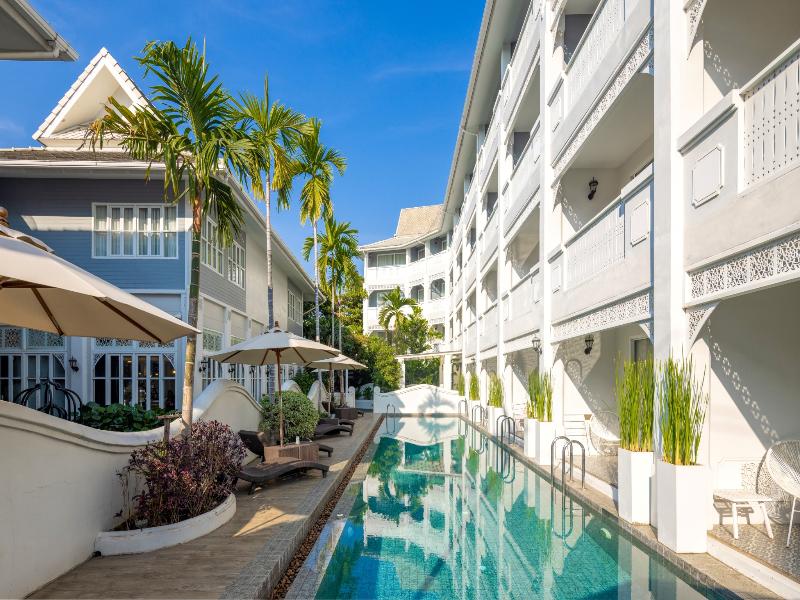
★★★★
Away Chiang Mai Thapae Resort – A Vegan Retreat
Chiang Mai
Spa · Pool · 67 rooms
From £119 a night, taxes incl.2 adults · checked 14 Nov, 17:07

★★★★★
Chiang Mai Marriott Hotel
Chiang Mai
Spa · Pool · Parking
From £199 a night, taxes incl.2 adults · checked 14 Nov, 17:07

★★★★
Baan Chai Thung Resort by ZUZU
Chiang Mai
Pool · 11 rooms · Parking
From £37 a night, taxes incl.2 adults · checked 14 Nov, 17:07

★★★★★
137 Pillars House Chiang Mai
Chiang Mai
Spa · Pool · 30 rooms
From £723 a night, taxes incl.2 adults · checked 14 Nov, 17:07
Getting around
The Old City is walkable. For longer hops, flag down a songthaew, one of the red shared pick-up trucks that act as the city's buses, or use a ride-hailing app. Day trips to the mountains are easiest with a driver or a tour.
When to go
The cool, dry season from about November to February is the most pleasant, and brings the Yi Peng and Loy Krathong lantern festivals in November. March and April are hot and often hazy with smoke from agricultural burning. The rainy season is green and quieter.
Questions about visiting Chiang Mai
- What is Chiang Mai best known for?
- Its temples, especially Wat Phra That Doi Suthep on the mountain above the city, the moated Old City, night markets, northern Thai food such as khao soi, and the surrounding mountains.
- How many days do you need in Chiang Mai?
- Three days is a good minimum: one for the Old City temples, one for Doi Suthep and the markets, and one for a day trip such as Doi Inthanon. Many people stay longer.
- Is Chiang Mai worth visiting?
- Yes. It is calmer and cooler than Bangkok, rich in culture and good food, and a base for exploring the mountains of northern Thailand.
- Do you need a car in Chiang Mai?
- No. The centre is easy on foot and by songthaew or ride-hailing app, and tours or private drivers cover the day trips.
More guides
- Where to stay in Chiang Mai
- The best things to do in London
- The best things to do in Edinburgh
- The best things to do in Manchester
- The best things to do in York
- The best things to do in Amsterdam
- The best things to do in Birmingham
- The best things to do in Liverpool
- The best things to do in Bristol
- The best things to do in Barcelona
- The best things to do in Budapest
- The best things to do in Cambridge
- The best things to do in Dublin
- The best things to do in Krakow