
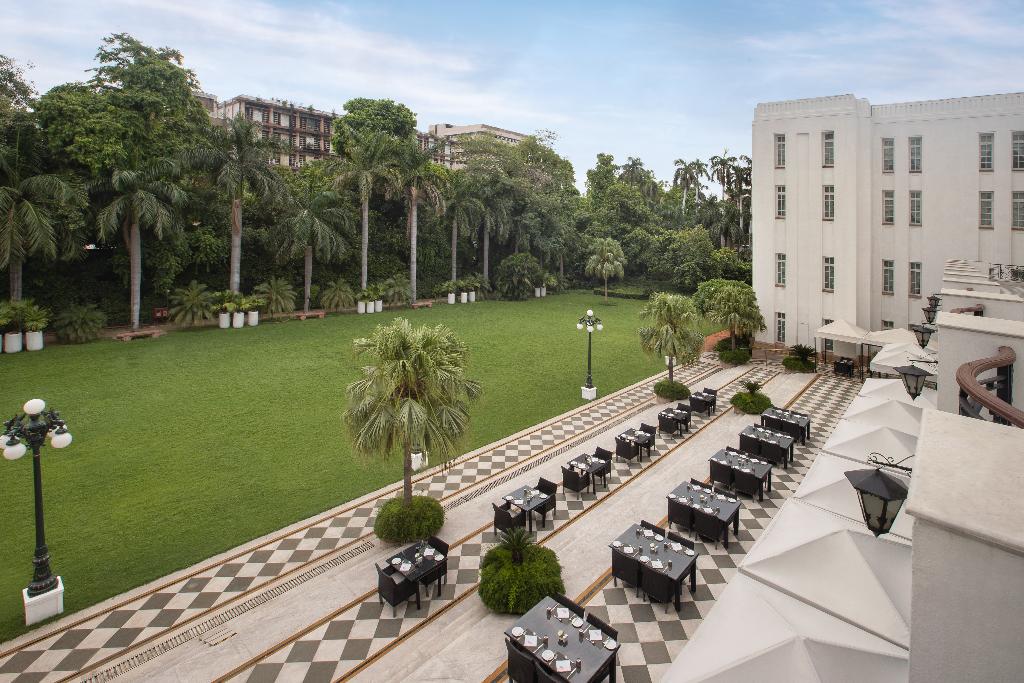
Delhi is not one city but seven or eight, piled on top of each other. Sultans, Mughal emperors and British viceroys each built a capital here, and each left it standing when the next lot arrived. The result is a place where a 12th-century victory tower, a marble Mughal tomb and a 1930s imperial avenue can all be ticked off before lunch, with a plate of chaat in between.
It is also noisy, crowded and occasionally overwhelming, which is part of the deal. Take it in two halves. Old Delhi is the walled Mughal city, all bazaars, rickshaws and spice dust. New Delhi is the leafy, spacious capital the British laid out to the south. A good metro joins the two and makes the heat and the traffic much easier to bear.
Don't miss
Old Delhi
The Mughal emperor Shah Jahan's walled city, still going at full volume.
Red Fort
Landmark

Photo: Jakub Hałun, CC BY-SA 4.0 The great red sandstone citadel from which the Mughal emperors ruled for two centuries, and from whose ramparts India's prime minister addresses the nation every Independence Day. Behind the towering Lahori Gate lie a covered bazaar, audience halls, marble pavilions and what remains of the palace gardens. It is a UNESCO World Heritage Site.
Tip: Go early in the morning, then walk straight out into Chandni Chowk.
Jama Masjid
Landmark

Photo: Jakub Hałun, CC BY-SA 4.0 India's best-known mosque rises on a mound a short walk from the Red Fort, built by Shah Jahan in red sandstone and white marble. Broad flights of steps lead up to a courtyard that can hold some 25,000 worshippers. Climb one of the minarets, if it is open, for a dizzying view over the rooftops of the old city.
Tip: Dress modestly and expect to leave your shoes at the gate. Visitors are not admitted during prayers.
Chandni Chowk
Market

Photo: Bahnfrend, CC BY-SA 3.0 The main street of Old Delhi and the tangle of lanes around it form one of the busiest markets in India. Each alley has its trade: wedding finery in Kinari Bazaar, silver in Dariba Kalan, and at Khari Baoli the largest spice market in Asia, where sacks of chillies make everyone sneeze. A cycle rickshaw is the classic way to see it.
Old Delhi street food
Food
Delhi takes snacking seriously, and the old city is its headquarters. Try stuffed, fried parathas in the lane named after them, Paranthe Wali Gali; chaat, a sweet, sour and spicy jumble of potato, chickpeas, yoghurt and chutney; syrupy jalebis hot from the pan; and, around Jama Masjid, kebabs and slow-cooked Mughlai curries.
Tip: A guided food walk is a good way in for a first visit. Stick to busy stalls where food is cooked fresh.
Raj Ghat
Landmark
A simple black marble platform in a quiet garden beside the Yamuna marks the spot where Mahatma Gandhi was cremated in 1948. An eternal flame burns at one end. It is a peaceful, dignified place, visited by a steady stream of Indian families, and a calm pause after the bazaars.
Tombs and towers
Humayun's Tomb
Landmark

Photo: Jakub Hałun, CC BY-SA 4.0 Built in the 1560s for the second Mughal emperor, this is the building that made the Taj Mahal possible: a perfectly symmetrical tomb of red sandstone and white marble under a great dome, set at the centre of a formal garden divided by water channels. It is a UNESCO World Heritage Site and, in the soft light of late afternoon, the most beautiful sight in Delhi.
Tip: Leave time for the restored Sunder Nursery gardens next door.
Qutub Minar
Landmark

Photo: Syed Sajidul Islam, CC BY-SA 4.0 A fluted tower of red sandstone and marble, 73 metres high, begun at the end of the 12th century to mark the arrival of Muslim rule in northern India. Bands of carved calligraphy wrap around it. At its foot are the ruins of an early mosque and a famous iron pillar that has stood for some 1,600 years without rusting. Another UNESCO site, in the south of the city.
Lodhi Garden
Nature
New Delhi's favourite park is scattered with the domed tombs of 15th-century sultans, which sit among lawns, old trees and flowerbeds as casually as garden follies. Joggers, picnicking families and courting couples share the paths. It is free, green and a welcome breather between sights, close to Khan Market's cafés and bookshops.
New Delhi
The grand imperial capital designed by Edwin Lutyens and Herbert Baker.
India Gate and Kartavya Path
Landmark

Photo: Nikhilb239, CC BY-SA 4.0 A broad ceremonial avenue, formerly called Rajpath, runs for two miles between lawns and canals from the war-memorial arch of India Gate to the domed presidential palace, Rashtrapati Bhavan. This is the stage for the Republic Day parade each January. In the evening the arch is floodlit and families come out for ice cream.
Gurudwara Bangla Sahib
Landmark

Photo: Slyronit, CC BY-SA 4.0 Delhi's principal Sikh temple, near Connaught Place, is a white marble building topped with golden domes, beside a large pool whose water is considered holy. Hymns are sung throughout the day. Everyone is welcome, and the community kitchen serves a simple free meal to thousands of people of all faiths, cooked and served by volunteers.
Tip: Cover your head and remove your shoes; scarves are provided at the entrance.
Connaught Place
Neighbourhood

Photo: Marcin Białek, CC BY-SA 4.0 The commercial heart of New Delhi is a set of white colonnaded Georgian-style crescents arranged in rings around a central park. Under the arcades are shops, restaurants, bars and old-fashioned coffee houses. Nearby Janpath has a lively street market, and Jantar Mantar, an 18th-century observatory of giant masonry instruments, is a few minutes' walk away.
National Museum
Museum
The country's leading museum, just off Kartavya Path, covers five thousand years of Indian history. The highlights are the finds from the Indus Valley civilisation, including the tiny bronze Dancing Girl, along with fine galleries of sculpture, miniature paintings and decorative arts. A cool, quiet way to spend a hot afternoon.
Modern temples and markets
Lotus Temple
Landmark

Photo: Gannu03, CC BY-SA 4.0 A Bahá'í house of worship in south Delhi, completed in 1986 and shaped like a half-open lotus flower, its 27 white marble petals rising from a ring of pools. Inside there is no altar and no images, only a vast, silent hall open to people of every religion. It is one of the most visited buildings in the world.
Akshardham
Landmark

Photo: Immanuelle, CC BY 4.0 An enormous Hindu temple complex on the east bank of the Yamuna, opened in 2005 and built in the traditional manner from pink sandstone and white marble. Almost every surface is carved, with elephants, dancers and deities by the thousand. Gardens, exhibitions and an evening fountain show surround the main shrine.
Tip: Phones and cameras are not allowed inside, so leave them at the hotel or use the cloakroom.
Hauz Khas Village
Neighbourhood

Photo: Varun Shiv Kapur from New Delhi, India, CC BY 2.0 In the south of the city, a 14th-century reservoir and the ruins of an Islamic college and royal tombs overlook a lake and a deer park. Beside them, a former village has turned into a compact quarter of boutiques, galleries, rooftop cafés and bars. It is a good spot for sunset and an evening out.
Dilli Haat
Market
An open-air crafts bazaar opposite the INA market, where artisans from every part of India take stalls in rotation to sell textiles, jewellery, pottery, paintings and woodwork. It is calmer and more manageable than the old city markets, and food stalls from different states make it an easy way to eat your way around the country.
Day trips
Agra and the Taj Mahal
Day trip

Photo: Yann; edited by King of Hearts, CC BY-SA 4.0 The world's most famous monument to love is about 200 kilometres south of Delhi and can be seen in a day, by fast train or by car on the expressway. Arrive as early as you can for the soft morning light on the marble. Agra Fort, the red sandstone palace-fortress where Shah Jahan ended his days gazing at the Taj, deserves a visit too.
Tip: The Taj Mahal is closed on Fridays.
Where to stay in Delhi
Not sure which area suits you? Read our guide: Where to stay in Delhi →

★★★★
Aloft New Delhi Aerocity
New Delhi
Spa · Pool · Parking
See prices and rooms →

★★★★
Ashok Country Resort
New Delhi
Spa · Pool · Family-friendly
See prices and rooms →

★★★★★
The Imperial, New Delhi
Delhi
Spa · Pool · Parking
See prices and rooms →

★★★★
Centaur Hotel IGI Airport
Delhi
Pool · Parking
See prices and rooms →

★★★★
Clarens Hotel
Gurugram
Spa · 32 rooms · Parking
See prices and rooms →

★★★★★
Taj Mahal Hotel Delhi
New Delhi
Spa · Pool · Golf
See prices and rooms →

★★★★
Country Inn & Suites by Radisson, Gurugram 12
Gurgaon
Adults only · Spa · Pool
See prices and rooms →

★★★★★
Welcomheritage Haveli Dharampura
Nueva Delhi y Ncr
Spa · 13 rooms
See prices and rooms →
Getting around
The Delhi Metro is clean, air-conditioned and reaches most of the major sights, including Chandni Chowk, Qutub Minar and the airport by a fast express line. For shorter hops, use ride-hailing apps or auto-rickshaws; agree the fare first if there is no meter. Traffic is heavy, so plan each day around one part of the city.
When to go
October to March is the time to visit, with warm days and cool nights; December and January can be chilly and foggy, and air quality is often poor in early winter. April to June is fiercely hot. The monsoon brings humidity and downpours from July to September.
Questions about visiting Delhi
- What is Delhi best known for?
- Its Mughal and colonial monuments, above all the Red Fort, Jama Masjid, Humayun's Tomb, Qutub Minar and India Gate, along with the bazaars and street food of Old Delhi. It is the capital of India.
- How many days do you need in Delhi?
- Two to three days: one for Old Delhi, one for New Delhi and the southern monuments, and a third for museums, markets or a day trip to Agra.
- Can you visit the Taj Mahal from Delhi in a day?
- Yes. Agra is a few hours away by fast train or by road, and many visitors go there and back in a day. Avoid Fridays, when the Taj Mahal is closed.
- What is there to do in Delhi with kids?
- Take a cycle rickshaw through Chandni Chowk, run around Lodhi Garden, see the giant instruments at Jantar Mantar and watch the evening fountain show at Akshardham.
- Is Delhi worth visiting?
- Yes. It can be intense, but few cities have such a concentration of great monuments, and the food alone justifies a stop on the way to Agra and Rajasthan.
More guides
- Where to stay in Delhi
- The best things to do in London
- The best things to do in Edinburgh
- The best things to do in Manchester
- The best things to do in York
- The best things to do in Amsterdam
- The best things to do in Birmingham
- The best things to do in Liverpool
- The best things to do in Bristol
- The best things to do in Barcelona
- The best things to do in Budapest
- The best things to do in Cambridge
- The best things to do in Dublin
- The best things to do in Krakow