

Florence is where the Renaissance happened, and it still feels like it. Brunelleschi's dome floats over a skyline of terracotta roofs, Michelangelo's David stands a few streets away from Botticelli's Venus, and there are frescoes by the greatest artists of the age in ordinary parish churches. For a city of its size, the concentration of genius is almost absurd.
It is compact and walkable, which also means busy. Book the big museums ahead, get up early, and save the evenings for the Oltrarno's wine bars, a T-bone steak the size of a dinner plate and the sunset view from Piazzale Michelangelo. With Siena, Pisa and the Chianti hills within easy reach, it makes a perfect base for Tuscany too.
Don't miss
The big sights
The historic centre is a UNESCO World Heritage Site, and these are its headline acts.
The Duomo
Landmark

Photo: GiovanniPen, CC BY-SA 4.0 Florence's cathedral, Santa Maria del Fiore, is clad in green, white and pink marble and crowned by Brunelleschi's colossal red-brick dome, an engineering marvel that nobody quite knew how to build when the church was designed. Climb up between its inner and outer shells for a close look at the frescoed Last Judgement and a breathtaking view from the lantern.
Alongside stand Giotto's elegant bell tower, which you can also climb, and the octagonal Baptistery with Ghiberti's gilded bronze doors, whose originals are kept in the cathedral museum.
Tip: Entry to the cathedral itself is free, but the dome climb needs a timed reservation that sells out days ahead in season.
Uffizi Gallery
Museum

Photo: Stefano Travasci, CC BY 4.0 The Medici's art collection grew into one of the world's great galleries. Walk its long corridors and you meet Botticelli's Birth of Venus and Primavera, Leonardo's Annunciation, Michelangelo's Doni Tondo, Titian's Venus of Urbino and Caravaggio's Medusa, along with room after room of Renaissance masterpieces.
Tip: Book a timed ticket in advance and go first thing or late in the day. The rooftop café has a fine view of Palazzo Vecchio.
Galleria dell'Accademia
Museum

Photo: Dimitris Kamaras from Athens, Greece, CC BY 2.0 People queue round the block for one reason: Michelangelo's David, moved here from Piazza della Signoria in the 19th century to protect it from the weather. It is far bigger and more powerful than any photo suggests. On the way, look out for his unfinished Prisoners, figures that seem to be struggling to escape from the marble.
Tip: Book ahead. The gallery is compact, so an hour is usually enough.
Ponte Vecchio
Landmark

Photo: Jebulon, CC0 The only bridge in Florence to survive the Second World War, the medieval Ponte Vecchio is lined with little shops hanging over the Arno, goldsmiths and jewellers since the Medici threw out the butchers in the 16th century. Above them runs the Vasari Corridor, the covered passageway that let the Medici walk from Palazzo Vecchio to the Pitti Palace without mixing with the public.
Tip: For the best photo of the bridge, walk along to the Ponte Santa Trinita at sunset.
Piazza della Signoria
Landmark

Photo: Txllxt TxllxT, CC BY-SA 4.0 Florence's political heart is an open-air sculpture gallery, dominated by the fortress-like Palazzo Vecchio, still the town hall, with its slender tower. A copy of David stands at the door, the Loggia dei Lanzi shelters Cellini's bronze Perseus holding up Medusa's head, and Ammannati's Neptune fountain splashes in the corner.
More art and palaces
Pitti Palace and the Boboli Gardens
Museum

Photo: Yanko Malinov, CC BY-SA 4.0 Across the river, the Medici's vast rusticated palace holds a series of museums, including a picture gallery hung floor to ceiling with Raphael and Titian. Behind it, the Boboli Gardens climb the hillside in terraces of fountains, grottoes, statues and cypress avenues, with views back over the city.
Basilica of Santa Croce
Landmark

Photo: Rhododendrites, CC BY-SA 4.0 Florence's great Franciscan church is a pantheon of Italian genius, holding the tombs of Michelangelo, Galileo and Machiavelli and a memorial to Dante. Its chapels are painted with frescoes by Giotto, and the leather school in the cloisters is still going.
Bargello
Museum
Once a prison and police headquarters, this grim medieval palace now houses Italy's finest collection of Renaissance sculpture, including Donatello's bronze David and early works by Michelangelo. It is far less crowded than the Uffizi or the Accademia, and wonderful for it.
Medici Chapels
Museum
Behind the church of San Lorenzo, the Medici built themselves a mausoleum of coloured marble and semi-precious stone. Next to it, Michelangelo's New Sacristy contains his tombs for two of the family, watched over by the reclining figures of Dawn and Dusk, Night and Day.
Views and neighbourhoods
Piazzale Michelangelo
Landmark

Photo: PROPOLI87, CC BY-SA 4.0 This big terrace on the hillside south of the Arno has the classic view of Florence: the dome, Giotto's tower, Palazzo Vecchio and the bridges laid out below. Come at sunset, when the whole city turns gold.
Climb a little further to San Miniato al Monte, a beautiful Romanesque church with an even quieter view.
Tip: Walk up through the Oltrarno via the stepped path from San Niccolò, or take the bus if it's hot.
Oltrarno
Neighbourhood
'Beyond the Arno' is Florence's artisan quarter, a web of streets where furniture restorers, framers, shoemakers and goldsmiths still work in tiny workshops. In the evening, Piazza Santo Spirito, in front of Brunelleschi's church, fills with locals for aperitivo, and the wine bars and trattorias around it are some of the best in the city.
Eat and drink
Tuscan food is simple, seasonal and built around very good ingredients.
Mercato Centrale
Market
Florence's 19th-century iron-and-glass market hall, by San Lorenzo, is crammed with butchers, cheesemongers and stalls of fresh pasta, truffles and olive oil on the ground floor. Upstairs is a busy modern food hall for a quick, good lunch.
Bistecca alla fiorentina
Food

Photo: Microsoikos at Italian Wikipedia, Public domain Florence's famous T-bone steak is cut thick, grilled over coals, seasoned with salt, pepper and olive oil and served very rare. It is sold by weight, usually to share, and a proper trattoria will bring it raw to the table for approval before it goes on the grill.
Tip: Don't ask for it well done: the kitchen probably won't oblige.
Lampredotto
Food

Photo: Lucarelli, CC BY-SA 3.0 Florence's street food classic, sold from carts around the city: slow-cooked tripe from the cow's fourth stomach, sliced into a crusty roll and dipped in its broth, with green sauce and chilli oil. It is tender, rich and much loved by Florentines. Be brave.
Day trips
Trains and buses put the best of Tuscany within easy reach.
Siena
Day trip

Photo: Massimo Catarinella, CC BY-SA 3.0 Florence's old rival is a perfectly preserved Gothic city of steep lanes and red-brick palaces. Its centre is the scallop-shaped Piazza del Campo, overlooked by the soaring Torre del Mangia, and its striped marble cathedral is one of the most spectacular in Italy.
Pisa
Day trip

Photo: Dimitris Kamaras from Athens, Greece, CC BY 2.0 Yes, the Leaning Tower really does lean, and it is even more surprising in person. It stands on the lawns of the Piazza dei Miracoli alongside the gleaming marble cathedral and baptistery. Pisa is an easy train ride from Florence, and often combined with Lucca.
Tip: Climbing the tower needs a timed ticket, so book ahead.
Chianti
Day trip
The rolling hills between Florence and Siena are the Tuscany of the imagination: vineyards, olive groves, cypress-lined lanes, stone farmhouses and hilltop villages such as Greve, Castellina and Radda. Visit a winery to taste Chianti Classico where it is made.
Tip: A car or a guided tour is the best way to explore. If you drive, choose a designated driver.
Fiesole
Day trip
A local bus climbs from the city centre up to this little hilltop town, which was here before Florence was. It has a Roman theatre, cool breezes on summer evenings and a sweeping view down over the city.
Where to stay in Florence
Not sure which area suits you? Read our guide: Where to stay in Florence →
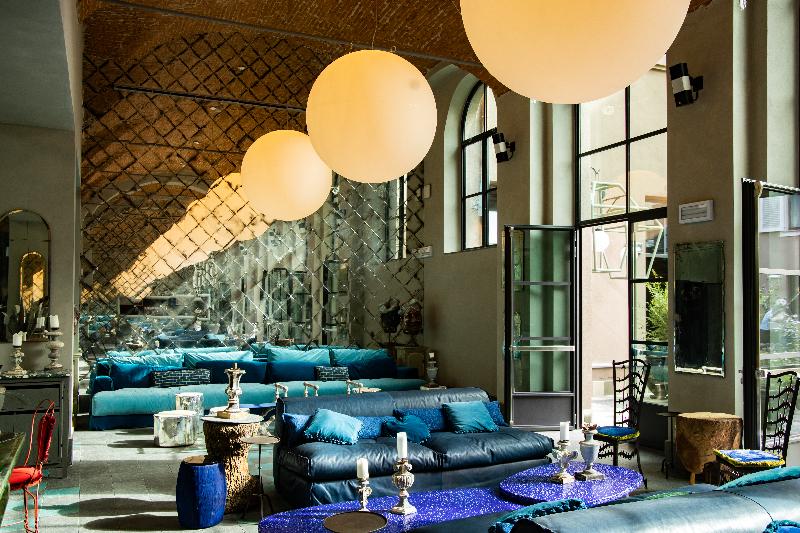
★★★★
25hours Hotel Piazza San Paolino
Florence
Pets allowed · Parking
From £407 a night, taxes incl.2 adults · checked 1 Oct, 19:23
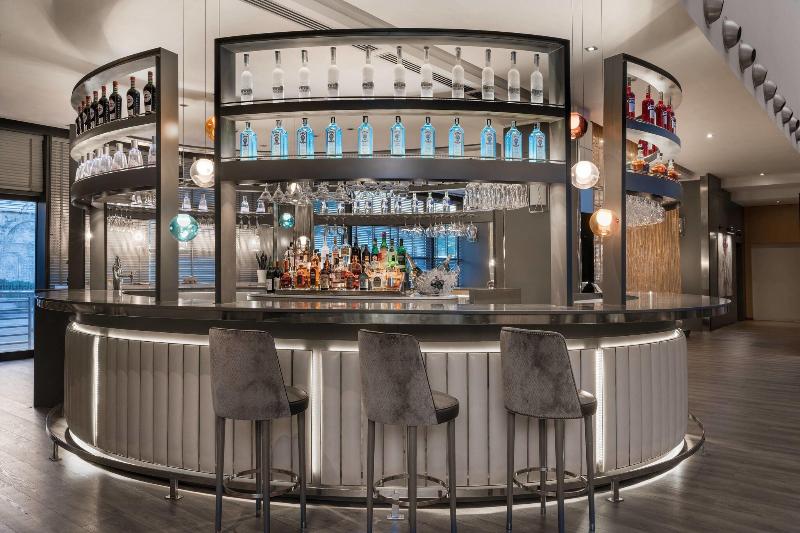
★★★★
AC Firenze
Florenz
Parking
See prices and rooms →

★★★★★
Floren Luxury Hotel
Florencia
33 rooms · Parking
See prices and rooms →
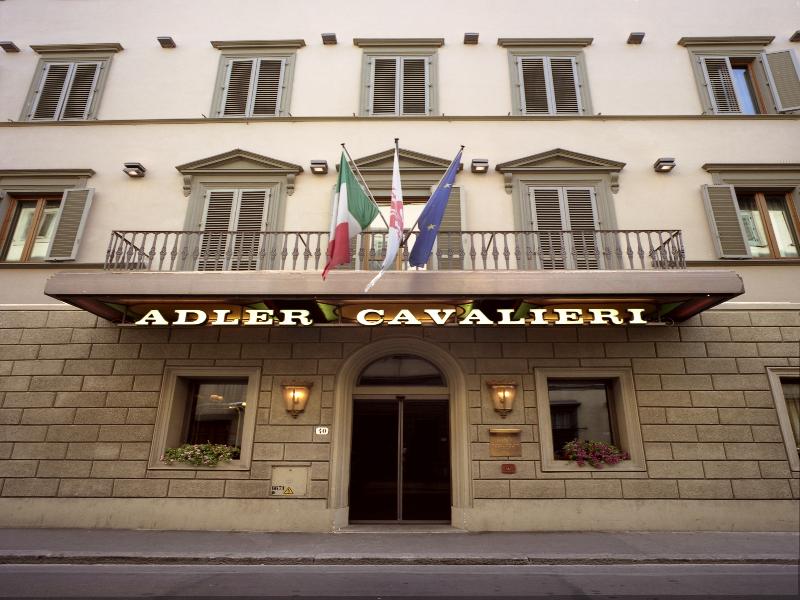
★★★★
Adler Cavalieri Hotel-Private Spa & Gym
Florenz
Pets allowed · Parking
From £317 a night, taxes incl.2 adults · checked 1 Oct, 19:23
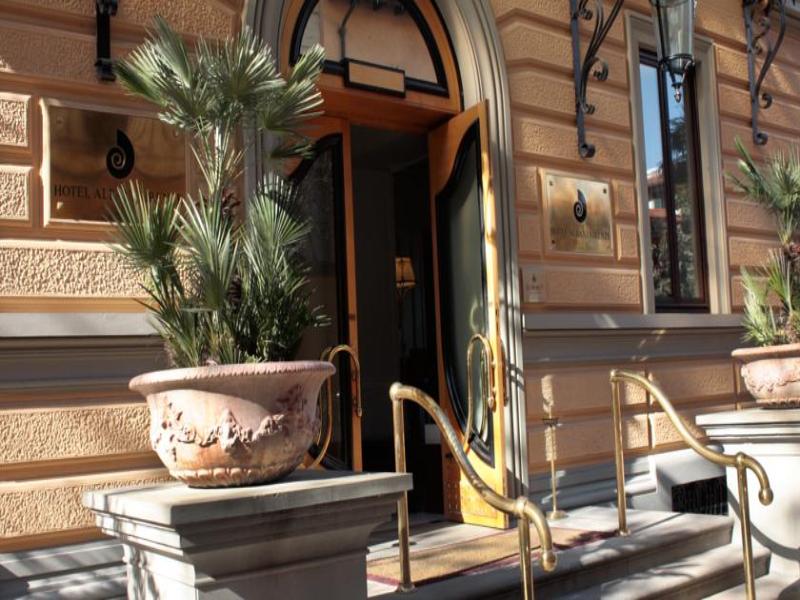
★★★★
Albani Firenze
Firenze
Pets allowed · Parking
See prices and rooms →
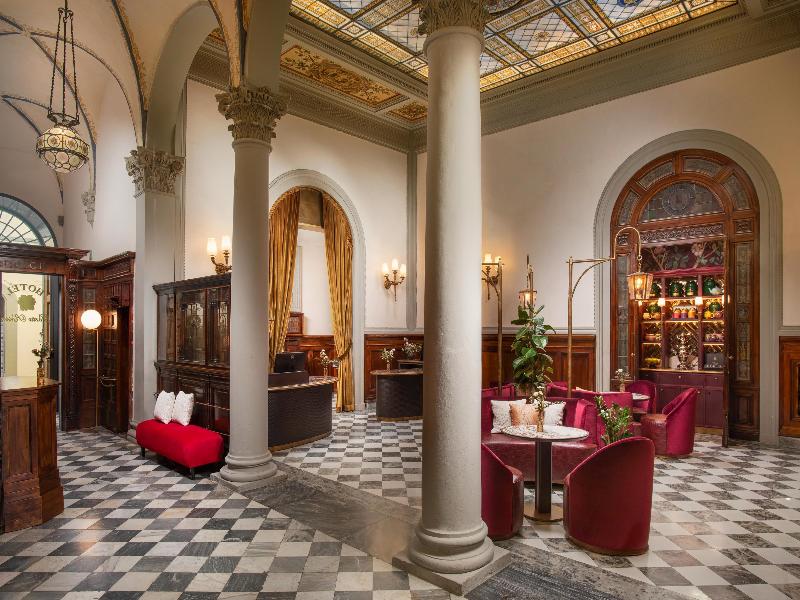
★★★★★
Porta Rossa Hotel Firenze Colbert Collection
Florence
70 rooms · Parking
From £690 a night, taxes incl.2 adults · checked 1 Oct, 19:23
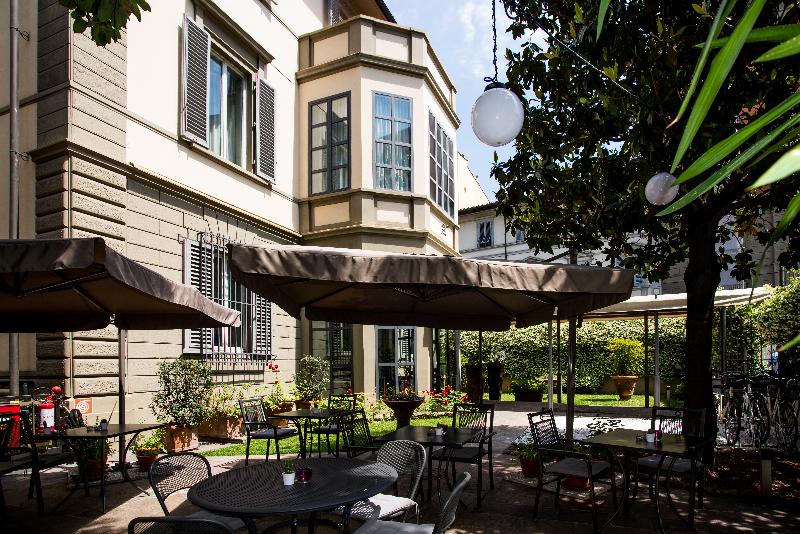
★★★★
ALLEGROITALIA San Gallo Firenze
Florence
56 rooms · Parking
See prices and rooms →
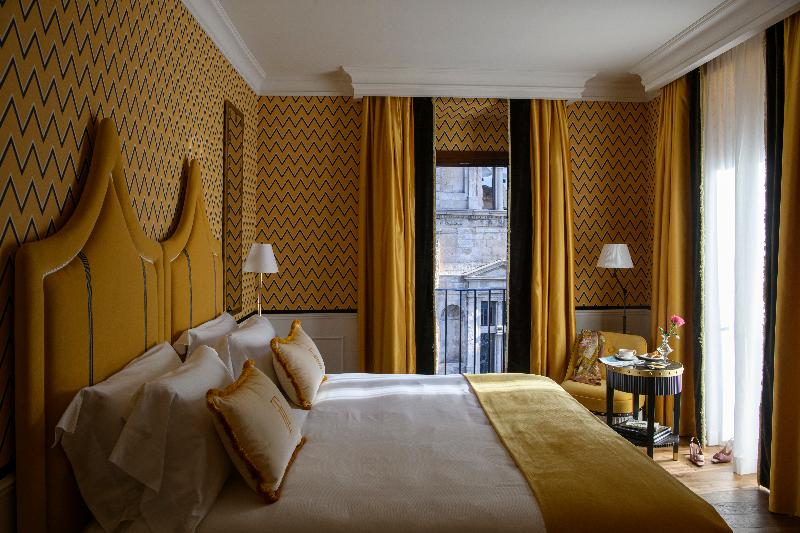
★★★★★
Il Tornabuoni The Unbound Collection by Hyatt
Florenz
62 rooms · Parking
From £784 a night, taxes incl.2 adults · checked 1 Oct, 19:23
Getting around
The historic centre is small and best seen on foot; most of it is closed to ordinary traffic. A tram links the main station and the airport. For day trips, trains run from Santa Maria Novella to Pisa and Siena, and buses also serve Siena and the Chianti villages.
When to go
Spring and autumn are the best times, with pleasant weather for walking. July and August are hot and crowded. Winter is quieter and cooler, and a good time for the museums.
Questions about visiting Florence
- What is Florence best known for?
- Renaissance art and architecture: Brunelleschi's dome, the Uffizi Gallery, Michelangelo's David and the Ponte Vecchio, plus Tuscan food and wine.
- How many days do you need in Florence?
- Three days covers the main museums and sights at a comfortable pace. Add a day or two for Siena, Pisa or the Chianti hills.
- Do you need to book the Uffizi and the Accademia in advance?
- It is strongly recommended. Queues for walk-up tickets can be very long, especially in spring and summer.
- Is Florence a good base for exploring Tuscany?
- Yes. Trains and buses link it to Pisa, Siena and Lucca, and the Chianti wine country starts just south of the city.
More guides
- Where to stay in Florence
- Where to stay in Tuscany
- The best things to do in London
- The best things to do in Edinburgh
- The best things to do in Amsterdam
- The best things to do in Barcelona
- The best things to do in Budapest
- The best things to do in Dublin
- The best things to do in Krakow
- The best things to do in Prague
- The best things to do in Berlin
- The best things to do in Lisbon
- The best things to do in Milan
- The best things to do in Paris