

France is the most visited country on Earth, and it takes about a day to see why. There is Paris, of course, which is every bit as beautiful as the films promise. But beyond it lies a country of startling range: Atlantic surf and Mediterranean coves, the highest peak in the Alps, river valleys lined with châteaux, Roman arenas, walled hill towns and vineyards whose names you know from wine lists.
Then there is the food, which is not a side attraction but half the point. Every region cooks differently and is fiercely proud of it. The best French holidays mix one great city with a stretch of countryside or coast, and leave long gaps in the schedule for lunch.
Don't miss
Paris and around
You could spend a lifetime here. Start with these four.
The Eiffel Tower
Landmark

Photo: Jorge Royan, CC BY-SA 3.0 Built for the World's Fair of 1889 and meant to be temporary, Gustave Eiffel's iron tower became the symbol of Paris and of France itself. Lifts, or a great many stairs, take you up through the lattice to viewing platforms with the whole city laid out below, the Seine curling through the middle. It is just as good from the ground. Bring a picnic to the Champ de Mars, or watch from the Trocadéro across the river when the tower sparkles after dark.
Tip: Reserve a timed ticket well ahead. The queues without one can swallow a morning.
The Louvre
Museum
The world's most visited museum occupies a former royal palace on the Seine, entered through a glass pyramid in the courtyard. Everyone heads for the Mona Lisa, the Venus de Milo and the Winged Victory, and you should too. Then escape the crowds among the Egyptian antiquities, the French crown jewels or the great halls of sculpture. It is far too big to see in one go. Pick a few sections and enjoy them properly.
Tip: Book a timed entry slot online, and check which day of the week the museum is closed before you plan around it.
Montmartre and Sacré-Cœur
Neighbourhood

Photo: Dietmar Rabich, CC BY-SA 4.0 Paris's hilltop village still has cobbled lanes, steep staircases and even a small vineyard. Picasso, Renoir and Toulouse-Lautrec all lived or worked here, and artists still set up their easels on the Place du Tertre. At the summit, the white domes of the Sacré-Cœur basilica look out over the entire city. Go early in the morning to have the streets almost to yourself.
The Palace of Versailles
Day trip

Photo: Myrabella, CC BY-SA 3.0 Louis XIV, the Sun King, turned a hunting lodge outside Paris into the grandest palace in Europe. The Hall of Mirrors, the royal apartments and the chapel are dazzling in their excess. Behind the palace, formal gardens stretch to the horizon, with fountains, a grand canal and Marie Antoinette's rustic hamlet hidden in the grounds.
Tip: It is a short suburban train ride from central Paris. Allow a full day, and wear comfortable shoes: the gardens are enormous.
The coasts
Mont-Saint-Michel
Landmark

Photo: Lynx1211, CC BY-SA 4.0 A medieval abbey on a rocky island off the coast of Normandy, rising from vast tidal flats like something from a legend. A single steep street winds up through the village to the abbey at the top, where cloisters and vaulted halls seem to hang in the air. The tides here are among the highest in Europe, and at the highest the mount is surrounded by sea.
Tip: Stay nearby and visit in the evening or early morning, when the day trippers have gone.
The Promenade des Anglais, Nice
Beach
Nice's famous seafront curves for miles around the Bay of Angels, lined with palm trees, Belle Époque hotels and those blue chairs facing the sea. The beach is pebbles, the water a remarkable blue. Behind it, the Old Town is a maze of ochre lanes and the Cours Saleya market sells flowers, olives and socca, the local chickpea pancake. Nice is also the best base for the Riviera: Monaco, Antibes and Cannes are all a short train ride along the coast.
The Calanques
Nature

Photo: Tobi 87, CC BY-SA 3.0 Between Marseille and the pretty port of Cassis, the coast is cut into a series of narrow inlets, white limestone cliffs plunging into water of an almost unreal turquoise. The area is a national park. You can hike in over rocky paths to swim from small pebble beaches, or take a boat from Cassis or Marseille and admire them from the sea.
Tip: Paths can be closed in high summer because of fire risk. Check before you set out, and carry plenty of water.
The Dune du Pilat
Nature

Photo: Pline, CC BY-SA 3.0 On the Atlantic coast near Arcachon, south-west of Bordeaux, stands the tallest sand dune in Europe. Climb to the crest and you have ocean and sandbanks on one side and a dark sea of pine forest on the other. Children love running down it. Follow up with a plate of oysters from the Bay of Arcachon, which is famous for them.
Châteaux and old stones
Château de Chambord
Landmark

Photo: Carsten Steger, CC BY-SA 4.0 The Loire Valley is strung with hundreds of châteaux, and Chambord is the most extravagant: a Renaissance hunting palace built for King François I, with a roofline of turrets and chimneys like a city skyline. Inside is a famous double-spiral staircase that some link to Leonardo da Vinci. Pair it with elegant Chenonceau, which spans a river on a row of arches.
Carcassonne
Landmark

Photo: Lynx1211, CC BY-SA 4.0 In the far south, a complete medieval fortress city sits on a hill above the River Aude, ringed by a double line of walls and more than fifty pointed towers. It is a UNESCO World Heritage Site and looks exactly like a child's drawing of a castle. Walk the ramparts, then try cassoulet, the hearty local stew of beans, sausage and duck.
The Pont du Gard
Landmark

Photo: Marc Ryckaert, CC BY 2.5 The Romans built this three-tiered aqueduct across the River Gardon almost two thousand years ago to carry water to the city of Nîmes. It is astonishingly well preserved and a UNESCO World Heritage Site. On a hot day people swim and paddle canoes in the river beneath its arches. Combine it with Nîmes or Avignon and its Palace of the Popes.
Sarlat and the Dordogne
Neighbourhood
The Dordogne is rural France at its most seductive: a slow green river, castles on every bluff and villages of golden stone. Sarlat, its most handsome town, has a superb medieval centre and a busy market selling walnuts, truffles and duck in all its forms. Nearby, replicas of the Lascaux cave let you see some of the world's most famous prehistoric paintings.
Mountains and islands
Chamonix and Mont Blanc
Nature

Photo: Christian David, CC BY-SA 4.0 Chamonix sits at the foot of Mont Blanc, the highest mountain in the Alps, and has been the capital of mountaineering for two centuries. You do not need ropes to enjoy it. The Aiguille du Midi cable car climbs to a needle of rock high among the glaciers, and a rack railway runs to the Mer de Glace, France's largest glacier. Winter means skiing; summer means walking, with trails for every ability.
Tip: Take warm clothes for the cable car even in August. It is freezing at the top.
Bonifacio, Corsica
Landmark
Corsica is a mountain range dropped in the Mediterranean, with some of the finest beaches in France around its edges. At its southern tip, the old town of Bonifacio perches on white limestone cliffs that overhang the sea, looking across the strait to Sardinia. Take a boat trip beneath the cliffs, then head for the pale sands of nearby beaches.
Cities for eating and drinking
Vieux Lyon
Food
Lyon is widely regarded as the food capital of France. Its Renaissance old town, on the bank of the Saône, is threaded with traboules, secret covered passageways once used by silk workers. It is also packed with bouchons, small traditional restaurants serving rich, unfussy local cooking at checked tablecloths. Ride the funicular up to the Fourvière basilica for the view.
Strasbourg
Neighbourhood

Photo: Dietmar Rabich, CC BY-SA 4.0 On the German border, the capital of Alsace has a personality all of its own. A single lacy spire rises from its pink sandstone cathedral, and the canals of the Petite France quarter are lined with half-timbered houses dripping with geraniums. Come in December for one of the oldest Christmas markets in Europe, and in any season for tarte flambée and Alsace wine.
Bordeaux
Food

Photo: Javier Perez Montes, CC BY-SA 4.0 The world's most famous wine city is also one of France's most elegant, with long eighteenth-century riverfront façades that are reflected in the shallow Water Mirror in front of the Place de la Bourse. The Cité du Vin museum tells the story of wine. Beyond the city lie the vineyards of the Médoc and the medieval wine village of Saint-Émilion.
Where to stay in France
Not sure which area suits you? Read our guide: Where to stay in France →

★★★★
Aquabella
Aix en Provence
Spa · Pool · Pets allowed
See prices and rooms →

★★★★
Astra Opera Astotel
Arr.9:Opéra-St Lazare
Pool · 73 rooms
From £295 a night, taxes incl.2 adults · checked 14 Nov, 09:37

★★★★★
Hotel du Louvre in the Unbound Collection by Hyatt
Paris
Pets allowed · Parking
From £544 a night, taxes incl.2 adults · checked 14 Nov, 09:37

★★★★
Aulivia Opera
Arr10/11:North Republic Station
32 rooms
From £174 a night, taxes incl.2 adults · checked 14 Nov, 09:37
★★★★
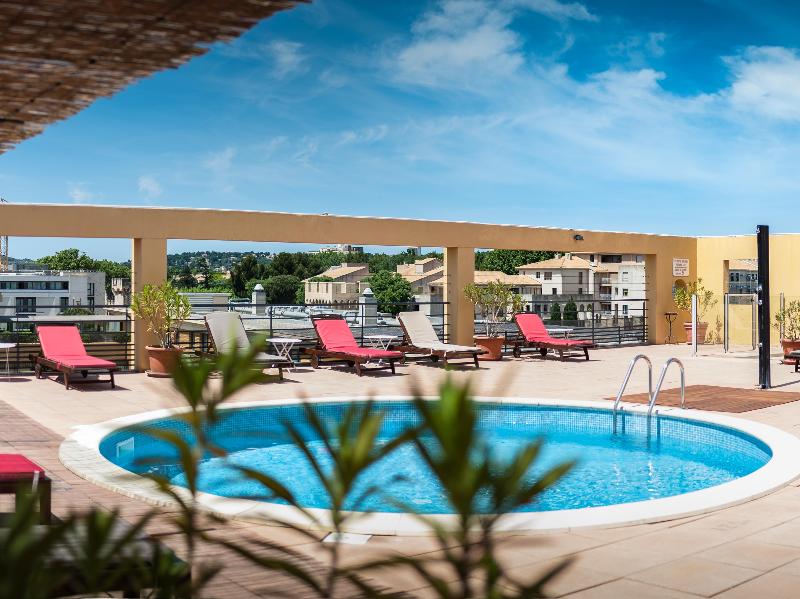
Avignon Grand Hotel
Avignon
From £104 a night, taxes incl.2 adults · checked 14 Nov, 17:52
★★★★★
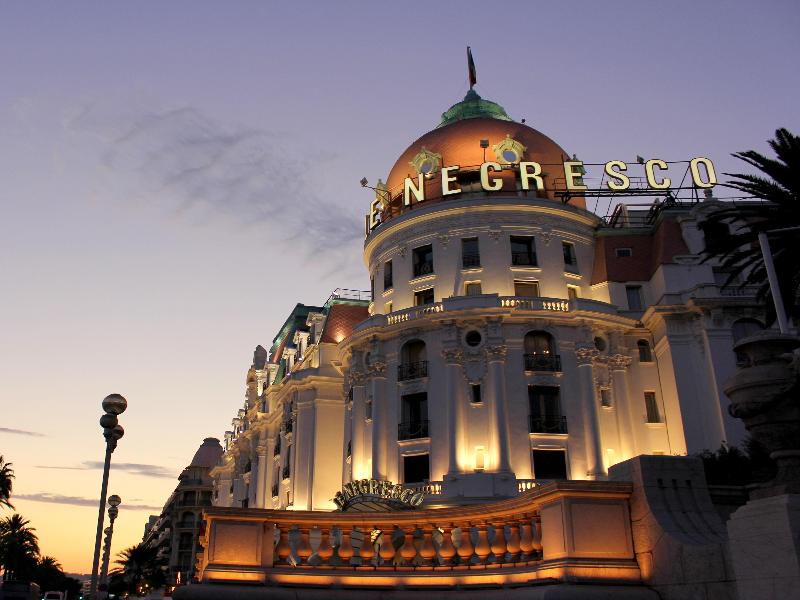
Negresco
Nice
Beach 10 m · All-inclusive option · Parking
From £410 a night, taxes incl.2 adults · checked 14 Nov, 10:37

★★★★
Best Western Hotel des Orangers
Cannes
Beach 300 m · Pool · 50 rooms
From £67 a night, taxes incl.2 adults · checked 14 Nov, 12:07

★★★★★
Hotel Alpaga
Megeve
Spa · Pool · 38 rooms
See prices and rooms →
Getting around
France's high-speed TGV trains link Paris with Lyon, Bordeaux, Strasbourg, Marseille and the Riviera, and are usually quicker and easier than flying. Book ahead for the best choice of seats. For the Loire, the Dordogne, Provence and Corsica you will want a hire car to reach the villages and the countryside.
When to go
Late spring and early autumn are the sweet spot nearly everywhere: warm, bright and less crowded. July and August are peak season on the coasts, and many Parisians leave the capital in August. Winter belongs to the Alps and the Christmas markets of Alsace.
Questions about visiting France
- What is France best known for?
- Paris and the Eiffel Tower, world-class art, food and wine, the châteaux of the Loire, the French Riviera, the Alps and landmarks such as Versailles and Mont-Saint-Michel.
- How many days do you need in France?
- Allow at least three or four days for Paris alone. A week to ten days lets you add one region, such as the Riviera, the Loire Valley or Provence. Two weeks makes a proper tour.
- Do you need a car in France?
- Not in Paris or the other big cities, and fast trains make it easy to travel between them. A car is the best way to explore rural regions such as the Dordogne, Provence, the Loire and Corsica.
- What is there to do in France with kids?
- The Eiffel Tower and a boat on the Seine, castles in the Loire and at Carcassonne, the Dune du Pilat, beaches on the Atlantic and the Riviera, and cable cars in the Alps all work well for families.
More guides
- Where to stay in France
- The best things to do in London
- The best things to do in Edinburgh
- The best things to do in Manchester
- The best things to do in York
- The best things to do in Amsterdam
- The best things to do in Birmingham
- The best things to do in Liverpool
- The best things to do in Bristol
- The best things to do in Barcelona
- The best things to do in Budapest
- The best things to do in Cambridge
- The best things to do in Dublin
- The best things to do in Krakow