
Germany is several countries in one. Berlin is gritty, creative and scarred by history. Bavaria is all onion-domed churches, beer halls and fairytale castles under the Alps. The Rhine winds past vineyards and robber-baron fortresses, Hamburg looks out to sea, and in between lie forests, lakes and half-timbered towns that seem to have been built for the lid of a biscuit tin.
What ties it together is how well it all works. Fast trains link the cities, museums are superb, and there is always a beer garden or a bakery within reach. Choose two or three regions rather than racing round the lot, and leave room for the small towns. They are often where Germany is most itself.
Don't miss
Berlin
The capital wears the twentieth century on its sleeve, and has reinvented itself several times since.
The Brandenburg Gate
Landmark

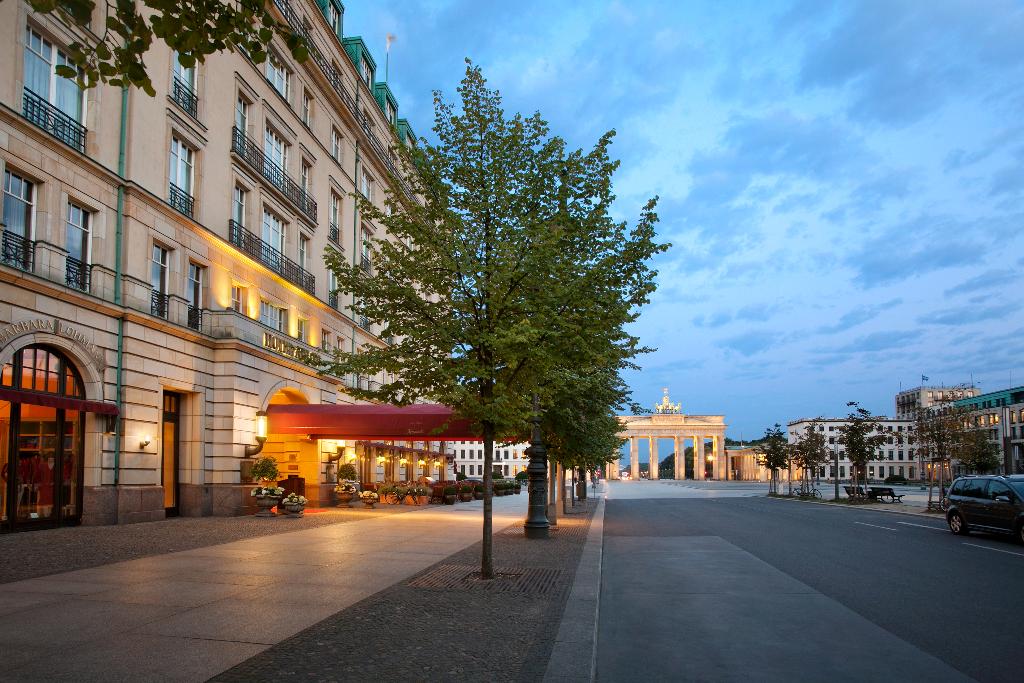
Photo: Thomas Wolf, www.foto-tw.de, CC BY-SA 3.0 Berlin's great neoclassical gateway, crowned by a chariot drawn by four horses, has watched over the city since the eighteenth century. For decades it stood stranded in no man's land beside the Berlin Wall; today it is the symbol of a reunited Germany. Walk through it onto the boulevard of Unter den Linden, or turn the other way into the wooded Tiergarten park. The Holocaust Memorial, a sombre field of concrete slabs, is a few steps to the south.
The Reichstag dome
Landmark

Photo: Ank Kumar, CC BY-SA 4.0 Germany's parliament meets in a heavy nineteenth-century building topped with a modern glass dome designed by Norman Foster. A spiral ramp winds up inside it, giving you a view over the rooftops of Berlin and, pointedly, straight down into the debating chamber below. It is one of the most popular visits in the city.
Tip: Visits must be registered in advance, and you will need photo ID.
The Berlin Wall Memorial and East Side Gallery
Landmark
Little of the Wall survives, which makes these two places important. The memorial on Bernauer Strasse preserves a stretch of the border strip with a watchtower, and explains how a city was cut in two. It is thoughtful and deeply affecting. Across town, the East Side Gallery is the longest remaining section, covered from end to end in murals painted after the Wall fell in 1989.
Museum Island
Museum

Photo: DXR, CC BY-SA 3.0 Five grand museums share an island in the River Spree, together a UNESCO World Heritage Site. Between them they hold treasures from ancient Egypt, Babylon, Greece and Rome through to nineteenth-century painting; the bust of Nefertiti in the Neues Museum is the star. Parts of the complex are being restored in stages, so check what is open before you go.
Bavaria and the Alps
Neuschwanstein Castle
Landmark

Photo: Ximonic, Simo Räsänen (post-processing) & Tauno Räsänen (photograph), CC BY-SA 3.0 King Ludwig II of Bavaria built this white, turreted fantasy on a crag above a gorge in the foothills of the Alps. It is the castle that every later fairytale castle copied. The interior is as theatrical as the outside, though Ludwig died before it was finished. Walk up to the Marienbrücke, a bridge across the gorge behind the castle, for the classic view. Avoid it if you dislike heights.
Tip: Entry is by timed guided tour and tickets sell out in summer. Book ahead.
Marienplatz and the English Garden, Munich
Neighbourhood

Photo: Chris 73, CC BY-SA 3.0 Munich's central square is ruled by the neo-Gothic New Town Hall, whose glockenspiel sends jousting knights and dancing coopers round its tower. From here it is a short walk to the Viktualienmarkt food market and the Hofbräuhaus beer hall. Then head for the English Garden, one of the largest city parks in the world, where you can drink beer under chestnut trees and watch surfers ride a standing wave on the river.
Oktoberfest
Activity
The world's largest beer festival takes over a fairground in Munich each year from late September into early October. Enormous tents run by the city's breweries fill with long tables, brass bands and people in lederhosen and dirndls. It is rowdy and good-natured, and there are fairground rides for those not drinking. Daytime visits are calmer and suit families.
Tip: Hotels in Munich book up months ahead for the festival. Reserve early.
The Zugspitze
Nature

Photo: Dguendel, CC BY 4.0 Germany's highest mountain rises above the resort of Garmisch-Partenkirchen on the Austrian border. A cogwheel railway and a spectacular cable car both go to the top, where the view takes in hundreds of Alpine peaks on a clear day. At its foot, the forest-ringed Eibsee is one of the most beautiful lakes in Bavaria. There is skiing in winter and hiking in summer.
The Rhine and the south-west
Cologne Cathedral
Landmark

Photo: Jörg Braukmann, CC BY-SA 4.0 Twin spires soar over the Rhine right beside Cologne's main station, so the cathedral is the first thing you see as you step off the train. This vast Gothic church took more than six hundred years to complete and is a UNESCO World Heritage Site. Climb the south tower if your legs are up to it, then reward yourself with a glass of Kölsch, the local beer.
The Rhine Gorge
Nature

Photo: Sailers, CC BY-SA 3.0 Between Koblenz and the wine towns of Bingen and Rüdesheim, the Rhine squeezes through a steep-sided valley with a castle on almost every bend. Vineyards cling to the slopes, and the Lorelei rock marks the spot where a legendary siren lured sailors to their doom. The whole stretch is a UNESCO World Heritage Site. See it from the deck of a river boat, glass of Riesling in hand, or from the trains that run along both banks.
Heidelberg Castle
Landmark

Photo: Pumuckel42 (Reinhard Wolf) at de:Wikipedia, CC BY-SA 3.0 A romantic red sandstone ruin on a wooded hillside above the River Neckar, looking down on the old university town of Heidelberg. Poets and painters fell for this view two centuries ago and it has hardly changed. Cross the Old Bridge and climb to the Philosophers' Walk on the opposite bank for the finest panorama of castle, town and river.
The Black Forest
Nature
A range of dark, fir-covered hills in the south-west, the home of the cuckoo clock and of Black Forest gateau. It is prime walking and cycling country, dotted with lakes such as the Titisee, waterfalls at Triberg and farmhouses with roofs that sweep almost to the ground. Elegant Baden-Baden, a spa town, and sunny Freiburg make the best bases.
Hamburg and the north
The Speicherstadt and the Elbphilharmonie
Neighbourhood

Photo: GFreihalter, CC BY-SA 4.0 Hamburg is Germany's great port, and the Speicherstadt is its most atmospheric quarter: a UNESCO-listed district of red-brick warehouses rising straight out of narrow canals. At its western tip stands the Elbphilharmonie, a concert hall of rippling glass set on top of an old warehouse. Its public viewing platform looks out over the harbour and the city.
Miniatur Wunderland
Activity
Inside one of those warehouses is the largest model railway in the world, and it is far more than trains. Whole miniature landscapes, from the Alps to Scandinavia, are packed with tiny figures, moving cars, a working airport and jokes hidden in every corner. Day turns to night every few minutes. Children adore it and adults are usually worse.
Tip: It is hugely popular. Book a time slot in advance, and go early or late in the day.
Storybook towns
Rothenburg ob der Tauber
Landmark

Photo: Diego Delso, CC BY-SA 4.0 One of the best-preserved medieval towns in Germany sits on the Romantic Road in Bavaria, still wrapped in its walls and gate towers. Inside is a picture-book jumble of gabled houses, cobbled lanes and wrought-iron shop signs. Walk the covered ramparts and look for the Plönlein, the little fork in the road that everyone photographs. Stay overnight to see it without the coach parties.
Nuremberg Old Town
Neighbourhood
Nuremberg has an imperial castle on a rock, a ring of medieval walls and one of the most famous Christmas markets in Germany on its main square. It also faces its darker history at the former Nazi rally grounds and the courtroom of the Nuremberg Trials. Eat the city's finger-sized grilled sausages, three in a bun.
Dresden
Landmark

Photo: Dietmar Rabich, CC BY-SA 4.0 The Baroque skyline of Dresden, on the River Elbe in the east, was famously beautiful before it was destroyed in 1945. Much of it has since been rebuilt, most movingly the domed Frauenkirche, reconstructed from its own rubble. The Zwinger palace holds an outstanding collection of Old Master paintings, and the surrounding sandstone hills of Saxon Switzerland are great for walkers.
Where to stay in Germany
Not sure which area suits you? Read our guide: Where to stay in Germany →

★★★★
Boutique Hotel Germania
Munich
Parking
From £137 a night, taxes incl.2 adults · checked 14 Nov, 09:22

★★★★
Brunfels Hotel Unbound Collection
Mainz
Family-friendly · Parking
See prices and rooms →
★★★★★
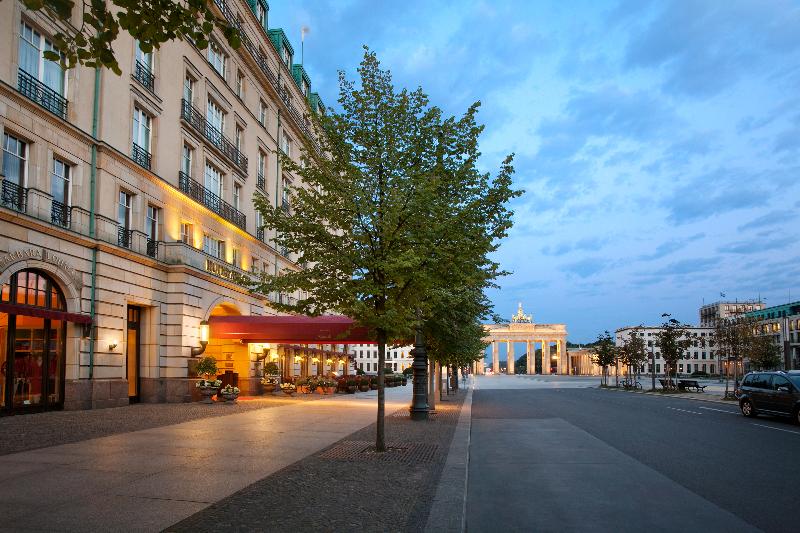
Hotel Adlon Kempinski Berlin
Berlin
Spa · Pool · Pets allowed
From £291 a night, taxes incl.2 adults · checked 14 Nov, 08:07

★★★★
BW Conference Airporthotel Frankfurt-Moerfelden
Moerfelden-Walldorf
Parking
From £56 a night, taxes incl.2 adults · checked 14 Nov, 16:53

★★★★
Clayton Hotel Düsseldorf
Dusseldorf
Spa · Pool · Parking
From £90 a night, taxes incl.2 adults · checked 14 Nov, 18:07

★★★★★
Hotel Vier Jahreszeiten Kempinski Munich
Munich
Spa · Pool · Pets allowed
From £342 a night, taxes incl.2 adults · checked 14 Nov, 09:22

★★★★
Courtyard Duesseldorf Seestern
Dusseldorf
Spa · Parking
From £79 a night, taxes incl.2 adults · checked 14 Nov, 18:07

★★★★★
Fairmont Hotel Vier Jahreszeiten
Hamburg
Spa · Parking
From £367 a night, taxes incl.2 adults · checked 14 Nov, 18:21
Getting around
Germany is made for rail travel. High-speed ICE trains connect the major cities, and regional trains reach most small towns. Within cities, the U-Bahn, S-Bahn, trams and buses are excellent. A hire car is handy for the Black Forest, the Romantic Road and the Bavarian Alps, but far from essential.
When to go
May to September is best for beer gardens, river cruises and walking. Late September brings Oktoberfest and the wine harvest. From late November, Christmas markets light up almost every town square. Winters are cold, with snow in the Alps and the hills.
Questions about visiting Germany
- What is Germany best known for?
- Berlin and its history, fairytale castles such as Neuschwanstein, Cologne Cathedral, the Rhine Valley, the Black Forest, beer and Oktoberfest, and its Christmas markets.
- How many days do you need in Germany?
- A long weekend suits a single city such as Berlin or Munich. With a week to ten days you can combine two or three regions, for example Berlin, Munich and the Bavarian Alps, travelling by train.
- Do you need a car in Germany?
- No. Trains link the cities quickly and public transport is very good. A car is only really useful for touring rural areas such as the Black Forest or the Romantic Road.
- What is there to do in Germany with kids?
- Miniatur Wunderland in Hamburg, Neuschwanstein Castle, a boat on the Rhine, cable cars in the Alps, medieval town walls at Rothenburg and Germany's many Christmas markets are all family favourites.
More guides
- Where to stay in Germany
- The best things to do in London
- The best things to do in Edinburgh
- The best things to do in Manchester
- The best things to do in York
- The best things to do in Amsterdam
- The best things to do in Birmingham
- The best things to do in Liverpool
- The best things to do in Bristol
- The best things to do in Barcelona
- The best things to do in Budapest
- The best things to do in Cambridge
- The best things to do in Dublin
- The best things to do in Krakow