
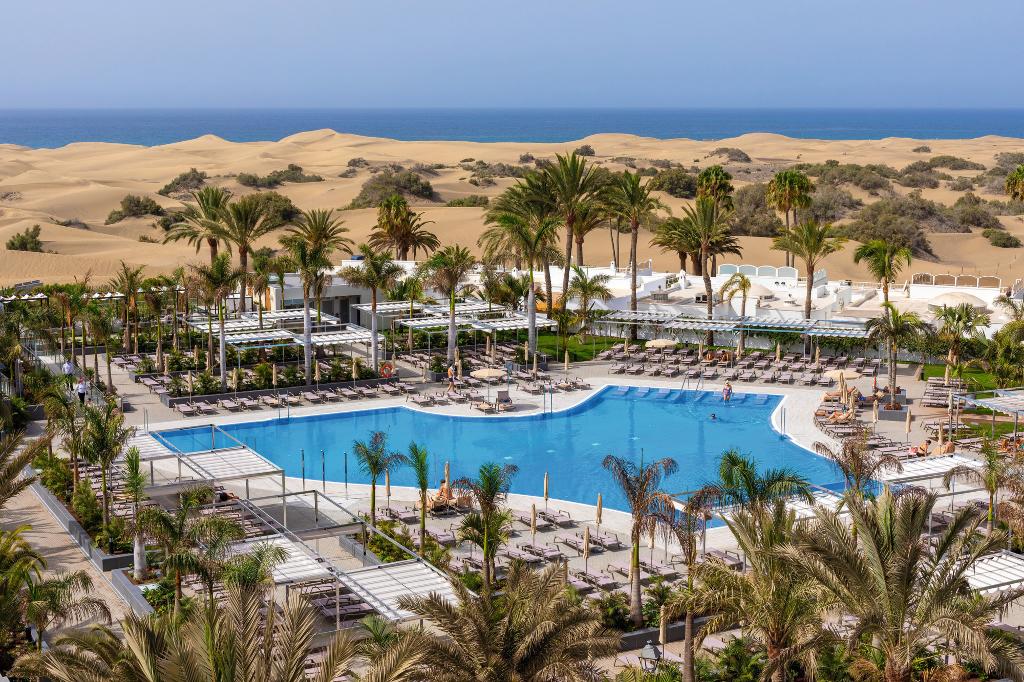
Gran Canaria is often called a continent in miniature, and for once the cliché earns its keep. In a single day you can walk across Saharan-style sand dunes, drive up through pine forests to a volcanic crater ringed with rock pinnacles, and finish with tapas in the colonial lanes of Las Palmas, one of the liveliest cities in the Canaries.
Most visitors base themselves in the sunny south, around Playa del Inglés, Maspalomas and Puerto de Mogán. Hire a car for a few days and head for the mountains and the green north: it is a round island, and nowhere is very far away.
Don't miss
The big sights
Dunes, a volcanic monolith, a pretty harbour and a colonial old town.
Maspalomas Dunes
Nature

Photo: Marc Ryckaert (MJJR), CC BY 3.0 Right on the edge of the southern resorts lies a protected reserve of golden sand dunes that ripple towards the sea, looking for all the world like a slice of the Sahara. Walk across them to the beach, watch the wind sculpt the ridges, and finish at the palm-fringed lagoon and the old lighthouse at Maspalomas.
Tip: Go early or late in the day, when the sand is cooler and the light is golden. Stick to the marked paths, which protect the reserve.
Roque Nublo
Nature

Photo: Rvr, CC BY-SA 4.0 The symbol of Gran Canaria is a giant finger of volcanic rock standing on a summit near the centre of the island. A well-trodden path from the road climbs through pine trees to its base, and the views over the Caldera de Tejeda to Mount Teide on Tenerife are spectacular on a clear day.
Tip: Start early: parking near the trailhead is limited, and clouds often roll in later. Bring a layer, as it is much cooler up here than on the coast.
Puerto de Mogán
Neighbourhood

Photo: Martin Falbisoner, CC BY-SA 4.0 Nicknamed 'Little Venice' for its canals and footbridges, Mogán is the prettiest resort on the island: a marina of yachts and fishing boats, a little sandy beach, and white low-rise houses trimmed with bright colours and draped in bougainvillea. It is a lovely place for a long seafood lunch.
Tip: The Friday market draws big crowds; come on another day if you want the lanes to yourself.
Vegueta
Neighbourhood

Photo: Maria.M Hernández Gómez, CC BY-SA 4.0 The old quarter of Las Palmas, founded in the 15th century, is a handsome grid of cobbled streets, colonial mansions and carved wooden balconies. At its heart are the Cathedral of Santa Ana, whose tower you can climb for views over the rooftops, and the Casa de Colón, a museum on the stop Columbus made here on his way to the Americas.
Beaches
Playa del Inglés
Beach
A huge sweep of golden sand that runs south into Maspalomas beach, backed by the island's busiest resort. It is lively, sunny and well equipped, with water sports and beach bars, and the resort behind is one of Europe's best-known LGBTQ+ holiday destinations.
Playa de Amadores
Beach

Photo: Felix König, CC BY-SA 3.0 A crescent of pale sand and calm, turquoise water in a sheltered bay between Puerto Rico and Tauro, with a promenade of cafés behind. It is one of the best beaches on the island for families and lazy swimmers, and a coastal path links it to Puerto Rico.
Playa de Las Canteras
Beach

Photo: Gerda Arendt, CC BY-SA 4.0 Las Palmas has one of the best city beaches in Spain: a long golden curve in the heart of town, protected by a natural reef that keeps the water calm for swimming and snorkelling. A promenade runs its whole length, lined with fish restaurants and bars, and surfers ride the waves at its southern end.
Mountain villages and the north
The green, hilly north and the mountains feel like another island entirely.
Tejeda
Neighbourhood

Photo: H. Zell, CC BY-SA 3.0 A white mountain village perched on the rim of the Caldera de Tejeda, looking across to Roque Nublo and Roque Bentayga. It is officially one of the most beautiful villages in Spain, and its bakeries are known for almond sweets, made from the trees that blossom here in early spring.
Teror
Neighbourhood

Photo: Gerda Arendt, CC BY-SA 4.0 Teror is the island's spiritual heart: its basilica is home to the Virgen del Pino, Gran Canaria's patron saint. The streets around it are lined with handsome old houses and carved wooden balconies, and the Sunday market is a good place to try the local soft chorizo.
Arucas
Neighbourhood

Photo: Mataparda, CC BY 3.0 A hill town in the banana-growing north, dominated by a neo-Gothic church built of dark volcanic stone and so grand that everyone calls it the cathedral. Arucas is also home to the island's best-known rum distillery, which offers tours and tastings.
Agaete and Puerto de las Nieves
Neighbourhood

Photo: Felix König, CC BY 3.0 On the north-west coast, the whitewashed town of Agaete sits at the mouth of a lush valley where tropical fruit and even coffee are grown. Down by the sea, the fishing port of Puerto de las Nieves has seafood restaurants, natural rock pools and ferries to Tenerife.
Cueva Pintada
Museum
In the town of Gáldar, a cave decorated with geometric paintings by the island's pre-Hispanic inhabitants forms the heart of a museum and archaeological park, built over the remains of their village. It is the best place on the island to understand who lived here before the Spanish arrived.
Days out with the family
Aqualand Maspalomas
Water park
A big water park in the hills just above Maspalomas, with towering slides, a wave pool, a lazy river and plenty of gentler pools for younger children. It is the go-to day out for families staying in the south.
Tip: Get there for opening time in school holidays to grab a shady spot.
Poema del Mar
Wildlife
A modern aquarium by the port in Las Palmas, with huge tanks of sharks, rays and tropical fish and a section devoted to the Canary Islands' own sea life. It makes a good rainy-day or city-day outing, combined with a walk along Las Canteras.
Eat and drink
Papas arrugadas and mojo
Food

Photo: Fer.., CC BY 2.0 The Canarian classic: little potatoes boiled in very salty water until their skins wrinkle, served with mojo, a spicy red sauce or a garlicky green one with coriander. Try them with grilled fish by the sea, and look out for gofio, the toasted grain flour that has been a staple here since before the Spanish arrived.
Mercado de Vegueta
Market
Las Palmas' oldest market is a lively place to see what the island eats: tropical fruit, local cheeses, fresh fish, and stalls selling Canarian specialities.
Where to stay in Gran Canaria
Not sure which area suits you? Read our guide: Where to stay in Gran Canaria →
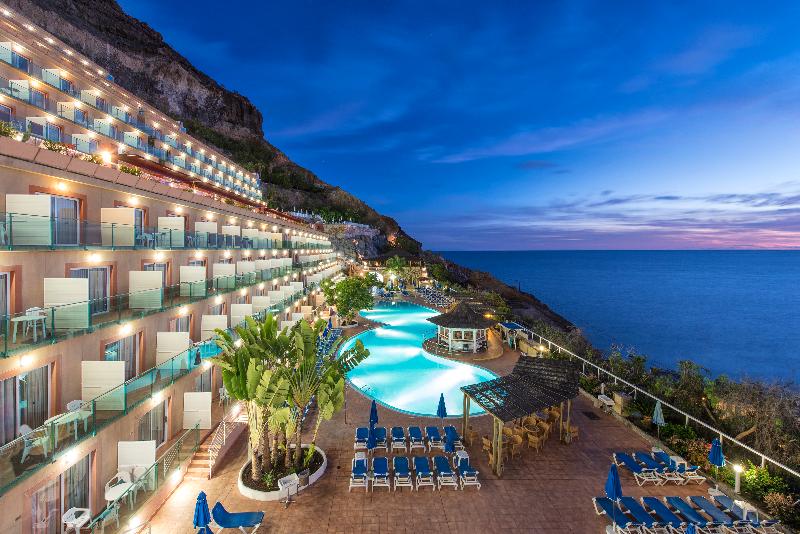
★★★★
Princess Mogan & Beach Club
Mogan, Gran Canaria
Beach 800 m · All-inclusive option · Pool
See prices and rooms →

★★★★
Servatur Puerto Azul
Puerto Rico de Gran Canaria
Beach 1.5 km · All-inclusive option · Spa
From £216 a night, taxes incl.2 adults · checked 1 Oct, 18:38
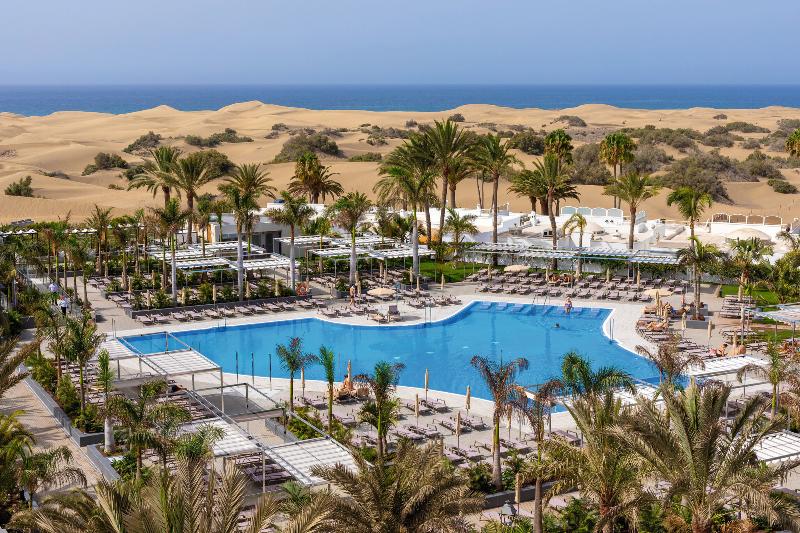
★★★★★
Hotel Riu Palace Maspalomas - Adults Only
Playa del Inglés
Beach 800 m · Adults only · Pool
See prices and rooms →
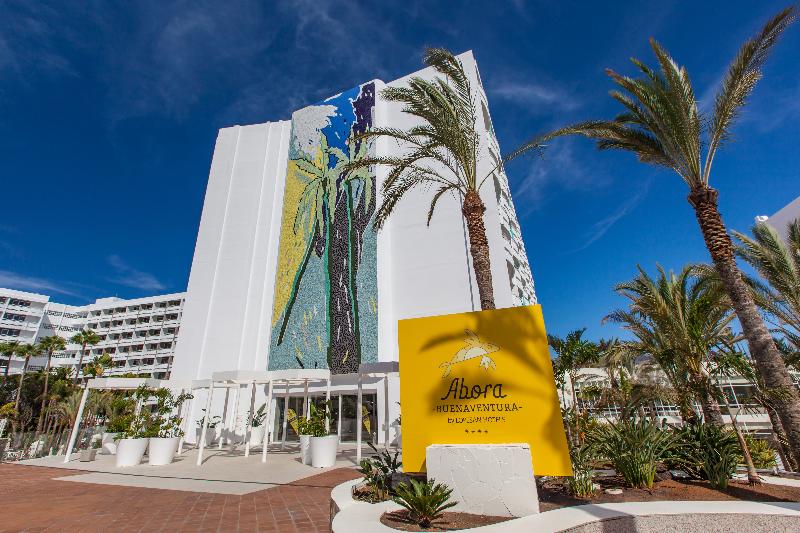
★★★★
Abora Buenaventura by Lopesan Hotels
Playa del Ingles
Beach 500 m · All-inclusive option · Pool
From £110 a night, taxes incl.2 adults · checked 1 Oct, 18:38
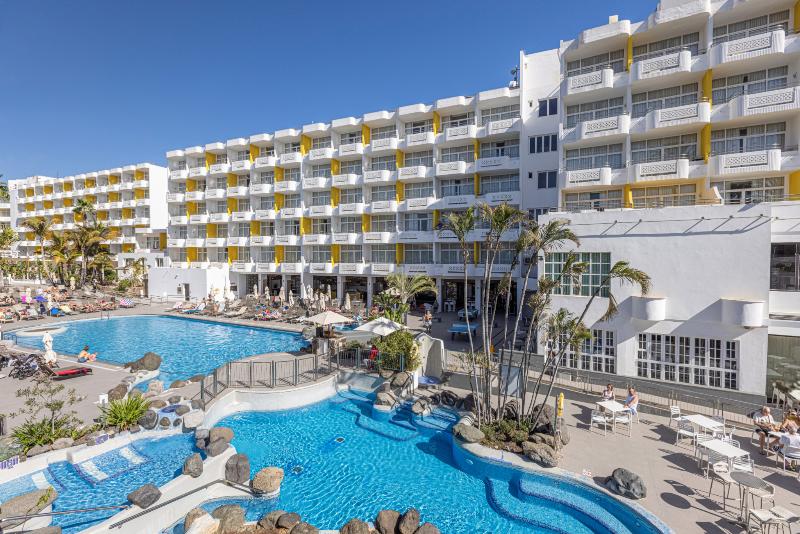
★★★★
Abora Catarina by Lopesan Hotels
Playa del Ingles
Beach 900 m · All-inclusive option · Pool
See prices and rooms →
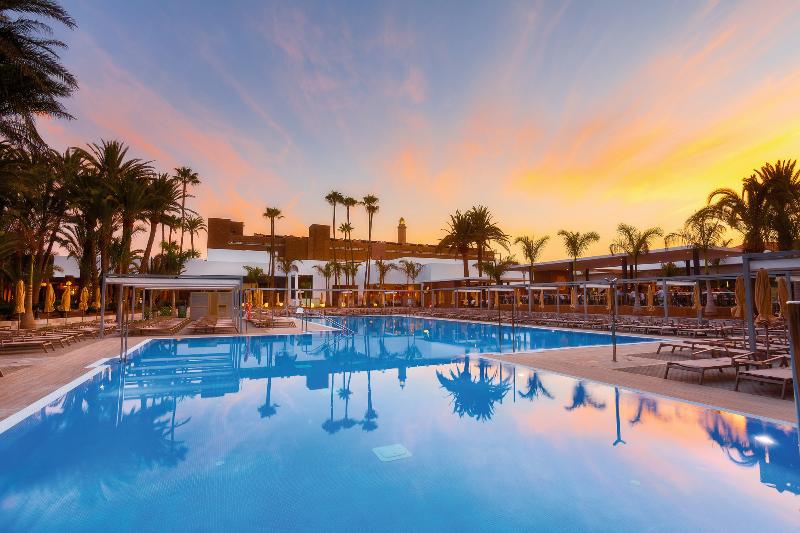
★★★★★
Hotel Riu Palace Oasis
Maspalomas
Beach 50 m · Spa · Pool
See prices and rooms →
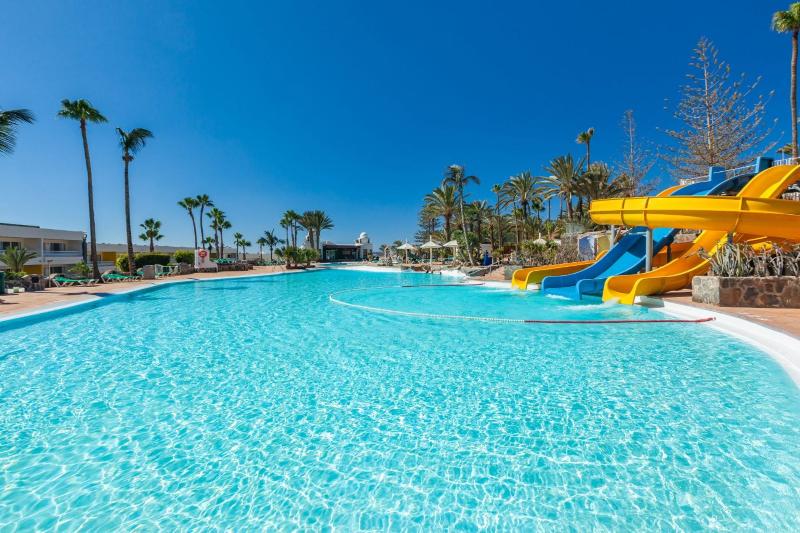
★★★★
Abora Interclub Atlantic by Lopesan Hotels
San Agustin
Beach 800 m · All-inclusive option · Pool
See prices and rooms →
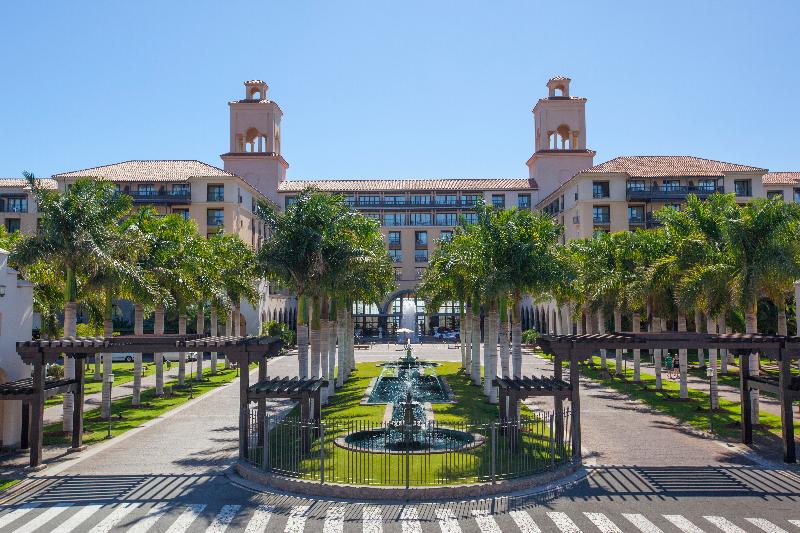
★★★★★
Lopesan Costa Meloneras Resort & Spa
San Bartolomé de Tirajana
Beach 300 m · Spa · Pool
See prices and rooms →
Getting around
Hire a car to explore the mountains and the north; the roads are good, though the mountain ones are steep and winding. Global, the island's bus company, links the airport, Las Palmas and the southern resorts, and reach many inland villages.
When to go
Gran Canaria is warm all year, with mild winters that make it a favourite winter-sun escape. The south is usually sunnier and drier than the north and Las Palmas. The mountains can be cool and cloudy at any time of year.
Questions about visiting Gran Canaria
- What is Gran Canaria best known for?
- Year-round sunshine, the Maspalomas sand dunes, the beaches of the south coast, the mountain scenery around Roque Nublo, and the lively city of Las Palmas.
- Do you need a car in Gran Canaria?
- Not to enjoy the beaches and resorts, which are well served by buses, but a car makes it much easier to explore the mountains and the north.
- What is there to do in Gran Canaria with kids?
- Calm beaches such as Amadores and Las Canteras, Aqualand water park, the Poema del Mar aquarium, and exploring the Maspalomas dunes are all popular with families.
- Is Gran Canaria worth visiting?
- Yes. Beyond the beaches, it has some of the most varied landscapes in the Canary Islands and a real city in Las Palmas, all within a short drive.
More guides
- Where to stay in Gran Canaria
- The best things to do in London
- The best things to do in Edinburgh
- The best things to do in Amsterdam
- The best things to do in Barcelona
- The best things to do in Budapest
- The best things to do in Dublin
- The best things to do in Krakow
- The best things to do in Prague
- The best things to do in Berlin
- The best things to do in Lisbon
- The best things to do in Milan
- The best things to do in Paris
- The best things to do in Rome