
Granada was the last Muslim kingdom in Spain, and it has never quite stopped being one. A red fortress-palace sits on a hill above the city with snow-capped mountains behind it. Across a narrow valley, a white quarter of walled gardens and cobbled alleys climbs towards the sunset. Down below, the smell of mint tea drifts out of doorways and a guitar is always playing somewhere.
Most people come for the Alhambra and leave talking about everything else as well: the views, the cave houses, the students who keep the bars busy until late, and the happy local custom of handing you something to eat with every drink. Give it at least two days, and wear good shoes. Granada is steep.
Don't miss
The Alhambra
One of the great sights of Europe, and big enough to need half a day.
The Alhambra
Landmark

Photo: Diego Delso, CC BY-SA 4.0 The Alhambra is not one building but a walled city on a ridge: a fortress, a string of royal palaces, gardens, bathhouses and a later Renaissance palace, built mostly by the Nasrid sultans in the 13th and 14th centuries. Together with the Generalife and the Albaicín it is a UNESCO World Heritage site.
Start with the Alcazaba, the oldest part, and climb the watchtower for a view over the city to the plain beyond. The round courtyard of the Palace of Charles V, added after the Christian conquest, is a surprise in the middle of it all.
Tip: Tickets are limited and often sell out weeks ahead. Book as early as you can and bring your passport.
The Nasrid Palaces
Landmark

Photo: Jebulon, CC0 The heart of the Alhambra, and the reason people cross continents to see it. Room after room is covered in carved stucco as fine as lace, glazed tiles and Arabic inscriptions, with ceilings like honeycomb and still pools that double the arches above them. The Court of the Myrtles and the Court of the Lions, with its fountain borne on twelve marble lions, are the high points.
Tip: Your ticket gives a set time for entering the palaces. Be at the door early: latecomers are not let in.
The Generalife
Nature

Photo: Benjamin Smith, CC BY-SA 4.0 On the slope above the Alhambra lies the sultans' summer retreat, a place designed for doing nothing in the shade. Terraced gardens, cypress walks, roses and orange trees lead to a small palace built round a long pool lined with arching jets of water. The sound of running water follows you everywhere, as it was meant to.
The old city
The Albaicín
Neighbourhood

Photo: Ввласенко, CC BY-SA 3.0 The old Moorish quarter covers the hill facing the Alhambra, a tangle of steep cobbled lanes, whitewashed walls and hidden houses with gardens, known as cármenes. There are small squares with fountains, churches built on the sites of mosques and sudden glimpses of the palace between the rooftops. Getting lost is the point.
Tip: The cobbles are polished and uneven. Flat, grippy shoes make all the difference.
Mirador de San Nicolás
Landmark

Photo: Jebulon, CC0 The most famous viewpoint in Granada is a terrace at the top of the Albaicín, looking straight across at the Alhambra with the Sierra Nevada behind. At sunset the walls turn from honey to deep red and the crowd, the buskers and the guitarists all fall quiet for a moment. It is busy, and worth it.
Carrera del Darro
Neighbourhood

Photo: Jebulon, CC0 One of the most picturesque streets in Spain follows the little River Darro along the foot of the Alhambra hill, past old stone bridges, convents and Renaissance mansions. Along the way is El Bañuelo, an 11th-century Arab bathhouse with star-shaped skylights. The street opens at the far end into the Paseo de los Tristes, a square of café terraces directly below the palace walls.
Sacromonte
Neighbourhood

Photo: Jebulon, CC0 Beyond the Albaicín the hillside is dotted with whitewashed cave houses dug into the rock. Sacromonte is the traditional home of Granada's Roma community and of the zambra, the local form of flamenco, which is still performed nightly in cave venues. By day, walk up for the views and visit the small museum that shows how the caves were lived in.
Granada Cathedral and the Royal Chapel
Landmark

Photo: David suárez Benítez 2, CC BY-SA 4.0 Down in the centre, the cathedral is a vast, bright Renaissance church, begun soon after the conquest of 1492 and all white and gold inside. Next door is the Royal Chapel, the burial place of Ferdinand and Isabella, the Catholic Monarchs who took the city. Their marble tombs lie behind a splendid iron screen, with their plain lead coffins in the crypt below.
The Alcaicería
Market

Photo: Kolforn, CC BY 3.0 A few steps from the cathedral, this knot of narrow lanes was once the Moorish silk market. The original burned down in the 19th century and was rebuilt in the same style, and it is now a bazaar of lanterns, ceramics, leather and inlaid wooden boxes. It is unashamedly for visitors, and fun to squeeze through all the same.
Eat and drink
Tapas
Food
Granada keeps up a tradition that has faded in much of Spain: order a drink and a small plate of food arrives with it, on the house. It might be a slice of tortilla, fried fish, a little stew or a mini burger, and it usually gets better with each round. An evening hopping from bar to bar around Calle Navas or the Realejo district can easily turn into dinner.
Teterías
Food
At the foot of the Albaicín, the lanes around Calle Calderería Nueva feel more like Morocco than Spain. They are lined with teterías, tea houses with low tables, cushions and tiled walls, serving mint tea in silver pots alongside sticky pastries. It is the perfect pause after the climb down from the viewpoints.
Piononos
Food

Photo: Zarateman, CC0 Granada's own cake is tiny: a roll of thin sponge soaked in syrup, topped with a crown of toasted cream, eaten in one or two bites. Piononos come from the nearby town of Santa Fe and are sold in pastry shops across the city. They are very sweet and go best with a strong coffee.
Day trips
Sierra Nevada
Nature

Photo: kallerna, CC BY-SA 4.0 The mountains that form Granada's backdrop include the highest peaks in mainland Spain. In winter there is skiing at the resort of Pradollano, a short drive up from the city, and on a clear day you can see the Mediterranean from the slopes. In summer the national park is superb walking country, cool when the city below is baking.
Las Alpujarras
Day trip

Photo: Mark Chinnick, CC BY 2.0 On the southern side of the Sierra Nevada, white villages cling to steep green valleys. The Alpujarras were the last refuge of the Moors in Spain, and their flat-roofed houses and terraced fields still show it. Pampaneira, Bubión and Capileira, stacked one above the other in the Poqueira gorge, are the best known, with craft shops, mountain ham and fine walking.
Costa Tropical
Beach
Granada province has its own stretch of Mediterranean coast, an easy drive south of the city. It gets its name from a mild climate in which mangoes and avocados grow. Salobreña is a white town heaped on a rock beneath a Moorish castle; Almuñécar has pebble-and-sand beaches and a long seafront. Yes, you really can ski and swim on the same day.
Where to stay in Granada
Not sure which area suits you? Read our guide: Where to stay in Granada →

★★★★
Museo Palacio de Mariana Pineda
Granada
Beach 70 m
From £124 a night, taxes incl.2 adults · checked 14 Nov, 17:37

★★★★
Melia Granada
Granada
Parking
From £104 a night, taxes incl.2 adults · checked 14 Nov, 17:37

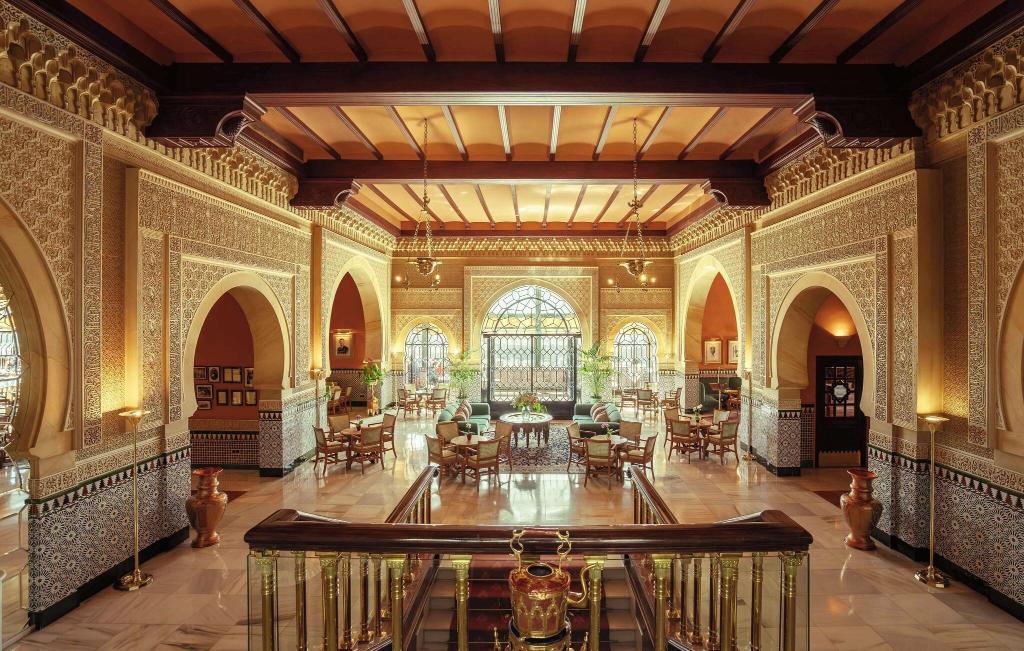
★★★★★
Hotel Alhambra Palace
Granada
Pets allowed · Parking
From £269 a night, taxes incl.2 adults · checked 14 Nov, 17:37
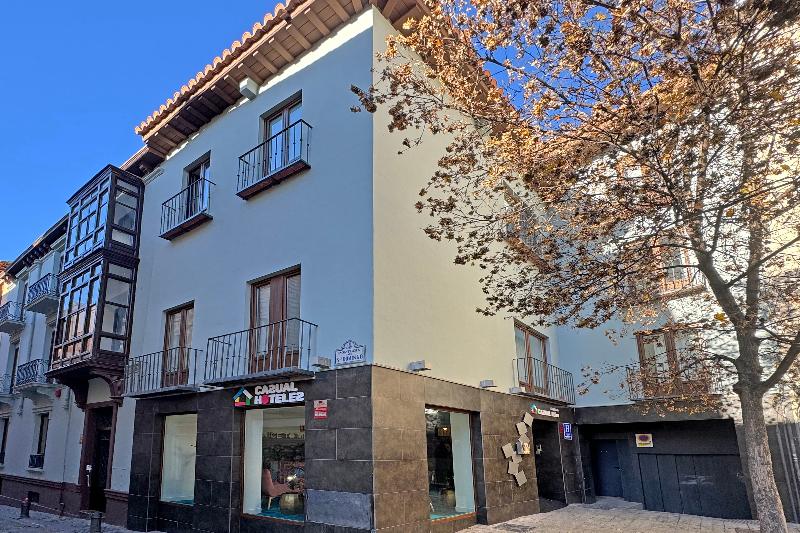
★★★★
Casual Ilbira
Granada
41 rooms · Pets allowed
From £50 a night, taxes incl.2 adults · checked 14 Nov, 17:37
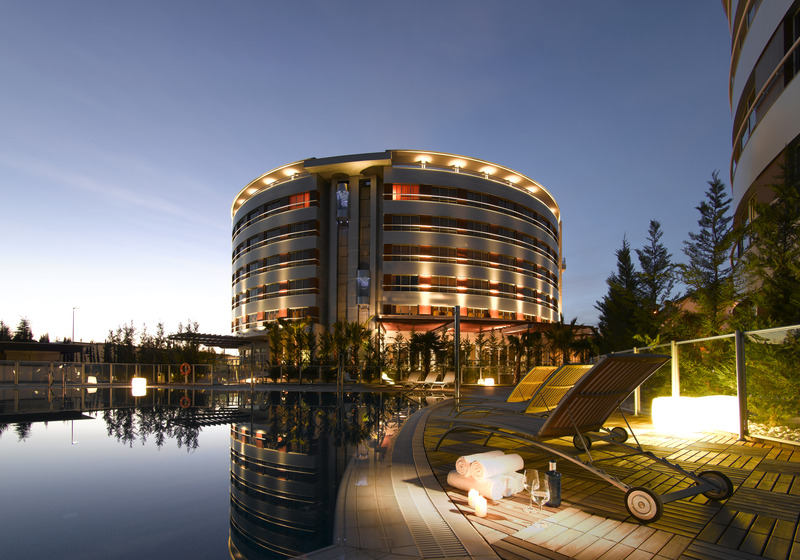
★★★★
Abades Nevada Palace
Granada
Pool · Parking
From £49 a night, taxes incl.2 adults · checked 14 Nov, 17:37
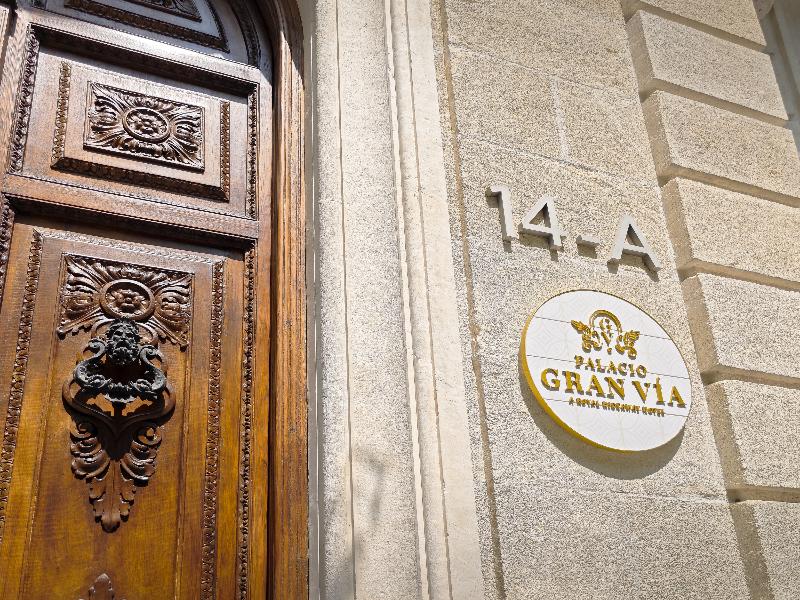
★★★★★
Palacio Gran Via, A Royal Hideaway Hotel
Granada
Spa · 38 rooms · Parking
From £276 a night, taxes incl.2 adults · checked 14 Nov, 17:37

★★★★
Andalucia Center
Granada
Pool · Parking
From £58 a night, taxes incl.2 adults · checked 14 Nov, 17:37

★★★★★
Barceló Granada Congress
Granada
Spa · Parking
From £70 a night, taxes incl.2 adults · checked 14 Nov, 17:37
Getting around
The centre is compact and best on foot, though the hills are steep. Small city buses run up to the Alhambra, the Albaicín and Sacromonte and save a lot of climbing. Much of the old town is closed to visitors' cars. Hire one, or join a tour, only for the mountains and the coast.
When to go
Spring and autumn are the best seasons, warm and clear. Summers are very hot in the middle of the day, so visit the Alhambra early or late. Winters are sunny but cold, especially at night, with snow on the mountains above the city.
Questions about visiting Granada
- What is Granada best known for?
- The Alhambra, the hilltop palace and fortress of the Nasrid sultans, along with the old Moorish quarter of the Albaicín, the cave houses and flamenco of Sacromonte, and tapas served with every drink.
- Is Granada worth visiting?
- Yes. The Alhambra alone justifies the trip, and the city around it, with its viewpoints, tea houses, tapas bars and mountain setting, is one of the most atmospheric in Spain.
- How many days do you need in Granada?
- Two full days is the minimum: one for the Alhambra and Generalife, one for the Albaicín, Sacromonte and the cathedral quarter. Add a day or two for the Sierra Nevada, the Alpujarras or the coast.
- Do you need to book the Alhambra in advance?
- Yes. Visitor numbers are limited and entry to the Nasrid Palaces is by timed slot, so tickets regularly sell out well ahead. Book as soon as you have your dates.
- Do you need a car in Granada?
- Not in the city, where walking and the small local buses are easier. A car is useful for the Alpujarras villages and the Costa Tropical.
More guides
- Where to stay in Granada
- The best things to do in London
- The best things to do in Edinburgh
- The best things to do in Manchester
- The best things to do in York
- The best things to do in Amsterdam
- The best things to do in Birmingham
- The best things to do in Liverpool
- The best things to do in Bristol
- The best things to do in Barcelona
- The best things to do in Budapest
- The best things to do in Cambridge
- The best things to do in Dublin
- The best things to do in Krakow