
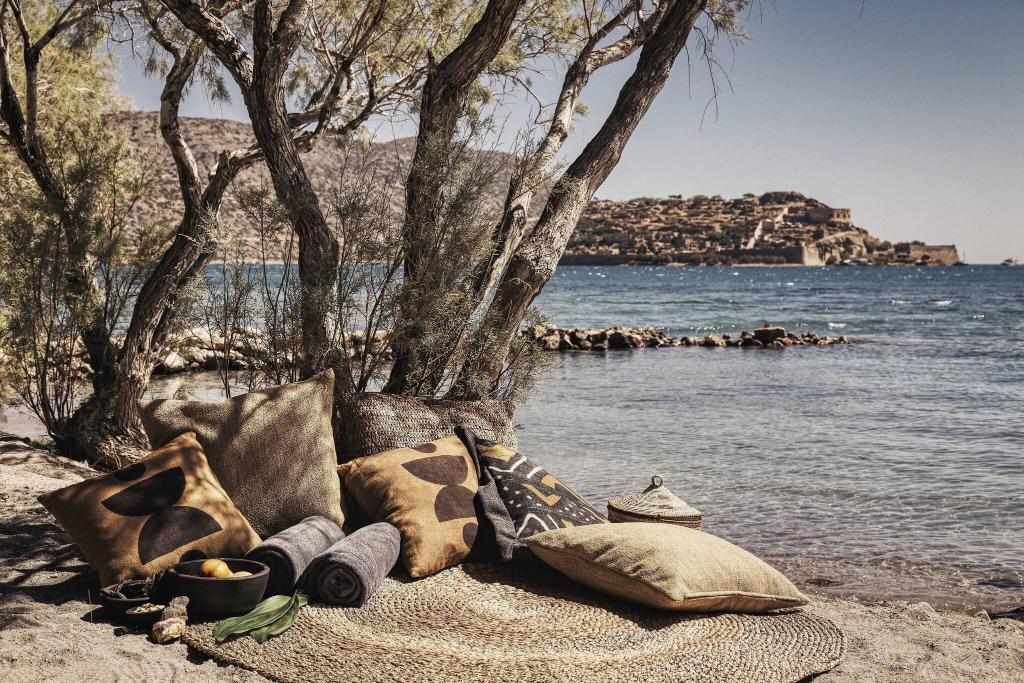
Greece is two holidays in one country. There is the Greece of marble columns and myths, where you can stand in the theatre that staged the first tragedies or on the track where the Olympics began. And there is the Greece of whitewashed villages, warm seas and long lunches under a vine, spread across more than two hundred inhabited islands.
The happiest trips mix the two: a few days in Athens and the mainland for the ancient sites, then a ferry or a flight to an island to do very little. Each island group has its own character, so choose with care and resist the urge to see too many.
Don't miss
Ancient Greece
The places where Western civilisation likes to say it started.
The Acropolis
Landmark

Photo: A.Savin, CC BY-SA 3.0 The rock that rises above Athens carries the most famous building of the ancient world. The Parthenon, built in the fifth century BC for the goddess Athena, still dominates the city, flanked by the Erechtheion with its porch of sculpted maidens and the small, perfect Temple of Athena Nike.
At the foot of the hill, the modern Acropolis Museum displays the sculptures in a glass-walled gallery facing the temple itself. See both, then lose yourself in the lanes of Plaka below.
Tip: Go as soon as the site opens or late in the afternoon: the marble is slippery, the sun is fierce and the crowds peak mid-morning.
Delphi
Landmark

Photo: George E. Koronaios, CC BY-SA 4.0 The ancient Greeks believed Delphi was the centre of the world, and it is easy to see why they chose the spot. The sanctuary of Apollo, where the oracle delivered her riddling prophecies, climbs a steep mountainside on Mount Parnassus above a valley filled with olive trees.
You follow the Sacred Way up past the treasuries to the temple, the theatre and the stadium at the top. The museum holds the celebrated bronze Charioteer. It is a classic day trip from Athens.
Ancient Olympia
Landmark

Photo: Annatsach, CC BY-SA 4.0 In a green valley in the western Peloponnese lies the birthplace of the Olympic Games, held here for over a thousand years. You can walk through the vaulted tunnel into the original stadium and stand on the starting line; the Olympic flame is still lit here before every modern Games.
The ruins of the temples of Zeus and Hera lie among shady trees, and the museum is one of the best in Greece. Children enjoy racing the track.
Knossos
Landmark

Photo: Marc Ryckaert (MJJR), CC BY 3.0 Just outside Heraklion on Crete stands the great palace of the Minoans, Europe's oldest advanced civilisation, and the place legend links with King Minos and the Minotaur's labyrinth. Its maze of rooms, staircases and storerooms dates back some three and a half thousand years.
Parts were boldly reconstructed in the early twentieth century, red columns and all, which divides opinion but helps the imagination. Pair it with the Heraklion Archaeological Museum, where the original frescoes are kept.
Epidaurus and Mycenae
Landmark

Photo: Zde, CC BY-SA 4.0 Two of the great sites of the Peloponnese sit close enough to see in a day. The theatre at Epidaurus is the best preserved in Greece, famous for acoustics so fine that a whisper on the stage carries to the top row, and it still hosts performances in summer.
Mycenae is older and darker: the hilltop citadel of Agamemnon, entered through the Lion Gate, with royal tombs shaped like giant beehives. Both are easy from Nafplio.
Islands and old towns
Santorini
Landmark

Photo: Giles Laurent, CC BY-SA 4.0 Santorini is the rim of a volcano that collapsed into the sea in one of the largest eruptions in human history. Villages of white cube houses and blue-domed churches run along the cliff edge, looking down into a flooded crater dotted with dark lava islets.
Walk the cliff path from Fira to Oia, visit the buried Bronze Age town of Akrotiri, taste the island's crisp white wine and swim from a black-sand beach. It is a place for couples above all.
Tip: Oia's sunset draws a huge crowd. The view from Imerovigli or Firostefani is just as good and far calmer.
Mykonos Town
Neighbourhood

Photo: Bernard Gagnon, CC BY-SA 3.0 The capital of Mykonos is the Cycladic village of everyone's imagination: a tangle of dazzling white lanes with blue doors and bougainvillea, said to have been built to confuse pirates. A row of windmills stands on the hill above, and in Little Venice the houses hang directly over the sea.
By night it becomes one of the liveliest places in the Mediterranean. Boats also run to Delos, the uninhabited sacred island that is one of Greece's most important ancient sites.
Rhodes Old Town
Neighbourhood

Photo: Unknown, Public domain Behind massive walls and a dry moat lies one of the best-preserved medieval towns in Europe, built by the Knights of St John when they ruled Rhodes. The cobbled Street of the Knights leads up to the Palace of the Grand Master, and behind it sprawls a warren of lanes, mosques, fountains and courtyards.
It is a UNESCO World Heritage Site and still lived in. An hour down the coast, the white village of Lindos sits beneath a clifftop acropolis.
Corfu Old Town
Neighbourhood

Photo: Martin Falbisoner, CC BY-SA 4.0 Four centuries of Venetian rule left Corfu's capital looking more Italian than Greek. Tall shuttered houses in faded pastels line narrow alleys strung with washing, two fortresses guard the seafront, and the arcaded Liston faces a green where cricket is still played.
It is UNESCO-listed and best enjoyed slowly, with a coffee under the arches. The island beyond is the greenest in Greece, thick with olive groves and cypress.
Beaches and wild places
Navagio Beach
Beach

Photo: kallerna, CC BY-SA 4.0 The image that sells Zante: a cove of white pebbles enclosed by towering limestone cliffs, a rusting shipwreck stranded on the sand and water of an almost luminous blue. It can only be reached by sea.
Landing on the beach has been restricted at times because of rockfalls, so check before you plan around it. The view from the clifftop lookout above and from the boat trips offshore is the famous one in any case.
Elafonissi
Beach
In the far south-west of Crete, Elafonissi is a lagoon beach where the sand takes on a pink tint from crushed shells. The water is warm, shallow and clear, and you can wade across to a low islet that is a protected nature reserve.
It is a long, winding drive from Chania, and popular in high summer, but the colours justify the effort. Ideal for families with small children.
Tip: Arrive early in the day in July and August, before the tour coaches.
Samaria Gorge
Nature
Crete's great walk runs for about sixteen kilometres through a national park in the White Mountains, descending from the Omalos plateau to the Libyan Sea. The path drops through pine forest, crosses a riverbed and squeezes through the Gates, where the walls close to just a few metres apart.
You finish at the village of Agia Roumeli with a swim and catch a boat out. It is a full, tiring day for reasonably fit walkers, open in the warmer months.
Meteora
Landmark

Photo: Bernard Gagnon, CC BY-SA 4.0 On the plain of Thessaly in central Greece, gigantic pillars of rock rise hundreds of metres into the air, and on their summits sit monasteries. Monks began building here in the Middle Ages, hauling everything up by rope and net; six monasteries remain active and open to visitors.
The sight is extraordinary, particularly at sunset. Meteora is a UNESCO World Heritage Site, reached by train or road from Athens or Thessaloniki.
Tip: Dress modestly for the monasteries: covered shoulders and knees for everyone.
Halkidiki
Beach
South-east of Thessaloniki, three long peninsulas reach into the Aegean. Kassandra, the first, is the busiest, with big resorts and nightlife; Sithonia, the second, is quieter and wilder, with pine forest running down to small coves of clear turquoise water.
The third is Mount Athos, a self-governing monastic community closed to casual visitors, which you can view from a boat cruise along its shore. Halkidiki suits families who want an easy beach holiday.
Cities and towns
Thessaloniki
Neighbourhood
Greece's second city is younger at heart and more relaxed than Athens, strung along a wide bay. The White Tower stands on the waterfront promenade, Roman and Byzantine monuments turn up between apartment blocks, and the old Upper Town looks down over it all.
Greeks will tell you the food here is the best in the country. Eat your way around the markets and the tavernas of the Ladadika quarter.
Nafplio
Neighbourhood

Photo: Giles Laurent, CC BY-SA 4.0 The first capital of modern Greece is one of its prettiest towns: Venetian houses, marble-paved squares and bougainvillea-draped lanes on a peninsula in the Peloponnese. A small fortress sits on an islet in the bay, and the mighty Palamidi fortress crowns the hill above, reached by a famously long flight of steps.
It makes a lovely base for Epidaurus and Mycenae, and a romantic weekend from Athens.
Eat and drink
The taverna
Food
The heart of Greek eating is the taverna, and the best way to order is to share. Start with meze: tzatziki, fava, grilled octopus, fried courgettes, a proper Greek salad with a slab of feta on top. Follow with grilled fish, lamb chops or slow-cooked dishes from the oven such as moussaka.
Wash it down with house wine by the carafe, and don't rush. Fruit or a small sweet often arrives on the house at the end.
Souvlaki and gyros
Food
Greece's great street food: skewers of grilled pork or chicken, or meat shaved from a rotating spit, wrapped in warm pitta with tomato, onion, tzatziki and a few chips tucked inside. It is cheap, quick and satisfying.
You'll find a grill house on almost every corner, in cities and island villages alike. It is the perfect lunch between ancient sites.
Where to stay in Greece
Not sure which area suits you? Read our guide: Where to stay in Greece →
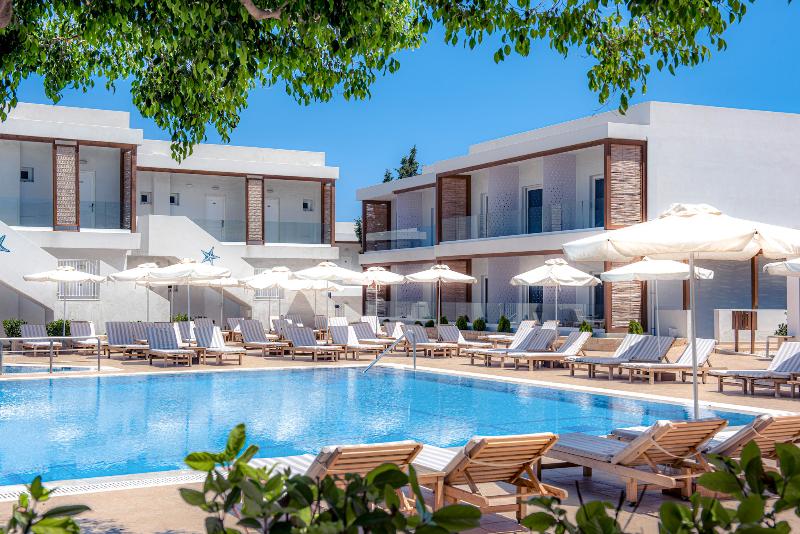
★★★★
Aelius Hotel & Spa
Kato Gouves
Beach 500 m · All-inclusive option · Spa
From £154 a night, taxes incl.2 adults · checked 14 Nov, 02:16

★★★★
Alexandra Beach Resort and Spa
Tsilivi
Beach 160 m · All-inclusive option · Spa
See prices and rooms →

★★★★★
Domes of Elounda, Autograph Collection
Elounda, Crete
Beach 10 m · Spa · Pool
See prices and rooms →

★★★★
Aluasoul Zakynthos - Adults Only - All Inclusive
Tragaki
Beach 50 m · Adults only · All-inclusive option
See prices and rooms →

★★★★
Amalia Kalambaka
Kalambaka
Pool
See prices and rooms →

★★★★★
Charisma Suites
Oia Santorini
Adults only · 18 rooms · Parking
See prices and rooms →

★★★★
Amalia Nafplion
Nafplion
Pool
See prices and rooms →

★★★★★
Belvedere hotel
Mykonos Town
Beach 650 m · Spa · Pool
See prices and rooms →
Getting around
Ferries link the islands, with the main port for Athens at Piraeus, and flights save time on longer hops to Crete, Rhodes or Corfu. On the mainland, a hire car is the easiest way to reach Delphi, Meteora and the Peloponnese, though coach tours cover them all.
When to go
Summers are hot and dry, and July and August are the busiest months. Late spring and early autumn are warm, calmer and better for sightseeing, and the sea stays warm into October. Many island hotels and restaurants close for the winter.
Questions about visiting Greece
- What is Greece best known for?
- Ancient sites such as the Acropolis, Delphi and Olympia, islands including Santorini, Mykonos, Crete, Rhodes and Corfu, clear warm seas and simple, excellent food.
- How many days do you need in Greece?
- Ten days to two weeks allows two or three days in Athens, a mainland trip to Delphi or Meteora and a week on one or two islands. In a single week, choose Athens plus one island.
- What is there to do in Greece with kids?
- Shallow, sandy beaches such as Elafonissi, racing on the ancient track at Olympia, the legends of Knossos, boat trips and the family resorts of Crete, Rhodes, Corfu and Halkidiki.
- Do you need a car in Greece?
- Not in Athens or on small islands such as Santorini and Mykonos, where buses and taxis are enough. A car is very useful on Crete, Rhodes and Corfu and for touring the mainland.
More guides
- Where to stay in Greece
- The best things to do in London
- The best things to do in Edinburgh
- The best things to do in Manchester
- The best things to do in York
- The best things to do in Amsterdam
- The best things to do in Birmingham
- The best things to do in Liverpool
- The best things to do in Bristol
- The best things to do in Barcelona
- The best things to do in Budapest
- The best things to do in Cambridge
- The best things to do in Dublin
- The best things to do in Krakow