
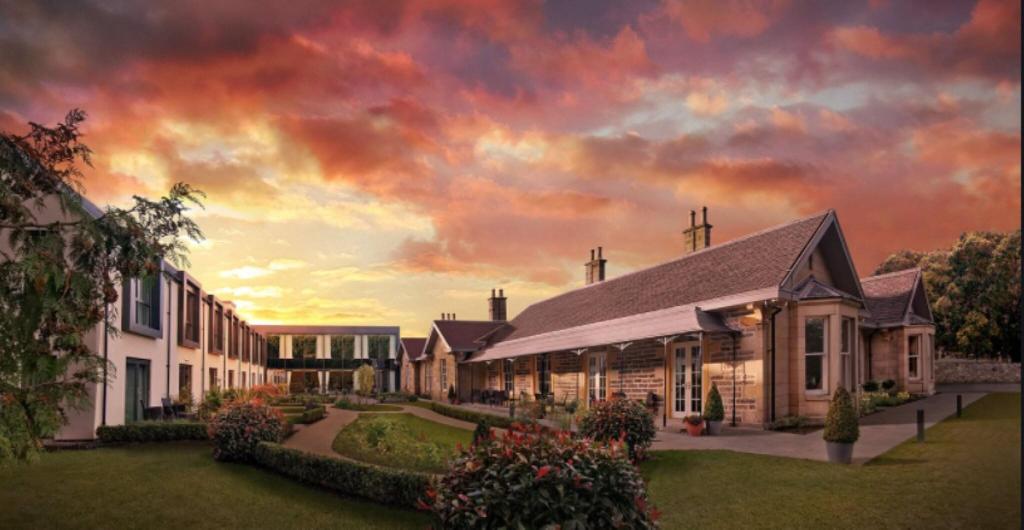
Inverness is the capital of the Highlands, a small, friendly city where the River Ness runs fast and clear through the middle on its short dash from loch to sea. It has a castle on a hill, church spires along the water and salmon fishermen standing thigh-deep within sight of the shops. It will not take you long to see.
That is the point. Inverness is a base, and what a base. Loch Ness begins a few miles upstream. The battlefield that ended the Jacobite dream lies just outside town. Dolphins leap in the firth, whisky is made over the hill and the mountains of the Cairngorms fill the southern horizon. Hire a car, pack a waterproof and go.
Don't miss
In the city
A gentle half-day on foot, mostly beside the river.
Inverness Castle
Landmark

Photo: Diliff, CC BY-SA 3.0 A red sandstone castle stands on a bluff above the river, where fortresses have stood for the best part of a thousand years. The present one is Victorian, built as a courthouse and prison, and has been redeveloped as a visitor attraction telling the story of the Highlands. Even from outside it is worth the climb. The terrace has the best view in town, up the River Ness towards the hills, and a statue of Flora MacDonald gazes out beside you.
The Ness Islands
Nature

Photo: dave conner, CC BY 2.0 A short walk upstream from the centre, the river splits around a cluster of small wooded islands linked to each bank, and to each other, by Victorian suspension footbridges. Tall pines and beeches shade the paths, and the water rushes past on both sides. It makes a lovely circular walk of an hour or so along one bank and back down the other, past the cathedral. Look out for anglers, herons and the occasional seal.
The Victorian Market
Market

Photo: Daniel Kraft, CC BY-SA 3.0 A covered arcade in the heart of the city, rebuilt after a fire in the late 19th century, with a fine arched iron and timber roof. The old shopfronts house independent businesses selling gifts, jewellery, sweets and Highland souvenirs. The former fish hall has been turned into a food hall with local producers and places to eat. It is a good refuge on a wet day, of which Inverness has its share.
Leakey's Bookshop
Activity

Photo: LeamingtonBooks, CC BY-SA 4.0 One of the most atmospheric second-hand bookshops in Britain, set in an 18th-century Gaelic church near the river. Books are stacked from floor to gallery, a spiral staircase leads upwards and a big wood-burning stove glows in the middle of the floor. There are old maps and prints to browse as well. Book lovers should allow an hour and room in the suitcase.
Loch Ness
Twenty-odd miles of deep, dark water and one very famous resident.
Loch Ness
Nature

Photo: Steven1991, CC BY-SA 4.0 The most famous lake in the world is long, narrow and startlingly deep, holding more fresh water than all the lakes of England and Wales put together. Peat washed down from the hills makes it almost black, which has done no harm to the legend of the monster. Whether or not you believe in Nessie, the loch is magnificent, walled in by steep wooded hills. Boat cruises leave from the northern end near Inverness and from Fort Augustus in the south.
Tip: The main road down the western shore is the busy one. The quieter road along the eastern side, through Dores and Foyers, is slower and prettier.
Urquhart Castle
Landmark

Photo: Daniel Kraft, CC BY-SA 3.0 The ruins of one of Scotland's largest medieval castles sit on a rocky headland jutting into Loch Ness near Drumnadrochit. It changed hands many times in the wars between Scots and English before being blown up in the 17th century to keep it from the Jacobites. Climb the surviving tower house for a sweeping view up and down the loch. It is the classic Loch Ness picture, and consequently very popular in summer.
Tip: Arrive early or late in the day to avoid the coach parties, or come by boat on a loch cruise.
Fort Augustus and the Caledonian Canal
Day trip

Photo: Stuart Wilding, CC BY-SA 2.0 At the southern tip of the loch, the village of Fort Augustus is built around a staircase of locks on the Caledonian Canal. Thomas Telford's great waterway links a chain of lochs to carry boats right across Scotland from coast to coast. Watching yachts and cruisers climb slowly through the lock flight, with a coffee or a pint in hand, is one of the Highlands' simplest pleasures. There are loch views from the pier beyond.
History on the doorstep
Culloden Battlefield
Landmark

Photo: Photograph by Mike Peel (www.mikepeel.net)., CC BY-SA 4.0 On this bleak moor east of Inverness, on 16 April 1746, the Jacobite army of Bonnie Prince Charlie was destroyed by government troops in under an hour. It was the last pitched battle fought on British soil, and it changed the Highlands for ever. The visitor centre tells both sides of the story with great care. Outside, flags mark the opposing lines, and simple stones bearing clan names stand over the mass graves. It is a sombre and powerful place.
Clava Cairns
Landmark

Photo: Daniel Kraft, CC BY-SA 3.0 A mile or so from Culloden, in a quiet grove of trees, lies a Bronze Age cemetery around 4,000 years old. Three large stone burial cairns, each ringed by standing stones, are aligned with the midwinter sunset. It is a peaceful, slightly eerie spot that often has few visitors, though fans of Outlander come looking for a familiar split stone. Combine it with the battlefield in one outing.
Fort George
Landmark

Photo: Iain Lees, CC BY-SA 2.0 Built after Culloden to make sure the Highlands never rose again, Fort George is one of the mightiest artillery fortifications in Europe. It occupies a spit of land thrusting into the Moray Firth and has never been attacked, so it survives almost exactly as designed. It is still a working army barracks. Walk the mile of ramparts for sea views, and watch the water: dolphins are often seen from the walls.
Cawdor Castle
Landmark
A fairy-tale tower house near Nairn, with a drawbridge, turrets and beautiful walled gardens. Shakespeare made Macbeth the Thane of Cawdor, though the real king lived centuries before the castle was built. It remains a family home, which gives the rooms a lived-in warmth, and the labels are unusually funny. In the vaults you can see the ancient tree around which, legend says, the tower was raised. The castle opens in the warmer months only.
Wild places and whisky
Chanonry Point
Wildlife

Photo: Vcarceler, CC BY-SA 3.0 A narrow shingle spit on the Black Isle, north of Inverness, reaching out into the Moray Firth beside a lighthouse. It is one of the best places in Britain to watch wild bottlenose dolphins from the shore. They come in close to chase salmon through the fast-running channel, sometimes just metres from the beach. Sightings are never guaranteed, but patience is often rewarded, especially in summer.
Tip: Aim to be there on a rising tide, roughly an hour or so after low water, when the dolphins tend to feed.
The Cairngorms
Nature

Photo: GC85, CC BY-SA 4.0 South of Inverness rises the largest national park in Britain: a high granite plateau surrounded by ancient Caledonian pine forest, lochs and heather moor. Aviemore, on the main road and railway, is the gateway. Walk or cycle round Loch an Eilein with its island castle, look for red squirrels in Rothiemurchus forest, or head up towards the ski area for big mountain views. In winter there is snow sport; all year there is space.
Glen Affric
Nature
Often described as the most beautiful glen in Scotland, Glen Affric lies west of Loch Ness beyond the village of Cannich. A single-track road winds past lochs and waterfalls through one of the largest surviving remnants of native Caledonian pinewood. Waymarked trails lead to viewpoints and around Loch Affric. In autumn the birches turn gold against the dark pines, and it is breathtaking. Bring midge repellent in summer.
Speyside whisky
Food
East of Inverness, the valley of the River Spey holds the greatest concentration of malt whisky distilleries in Scotland. Famous names cluster around towns such as Dufftown, Aberlour and Rothes, and many welcome visitors for tours and tastings. You will see the copper stills, breathe in the warehouses and learn why no two malts taste alike. Book tours ahead, and choose a designated driver or join an organised trip.
Where to stay in Inverness
Not sure which area suits you? Read our guide: Where to stay in Inverness →

★★★★
Culloden House Hotel
Inverness
Spa · 28 rooms · Parking
See prices and rooms →

★★★★
Macdonald Highland Hotel
Aviemore
Spa · Pool · Family-friendly
See prices and rooms →

★★★★★
Ness Walk
Inverness
47 rooms · Parking
See prices and rooms →

★★★★
Crerar Golf View Hotel & Spa
Nairn
Spa · Pool · 42 rooms
See prices and rooms →

★★★★
Mansion House
Elgin
23 rooms · Parking
See prices and rooms →

★★★★★
Glenmorangie House
Tain, Ross-Shire
9 rooms · Parking
See prices and rooms →
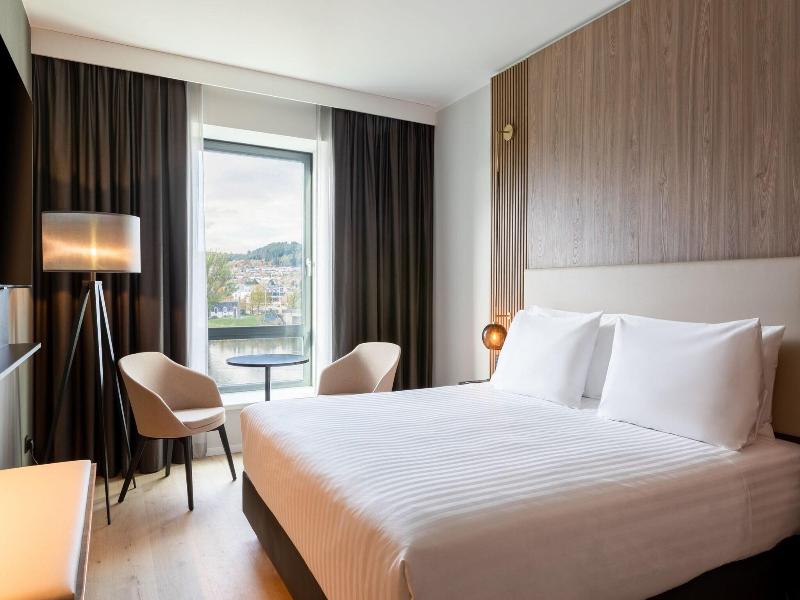
★★★★
Ac Hotel Inverness
Inverness
Parking
See prices and rooms →

★★★★★
Rocpool Reserve
Inverness
11 rooms · Golf · Parking
See prices and rooms →
Getting around
The city itself is easily walked. Beyond it, a hire car gives you by far the most freedom, as the best places are spread out and rural buses are infrequent. Without one, organised day tours cover Loch Ness, Culloden and Speyside, and trains run to Aviemore. Many Highland roads are single track: use the passing places and let faster traffic by.
When to go
May to September brings the longest days, with daylight lasting late into the evening around midsummer. Summer is also the busiest season and the time for midges, the tiny biting insects of the west. Spring and autumn are quieter and often beautiful. Winter days are short and some attractions close, but the mountains are at their most dramatic. Expect changeable weather at any time.
Questions about visiting Inverness
- What is Inverness best known for?
- It is the capital of the Scottish Highlands and the gateway to Loch Ness. It is also close to Culloden Battlefield and the start and finish of the North Coast 500 driving route.
- Is Inverness worth visiting?
- Yes, above all as a base. The city is pleasant and compact, and within an hour or so you have Loch Ness, Culloden, the Moray Firth dolphins, Speyside distilleries and the Cairngorms.
- How many days do you need in Inverness?
- Three days is a good minimum: one for the city and Culloden, one for Loch Ness and one for the Cairngorms, the Black Isle or Speyside. Stay longer if you plan to tour further north or west.
- What is there to do in Inverness with kids?
- A boat trip on Loch Ness to look for the monster, exploring Urquhart Castle and Fort George, dolphin watching at Chanonry Point and outdoor activities around Aviemore in the Cairngorms.
- Do you need a car in Inverness?
- Not for the city, but it helps a great deal for everything around it. If you would prefer not to drive, day tours from Inverness reach the main sights.
More guides
- Where to stay in Inverness
- The best things to do in London
- The best things to do in Edinburgh
- The best things to do in Manchester
- The best things to do in York
- The best things to do in Amsterdam
- The best things to do in Birmingham
- The best things to do in Liverpool
- The best things to do in Bristol
- The best things to do in Barcelona
- The best things to do in Budapest
- The best things to do in Cambridge
- The best things to do in Dublin
- The best things to do in Krakow