
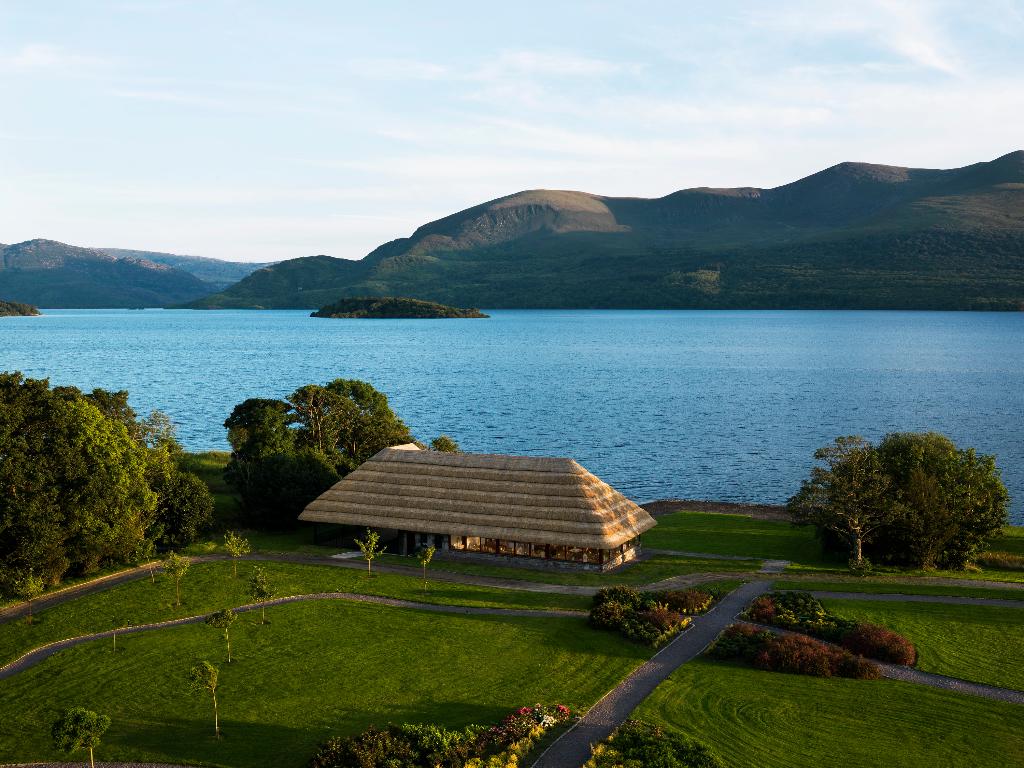
Ireland is a small country that feels enormous. Drive for an hour and the scenery changes completely: Georgian squares give way to green pasture, pasture to bare limestone, limestone to cliffs with nothing beyond them but the Atlantic. The light shifts every ten minutes, the roads wander, and there is almost always a pub at the end of them with a fire lit and a fiddle tuning up.
Most trips start in Dublin and head west, and that is a fine plan. Give the capital a couple of days for its history and its pubs, then follow the coast through Kerry, Clare, Galway and beyond. Don't try to see everything. Ireland rewards those who slow down and stop to talk.
Don't miss
Dublin
A compact, walkable capital with a thousand years of stories.
Trinity College and the Book of Kells
Landmark

Photo: Diliff, CC BY-SA 4.0 Ireland's oldest university sits behind railings in the very centre of Dublin, a calm world of cobbled squares and grey stone. People queue to see the Book of Kells, a gospel manuscript illuminated by monks around the year 800, its pages alive with swirling knots and tiny animals. The visit also takes in the Long Room, the barrel-vaulted old library that is one of the most photographed rooms in Ireland.
Tip: Book a timed slot ahead, especially in summer.
Guinness Storehouse
Museum
Guinness has been brewed at St James's Gate since 1759, and the brewery's visitor centre is the most popular attraction in the country. Seven floors, built around a giant glass atrium shaped like a pint, explain how the black stuff is made. You finish at the rooftop Gravity Bar with a pint in hand and a full-circle view over Dublin.
Kilmainham Gaol
Museum

Photo: Velvet, CC BY-SA 3.0 This grim Victorian prison held generations of Irish rebels, and the leaders of the 1916 Easter Rising were executed in its yard. Guided tours lead you through the echoing cell blocks and tell the story of Ireland's long road to independence. It is the most moving visit in Dublin and essential for anyone interested in Irish history.
Tip: Entry is by guided tour only and tickets go quickly. Reserve as early as you can.
Temple Bar
Nightlife

Photo: Gordon Leggett, CC BY-SA 4.0 The cobbled lanes south of the River Liffey are Dublin's best-known party district, packed with pubs spilling live music onto the street. It is touristy, noisy and not where Dubliners drink, but it is good fun for a first night. For a quieter pint and a proper chat, walk ten minutes in any direction.
The wild west coast
The Wild Atlantic Way runs the length of the west coast. These are its headline acts.
The Cliffs of Moher
Nature

Photo: Berthold Werner, CC BY-SA 4.0 In County Clare, the land simply stops. The Cliffs of Moher run for miles along the Atlantic, sheer walls of dark rock rising to around two hundred metres, with seabirds wheeling below your feet and the Aran Islands on the horizon. It is Ireland's most famous natural sight and it deserves to be. Paths lead along the cliff top in both directions from the visitor centre. Walk a little and you leave most of the crowd behind.
Tip: It is windy on the best of days. Bring a waterproof, stick to the marked paths and go late in the afternoon for softer light.
The Ring of Kerry
Activity

Photo: Marco Ober, CC BY-SA 4.0 The classic Irish road trip is a loop around the Iveragh Peninsula in the far south-west, past mountains, peat bogs, sandy bays and pastel-painted villages. It starts and ends near Killarney, whose national park of lakes, oak woods and wild red deer is a destination in its own right. You can drive it in a day, but two is better. Stop often.
Tip: Tour coaches travel anticlockwise. Many drivers go the same way to avoid meeting them on the narrow bends.
The Dingle Peninsula
Nature

Photo: Towiki60, CC BY 3.0 Just north of the Ring of Kerry, Dingle is smaller, wilder and, for many, even more beautiful. The Slea Head Drive loops past ancient stone huts, empty beaches and views out to the Blasket Islands. Dingle town itself is a cheerful fishing port with a remarkable number of pubs, several of which double as hardware shops.
Connemara
Nature

Photo: JoachimKohler-HB, CC BY-SA 4.0 West of Galway city the landscape turns raw and magnificent: brown bog, dark lakes, dry-stone walls and the bare peaks of the Twelve Bens. This is one of the heartlands of the Irish language. Don't miss Kylemore Abbey, a Victorian castle mirrored in its lake, or the Sky Road above Clifden for its views of islands and ocean.
Slieve League
Nature

Photo: James Emmans, CC BY-SA 2.0 Up in County Donegal, the sea cliffs of Slieve League are nearly three times the height of the Cliffs of Moher and see a fraction of the visitors. A road climbs to a viewpoint where the mountain falls away into the Atlantic in bands of ochre and green. Donegal is a long drive from anywhere, which is precisely its appeal.
Castles, saints and ancient stones
The Rock of Cashel
Landmark

Photo: Berthold Werner, CC BY-SA 4.0 A cluster of medieval ruins on a limestone outcrop above the green plain of Tipperary: a roofless cathedral, a round tower, a Romanesque chapel and high stone crosses. This was the seat of the kings of Munster, and legend ties it to St Patrick. Seen from the road at dusk, it is one of the great sights of Ireland.
Newgrange
Landmark

Photo: Stanley Howe, CC BY-SA 2.0 In the Boyne Valley north of Dublin stands a huge Stone Age passage tomb, older than both Stonehenge and the pyramids of Giza. A narrow passage leads to a chamber deep inside the mound, built so that the rising sun at the winter solstice shines straight down it. Visits are by guided tour from the visitor centre.
Tip: Places are limited, so reserve ahead in summer.
Glendalough
Landmark

Photo: Zairon, CC BY 4.0 An hour or so south of Dublin, in the Wicklow Mountains, a sixth-century monastic settlement sits in a wooded valley between two lakes. A slender round tower rises above the ruined churches and old gravestones, and walking trails lead on along the shore. It makes an excellent day out of the city for walkers and history lovers alike.
Blarney Castle
Landmark

Photo: Gerd Eichmann, CC BY-SA 4.0 Just outside Cork, this medieval tower house is home to the Blarney Stone. Climb to the battlements, lean out backwards and kiss it, and you are said to gain the gift of the gab. It is gloriously silly and everyone does it. The gardens around the castle are lovely and often overlooked.
Towns worth a night
Galway
Neighbourhood
Ireland's most likeable city is small, young and musical. The pedestrian streets of the Latin Quarter are lined with bright shopfronts and buskers, the pubs put on traditional music most nights, and the River Corrib rushes through the middle to the bay. It is also the natural base for Connemara, the Aran Islands and the Cliffs of Moher.
Kinsale
Food
A harbour town south of Cork with narrow, brightly painted streets and a reputation as one of the best places to eat in Ireland. Seafood is the thing: oysters, mussels, chowder and whatever came off the boats that morning. Walk it off with a stroll out to Charles Fort, a star-shaped fortress guarding the harbour mouth.
The English Market, Cork
Market
Cork's covered food market has been trading since the eighteenth century under a handsome vaulted roof. Stalls are piled with local cheeses, smoked fish, fresh bread and traditional Cork specialities. It is a fine place to graze, put together a picnic or simply watch Ireland's second city go about its shopping.
Eat and drink
A traditional music session
Nightlife
The best night out in Ireland costs the price of a drink. In pubs all over the country, musicians gather in a corner with fiddles, flutes, pipes and a bodhrán drum and simply start playing. Nobody is on a stage and anyone may join in. Counties Clare, Galway and Kerry are especially known for it; ask a local where the music is tonight.
Seafood chowder and soda bread
Food
The lunch that fuels the west coast: a creamy bowl of chowder thick with salmon, white fish and mussels, served with dense brown soda bread and salty Irish butter. You will find it in almost every pub from Cork to Donegal, and after a wet walk on a headland nothing tastes better.
Where to stay in Ireland
Not sure which area suits you? Read our guide: Where to stay in Ireland →

★★★★
Absolute Hotel Limerick
Limerick
Spa · Parking
See prices and rooms →
★★★★
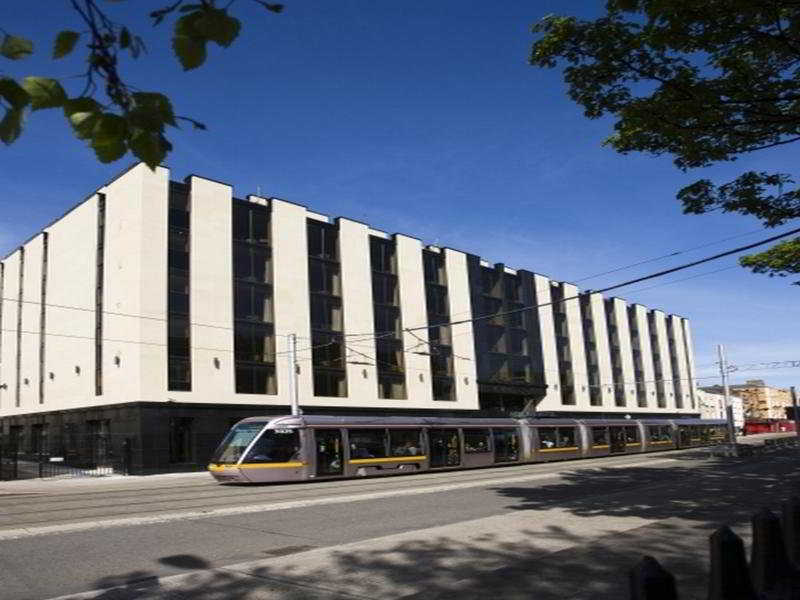
Ashling Hotel
Dublin
Parking
From £140 a night, taxes incl.2 adults · checked 14 Nov, 22:52

★★★★★
The College Green Hotel Dublin, Autograph
Dublin
Parking
From £454 a night, taxes incl.2 adults · checked 14 Nov, 10:22

★★★★
Brooks
Dublin
Parking
From £232 a night, taxes incl.2 adults · checked 14 Nov, 04:07

★★★★
Cahernane House
Killarney
38 rooms · Parking
See prices and rooms →

★★★★★
The Europe Hotel & Resort
Killarney
Spa · Pool · Family-friendly
See prices and rooms →

★★★★
Carlton Hotel Blanchardstown
Dublin
Parking
From £149 a night, taxes incl.2 adults · checked 14 Nov, 22:52

★★★★★
Hayfield Manor
Cork
Spa · Pool · Parking
See prices and rooms →
Getting around
Dublin is best on foot, with trams and buses for longer hops. Trains and coaches link the main cities, but to explore the west coast properly you will want a hire car. Roads are narrow and winding, so journeys take longer than the map suggests. If you would rather not drive, day tours run from Dublin, Galway and Killarney.
When to go
Late spring to early autumn brings the longest days and the mildest weather. Ireland is green for a reason, though: showers are possible in any month, often followed by sunshine an hour later. Bring a waterproof and you will be fine. St Patrick's Day, in March, is a big celebration nationwide.
Questions about visiting Ireland
- What is Ireland best known for?
- Green countryside and a dramatic Atlantic coast, including the Cliffs of Moher and the Ring of Kerry, along with Dublin, Guinness, traditional music and a famously warm welcome.
- How many days do you need in Ireland?
- A week is enough for Dublin plus a taste of the west coast, such as Galway and the Cliffs of Moher or Killarney and the Ring of Kerry. Ten days to two weeks lets you take in both and travel more slowly.
- Do you need a car in Ireland?
- Not in Dublin, where a car is a nuisance. For the west coast and the countryside a hire car gives you far more freedom, though organised tours cover the main sights if you prefer not to drive.
- What is there to do in Ireland with kids?
- Castles to climb, beaches and boat trips on the west coast, the red deer of Killarney National Park, kissing the Blarney Stone and easy walks at Glendalough all suit families.
More guides
- Where to stay in Ireland
- The best things to do in London
- The best things to do in Edinburgh
- The best things to do in Manchester
- The best things to do in York
- The best things to do in Amsterdam
- The best things to do in Birmingham
- The best things to do in Liverpool
- The best things to do in Bristol
- The best things to do in Barcelona
- The best things to do in Budapest
- The best things to do in Cambridge
- The best things to do in Dublin
- The best things to do in Krakow