
Kyoto was Japan's imperial capital for more than a thousand years, and it still carries itself that way. There are well over a thousand temples here, along with shrines, moss gardens, wooden teahouses and lantern-lit lanes where you may catch a geiko hurrying to an appointment. It is the Japan people picture before they arrive, and the surprise is that it really exists.
It is also a working modern city, with a grid of busy avenues and a station the size of a small airport. The trick is to pick a district a day rather than racing across town: the eastern hills, the bamboo of Arashiyama, the gates of Fushimi Inari. Get up early and Kyoto rewards you with an hour or two of near silence.
Don't miss
The big sights
The temples and shrines that made Kyoto's name.
Fushimi Inari Taisha
Landmark

Photo: Basile Morin, CC BY-SA 4.0 Thousands of vermilion torii gates march up the wooded slopes of Mount Inari, packed so tightly that the path becomes a glowing orange tunnel. This is the head shrine of Inari, the deity of rice and business, and stone foxes guard every corner. Most visitors stop after the first dense stretch of gates.
Keep climbing. The crowds thin within minutes, small shrines and tea stalls appear among the trees, and the city spreads out below. The full loop to the summit suits anyone with decent shoes and a couple of hours to spare.
Tip: Go at dawn or after dark. The shrine grounds stay open, the gates are lit, and you will have long stretches to yourself.
Kinkaku-ji
Landmark

Photo: Basile Morin, CC BY-SA 4.0 The Golden Pavilion is exactly what it sounds like: a Zen temple whose upper floors are covered in gold leaf, set on the edge of a pond that doubles it in reflection. It is a short visit on a one-way path, and it is always busy, but the first sight of it across the water still stops people mid-step.
Tip: Sunny mornings give the best reflection. A dusting of winter snow is the picture everyone hopes for.
Kiyomizu-dera
Landmark

Photo: Martin Falbisoner, CC BY-SA 4.0 A great wooden temple built out over a hillside in the eastern hills, its famous stage held up by a lattice of huge timber pillars. From the terrace you look across maple and cherry trees to the city beyond, which is why spring and autumn bring the biggest crowds.
Half the pleasure is the walk up: the sloping lanes of Sannenzaka and Ninenzaka are lined with old wooden shopfronts selling sweets, ceramics and green tea ice cream.
Nijo Castle
Landmark

Photo: Jakub Hałun, CC BY 4.0 Built for the Tokugawa shoguns, Nijo Castle is all moats, stone walls and painted sliding screens of tigers and pine trees. The corridors of the Ninomaru Palace have 'nightingale floors' that chirp underfoot, said to warn of intruders. It is a good counterweight to all the temples, and one for anyone with a taste for samurai history.
Ginkaku-ji
Landmark

Photo: Jakub Hałun, CC BY 4.0 The Silver Pavilion has no silver on it at all, and is lovelier for it. This is Kyoto at its most restrained: a dark wooden hall, a raked cone of white sand, and a moss garden that climbs the hill behind. Come here for calm rather than spectacle.
Neighbourhoods to wander
Gion
Neighbourhood

Photo: lumoplank, CC0 Kyoto's best-known geisha district is a web of wooden machiya townhouses, teahouses and discreet restaurants behind sliding doors. Hanamikoji Street is the famous stretch, but the willow-lined Shirakawa canal a few minutes north is prettier and quieter. Early evening, when the lanterns come on, is the time to be here.
Tip: Geiko and maiko are on their way to work. Give them space and do not block their path for photographs; some private lanes ban photography altogether.
Arashiyama Bamboo Grove
Nature

Photo: Basile Morin, CC BY-SA 4.0 On the western edge of the city, a path runs through towering green bamboo that creaks and sways overhead. It is shorter than photographs suggest and packed by mid-morning, so treat it as the start of a day in Arashiyama rather than the whole point.
The Zen temple of Tenryu-ji and its pond garden sit right beside the grove, the Togetsukyo Bridge spans the river below, and the hills behind turn red and gold in autumn.
Tip: Arrive soon after sunrise, then have breakfast once the tour groups turn up.
Philosopher's Path
Neighbourhood

Photo: Gzzz, CC BY 4.0 A stone path follows a narrow canal along the foot of the eastern hills, running south from Ginkaku-ji towards Nanzen-ji. Cherry trees arch over the water, so for a week or two in spring it is one of the most photographed walks in Japan. The rest of the year it is simply a gentle, leafy stroll with small temples and cafés along the way.
Pontocho
Nightlife
A lantern-lit alley barely wide enough for two people, running parallel to the Kamo River and lined from end to end with restaurants and bars. In the warmer months many of them build wooden terraces out over the riverbank. It suits couples and anyone who wants a proper Kyoto evening.
Eat and drink
Nishiki Market
Market

Photo: ignis, CC BY-SA 3.0 Known as Kyoto's Kitchen, this long covered arcade in the centre of town is crammed with stalls selling pickles, tofu, grilled eel, knives and things on sticks. It is as much a place to snack as to shop, and a good introduction to ingredients you will meet again at dinner.
Tip: Eat at the stall rather than walking along with your food, which is frowned upon here.
Kaiseki
Food
Kyoto is the home of kaiseki, a formal meal of many small, seasonal courses, each arranged like a painting. It grew out of the tea ceremony and it is as much about the season, the ceramics and the pacing as the food. Lunch is the gentler way to try it.
Matcha and wagashi
Food

Photo: Laitche, CC BY-SA 4.0 The tea fields of nearby Uji have supplied Kyoto for centuries, and the city turns matcha into everything: whisked tea, parfaits, noodles, soft ice cream. The classic way to drink it is in a teahouse with wagashi, delicate sweets made to balance the tea's bitterness.
Day trips
Nara
Day trip

Photo: ONO Masanobu, CC0 Japan's first permanent capital is an easy train ride south. The headline is Todai-ji, a vast wooden hall housing a giant bronze Buddha, set in a park where deer wander freely among the visitors. Add the lantern-lined paths of Kasuga Taisha and you have a full, easy day that works well with children.
Uji
Day trip

Photo: 663highland, CC BY 2.5 A small riverside town between Kyoto and Nara, famous for two things: green tea and Byodo-in, the graceful Phoenix Hall that appears on the ten-yen coin. The street leading to the temple is lined with tea merchants, and half a day is plenty.
Where to stay in Kyoto
Not sure which area suits you? Read our guide: Where to stay in Kyoto →

★★★★
Almont Hotel Kyoto
Kyoto
Parking
From £64 a night, taxes incl.2 adults · checked 14 Nov, 02:22

★★★★
Ana Crowne Plaza Hotel Kyoto
Kyoto
Parking
From £99 a night, taxes incl.2 adults · checked 14 Nov, 02:22

★★★★★
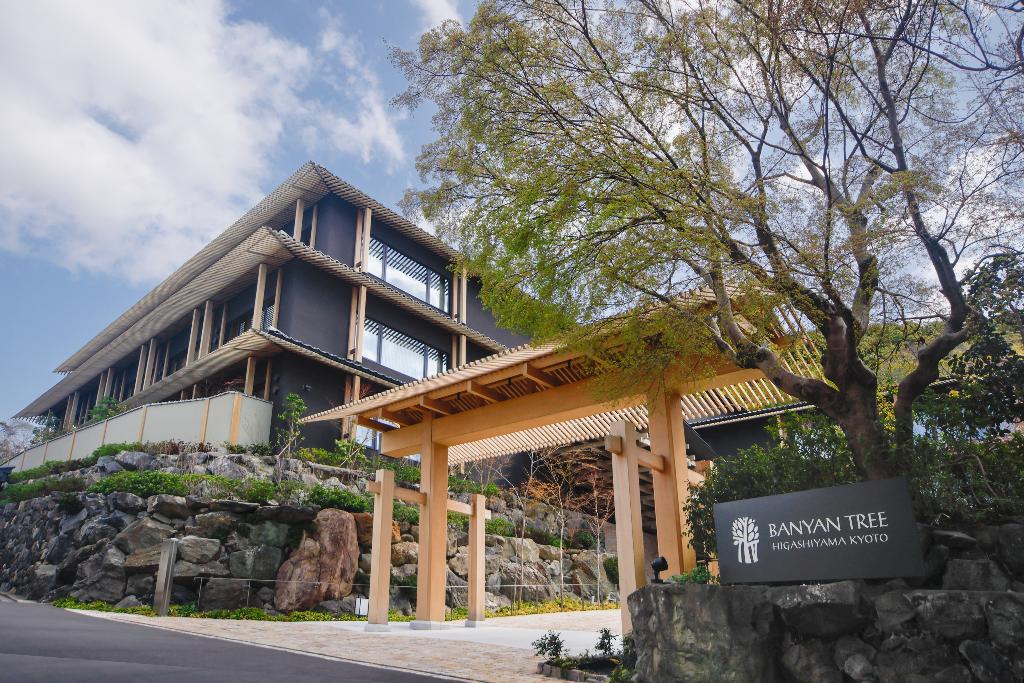
Banyan Tree Higashiyama Kyoto
Kyoto
Spa · 52 rooms
From £651 a night, taxes incl.2 adults · checked 14 Nov, 14:52

★★★★
AOI HOTEL KYOTO
Kyoto
6 rooms · Parking
See prices and rooms →

★★★★
DoubleTree by Hilton Kyoto Station
Kyoto
Parking
From £112 a night, taxes incl.2 adults · checked 14 Nov, 21:07

★★★★★
Ace Hotel Kyoto
Kyoto
Pets allowed
From £182 a night, taxes incl.2 adults · checked 14 Nov, 02:22

★★★★
Genmyoan
Miyazu
Spa · 17 rooms · Parking
From £822 a night, taxes incl.2 adults · checked 14 Nov, 14:52

★★★★★
Hotel Granvia Kyoto
Karasuma-Dori, Shimogyo-Ku,kyoto
Pool · Parking
From £120 a night, taxes incl.2 adults · checked 14 Nov, 02:22
Getting around
Kyoto has two subway lines, several private railways and a dense bus network, and between them they reach almost everything. Trains are quicker for Fushimi Inari and Arashiyama; buses fill the gaps but get crowded. The eastern hills are best on foot, and the flat city centre is good for cycling.
When to go
Spring cherry blossom and autumn leaves are the most beautiful times and by far the busiest. Summers are hot and humid, winters cold and clear with far fewer visitors. Whenever you come, the first hours of the morning are the quietest.
Questions about visiting Kyoto
- What is Kyoto best known for?
- Its temples and shrines, above all the torii gates of Fushimi Inari, the Golden Pavilion and Kiyomizu-dera, along with the geisha district of Gion, traditional gardens and refined kaiseki cooking.
- How many days do you need in Kyoto?
- Three days covers the main sights at a sensible pace: one for the eastern hills and Gion, one for Arashiyama and the Golden Pavilion, one for Fushimi Inari and Nara. Four or five lets you slow down.
- Is Kyoto worth visiting?
- Yes. It is the best place in Japan to see traditional architecture, gardens and culture, and it is a short bullet train ride from Osaka and a few hours from Tokyo.
- What is there to do in Kyoto with kids?
- The gates of Fushimi Inari, the bamboo grove and river at Arashiyama, snacking through Nishiki Market and a day trip to the deer park at Nara all go down well with children.
More guides
- Where to stay in Kyoto
- The best things to do in London
- The best things to do in Edinburgh
- The best things to do in Manchester
- The best things to do in York
- The best things to do in Amsterdam
- The best things to do in Birmingham
- The best things to do in Liverpool
- The best things to do in Bristol
- The best things to do in Barcelona
- The best things to do in Budapest
- The best things to do in Cambridge
- The best things to do in Dublin
- The best things to do in Krakow