
Lille is the French city that feels a little bit Belgian, and is all the better for it. It only became French in the seventeenth century, and its heart is still Flemish: tall, ornate houses of red brick and carved stone, a belfry on the skyline, beer on every table and a cuisine built on cheese, chips and slow-cooked beef. The welcome is famously warm. Northerners will tell you they have the sun in their hearts because they do not have it in the sky.
For British visitors it is also absurdly convenient, a short hop on the Eurostar from London. That makes it one of the easiest weekends abroad there is: cobbled streets to wander, one of the best art museums in France, markets, waffles and long, convivial lunches, all within walking distance of the station.
Don't miss
The big sights
The Grand Place
Landmark

Photo: Velvet, CC BY-SA 3.0 Lille's main square, officially named after Charles de Gaulle, who was born in the city, is its living room. Flemish gables, gilded suns and stone garlands crowd the house fronts, café terraces spread across the paving and people meet by the fountain in the middle.
On top of its column stands the Goddess, a bronze figure put up to honour the townspeople who withstood an Austrian siege in 1792. On one side is the stepped gable of the old newspaper building, lit up at night.
The Vieille Bourse
Landmark

Photo: Gzen92, CC BY-SA 4.0 Between the Grand Place and the opera house stands the finest building in Lille: the old stock exchange, built in the 1650s as twenty-four identical houses around an arcaded courtyard. The facades are a riot of carved fruit, masks and garlands, picked out in red and gold.
Step inside the courtyard, where on most afternoons second-hand booksellers set out their stalls, florists sell bunches of tulips and chess players sit hunched over their boards. In summer, people come here to dance the tango.
The Belfry
Landmark

Photo: Chabe01, CC BY-SA 4.0 The slim brick and concrete tower of the town hall, finished in the 1930s, rises over a hundred metres above the city and is one of the tallest belfries in the region. It is part of a group of Flemish and northern French belfries listed by UNESCO, symbols of the independence of these merchant towns.
Climb the stairs or take the lift from part of the way up for a view over the rooftops to the Belgian border and, on a clear day, far beyond.
Tip: Visitor numbers are limited, so it is worth booking a slot through the tourist office.
The Citadel
Landmark

Photo: Velvet, CC BY-SA 4.0 When Louis XIV took Lille in 1667, he had his great military engineer Vauban build a fortress to keep it. The result, a huge star-shaped citadel of brick ramparts and moats, was called the Queen of Citadels. It is still used by the army, so the interior is rarely open.
No matter. The woods and waterside paths that surround it are the city's biggest park, full of joggers, families and picnickers at weekends. It is a pleasant walk from Vieux-Lille.
Vieux-Lille
The old town, north of the Grand Place: Lille's best-looking streets, and its best shopping.
Vieux-Lille
Neighbourhood
Thirty years ago much of old Lille was run-down. Now it is the smartest part of town, a maze of cobbled lanes lined with restored seventeenth and eighteenth-century houses in brick and pale stone, their ground floors given over to boutiques, delicatessens, bars and restaurants.
Start on the Rue de la Monnaie and the Place aux Oignons and simply follow your nose. It is at its best on a Saturday, when everyone is out shopping, and in the evening, when the lamps come on.
Notre-Dame de la Treille
Landmark

Photo: Velvet, CC BY-SA 3.0 Lille's cathedral is a curiosity. Begun in the 1850s in the Gothic style, it was left unfinished for well over a century, until a strikingly modern west front was added in the 1990s. From outside, the facade is a blank grey screen.
Go in and turn around. The front is made of thin sheets of marble that glow a soft, veined orange-pink when the daylight comes through, around a contemporary rose window. Visit on a bright afternoon for the full effect.
The Hospice Comtesse
Museum

Photo: Velvet, CC BY-SA 3.0 Founded in 1237 by Countess Joan of Flanders as a hospital for the poor, this is one of the oldest buildings in the city. The present brick ranges, around a peaceful courtyard, date mostly from the fifteenth to eighteenth centuries.
Inside is a museum of old Lille: a long, barn-like sick ward with a wooden ceiling like an upturned boat, a kitchen lined with blue and white Delft-style tiles, and rooms of Flemish furniture and paintings. It gives a real sense of the city before it was French.
Museums and galleries
The Lille area has more good art than any French city outside Paris has a right to.
The Palais des Beaux-Arts
Museum

Photo: Velvet, CC BY-SA 4.0 Housed in a grand Belle Époque palace on the Place de la République, Lille's fine arts museum is one of the largest in France. The collection is superb: Rubens, Van Dyck, Goya, Delacroix, Courbet and Monet, with Rodin and Claudel among the sculpture.
The most unusual exhibits are in the basement: a set of enormous, intricate eighteenth-century scale models of the fortified towns of northern France and Belgium, made for the king's generals. Allow a good half-day.
La Piscine, Roubaix
Museum

Photo: Camster2, CC BY-SA 3.0 One of the most beautiful museums in France is a former swimming pool. Roubaix, a textile town now part of greater Lille, built its workers a lavish art deco baths in the 1930s. When it closed, the building was turned into a museum of art and industry.
The pool is still there, a long strip of water lined with sculptures under a great sunburst window of stained glass, with the old changing cubicles as display cases. It is twenty minutes or so from central Lille by metro, and should not be missed.
The LaM
Museum
In a sculpture park at Villeneuve-d'Ascq, on the eastern edge of the city, the LaM is Lille's museum of modern and contemporary art. It holds important works by Picasso, Braque, Modigliani and Miró.
What sets it apart is its collection of outsider art, the largest in France: obsessive, visionary work by self-taught artists, shown in a purpose-built wing. The park, dotted with sculptures by Calder and others, is good for a wander. Check that it is open before you go, as it has had periods of closure for refurbishment.
Villa Cavrois
Landmark

Photo: Velvet, CC BY-SA 4.0 In the leafy suburb of Croix stands a masterpiece of modernist architecture: a long, low mansion of yellow brick, designed in the early 1930s by Robert Mallet-Stevens for a wealthy textile family. He designed everything, from the building to the furniture, the clocks and the door handles.
After decades of neglect it has been meticulously restored, and the marble dining room, the parents' bathroom and the gardens with their long mirror pool are a treat for anyone who cares about design. It is reached by tram from the city.
Eat and drink
Wazemmes Market
Market

Photo: Alexander Baranov from Montpellier, France, CC BY 2.0 On Sunday mornings, the working-class district of Wazemmes hosts one of the biggest and liveliest street markets in France. Stalls fill the square around the red-brick covered market hall and spill down the neighbouring streets: fruit and vegetables, roast chickens, olives, spices, flowers, fabrics, bric-a-brac.
It is multicultural, noisy and tremendous fun. Afterwards, the cafés around the square fill up with people drinking beer in the sunshine, often with an accordion somewhere in the background.
Estaminets
Food

Photo: Jiel Beaumadier, CC BY-SA 4.0 The traditional tavern of French Flanders is the estaminet: wooden tables, hops hanging from the beams, old enamel signs on the walls and a long list of local beers. Vieux-Lille has several good ones.
This is where to try the cooking of the north. Order carbonnade flamande, beef braised in beer with gingerbread until it falls apart; potjevleesch, a terrine of cold meats in jelly; or a Welsh, a bubbling dish of melted cheddar and beer over ham and toast. Everything comes with chips.
Waffles at Méert
Food
Méert, on the Rue Esquermoise, has been selling sweets since the eighteenth century, from a shop that looks like a jewel box: gilded balconies, painted ceilings and mirrored cabinets. Its speciality is a thin, soft, oval waffle sandwiched with a filling of sugar and Madagascar vanilla.
They are small, intensely sweet and nothing like a Belgian waffle. Charles de Gaulle is said to have been a devoted customer. Buy a few to take away, or sit down in the tearoom behind.
The Braderie de Lille
Market

Photo: Jiel Beaumadier (http://jiel.b.free.fr), CC BY-SA 3.0 On the first weekend of September, Lille hosts what is claimed to be the largest flea market in Europe. For two days and a night, the centre is closed to traffic and mile after mile of pavement is taken over by stalls selling antiques, junk and everything in between. Huge crowds come.
The tradition is to eat mussels and chips, and restaurants compete to build the biggest pile of empty shells outside their doors. Great fun if you plan for it; book a room far ahead.
Day trips
The Louvre-Lens
Day trip
In the former coal-mining town of Lens, south of Lille, the Louvre opened an outpost on the site of an old pit. The building is a low, shimmering pavilion of glass and brushed aluminium set in parkland, with slag heaps on the horizon.
Its centrepiece is a single enormous gallery in which works from the Paris collection are arranged in order of time, from ancient Mesopotamia to the nineteenth century, so you can walk through five thousand years of art in one room. Lens is a short train ride away.
Where to stay in Lille
Not sure which area suits you? Read our guide: Where to stay in Lille →

★★★★
Grand Hotel Bellevue
Lille
Pets allowed
From £168 a night, taxes incl.2 adults · checked 14 Nov, 10:08

★★★★
Park Inn By Radisson Lille Grand Stade
Villeneuve d'Ascq
Pets allowed · Parking
From £112 a night, taxes incl.2 adults · checked 14 Nov, 10:08

★★★★★
Clarance Hotel
Lille
19 rooms · Parking
From £245 a night, taxes incl.2 adults · checked 14 Nov, 10:08

★★★★
Mercure Lille Marcq Baroeul
Marcq-en-Baroeul
Parking
From £172 a night, taxes incl.2 adults · checked 14 Nov, 10:08

★★★★
Aparthotel Adagio Lille Centre Grand Place
Lille
79 rooms · Parking
From £142 a night, taxes incl.2 adults · checked 14 Nov, 10:08

★★★★★
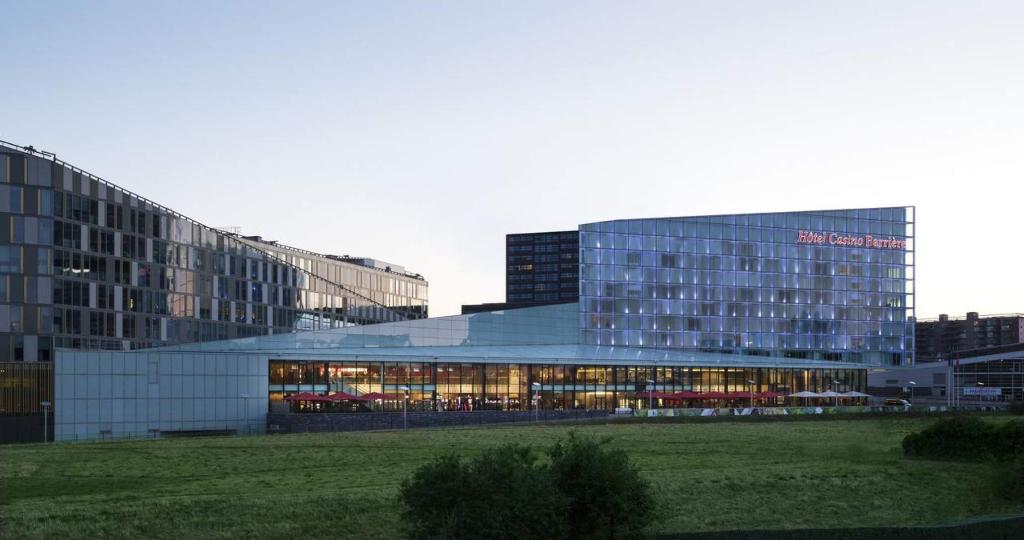
Barriere Lille
Lille
Spa · Pets allowed · Parking
From £205 a night, taxes incl.2 adults · checked 14 Nov, 10:08

★★★★
Best Western Premier Why Hotel
Lille
46 rooms · Parking
From £120 a night, taxes incl.2 adults · checked 14 Nov, 10:08

★★★★★
Autograph Collection L'Hermitage Gantois
Lille
Spa · Pool · 72 rooms
From £178 a night, taxes incl.2 adults · checked 14 Nov, 10:08
Getting around
Central Lille is compact, and the Grand Place, Vieux-Lille and the fine arts museum are all a short walk from the two main stations. A driverless metro and two tram lines run out to Roubaix, Villeneuve-d'Ascq and Croix. You do not need a car.
When to go
Lille is a city of indoor pleasures, so it works all year. Spring and summer bring café terraces and long evenings; the Braderie takes over on the first weekend of September; and December has a Christmas market and a big wheel on the Grand Place. Bring an umbrella in any season.
Questions about visiting Lille
- What is Lille best known for?
- Its Flemish-style old town and Grand Place, the Palais des Beaux-Arts, the huge Braderie flea market each September, hearty northern food and beer, and being the birthplace of Charles de Gaulle.
- Is Lille worth visiting?
- Yes. It is one of the most attractive and friendly cities in France, with excellent museums, shopping and food, and it is very easy to reach from the UK by train.
- How many days do you need in Lille?
- Two days is ideal for a first visit: one for the centre, Vieux-Lille and the Palais des Beaux-Arts, and one for La Piscine in Roubaix, Villa Cavrois or the Sunday market at Wazemmes.
- What is there to do in Lille with kids?
- Climb the Belfry, run about in the park around the Citadel, see the swimming pool museum in Roubaix and try the waffles at Méert.
- Do you need a car in Lille?
- No. The centre is walkable, and the metro and trams reach Roubaix, Croix and Villeneuve-d'Ascq. Trains run to Lens and across the border into Belgium.
More guides
- Where to stay in Lille
- The best things to do in London
- The best things to do in Edinburgh
- The best things to do in Manchester
- The best things to do in York
- The best things to do in Amsterdam
- The best things to do in Birmingham
- The best things to do in Liverpool
- The best things to do in Bristol
- The best things to do in Barcelona
- The best things to do in Budapest
- The best things to do in Cambridge
- The best things to do in Dublin
- The best things to do in Krakow