
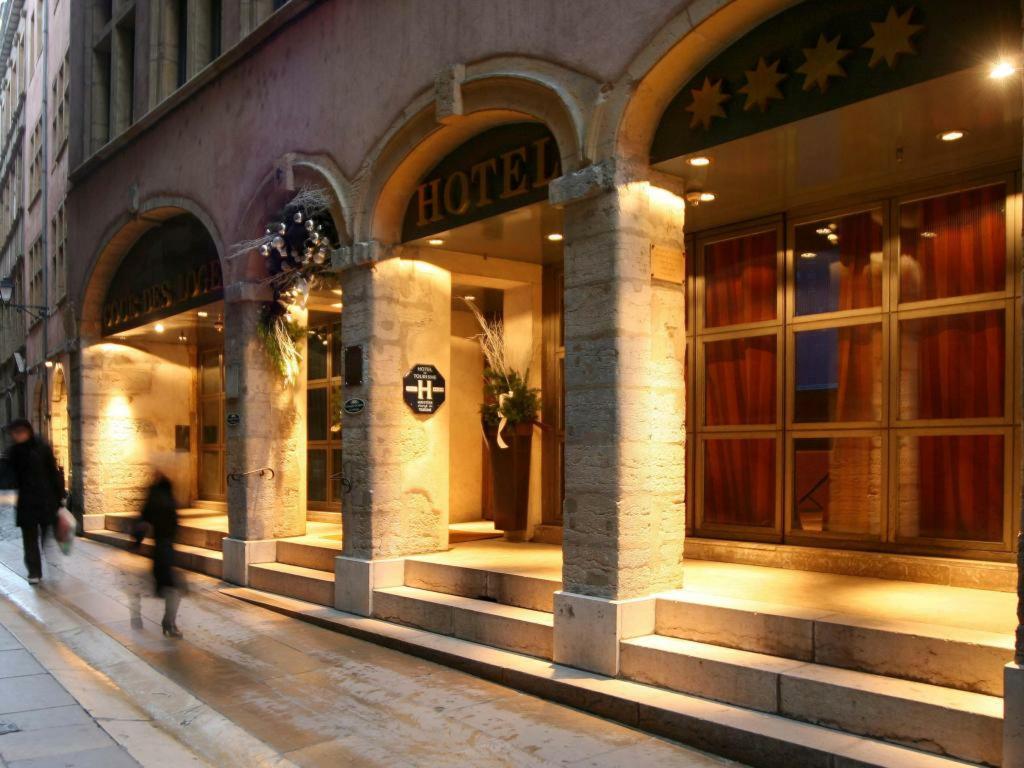
Paris has the fame; Lyon has the appetite. France's third city sits where two rivers meet, the brisk Rhône and the lazier Saône, with a hill on either side: Fourvière, "the hill that prays", crowned by a basilica, and Croix-Rousse, "the hill that works", where silk weavers once rattled their looms. In between lies a long, elegant peninsula of squares, shops and restaurants. A great many restaurants.
Lyon has been important for two thousand years, first as the capital of Roman Gaul, then as a Renaissance banking and silk town, and a large part of the centre is a UNESCO World Heritage site. Yet it wears all this lightly. People come here to eat, to walk the quays, to duck through secret passageways and to sit over a pot of Beaujolais far longer than they meant to.
Don't miss
The big sights
Roman, Renaissance and 19th-century Lyon, all within walking distance of each other.
Basilica of Notre-Dame de Fourvière
Landmark

Photo: Phyrexian, CC BY-SA 4.0 The white basilica on the hill watches over the whole city. Built in the late 19th century, it is plain enough outside, with four stout towers, and dazzling within: every surface is covered in mosaics, gilding, marble and stained glass. The terrace beside it has the finest view in Lyon, across the rooftops and both rivers and, on a clear day, all the way to Mont Blanc.
Tip: A funicular runs up from Vieux Lyon. Ride up and walk down through the rose gardens.
Vieux Lyon and the traboules
Neighbourhood

Photo: Fred Romero from Paris, France, CC BY 2.0 At the foot of Fourvière lies one of the largest Renaissance quarters in Europe: narrow cobbled streets of tall houses in pink, ochre and cream, built by merchants and bankers when Lyon was a great trading city. The pleasure is in the detail, the mullioned windows, spiral stairs and Italianate galleries.
Hidden behind ordinary front doors are the traboules, covered passageways that cut through buildings and courtyards from one street to the next. Some are open to the public. Push the door and walk quietly: people live here.
The Roman theatres of Fourvière
Landmark

Photo: Chris j wood, CC BY-SA 4.0 Lyon began on this hill as Lugdunum, capital of Roman Gaul. Its great theatre, built into the slope, is one of the oldest in France, with a smaller odeon beside it, and you can climb the stone tiers and look out over the modern city. The Gallo-Roman museum next door is half buried in the hillside. On summer nights the theatres host the Nuits de Fourvière festival.
Lyon Cathedral
Landmark

Photo: John Samuel, CC BY-SA 4.0 The Cathédrale Saint-Jean, at the heart of Vieux Lyon, took three centuries to build and blends Romanesque and Gothic. Inside, look for the 13th-century stained glass and, above all, the astronomical clock, a tall and intricate machine dating back to the 14th century, with a cast of small figures that move when it chimes.
Place Bellecour
Landmark
One of the largest open squares in Europe sits in the middle of the Presqu'île, a great rectangle of red gravel with an equestrian statue of Louis XIV at its centre and Fourvière rising behind. It is the city's meeting point and the hub from which the main shopping streets run north towards the town hall and the opera.
Museums
Musée des Beaux-Arts
Museum
Lyon's fine arts museum occupies a 17th-century abbey on Place des Terreaux and holds one of the best collections in France outside Paris: Egyptian antiquities, Old Masters, and a strong run of Impressionist and modern painting. The cloister garden, scattered with sculpture, is a peaceful spot in the middle of town. Outside, Bartholdi's fountain of rearing horses dominates the square.
Musée des Confluences
Museum

Photo: Fred Romero from Paris, France, CC BY 2.0 At the very tip of the peninsula, where the Rhône and the Saône meet, stands a building like a crystal cloud of glass and steel. Inside is a science and anthropology museum that tackles the big questions, where we come from and how societies work, with dinosaur skeletons, meteorites and objects from around the world. It is excellent for curious children.
Institut Lumière
Museum

Photo: This picture belongs to Xavier Caré. Please credit : Xavier Caré / Wikimedia Com, CC BY-SA 4.0 Cinema was born in Lyon. In 1895 the brothers Auguste and Louis Lumière shot what is considered the first film, workers leaving their family's factory, on this very spot. Their Art Nouveau villa in the Monplaisir district is now a museum of their inventions, including the Cinématographe, and the remains of the factory house a cinema.
Neighbourhoods and parks
Croix-Rousse
Neighbourhood
The hill north of the centre was the home of the canuts, Lyon's silk weavers, whose tall-ceilinged workshops were built to fit their looms. Today it feels like a village with a bohemian streak: a daily market along the boulevard, independent shops, steep staircases and more traboules running down the slopes. The huge painted Mur des Canuts shows the district in trompe-l'œil.
Parc de la Tête d'Or
Nature

Photo: Matt Neale from Leicester, UK, CC BY-SA 2.0 One of the largest city parks in France lies on the bank of the Rhône, with a wide lake for boating, a botanical garden with grand old glasshouses, rose gardens and broad lawns. Lyon comes here to run, picnic and push prams. On a fine Sunday it is the most relaxed place in town, and families can easily spend a whole day.
Fresque des Lyonnais
Landmark
Lyon is famous for its painted walls, and this is the best known: the blank side of a building near the Saône turned into a trompe-l'œil façade, with some thirty famous Lyonnais standing on its balconies. Spot the Lumière brothers, the author of The Little Prince, Antoine de Saint-Exupéry, and the chef Paul Bocuse in his whites at the door.
Eat and drink
Lyon is widely regarded as the food capital of France. Arrive hungry.
Bouchons
Food

Photo: Ji-Elle, CC BY-SA 4.0 The bouchon is Lyon's own kind of restaurant: small, noisy and convivial, with checked tablecloths and a short menu of hearty local cooking. Expect sausages, pork in many forms, quenelles, which are light pike dumplings in a creamy sauce, and cervelle de canut, a fresh cheese whipped with herbs. Wine comes in a pot, a thick-bottomed bottle.
Tip: Book ahead, especially at weekends, and don't plan much for the afternoon.
Les Halles de Lyon Paul Bocuse
Market

Photo: Arnaud 25, CC BY-SA 4.0 The city's covered food market, named after its most celebrated chef, is a temple to good ingredients. Dozens of stalls sell cheeses, charcuterie, oysters, chocolates and pastries, and many have a counter or a few tables where you can eat on the spot. Go late in the morning for oysters and a glass of white wine.
Praline tart
Food

Photo: Ji-Elle, CC BY-SA 4.0 You will notice it in every bakery window: a shocking-pink tart, or a brioche studded with pink lumps. The colour comes from pralines roses, almonds coated in rose-coloured sugar, a Lyon speciality. Melted with cream into a tart filling they are sweet, sticky and very hard to stop eating.
Day trips
Beaujolais
Day trip
The vineyards begin a short way north of the city. Beaujolais is rolling, generous country, and its southern part is known as the land of golden stones for the honey-coloured villages scattered over the hills. Visit a few cellars, taste the crus such as Fleurie and Morgon, and have lunch somewhere with a view.
Pérouges
Day trip

Photo: Cayambe, CC BY-SA 4.0 A tiny walled medieval town on a hilltop north-east of Lyon, so intact that it has often been used as a film set. Cobbled lanes wind between half-timbered houses to a square shaded by an ancient lime tree. Try the galette de Pérouges, a thin, sugary, buttery flatbread served warm.
Annecy
Day trip

Photo: Tournasol7, CC BY-SA 4.0 For mountains and water, take the train to Annecy in the Alps. Its old town is threaded with canals and flower-decked bridges, with a little island prison in midstream, and the lake beyond is known for its clear, blue-green water ringed by peaks. It makes a long but very rewarding day out.
Where to stay in Lyon
Not sure which area suits you? Read our guide: Where to stay in Lyon →
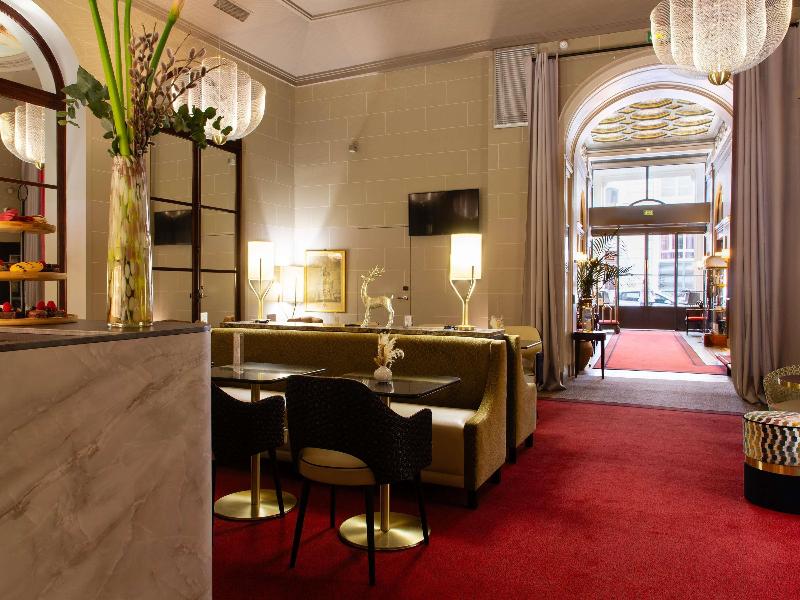
★★★★
Carlton Hotel Lyon - MGallery Collection
Lyon
Spa · 80 rooms · Parking
From £198 a night, taxes incl.2 adults · checked 14 Nov, 07:07

★★★★
Novotel Lyon Confluence
Lyon
Family-friendly · Parking
From £126 a night, taxes incl.2 adults · checked 14 Nov, 07:07

★★★★★
Cour des Loges Lyon, a Radisson Collection Hotel
Lyon
Spa · Pool · 60 rooms
From £241 a night, taxes incl.2 adults · checked 14 Nov, 07:07

★★★★
Pullman Lyon
Lyon
Family-friendly · Pets allowed · Parking
From £202 a night, taxes incl.2 adults · checked 14 Nov, 07:07

★★★★
Warwick Reine Astrid - Lyon
Lyon
Parking
From £130 a night, taxes incl.2 adults · checked 14 Nov, 07:07

★★★★★
InterContinental Lyon - Hotel Dieu
Lyon
Spa · Pets allowed · Parking
From £433 a night, taxes incl.2 adults · checked 14 Nov, 07:07

★★★★
Aparthotel Adagio Lyon Patio Confluence
Lyon
Family-friendly · Parking
From £85 a night, taxes incl.2 adults · checked 14 Nov, 07:07

★★★★★
Boscolo Lyon Hotel & Spa
Lyon
Spa · Pool · Parking
From £217 a night, taxes incl.2 adults · checked 14 Nov, 07:07
Getting around
Central Lyon is very walkable, and the metro, trams and two funiculars fill in the gaps, including the climb to Fourvière. A tram links Part-Dieu station with the airport. The riverbanks have been turned into long promenades and cycle paths, and the city bike-share scheme is easy to use.
When to go
Spring and early autumn are ideal for walking and eating outdoors. Summers are hot. In early December the Fête des Lumières, the Festival of Lights, turns the city's buildings into a vast light show and draws enormous crowds, so book well ahead if you are coming then.
Questions about visiting Lyon
- What is Lyon best known for?
- Its food, from traditional bouchons to the legacy of Paul Bocuse; the Renaissance old town with its hidden traboules; the basilica of Fourvière; its Roman theatres; and the Festival of Lights each December.
- Is Lyon worth visiting?
- Yes. It is one of the most enjoyable cities in France, with a UNESCO-listed historic centre, two rivers, excellent museums and superb restaurants, and it is far less crowded than Paris.
- How many days do you need in Lyon?
- Two to three days is enough for Vieux Lyon, Fourvière, the Presqu'île and Croix-Rousse, with time for long lunches. Add a day for Beaujolais, Pérouges or Annecy.
- What is there to do in Lyon with kids?
- The Parc de la Tête d'Or, the Musée des Confluences, the funicular up to Fourvière, exploring the traboules and spotting the painted walls are all good with children.
- Do you need a car in Lyon?
- No. The city is easy to cover on foot and by public transport. A car or an organised tour is useful only for the Beaujolais vineyards and Pérouges.
More guides
- Where to stay in Lyon
- The best things to do in London
- The best things to do in Edinburgh
- The best things to do in Manchester
- The best things to do in York
- The best things to do in Amsterdam
- The best things to do in Birmingham
- The best things to do in Liverpool
- The best things to do in Bristol
- The best things to do in Barcelona
- The best things to do in Budapest
- The best things to do in Cambridge
- The best things to do in Dublin
- The best things to do in Krakow