
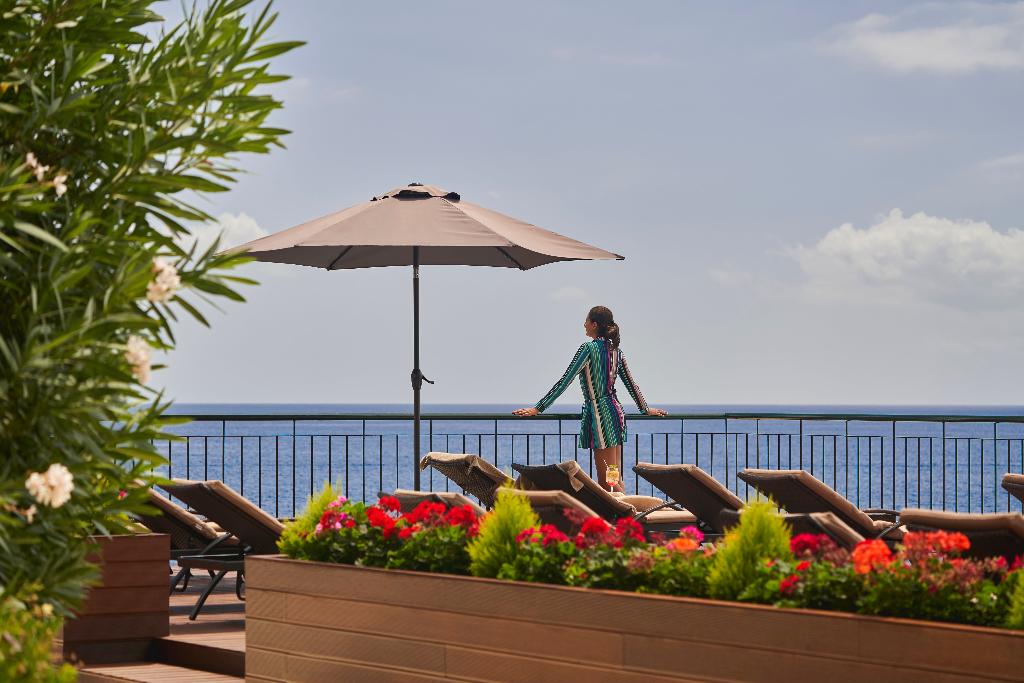
Madeira rises out of the Atlantic like a green fortress: knife-edge ridges, cliffs that drop hundreds of metres to the sea, and valleys so steep that every scrap of land is terraced for bananas and vines. Flowers spill over every wall, and the mild climate means they bloom all year.
This is not a lie-on-the-beach island. It is for walkers, food lovers and anyone who likes their scenery dramatic. Base yourself in Funchal, the elegant, easy-going capital, and spend your days hiking the levadas, driving the corniche roads and eating grilled fish in harbour villages.
Don't miss
Funchal
A handsome harbour city of black-and-white cobbles, flower markets and gardens.
Zona Velha
Neighbourhood

Photo: PESP/ Wikimedia, CC BY-SA 4.0 Funchal's old town, by the sea at the eastern end of the centre, was once a down-at-heel fishermen's quarter. Today its lanes are packed with restaurants and bars, and the doors along Rua de Santa Maria have been painted by local artists, turning the street into an open-air gallery.
Tip: Come for dinner, when the narrow streets fill with tables and the restaurants compete for your custom.
Mercado dos Lavradores
Market

Photo: Dietmar Rabich, CC BY-SA 4.0 Funchal's art deco market hall is a riot of colour: piles of exotic fruit you won't recognise, stalls of flowers, baskets and spices, and a fish hall where the long, black, fearsome-looking espada (scabbardfish) is laid out on the slabs each morning.
Tip: Fruit sellers love to hand out tastings, but check the price per kilo before you buy.
Monte and the toboggan ride
Activity

Photo: Ввласенко, CC BY-SA 3.0 A cable car swings up from the old town to the hilltop parish of Monte, where the church of Nossa Senhora do Monte holds the tomb of the last Austrian emperor. Then comes the fun part: the traditional ride back down the steep streets in a wicker sledge, steered by two men in white with straw boaters, who use their rubber-soled boots as brakes.
Tip: The toboggan ride only goes part of the way, so plan a taxi or a walk for the rest.
Monte Palace Tropical Garden
Nature

Photo: H. Zell, CC BY-SA 3.0 Right next to the cable car station at Monte, this garden tumbles down a ravine in a jumble of exotic plants, koi ponds, Asian-style pagodas, statues and historic tile panels. It is eccentric and lovely, and you can easily lose a couple of hours.
Walks and mountains
Madeira is one of the great walking destinations in Europe.
Levada walks
Activity

Photo: Jörg Schmalenberger (= JOEXX), CC BY-SA 3.0 For centuries Madeirans have carved levadas, narrow irrigation channels, along the mountainsides to carry water from the wet north to the farms of the south. The maintenance paths beside them make some of the most enchanting walks anywhere, flat or gently sloping, through laurel forest, past waterfalls and along cliff edges.
Popular routes include the 25 Fontes and Risco waterfalls at Rabaçal and the Caldeirão Verde from Queimadas, through deep, mossy forest.
Tip: Bring a torch for the tunnels and a waterproof. Check trail conditions before you set off, as paths can close after storms.
Pico do Arieiro to Pico Ruivo
Nature

Photo: Luis Miguel Bugallo Sánchez (Lmbuga), CC BY-SA 4.0 Madeira's classic mountain hike links its third-highest peak, which you can drive to, with the highest, along a jagged ridge of steps, tunnels and staircases cut into the rock. Even if you don't walk it, the view from Pico do Arieiro over a sea of clouds is unforgettable, especially at sunrise.
Tip: This is a serious, exposed walk: go with a good head for heights, sturdy boots and plenty of water.
Ponta de São Lourenço
Nature

Photo: Diego Delso, CC BY-SA 4.0 At the island's eastern tip, a long, bare, windswept peninsula of red, ochre and black volcanic rock juts into the Atlantic. A popular trail runs along it, with sea views on both sides, and it feels like a different island from the lush interior.
Fanal
Nature

Photo: Ximonic (Simo Räsänen), CC BY-SA 4.0 Up on the high plateau of Paul da Serra, ancient, gnarled laurel trees stand scattered across a grassy slope. When the mist rolls in, which it often does, Fanal becomes one of the most atmospheric places on the island. Madeira's laurel forest is a UNESCO World Heritage Site.
Around the island
Cabo Girão
Nature

Photo: Otto Domes, CC BY-SA 4.0 One of the highest sea cliffs in Europe, just west of Funchal. A glass-floored skywalk juts out from the top, so you can stand above the drop and look straight down at the terraced fields and the surf far below.
Porto Moniz
Beach

Photo: H. Zell, CC BY-SA 3.0 On the island's north-west tip, the ocean crashes into natural rock pools formed by volcanic lava, and the calmer pools make wonderful places to swim in seawater, with the Atlantic breaking just beyond the walls.
Tip: Combine it with the drive along the north coast, past waterfalls and the black-sand beach at Seixal.
Seixal
Beach
A small black-sand beach on the north coast, backed by towering green cliffs and waterfalls. It is one of the most beautiful spots on the island for a swim when the sea is calm.
Santana
Neighbourhood

Photo: Dietmar Rabich, CC BY-SA 4.0 A village on the north coast famous for its traditional triangular houses, painted in red, white and blue and topped with thatched roofs that almost reach the ground. A few are preserved in the village centre, and the surrounding countryside is lovely.
Porto Santo
Day trip
Madeira's little sister island is everything Madeira is not: low, dry and fringed by a long beach of golden sand. It is reached by ferry from Funchal or a short flight, and makes a relaxing contrast to the main island.
Eat and drink
Espetada and bolo do caco
Food
Madeira's favourite feast is espetada: chunks of beef rubbed with garlic and salt, skewered on bay-laurel sticks and grilled over an open fire, then hung from a hook at the table. It comes with bolo do caco, a round flatbread cooked on a hot stone and spread with garlic butter.
Seafood lovers should try espada, the black scabbardfish, often served with banana, and grilled limpets (lapas) sizzling with garlic and lemon.
Poncha
Food
The island's punchy traditional drink, made with sugar-cane rum, honey and fresh lemon juice. Poncha bars are found all over the island, and the fishing village of Câmara de Lobos is particularly associated with it.
Madeira wine
Food
Madeira's famous fortified wine is deliberately heated and aged, giving it a rich, nutty flavour and a remarkably long life. It ranges from dry Sercial to sweet, luscious Malmsey. Taste it at one of the historic wine lodges in Funchal.
Where to stay in Madeira
Not sure which area suits you? Read our guide: Where to stay in Madeira →

★★★★
Royal Orchid
Canico
Beach 100 m · All-inclusive option · Spa
See prices and rooms →
★★★★
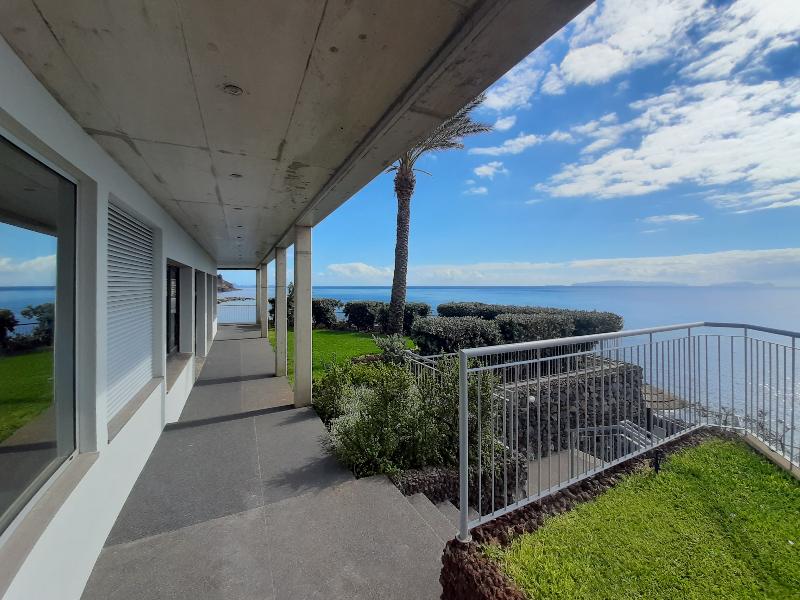
Hotel Roca Mar
Canico
Beach 100 m · All-inclusive option · Spa
See prices and rooms →
★★★★★
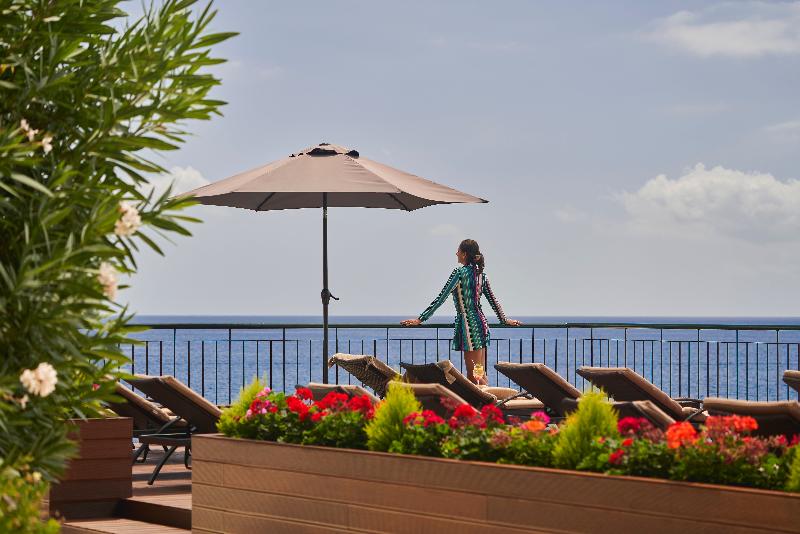
The Cliff Bay Resort
Funchal
Spa · Pool · Family-friendly
From £549 a night, taxes incl.2 adults · checked 1 Oct, 19:08

★★★★
(Madeira) Turim Santa Maria Hotel
Funchal
Pool · Parking
From £248 a night, taxes incl.2 adults · checked 1 Oct, 19:08
★★★★
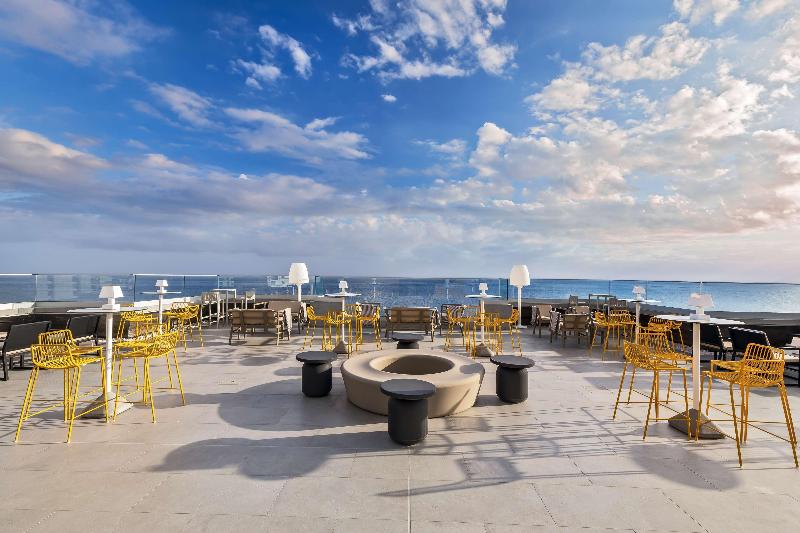
Allegro Madeira - Adults Only, Member of Barcelo
Funchal
Adults only · Parking
From £194 a night, taxes incl.2 adults · checked 1 Oct, 19:08
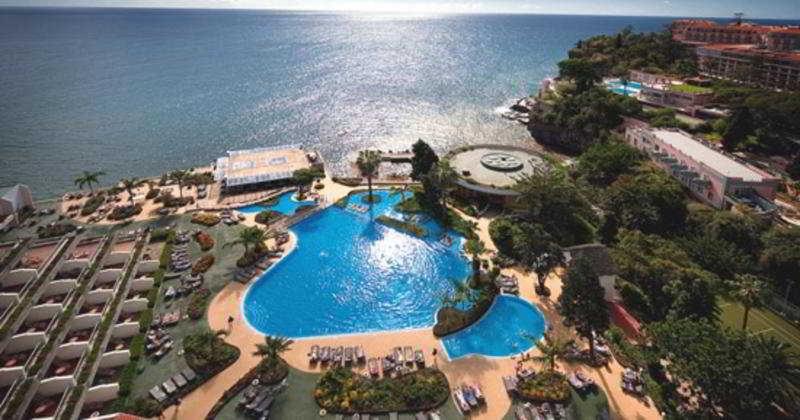
★★★★★
PESTANA CARLTON MADEIRA PREMIUM OCEAN RESORT
Funchal
Spa · Pool · Family-friendly
See prices and rooms →
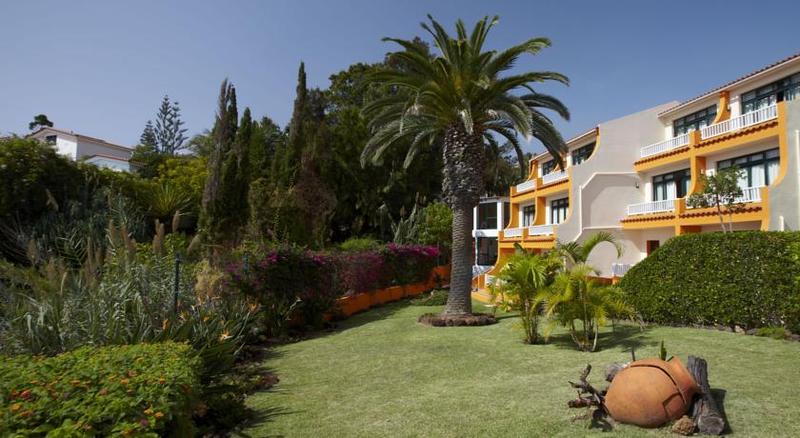
★★★★
Alpino Atlantico Ayurveda Cure Centre Adults Only
Canico
Beach 300 m · Adults only · Spa
See prices and rooms →

★★★★★
Albatroz Beach & Yacht Club
Santa Cruz
Spa · Pool · 20 rooms
See prices and rooms →
Getting around
A hire car is the best way to see the island; the expressway is fast, but the old mountain roads are steep and winding. Buses link Funchal with most towns and villages, and organised tours and walking guides cover the main sights and levadas.
When to go
Madeira is mild all year, which is why it is often called the island of eternal spring. Summer is the warmest and driest; winter brings more rain, especially in the north and mountains. New Year's Eve, with its huge fireworks display over Funchal's bay, is famous.
Questions about visiting Madeira
- What is Madeira best known for?
- Its mild year-round climate, dramatic mountain and cliff scenery, levada walks, flowers, Madeira wine and the New Year fireworks in Funchal.
- Does Madeira have good beaches?
- Madeira is better known for natural rock pools, such as those at Porto Moniz, and a few black-sand beaches. For a long golden beach, take the ferry or a short flight to Porto Santo.
- How many days do you need in Madeira?
- A week lets you explore Funchal, do a few levada walks and drive round the island. Four or five days covers the highlights.
- Do you need a car in Madeira?
- Not if you are happy with Funchal and organised tours, but a car makes it much easier to reach trailheads and the north coast.
More guides
- Where to stay in Madeira
- The best things to do in London
- The best things to do in Edinburgh
- The best things to do in Amsterdam
- The best things to do in Barcelona
- The best things to do in Budapest
- The best things to do in Dublin
- The best things to do in Krakow
- The best things to do in Prague
- The best things to do in Berlin
- The best things to do in Lisbon
- The best things to do in Milan
- The best things to do in Paris
- The best things to do in Rome