
Marrakech hits every sense at once. Woodsmoke and orange blossom, the call to prayer rolling over rose-red walls, motorbikes squeezing down alleys barely wider than a doorway, and a square that turns into an open-air restaurant every evening. It's loud, dizzying and utterly unforgettable.
The trick is to pace it. Mornings are for palaces, gardens and the quieter corners of the medina. Afternoons are for a hammam, a rooftop or a pool. Evenings belong to the square. And when the medina gets too much, the Atlas mountains are right there on the horizon.
Don't miss
The big sights
The landmarks that define the city.
Jemaa el-Fnaa
Landmark

Photo: Jakub Hałun, CC BY 4.0 The great square at the heart of the medina is Marrakech in miniature. By day it's quiet, with juice stalls and henna artists. As the sun sets, food stalls fire up, musicians and storytellers gather, and the whole place fills with smoke, chatter and crowds. UNESCO recognises it as a place of living cultural heritage.
Climb to a café terrace around the edge for a bird's-eye view as the lights come on.
Tip: Agree prices before you eat or accept anything, and keep your phone and wallet close in the crowds.
Koutoubia Mosque
Landmark

Photo: Baca12, CC BY-SA 4.0 The tall 12th-century minaret of the Koutoubia is the city's compass: you can spot it from across Marrakech, and it served as a model for towers elsewhere in Morocco and Spain. Non-Muslims can't go inside, but the gardens around it are a pleasant place to sit and look up.
Bahia Palace
Landmark

Photo: Val Traveler, CC BY-SA 4.0 A 19th-century palace of shaded courtyards, painted cedar ceilings and mosaic-tiled floors, built for a powerful court official. It's a quiet, cool, photogenic break from the souks, and a good introduction to the intricate craftsmanship of Moroccan interiors.
Tip: Go early or late, when the tour groups thin out.
Saadian Tombs
Landmark

Photo: C messier, CC BY-SA 4.0 Sealed off for centuries and rediscovered in the early 20th century, these 16th-century royal tombs sit in a small garden beside the Kasbah mosque. Inside, carved cedar, delicate plasterwork and marble columns make the main mausoleum one of the city's most ornate rooms.
Tip: Queues build up fast. Arrive at the start of the day.
Palaces, gardens and museums
Majorelle Garden
Nature

Photo: Haimed mohamed, CC BY-SA 4.0 A small, vivid garden laid out by the French painter Jacques Majorelle, with cobalt-blue walls, lemon-yellow pots and clusters of cacti and bamboo. Later rescued and restored by Yves Saint Laurent and Pierre Bergé, it remains one of the most visited places in Morocco, and a cool, leafy escape.
Tip: It is small and popular. Go as early as you can.
Yves Saint Laurent Museum
Museum
Right next to Majorelle Garden, this modern museum celebrates the fashion designer who made Marrakech a second home. Expect sketches, couture and catwalk pieces displayed in a striking building clad in terracotta-coloured brick.
El Badi Palace
Landmark

Photo: Jakub Hałun, CC BY 4.0 The ruins of a vast 16th-century palace that once held a sultan's court. The walls are bare now, but the huge sunken courtyards and orange trees give a sense of its scale, and storks nest on the ramparts. Climb the walls for views across the medina.
Ben Youssef Madrasa
Landmark

Photo: R Prazeres, CC BY-SA 4.0 A former Islamic college, centred on a courtyard with a reflecting pool and covered in carved cedar, stucco and zellige tilework. The tiny student cells upstairs and the quiet, shadowy corridors are a window into the city's scholarly past.
Souks and neighbourhoods
The souks
Market

Photo: Petar Milošević, CC BY-SA 4.0 North of Jemaa el-Fnaa, the medina's souks are a labyrinth of covered lanes grouped by trade: leather and slippers, spices, brass lanterns, rugs, ceramics and metalwork. Getting lost is the point. Haggling is expected, so smile, counter-offer and walk away if it doesn't feel right.
Tip: Go in the morning, when it is cooler and the lanes are less crowded.
Gueliz
Neighbourhood
The French-built new town, a short taxi ride from the medina, has wide boulevards, art galleries, boutiques and café terraces. It's a good place to see everyday modern Marrakech, and to have a coffee and a croissant away from the souk bustle.
A hammam
Activity
A traditional steam bath is part of Moroccan life, and a perfect antidote to a long day of walking. Choose between a local hammam, which is simple and cheap, or a spa in a hotel or riad, which is more private and comes with a massage. Either way, expect to be scrubbed thoroughly.
Eat and drink
Tagine
Food

Photo: This Photo was taken by Timothy A. Gonsalves. Feel free to use my photos, but pl, CC BY-SA 4.0 Meat, poultry or vegetables slow-cooked with spices, olives, preserved lemon or dried fruit in a conical clay pot: the dish that defines Moroccan cooking. Try lamb with prunes and almonds, or chicken with preserved lemon and olives, and eat it with bread rather than cutlery.
Moroccan mint tea
Food

Photo: Sarkar Sayantan, CC BY-SA 4.0 Sweet, fresh and poured from a height so it froths in the glass, mint tea is the drink of hospitality in Morocco. You'll be offered it in shops, riads and restaurants. Accept it, sip slowly and enjoy a short pause.
Day trips
Essaouira
Day trip

Photo: Goldfinchshuffle, CC BY-SA 4.0 A whitewashed, wind-blown port on the Atlantic coast with a walled medina, a fishing harbour crowded with blue boats, and a cooler, more relaxed pace than Marrakech. Wander the ramparts, eat grilled fish by the harbour and browse the woodwork shops.
Tip: It is a long day by road. Consider an overnight stay to enjoy it properly.
Ourika Valley
Day trip
In the foothills of the High Atlas, the Ourika Valley follows a river through terraced villages and red-earth hills. Walk to the waterfalls near Setti Fatma, have lunch at a riverside terrace and enjoy the cooler mountain air.
Agafay Desert
Day trip

Photo: Jakub Hałun, CC BY 4.0 A stony, rolling desert landscape on Marrakech's doorstep, with the Atlas mountains as a backdrop. It isn't a sand-dune desert, but it's a dramatic place for a sunset dinner, a camel ride or a night under the stars in a desert camp.
Where to stay in Marrakech
Not sure which area suits you? Read our guide: Where to stay in Marrakech →
★★★★
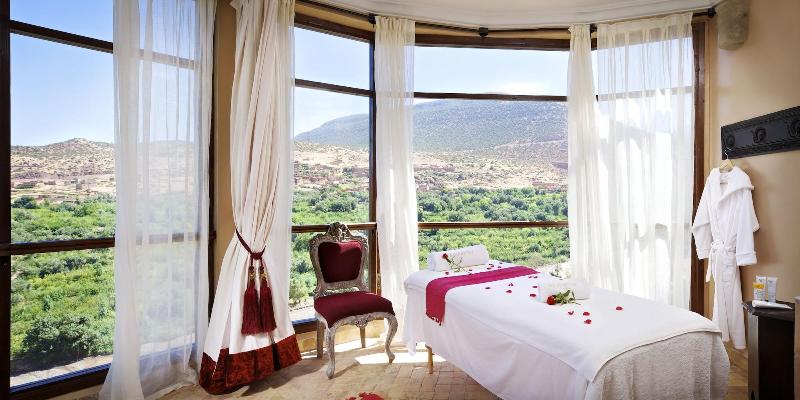
Kasbah Tamadot
Asni
Spa · Pool · 42 rooms
See prices and rooms →
★★★★
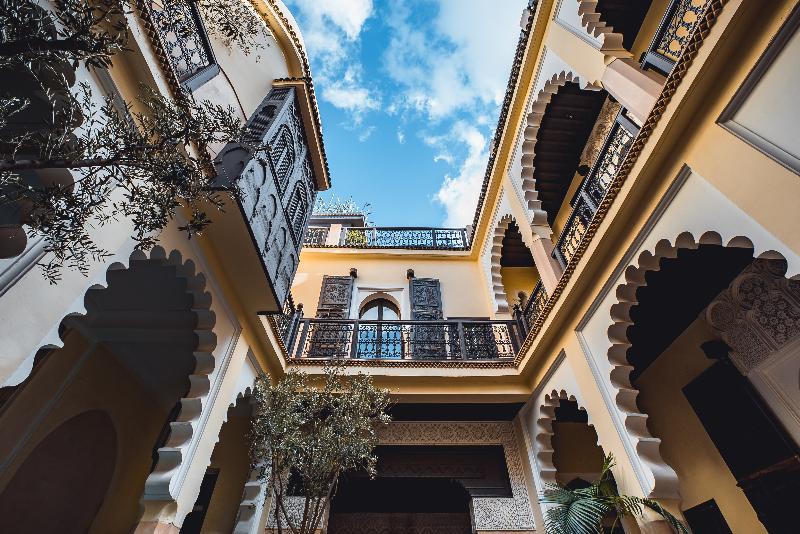
Ambre Epices Riad Medina
Marrakech
Spa · Pool · Parking
See prices and rooms →

★★★★★
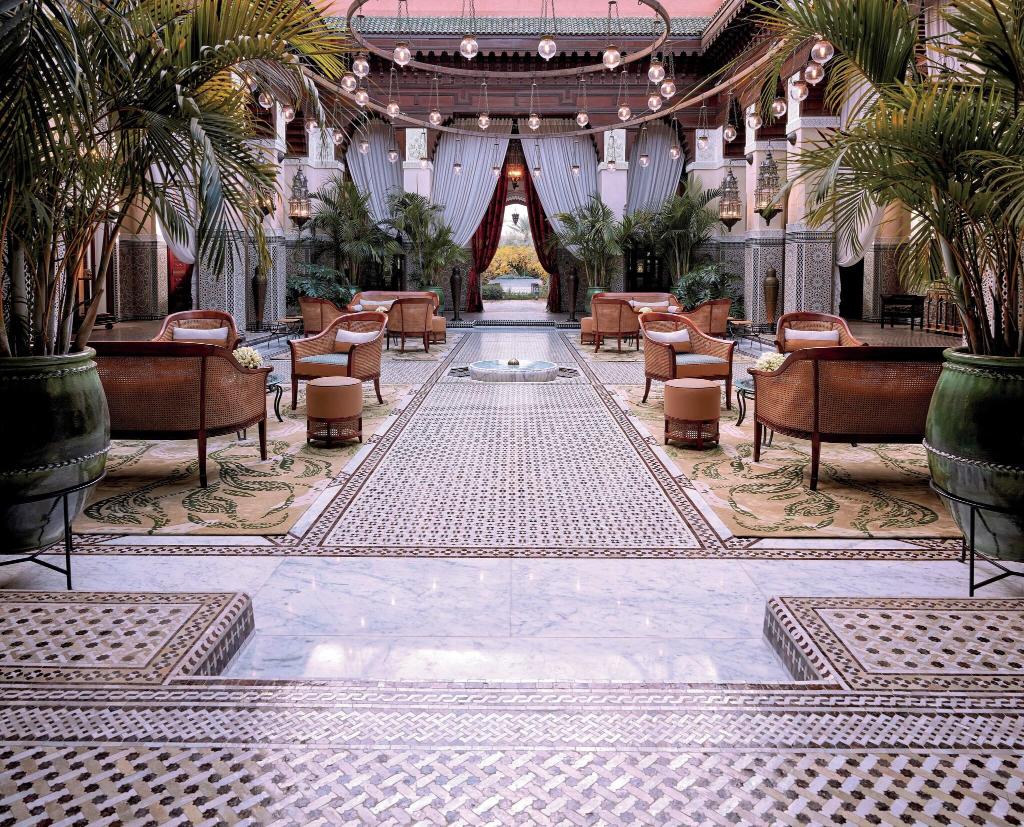
Royal Mansour Marrakech
Marrakech
Spa · Pool · 53 rooms
See prices and rooms →
★★★★
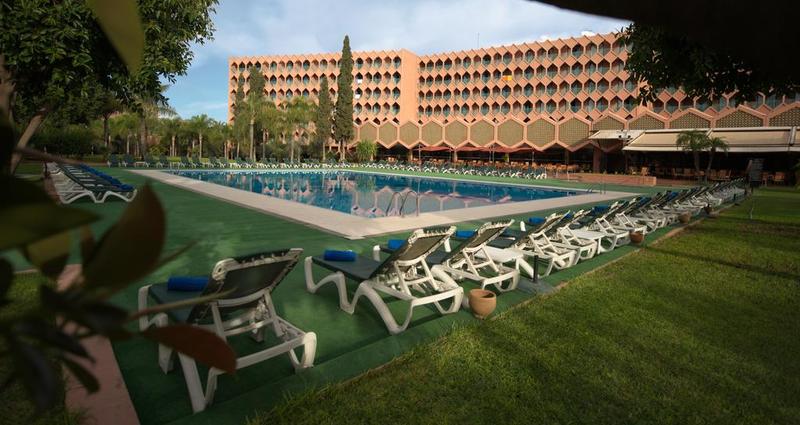
Atlas Asni
Marrakech
Spa · Pool · Parking
See prices and rooms →
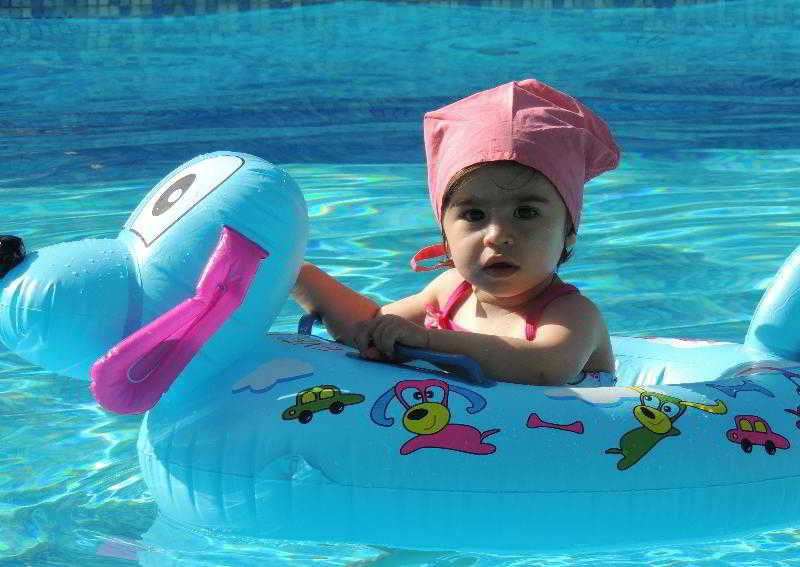
★★★★
Chems
Marrakech
Spa · Pool
See prices and rooms →
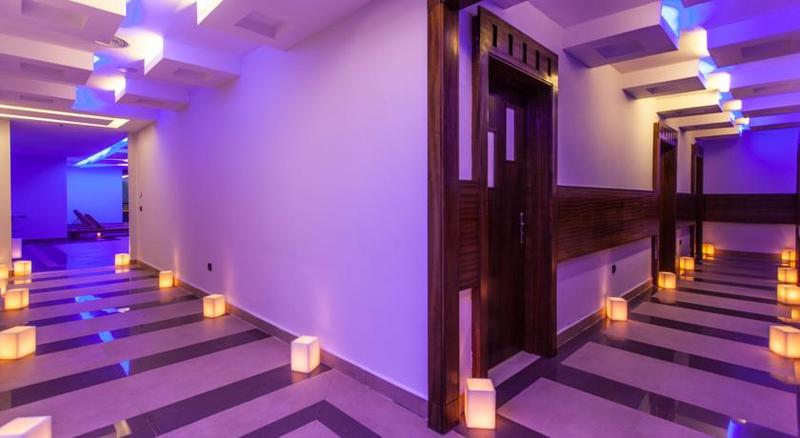
★★★★★
Savoy Le Grand Hotel
Marrakech
Spa · Pool · Parking
See prices and rooms →
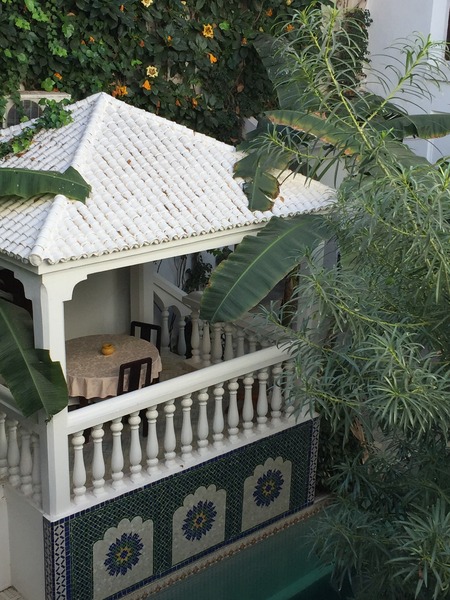
★★★★
Dar el Assafir
Marrakech
Pool · Parking
See prices and rooms →
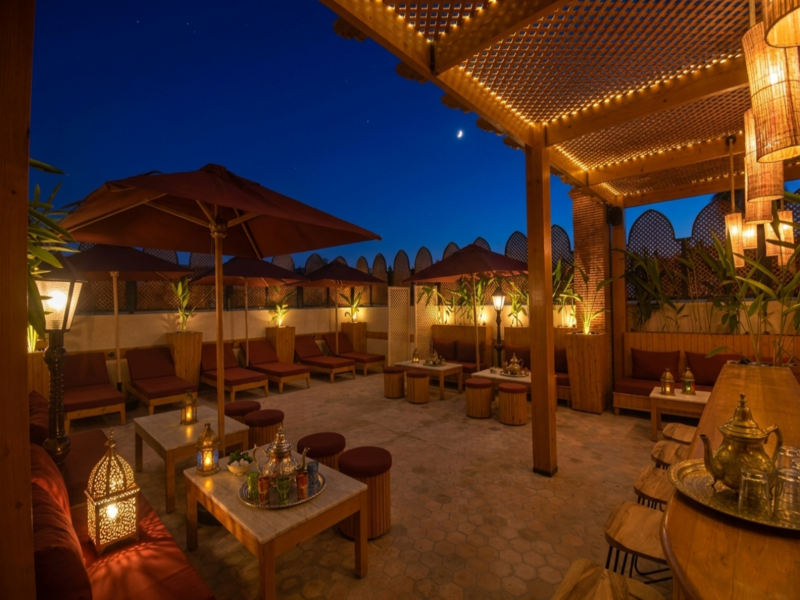
★★★★★
Dar Arwa & Spa
Marrakech
See prices and rooms →
Getting around
The medina is best explored on foot, though the alleys can be confusing, so download an offline map. Petits taxis are cheap for longer hops, so agree a price or insist on the meter before you set off. Taxis from the airport and tours into the mountains are easy to arrange through your hotel.
When to go
Spring and autumn are the most comfortable seasons for sightseeing. Summers are very hot, so plan sightseeing for the early morning and spend afternoons by the pool. Winter days are mild and sunny, though evenings can be cool.
Questions about visiting Marrakech
- What is Marrakech best known for?
- Its red-walled medina, the Jemaa el-Fnaa square, the souks, palaces such as Bahia Palace and gardens like Majorelle.
- Is Marrakech worth visiting?
- Yes. It is a vivid, sensory city with beautiful historic buildings, great food and easy access to the Atlas mountains and the desert, all within a few hours of the UK.
- How many days do you need in Marrakech?
- Three days is enough for the main sights. Four or five lets you add a day trip to the mountains or the coast at a gentler pace.
- What is there to do in Marrakech with kids?
- Children enjoy the square at night, the colours of the souks, riad pools and a day out in the Ourika Valley or the Agafay Desert.
- Is it better to stay in the medina or outside it?
- The medina is atmospheric and puts you close to the sights, while Hivernage, Gueliz and the Palmeraie offer larger hotels, pools and a quieter base.
More guides
- Where to stay in Marrakech
- The best things to do in London
- The best things to do in Edinburgh
- The best things to do in Amsterdam
- The best things to do in Barcelona
- The best things to do in Budapest
- The best things to do in Dublin
- The best things to do in Krakow
- The best things to do in Prague
- The best things to do in Berlin
- The best things to do in Lisbon
- The best things to do in Milan
- The best things to do in Paris
- The best things to do in Rome