
Marseille is France's oldest city and its least well-behaved. Founded by Greek sailors some 2,600 years ago, it has been a port ever since, and it has a port's character: loud, sun-bleached, multicultural and thoroughly unbothered about what Paris thinks. Fishermen still sell their catch on the quayside each morning, a few steps from a striking 21st-century museum.
The city rewards walkers. Start at the Old Port, climb to the basilica for the view, lose an afternoon in the lanes of Le Panier, and eat by the water. Then leave the streets behind: on Marseille's doorstep is a national park of white limestone cliffs and inlets of startlingly blue sea.
Don't miss
The big sights
Vieux-Port
Landmark

Photo: Clément Bardot, CC BY-SA 4.0 The Old Port is where Marseille began and where it still gathers. A long rectangle of water packed with masts, it is lined on three sides with café terraces and guarded at its mouth by two stone forts. Each morning a small fish market sets up on the Quai des Belges.
Look up at the mirrored canopy by Norman Foster, which turns the crowd upside down, and take the little ferry across the harbour, a ride of a few minutes that locals are very fond of.
Notre-Dame de la Garde
Landmark

Photo: Anfrx, CC BY-SA 4.0 The striped basilica on the city's highest hill is visible from almost everywhere, topped by a gilded statue of the Virgin and Child that locals call the Bonne Mère, the Good Mother. Inside, the walls glitter with mosaics and are hung with model boats and paintings left by sailors in thanks for safe returns. The terrace outside has the best panorama in Marseille: the port, the islands, the hills and the whole terracotta sprawl of the city.
Tip: It is a steep climb on foot. A bus and a tourist train run up from the Vieux-Port if you would rather save your legs.
MuCEM
Museum

Photo: Kent Wang from Barcelona, Spain, CC BY-SA 2.0 The Museum of European and Mediterranean Civilisations is a dark glass cube wrapped in a lacy concrete screen, set right on the water at the harbour entrance. A slim footbridge links its roof terrace to the 17th-century Fort Saint-Jean, whose ramparts and gardens are free to wander.
Even if you skip the exhibitions, walk the ramps between the screen and the building, cross the bridge and sit on the fort walls. It is one of the finest pieces of modern architecture in France.
Cathédrale de la Major
Landmark

Photo: Olena Ilnytska, CC BY-SA 4.0 Just north of MuCEM, Marseille's cathedral is a huge 19th-century building in bands of green and white stone, with Byzantine-style domes that look more Istanbul than Provence. It stands on an esplanade above the port, close to the ferries, and is as impressive for its scale as for its decoration.
Château d'If and the Frioul islands
Day trip

Photo: Rémih, CC BY-SA 4.0 A short boat ride from the Vieux-Port, the Château d'If is a 16th-century fortress on a bare rock in the bay. It became a prison and then a legend, thanks to Alexandre Dumas, who locked up the Count of Monte Cristo here. You can visit the cells and look back at the city. Boats continue to the Frioul islands, a pair of rocky, windswept islets with small coves for swimming and a handful of harbourside restaurants.
Tip: Boats can be cancelled when the mistral blows. Check on the morning you plan to go.
Neighbourhoods to wander
Le Panier
Neighbourhood

Photo: Benh LIEU SONG, CC BY-SA 3.0 On the hill north of the port is the oldest quarter of the city, a tangle of stepped lanes, washing lines, pastel shutters and street art. It was once rough around the edges and is now full of ceramic studios, soap shops and small squares with café tables under the plane trees. At its centre is the Vieille Charité, a 17th-century almshouse with a beautiful arcaded courtyard and a domed chapel, now home to museums.
Cours Julien
Neighbourhood

Photo: DC, CC BY-SA 3.0 Up the hill to the east of the port, this is the city's bohemian heart: a long tree-shaded square with fountains, surrounded by streets where barely a wall has escaped the spray can. Expect bookshops, vintage clothes, music venues and restaurant terraces that stay busy late. It suits night owls and anyone who likes their cities a bit scruffy.
Noailles market
Market
A few minutes from the Vieux-Port, the Noailles district is often called the belly of Marseille. Its daily market on the Marché des Capucins and the streets around it sell spices, olives, flatbreads, harissa and North African pastries, and the air smells of mint and grilled meat. Come hungry and eat as you go.
Vallon des Auffes
Neighbourhood

Photo: Arnaud 25, CC BY-SA 4.0 Tucked beneath the arches of a road bridge on the Corniche, this tiny fishing harbour looks as if it has been dropped in from another century: painted wooden boats, fishermen's cabins and a few restaurants at the water's edge. It is a lovely walk along the seafront from the centre, and a famous place to eat bouillabaisse.
Sea and coast
Calanques National Park
Nature

Photo: kallerna, CC BY-SA 4.0 Between Marseille and Cassis, the coast breaks into a series of narrow inlets where white limestone cliffs drop into water of an improbable turquoise. These are the calanques, and they are the great outdoors of Marseille. Sormiou, Morgiou and En-Vau are the best known.
You can hike in over rocky paths, which is hot work but rewarded with a swim, or see them from a boat. Either way it feels a very long way from a city of nearly a million people.
Tip: Access is restricted in summer because of fire risk, and some coves need a reservation. Check before you go, and carry plenty of water.
Corniche Kennedy
Activity
The coast road south of the Vieux-Port winds for several kilometres above the sea, past villas, rocky bathing spots and views of the islands. Walk or cycle a stretch of it, or ride the bus, and you will see where the city goes to swim. It leads to the Prado beaches, a long strip of seafront parks and sand that is the family choice for a beach day.
Art and architecture
Cité Radieuse
Landmark
Le Corbusier's Unité d'Habitation, finished in 1952, is a concrete apartment block on stilts that set out to be a vertical village, complete with an indoor shopping street, a hotel and a rooftop with a paddling pool and sculptural chimneys. It is a UNESCO World Heritage Site, and people still live in it. Visitors can go up to the shopping level and the roof. A must for architecture fans, and the view is good for everyone else.
Palais Longchamp
Landmark

Photo: kallerna, CC BY-SA 4.0 Built to celebrate the arrival of canal water in the thirsty city, this 19th-century monument is pure theatre: a grand colonnade curving around a cascading fountain, with a museum in each wing, fine arts on one side and natural history on the other. The park behind is a shady spot for a picnic.
Eat and drink
Bouillabaisse
Food

Photo: Benoît Prieur, CC0 Marseille's famous dish began as a fishermen's stew of whatever could not be sold. Done properly, it is a saffron-scented broth served first with croutons and garlicky rouille, followed by the rockfish that were cooked in it. It is a ritual, a splurge and usually ordered in advance. For something lighter on the wallet, try panisses, crisp chickpea-flour fritters, or a slice of pizza: Marseille takes its pizza very seriously.
Day trips
Cassis
Day trip

Photo: Jean-Christophe BENOIST, CC BY 3.0 At the far end of the calanques, Cassis is a small, pretty fishing port of pastel houses under a ruined castle and a towering cliff, Cap Canaille. Boat trips into the calanques leave from the quay, the local white wine is excellent with seafood, and the pebbly beaches are a short stroll away.
Aix-en-Provence
Day trip
A short trip inland, Aix is Marseille's elegant opposite: honey-coloured mansions, mossy fountains and the plane-shaded Cours Mirabeau lined with café terraces. It was the home of Paul Cézanne, whose studio can be visited, and its markets are among the best in Provence.
Where to stay in Marseille
Not sure which area suits you? Read our guide: Where to stay in Marseille →

★★★★
Best Western Plus Hotel La Joliette
Marseille
Beach 3 km · Spa · Pool
From £79 a night, taxes incl.2 adults · checked 14 Nov, 14:53
★★★★
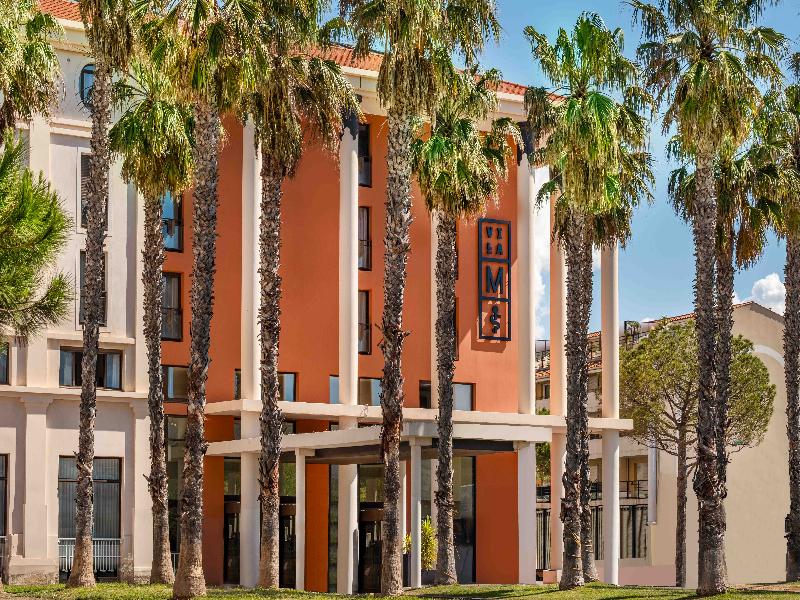
Hotel Villa M Marseille
Marseille
Beach 200 m · Spa · Pool
From £268 a night, taxes incl.2 adults · checked 14 Nov, 14:53

★★★★★
Sofitel Marseille Vieux Port
Marseille
Beach 1 km · Spa · Pool
From £177 a night, taxes incl.2 adults · checked 14 Nov, 14:53

★★★★
Ac By Marriott Marseille Prado Velodrome
Marseille
Beach 2 km · Pool · Parking
From £183 a night, taxes incl.2 adults · checked 14 Nov, 14:53

★★★★
Appart'hotel Marseille Centre Euromed
Marseille
Pool · Pets allowed
From £82 a night, taxes incl.2 adults · checked 14 Nov, 14:53

★★★★★
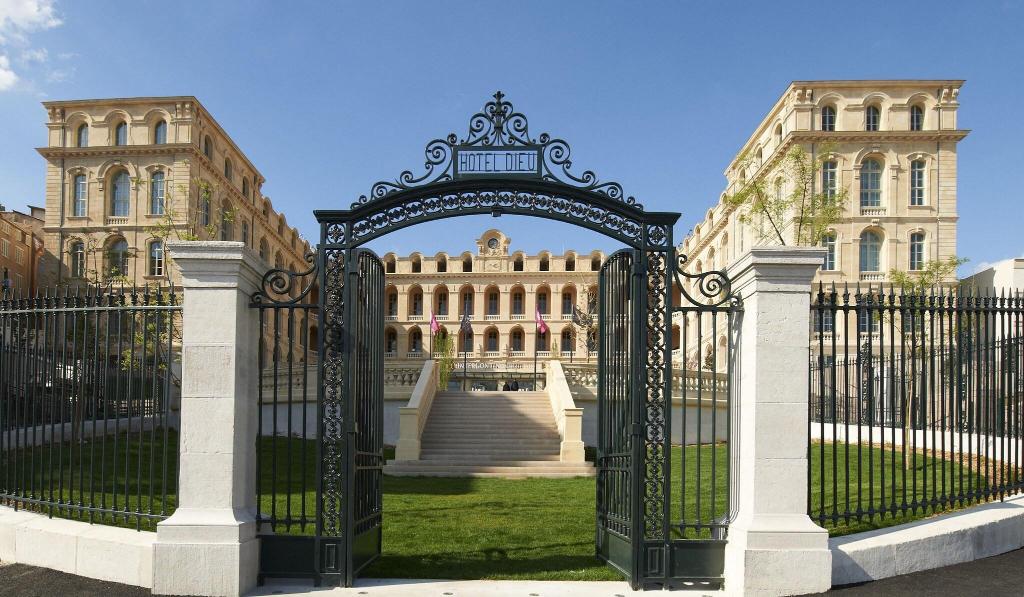
InterContinental Marseille Hotel Dieu
Marseille
Beach 2 km · Spa · Pool
From £225 a night, taxes incl.2 adults · checked 14 Nov, 14:53

★★★★
Best Western Marseille Aeroport
Vitrolles
Spa · Pool · Parking
From £148 a night, taxes incl.2 adults · checked 14 Nov, 14:53

★★★★★
Le Petit Nice Passedat
Marseille
Spa · 19 rooms
See prices and rooms →
Getting around
The centre is walkable, if hilly, and a compact network of metro lines, trams and buses fills the gaps. Buses run along the Corniche to the beaches and out towards the calanques, and boats to the islands leave from the Vieux-Port. You do not need a car in the city.
When to go
Marseille is one of the sunniest cities in France. Late spring and early autumn are warm without being stifling, and good for both walking and swimming. High summer is hot and busy. At any time of year the mistral, a strong, cold northerly wind, can blow for days under a bright blue sky.
Questions about visiting Marseille
- What is Marseille best known for?
- Its Old Port, the hilltop basilica of Notre-Dame de la Garde, bouillabaisse, the Château d’If of Monte Cristo fame and the cliffs and coves of the Calanques National Park.
- How many days do you need in Marseille?
- Two days covers the port, the basilica, MuCEM and Le Panier. Add a third for the calanques or a boat trip to the islands, and a fourth for Cassis or Aix-en-Provence.
- Is Marseille worth visiting?
- Yes. It is a lively, sunny port city with remarkable architecture, excellent food and a national park on its doorstep. It is grittier than the Riviera resorts, which is part of its appeal.
- Can you visit the Calanques without a car?
- Yes. City buses run to the trailheads on the edge of Marseille, and boat tours leave from the Vieux-Port and from Cassis. In summer, check access rules before setting out.
More guides
- Where to stay in Marseille
- The best things to do in London
- The best things to do in Edinburgh
- The best things to do in Manchester
- The best things to do in York
- The best things to do in Amsterdam
- The best things to do in Birmingham
- The best things to do in Liverpool
- The best things to do in Bristol
- The best things to do in Barcelona
- The best things to do in Budapest
- The best things to do in Cambridge
- The best things to do in Dublin
- The best things to do in Krakow