
Mexico City is enormous, high and loud, and it will win you over by lunchtime on the first day. An Aztec capital lies under its main square, a castle sits on a hill in its biggest park, and somewhere on every block somebody is slicing pork from a spit on to a warm tortilla. It is one of the great cities of the Americas, and it still feels like a discovery.
The trick is to think in neighbourhoods. The historic centre holds the grand set pieces, Chapultepec the museums, Roma and Condesa the cafés and bars, and Coyoacán the cobbles and Frida Kahlo. Take it one district at a time and the scale stops being daunting.
Don't miss
The big sights
Seven centuries of history, most of it within walking distance of the main square.
The Zócalo and the Metropolitan Cathedral
Landmark

Photo: ProtoplasmaKid, CC BY-SA 4.0 The Plaza de la Constitución, known to everyone as the Zócalo, is one of the largest city squares in the world: a vast paved stage with a giant Mexican flag at its centre. The Metropolitan Cathedral fills the north side, built over centuries and visibly tilting as the soft old lakebed sinks beneath it.
Along the east side runs the National Palace, home to Diego Rivera's sweeping murals of Mexican history. This is where the city began, and where it still gathers for celebrations and protests alike.
Tip: Come early in the morning, when the square is quiet and the light is soft on the cathedral.
Templo Mayor
Landmark

Photo: Photograph by Mike Peel (www.mikepeel.net)., CC BY-SA 4.0 Just off the Zócalo, a few steps from the cathedral, lie the excavated remains of the great temple of Tenochtitlan, the Aztec capital the Spanish built over. It was rediscovered in the 1970s, and you now walk through its layered stone platforms on raised paths, with the modern city pressing in on all sides.
The museum alongside is excellent, filled with offerings and sculptures found on the site. Nowhere else makes it so clear that Mexico City stands on top of another city.
Palacio de Bellas Artes
Landmark

Photo: لا روسا, CC BY-SA 4.0 The city's grandest cultural palace is a wedding cake of white marble outside and pure Art Deco inside, topped with a shimmering tiled dome. It hosts opera, concerts and the Ballet Folklórico, and its upper floors carry murals by Rivera, Orozco, Siqueiros and Tamayo.
It sits at the edge of the Alameda Central, the old park where the centre comes to stroll. Art lovers should allow a couple of hours; everyone else should at least step inside the lobby.
Tip: The classic photograph is from the café terrace on the upper floor of the department store directly opposite.
Chapultepec Castle
Landmark

Photo: Own work, CC BY-SA 4.0 On a rocky hill in the middle of Chapultepec Park stands a castle that has been a military academy, an imperial residence and a presidential home. Today it houses the National Museum of History, though many visitors come simply for the terraces, the stained glass and the long view straight down Paseo de la Reforma.
The park around it is the city's lungs: lakes, shaded paths, snack stalls and families out in force on Sundays. It suits anyone who needs a breather between museums.
Museums
National Museum of Anthropology
Museum
If you only visit one museum in Mexico, make it this one. Set in Chapultepec Park, it gathers the finest objects from the country's ancient civilisations under one roof: colossal Olmec heads, Maya carvings, and the famous Aztec Sun Stone, which holds court in the central hall.
The building itself is a 1960s landmark, wrapped around a courtyard sheltered by a single enormous concrete canopy. It is big enough to swallow a day, so choose a few halls and do them properly.
Tip: Start with the Mexica (Aztec) and Maya halls, then see how much energy you have left.
Frida Kahlo Museum
Museum

Photo: Rebeccananonof, CC0 The Casa Azul, the cobalt-blue house in Coyoacán where Frida Kahlo was born, lived and died, is now a museum of her life. Her studio, her kitchen, her corsets and her collection of folk art are all here, and the garden courtyard is as vivid as her paintings.
It is a small house and hugely popular, so it feels intimate and crowded at the same time. Fans will find it moving; even the indifferent tend to leave converted.
Tip: Tickets are timed and sell out, so book online well before you travel.
Neighbourhoods to wander
Coyoacán
Neighbourhood

Photo: Ferdc, CC BY-SA 4.0 Once a separate village, Coyoacán still behaves like one. Cobbled lanes, colonial houses painted in ochre and blue, and two leafy plazas with a fountain of drinking coyotes at their heart make it the gentlest corner of the capital.
Come for the Frida Kahlo Museum and stay for the market, the ice cream and the churros eaten on a bench. Weekends are busy and cheerful, with street performers and balloon sellers out in the squares.
Roma and Condesa
Neighbourhood

Photo: ProtoplasmaKid, CC BY-SA 4.0 These two neighbouring districts are where Mexico City goes for brunch, cocktails and dog-walking. Tree-lined avenues, Art Deco apartment blocks and early twentieth-century mansions house bookshops, galleries, coffee roasters and some of the city's most talked-about restaurants.
Condesa curls around two lovely parks, Parque México and Parque España; Roma is a touch grittier and more creative. Both suit travellers who like to explore on foot with no fixed plan.
Xochimilco
Activity

Photo: Wotancito, CC BY-SA 4.0 In the far south of the city, a network of canals survives from the lake that once filled this valley. You hire a trajinera, a flat-bottomed boat painted in riotous colours, and are poled along past floating gardens while other boats sell you tacos, corn, beer and a serenade from a mariachi band.
It is noisy, kitsch and tremendous fun, at its liveliest on Sundays when local families pile in. The canals and the historic centre share a UNESCO World Heritage listing.
Tip: Go with a group if you can: boats are hired whole, so the more of you there are, the better.
Eat, drink and be entertained
This is one of the great food cities, and much of the best of it is eaten standing up.
Tacos al pastor
Food
The capital's signature taco: thin slices of marinated pork carved from a vertical spit, dropped on to a small corn tortilla with onion, coriander and a sliver of pineapple. The technique arrived with Lebanese immigrants and the city made it its own.
You'll find taquerías on almost every street, busiest late at night. Look for the spit glowing in the window and a queue of locals, then order two more than you think you need.
Mercado de San Juan
Market

Photo: Luis Alvaz, CC BY-SA 4.0 A short walk from the Alameda, this covered market is where the city's chefs come to shop. Stalls are piled with cheeses, cured meats, tropical fruit, seafood and ingredients you may not recognise, and several serve food at the counter.
It is a good introduction to Mexican produce for curious eaters, and a lively place for a casual lunch on a day in the historic centre.
Lucha libre
Activity

Photo: Luis Alvaz, CC BY-SA 4.0 Masked wrestlers, flying leaps from the ropes, heroes and villains, and a crowd that shouts itself hoarse: a night of lucha libre is pure Mexican theatre. Arena México, in the Doctores district near Roma, is the sport's best-known home.
Nobody minds if you don't follow the plot. Buy a mask from the stalls outside, pick a side and join in. It suits groups and older children as much as anyone.
Plaza Garibaldi
Nightlife
This square north of the historic centre is the home of mariachi. Bands in full silver-studded costume gather here in the evenings, waiting to be hired for a song or for a whole party, and the air fills with trumpets and violins.
It is at its liveliest late on Friday and Saturday nights. The Museum of Tequila and Mezcal stands on the square if you want something to sip while you listen.
Tip: Take a taxi or ride-hailing car to and from the square at night rather than walking.
Day trips
Teotihuacan
Day trip

Photo: Daniel Case, CC BY-SA 3.0 North-east of the city lie the ruins of one of the largest cities of the ancient Americas, already abandoned and mysterious by the time the Aztecs found it. Its Avenue of the Dead runs straight for well over a mile between the vast Pyramid of the Sun and the Pyramid of the Moon.
It is a UNESCO World Heritage Site and the classic day out from the capital. The scale only really lands when you are standing in the middle of it.
Tip: There is almost no shade. Go early and bring a hat, water and sunscreen.
Basilica of Our Lady of Guadalupe
Landmark

Photo: Eneas De Troya from Mexico City, México, CC BY 2.0 In the north of the city, this is one of the most visited Catholic pilgrimage sites in the world. The complex holds the old sinking basilica, a huge circular modern one built in the 1970s, and the revered image of the Virgin of Guadalupe.
It is easy to combine with Teotihuacan, and many tours do. Even for non-believers the devotion on display is striking, above all around the feast day in December.
Puebla
Day trip
A couple of hours to the south-east, Puebla is a handsome colonial city with a UNESCO-listed centre of churches and houses faced in painted Talavera tiles. It is also a place of pilgrimage for eaters: mole poblano, the dark, complex sauce of chillies and chocolate, comes from here.
With the volcano Popocatépetl on the horizon on a clear day, it makes a rewarding change of pace for anyone staying in the capital for more than a few days.
Where to stay in Mexico City
Not sure which area suits you? Read our guide: Where to stay in Mexico City →

★★★★
Aiden By Best Western Hotel Black Boutique
Mexico City
70 rooms · Family-friendly · Pets allowed
From £72 a night, taxes incl.2 adults · checked 14 Nov, 10:52

★★★★
BelAir Business a Wyndham Garden Hotel
Ciudad de Mexico
Parking
From £73 a night, taxes incl.2 adults · checked 14 Nov, 10:52

★★★★★
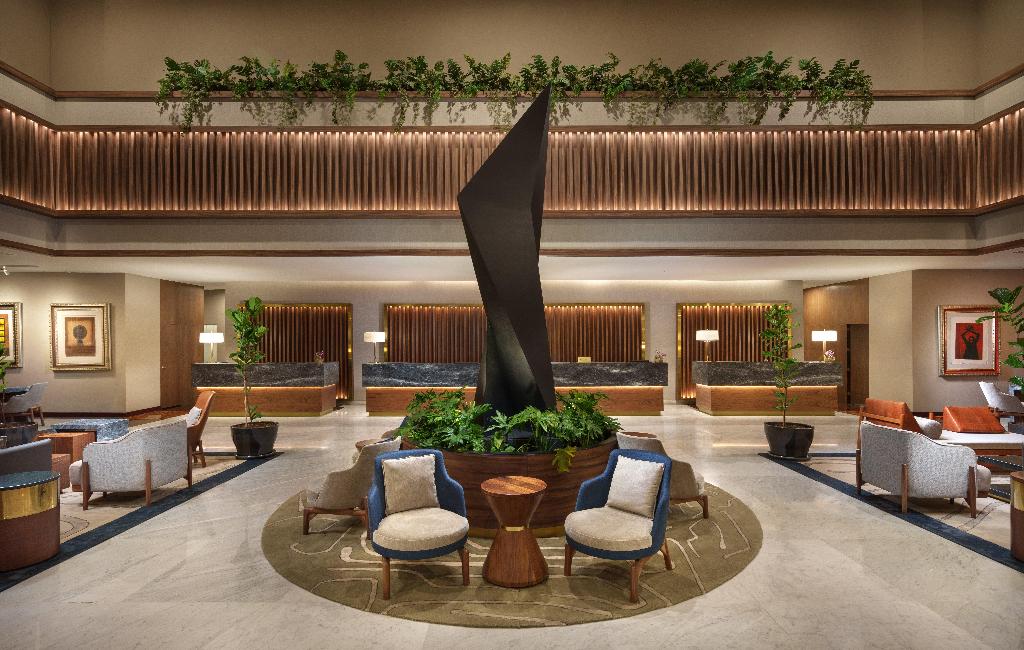
InterContinental Presidente Mexico City
Ciudad De Mexico
All-inclusive option · Spa · Family-friendly
From £288 a night, taxes incl.2 adults · checked 14 Nov, 10:52

★★★★
Casa Blanca
Mexico D.f.
Pool · Parking
See prices and rooms →

★★★★
Century Reforma
Ciudad de Mexico
Pool · Parking
From £73 a night, taxes incl.2 adults · checked 14 Nov, 10:52

★★★★★
Marriott Reforma Mexico City
Col. Juarez
Spa · Pool · Parking
From £223 a night, taxes incl.2 adults · checked 14 Nov, 10:52

★★★★
City Express by Marriott CDMX Plaza Central
Ciudad de Mexico
Parking
From £58 a night, taxes incl.2 adults · checked 14 Nov, 10:52

★★★★★
Andaz Condesa Mexico City, By Hyatt
Mexico City
Parking
From £272 a night, taxes incl.2 adults · checked 14 Nov, 10:52
Getting around
The metro is extensive and cheap, though packed at rush hour. Ride-hailing apps are the easy way to cross the city, especially after dark, and Roma, Condesa and the historic centre are best explored on foot. Traffic is heavy, so plan each day around one part of town.
When to go
The city sits high in the mountains, so it is mild all year, with warm days and cool evenings. The drier months, roughly November to April, are the most comfortable; summer afternoons often bring heavy showers. Give yourself a gentle first day to get used to the altitude.
Questions about visiting Mexico City
- What is Mexico City best known for?
- The Zócalo and its cathedral, the Aztec ruins of the Templo Mayor, the National Museum of Anthropology, Frida Kahlo's Casa Azul, the canals of Xochimilco and some of the best street food in the world.
- How many days do you need in Mexico City?
- Four or five days lets you see the historic centre, Chapultepec and its museums, Coyoacán and Xochimilco, with a day trip to Teotihuacan. A long weekend covers the headline sights.
- Is Mexico City worth visiting?
- Yes. It has world-class museums, ancient ruins, beautiful neighbourhoods and outstanding food, and it is far greener and more walkable than its size suggests.
- What is there to do in Mexico City with kids?
- Chapultepec Park and its castle, a boat ride at Xochimilco, exploring the pyramids at Teotihuacan and a night at the lucha libre all go down well with children.
- Do you need a car in Mexico City?
- No. Traffic is heavy and parking is difficult. The metro, ride-hailing apps and walking cover the city, and tours or buses run to Teotihuacan and Puebla.
More guides
- Where to stay in Mexico City
- The best things to do in London
- The best things to do in Edinburgh
- The best things to do in Manchester
- The best things to do in York
- The best things to do in Amsterdam
- The best things to do in Birmingham
- The best things to do in Liverpool
- The best things to do in Bristol
- The best things to do in Barcelona
- The best things to do in Budapest
- The best things to do in Cambridge
- The best things to do in Dublin
- The best things to do in Krakow