

Minneapolis is a city that spends half the year outdoors and the other half pretending the cold doesn't bother it. In summer everyone is on a bike, in a canoe or on a patio beside one of the lakes that sit, improbably, in the middle of town. In winter they skate on those same lakes, then retreat to theatres, galleries and very good restaurants.
It grew up around a waterfall on the Mississippi and the flour mills that harnessed it, and that riverfront, now ruins, parks and a celebrated theatre, is the place to begin. Add a serious art scene, the ghost of Prince around every corner and America's biggest shopping mall on the doorstep, and you have a far more rewarding city break than most people expect.
Don't miss
The big sights
Stone Arch Bridge and St Anthony Falls
Landmark

Photo: Michael Barera, CC BY-SA 4.0 The only major waterfall on the whole length of the Mississippi is the reason Minneapolis exists, and the best view of it is from a curving granite railway bridge built in the 1880s and now given over to walkers and cyclists. Water thunders over the spillway on one side; the downtown skyline stacks up on the other.
Old mill ruins and riverside parks line both banks, so it is easy to turn the crossing into a loop of an hour or so. Come at golden hour for photographs.
Minneapolis Sculpture Garden
Landmark
A giant spoon with a bright red cherry balanced on its tip has become the unofficial emblem of the city. Spoonbridge and Cherry, by Claes Oldenburg and Coosje van Bruggen, is the centrepiece of this big open-air gallery beside the Walker Art Center, where dozens of works are scattered across lawns and gravel walks.
It is playful, uncrowded and easy to enjoy with children, and a footbridge leads across the road to Loring Park and on towards downtown.
Minnehaha Falls
Nature

Photo: Mikael Häggström, M.D. Author info - Reusing images- Conflicts of interest: None, CC0 In a wooded park on the south side of the city, Minnehaha Creek drops over a limestone ledge into a leafy gorge just before it joins the Mississippi. The waterfall was made famous by Longfellow's poem The Song of Hiawatha and has been a favourite Sunday outing ever since.
Paths follow the creek down to the river, and in the depths of winter the whole cascade freezes into a wall of blue ice.
Tip: The light rail from downtown stops a short walk from the falls.
Mall of America
Activity

Photo: Tyler Vigen, CC BY 4.0 In suburban Bloomington, near the airport, stands the largest shopping mall in the United States: hundreds of shops on several levels, wrapped around a full indoor theme park with roller coasters under a glass roof. There is an aquarium in the basement and enough restaurants to feed a small town.
Shoppers can lose a whole day here. Families love that the weather outside is irrelevant.
Tip: The Blue Line light rail runs from downtown and the airport straight to the mall.
Museums and theatre
For its size, Minneapolis has an outstanding cultural life.
Walker Art Center
Museum

Photo: McGhiever, CC BY-SA 4.0 One of the leading museums of modern and contemporary art in the country, the Walker is bold, brainy and rarely dull. Its galleries mix painting and sculpture with film, design and performance, and the building itself, part brick block, part crumpled metal box, makes a statement on the edge of downtown.
Combine it with the Sculpture Garden across the way, and finish on the terraces for the view of the skyline.
Minneapolis Institute of Art
Museum

Photo: McGhiever, CC BY-SA 4.0 Known to everyone as Mia, this is the big, traditional counterpart to the Walker: a grand columned building south of downtown holding art from around the world and across five thousand years. The Asian collections are especially admired, with whole reconstructed rooms from China and Japan, and there are Rembrandts, Van Goghs and Monets to find upstairs.
It is large enough to lose a day in. Pick two or three departments and take your time.
Mill City Museum
Museum

Photo: Michael Barera, CC BY-SA 4.0 Built inside the burnt-out shell of what was once the largest flour mill in the world, this museum tells how wheat, water and railways made Minneapolis. A ride in a goods lift carries you up through recreated factory floors, and an observation deck at the top looks straight down on the falls and the Stone Arch Bridge.
The ruined courtyard, open to the sky, is one of the most atmospheric spaces in the city.
Guthrie Theater
Landmark

Photo: Michael Barera, CC BY-SA 4.0 The Guthrie is among the most respected regional theatres in America, and its home on the riverfront, a dark blue block designed by Jean Nouvel, is worth visiting even if you never see a play. A long cantilevered walkway, the Endless Bridge, pokes out high above the Mississippi and is open to the public.
Walk to the end for a framed view of the falls, then stay for a drink in the bar.
Lakes and neighbourhoods
Chain of Lakes
Nature

Photo: SusanLesch, CC0 A string of lakes runs through the south-west of the city, joined by parkland and ringed with separate paths for walkers and cyclists. Bde Maka Ska is the biggest and busiest, with beaches and boat hire; Lake Harriet has a bandstand and summer concerts; Lake of the Isles is the quiet, pretty one, lined with grand houses.
Hire a bike or a kayak and do what the locals do. In winter the same lakes turn into ice rinks and cross-country ski tracks.
North Loop
Neighbourhood
The old warehouse district on the north-west edge of downtown is now the most fashionable part of Minneapolis. Brick buildings that once stored farm machinery hold independent boutiques, coffee roasters, cocktail bars and many of the restaurants that have earned the city its food reputation.
It is compact and walkable, with the Twins' baseball stadium at one end. Book dinner here at least once.
Northeast Minneapolis
Neighbourhood
Across the river, Northeast is an old immigrant quarter of church spires and corner bars that has filled up with artists and brewers. Former factories now house hundreds of studios, taprooms occupy garages and workshops, and Polish and Ukrainian delis still trade alongside them.
Come for a low-key evening of beer and live music. It is the least polished part of the city and all the better for it.
Eat, drink and music
The Juicy Lucy
Food

Photo: Kim, CC BY-SA 2.0 Minneapolis's gift to the hamburger is to put the cheese inside the meat rather than on top, so that it melts into a molten core while the patty cooks. Two old south-side bars each claim to have invented it, they spell it differently, and locals take sides with great seriousness.
Order one, with fried onions, at a formica table. It is not subtle and it is very good.
Tip: Let it cool for a minute before the first bite. The cheese in the middle is scalding.
First Avenue
Nightlife

Photo: Tony Webster, CC BY-SA 4.0 A curved black building in the middle of downtown, once a bus station, is one of the most storied rock clubs in America. Prince made it his home stage and filmed much of Purple Rain inside, and the outside walls are covered with hundreds of silver stars naming the acts who have played here.
Gigs run most nights, in the main room and the smaller side room next door. Even without a ticket, find Prince's star, the gold one.
Day trips
St Paul
Day trip

Photo: Michael Barera, CC BY-SA 4.0 The other Twin City, and the state capital, is a short ride east by light rail and has a quite different character: older, hillier and quieter. Its landmarks face each other across the centre, the white marble dome of the Minnesota State Capitol and the huge copper-domed Cathedral of Saint Paul.
From the cathedral, Summit Avenue runs west for miles past Victorian mansions built by railway and timber barons. F. Scott Fitzgerald was born nearby and wrote here.
Paisley Park
Museum
In the suburb of Chanhassen, south-west of the city, stands the white studio complex where Prince lived, recorded and threw late-night parties. Since his death it has been open as a museum, and guided tours lead through the studios, the soundstage and rooms of instruments, costumes and awards.
For fans it is a pilgrimage. For everyone else it is a fascinating look inside a very private creative world.
Tip: Visits are by timed tour only and need booking ahead.
Stillwater
Day trip

Photo: Autoshade~commonswiki, Public domain On the St Croix River, which forms the border with Wisconsin, Stillwater is a handsome old lumber town within easy reach of the Twin Cities. Its main street of brick shopfronts is full of antique dealers, bookshops and cafés, a historic lift bridge spans the river, and paddle steamers and pleasure boats cruise below the bluffs in summer.
Where to stay in Minneapolis
Not sure which area suits you? Read our guide: Where to stay in Minneapolis →
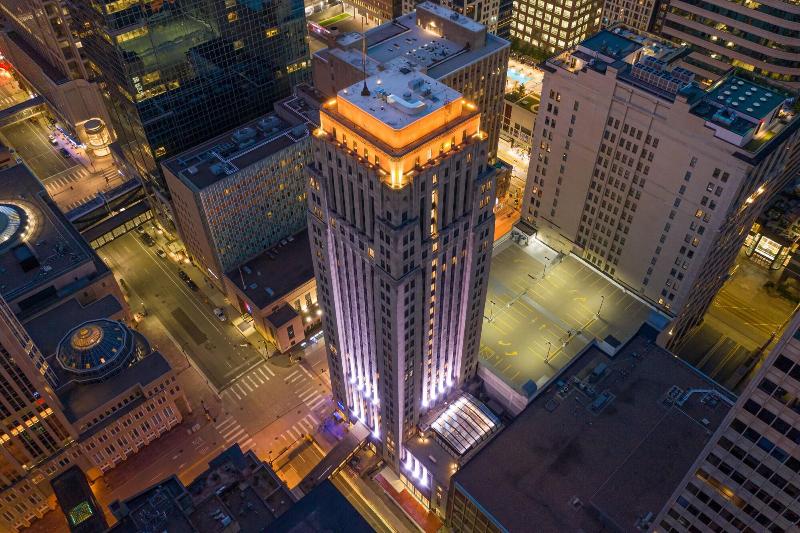
★★★★
Rand Tower Hotel, A Tribute Portfolio Hotel
Minneapolis
Pets allowed · Parking
From £140 a night, taxes incl.2 adults · checked 14 Nov, 01:22

★★★★
Canopy by Hilton Minneapolis Mill District
Minneapolis
Parking
From £163 a night, taxes incl.2 adults · checked 14 Nov, 01:22

★★★★★
Four Seasons Hotel Minneapolis
Minneapolis
Adults only · Spa · Rooftop pool
From £372 a night, taxes incl.2 adults · checked 14 Nov, 01:22

★★★★
Radisson Blu Mall of America
Bloomington
Pool · Parking
From £125 a night, taxes incl.2 adults · checked 14 Nov, 08:22

★★★★
InterContinental Saint Paul Riverfront
St. Paul
Pets allowed · Parking
From £112 a night, taxes incl.2 adults · checked 14 Nov, 01:22

★★★★★
W Minneapolis-The Foshay
Minneapolis
Spa · Parking
From £191 a night, taxes incl.2 adults · checked 14 Nov, 01:22

★★★★
Omni Viking Lakes Hotel
Eagan
Spa · Pool · Pets allowed
From £171 a night, taxes incl.2 adults · checked 14 Nov, 01:22

★★★★
Courtyard Minneapolis St. Paul/Roseville
Roseville, Minneapolis
Pool · Parking
From £138 a night, taxes incl.2 adults · checked 14 Nov, 01:22
Getting around
The light rail is useful: the Blue Line links downtown with Minnehaha Falls, the airport and Mall of America, and the Green Line runs to St Paul. Downtown buildings are joined by miles of enclosed skyways, a blessing in winter. The city is also one of the best in America for cycling, with hire bikes and off-road paths everywhere.
When to go
Summer is glorious, warm and long-lit, with everyone out on the lakes; early autumn brings fine colour. Winters are long and seriously cold, though the city is built for them and carries on regardless. Pack properly and you can enjoy either.
Questions about visiting Minneapolis
- What is Minneapolis best known for?
- Its lakes and parks, the Mississippi riverfront and St Anthony Falls, a strong arts scene led by the Walker Art Center and the Guthrie Theater, Mall of America, and Prince, who was born and worked here.
- Is Minneapolis worth visiting?
- Yes. It combines excellent museums, theatre and restaurants with an unusual amount of outdoor life for a big city, and St Paul is a short ride away for a change of pace.
- What is there to do in Minneapolis with kids?
- Mall of America, with its indoor theme park and aquarium, is the obvious choice. The Sculpture Garden, Minnehaha Falls, the Mill City Museum and beaches and boat hire on the Chain of Lakes are all good for families too.
- How many days do you need in Minneapolis?
- Three days is about right: one for the riverfront and museums, one for the lakes and neighbourhoods, and one for St Paul, Mall of America or Paisley Park.
- Do you need a car in Minneapolis?
- Not for the city itself. Light rail, buses, bikes and the downtown skyways cover most sights, including the airport and Mall of America. A car helps for Paisley Park and Stillwater.
More guides
- Where to stay in Minneapolis
- The best things to do in London
- The best things to do in Edinburgh
- The best things to do in Manchester
- The best things to do in York
- The best things to do in Amsterdam
- The best things to do in Birmingham
- The best things to do in Liverpool
- The best things to do in Bristol
- The best things to do in Barcelona
- The best things to do in Budapest
- The best things to do in Cambridge
- The best things to do in Dublin
- The best things to do in Krakow