
Montenegro is tiny, about the size of Northern Ireland, and absurdly dramatic. Grey limestone mountains drop straight into the Adriatic, a fjord-like bay winds deep inland past Venetian towns, and an hour or two from the beach you can be standing on the rim of one of the deepest canyons in Europe. The name means Black Mountain, and it is well earned.
The coast gets the attention, and rightly so: walled old towns, clear water and long, hot summers. But the country's small scale is its secret weapon. Base yourself by the sea and you can still reach a mountain mausoleum, a lake full of water lilies or a cliff-face monastery and be back in time for grilled fish at sunset.
Don't miss
The Bay of Kotor
A long, winding inlet walled in by mountains: the most beautiful corner of the Adriatic.
Kotor Old Town
Landmark

Photo: Milica Buha, CC BY-SA 4.0 At the innermost end of the bay, pressed against a wall of rock, sits a perfectly preserved medieval town. Kotor spent centuries under Venetian rule and it shows: marble-paved squares, carved palaces, the winged lion of St Mark above the gates and the twin-towered Cathedral of St Tryphon. The whole place is a UNESCO World Heritage Site. There is no route to follow. Wander, get lost, and count the cats, which are the town's unofficial mascots.
Tip: Cruise ships fill the lanes in the middle of the day. Early morning and evening are far more pleasant.
The Kotor fortress walk
Activity
Kotor's defensive walls do not stop at the edge of town. They zigzag straight up the mountain behind it to the Fortress of San Giovanni, far above the rooftops. The climb is well over a thousand stone steps, hot and steep, and the reward is the view that sells Montenegro to the world: terracotta roofs, the blue bay and mountains folding away on every side.
Tip: Start early or late in the day, wear proper shoes and take water. There is very little shade.
Perast and Our Lady of the Rocks
Landmark

Photo: Gertjan R., CC BY-SA 3.0 A few miles along the shore from Kotor, Perast is a single waterfront street of Baroque palaces and church towers built by wealthy sea captains. It is tiny, quiet and exquisite. Just offshore float two little islands. One holds a monastery among cypress trees; the other, Our Lady of the Rocks, was built up by local sailors stone by stone and carries a blue-domed church. Small boats shuttle across from the quay.
Herceg Novi
Neighbourhood

Photo: Alexkom000, CC BY 4.0 Guarding the mouth of the bay, Herceg Novi is a town of steps, fortresses and gardens, known for its mimosa and its mild climate. A clock tower leads into a small old town of leafy squares, and a long seafront promenade links swimming spots, cafés and the old spa suburb of Igalo. It feels more lived-in than Kotor and suits those who like a town with locals in it.
The Adriatic coast
Budva Old Town
Landmark

Photo: Dirgela, CC BY-SA 4.0 Budva is the capital of Montenegrin beach life, and at its heart is a small walled town on a peninsula, all narrow stone lanes, churches and a citadel looking out to sea. Around it stretch beaches, a marina and a long strip of bars and clubs that make this the liveliest resort in the country. Come for sun by day and a party at night.
Sveti Stefan
Landmark

Photo: Marcin Konsek, CC BY-SA 4.0 The image on every Montenegro brochure: a fortified fishing village on a rocky islet, joined to the mainland by a narrow causeway with a beach on either side. The island itself has long been a private luxury resort and is not generally open to visitors, but the view from the coast road above is the thing. Stop at the lay-by and bring a camera.
Mogren Beach
Beach
A short walk from Budva's old town along a path cut into the cliff, Mogren is two sandy coves backed by rock and joined by a little tunnel. The water is clear and the setting far prettier than the main town beach. It is popular, so it fills up; arrive in the morning for a good spot.
Velika Plaža, Ulcinj
Beach
Down by the Albanian border, the coast changes character. Velika Plaža, the Long Beach, is a vast sweep of fine dark sand running for miles, shelving so gently that it is ideal for children. Steady winds have made it a centre for kitesurfing. Ulcinj itself has an old town on a headland and a distinctly different feel, with minarets on the skyline.
Stari Bar
Landmark

Photo: Diego Delso, CC BY-SA 3.0 Inland from the modern port of Bar, at the foot of a mountain, lie the ruins of the old town: a ghostly hillside of roofless churches, an aqueduct, Ottoman baths and crumbling walls, slowly being restored. Olive groves surround it, some of the trees reputed to be among the oldest in Europe. It is peaceful, atmospheric and blissfully uncrowded.
Mountains, lakes and canyons
Turn your back on the sea for a day or two. This is where Montenegro gets wild.
Lovćen and the Njegoš Mausoleum
Nature

Photo: Milica Buha, CC BY-SA 4.0 Above Kotor, a legendary road climbs the mountainside in a ladder of hairpin bends, each with a wider view of the bay. At the top is Lovćen National Park and, on a summit reached by a long flight of steps, the mausoleum of Njegoš, Montenegro's poet-prince. On a clear day you can see much of the country from the viewing platform. Stop in the village of Njeguši on the way for its famous smoked ham and cheese.
Tip: The serpentine road is narrow. Nervous drivers may prefer an organised tour.
Lake Skadar
Nature

Photo: Diego Delso, CC BY-SA 3.0 The largest lake in the Balkans straddles the border with Albania, a huge, still expanse of water fringed with reeds, water lilies and sleepy fishing villages. It is a national park and one of Europe's most important sites for birds, including pelicans. Take a boat trip from the village of Virpazar, then try the local carp and a glass of Vranac, the dark Montenegrin red.
Durmitor National Park and the Black Lake
Nature

Photo: Ad Meskens You are free to use this picture for any purpose as long as you credi, CC BY-SA 4.0 In the far north, the peaks of Durmitor rise above high pastures and pine forest, a UNESCO-listed landscape of jagged limestone and glacial lakes. The Black Lake, an easy walk from the small mountain town of Žabljak, is the best known, with a gentle path around its shore. Serious hikers have a choice of summits, and in winter the area turns to skiing.
The Tara River Canyon
Activity

Photo: Dirgela, CC0 On the edge of Durmitor, the Tara has carved one of the deepest river canyons in Europe. The classic way to see it is from a raft, floating and splashing between forested walls on clear, green water. If that sounds too wet, stand on the Đurđevića Tara Bridge, a graceful concrete arch high above the river, where zip lines now fly across the gorge.
Ostrog Monastery
Landmark

Photo: Diego Delso, CC BY-SA 3.0 A white monastery built into a sheer cliff face high above a valley, Ostrog is the most important place of pilgrimage in Montenegro and draws visitors of every faith. The upper church, with its cave chapels and frescoes painted on bare rock, is the part to see. Dress modestly, with shoulders and knees covered, and expect a winding drive up.
Eat, drink and day trips
Njeguši ham and cheese
Food
The mountain village of Njeguši, between Kotor and Cetinje, is famous for two things: pršut, an air-dried, smoked ham, and a firm, tangy cheese. You will be offered both as a starter all over the country, usually with olives and a glass of local wine. On the coast, follow them with grilled fish, squid or black risotto.
Cetinje
Day trip

Photo: Koroner, CC BY-SA 3.0 Montenegro's old royal capital sits on a high plateau beneath Mount Lovćen. It is a modest, leafy town with an outsized past: grand former embassies line its streets, and the palace of King Nikola and the Cetinje Monastery tell the story of a small kingdom that held out against empires. It combines naturally with a trip up Lovćen.
Where to stay in Montenegro
Not sure which area suits you? Read our guide: Where to stay in Montenegro →
★★★★
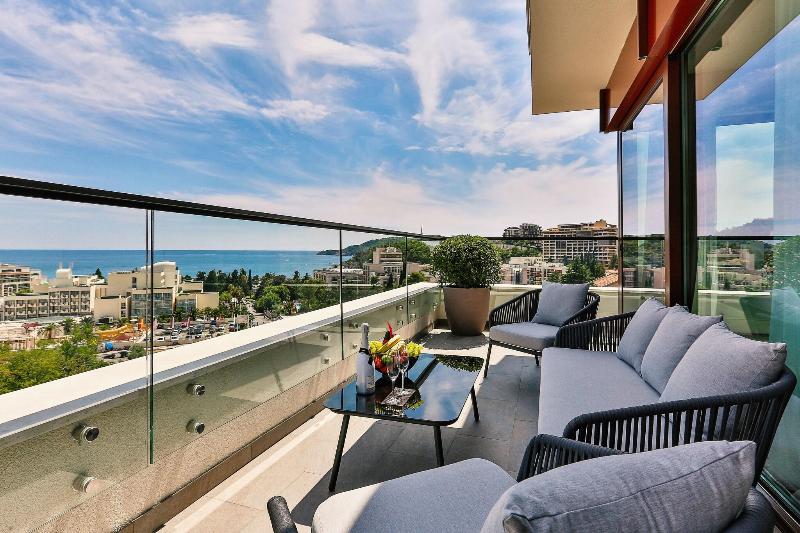
Kalos
Bečići
Beach 250 m · 29 rooms · Family-friendly
See prices and rooms →

★★★★
Apartments Aqua Resort
Budva
23 rooms · Parking
See prices and rooms →
★★★★★
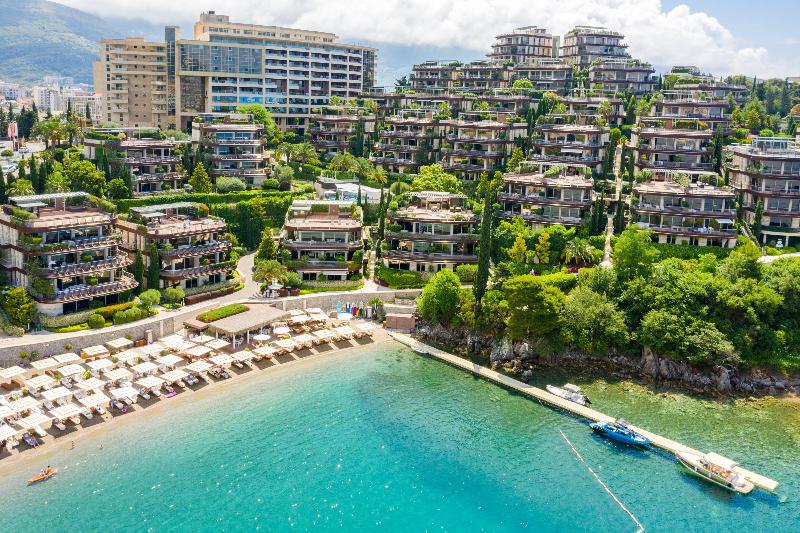
Dukley Hotel&Resort
Budva
Beach 10 m · Spa · Rooftop pool
See prices and rooms →

★★★★
Apartments Krug
Budva
5 rooms
See prices and rooms →
★★★★
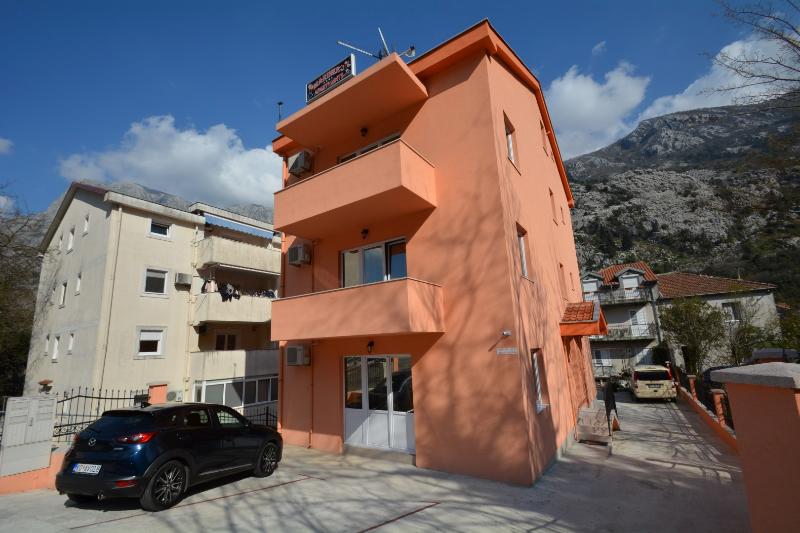
Apartments Marinero
Kotor
7 rooms · Parking
See prices and rooms →

★★★★★
Heritage Grand Perast
Kotor
Spa · Pool · Family-friendly
See prices and rooms →

★★★★
Aurel Hotel
Podgorica
Parking
See prices and rooms →
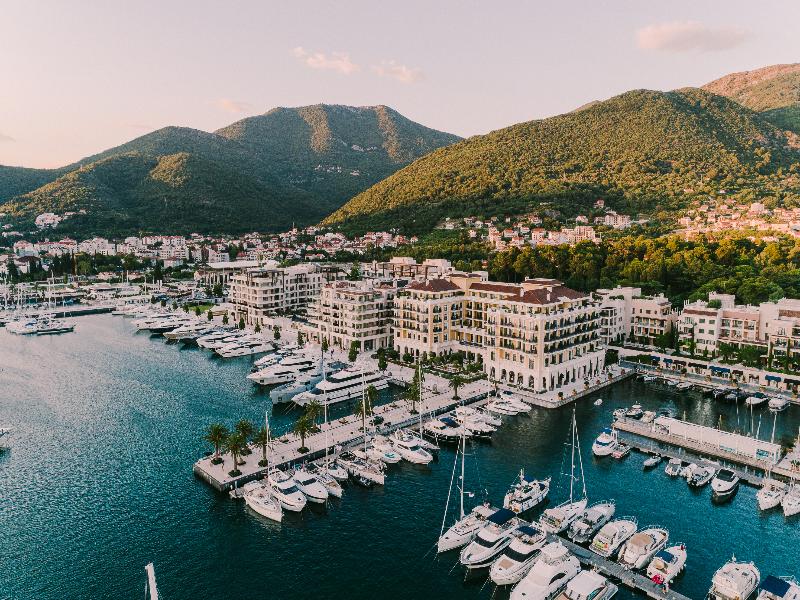
★★★★★
The Quince Hotel, Porto Montenegro
Tivat
Beach 500 m · Spa · Pool
See prices and rooms →
Getting around
A hire car gives you the most freedom, and distances are short, though mountain roads are slow and twisting and the coast road is busy in summer. Buses link the main coastal towns and the capital, Podgorica. Organised day trips from Budva and Kotor cover Lovćen, Lake Skadar, Ostrog and the Tara Canyon.
When to go
The coast has hot, dry summers and is at its busiest in July and August. May, June and September are warm, quieter and good for sightseeing as well as swimming. The mountains are much cooler, with snow in winter, and are best for walking from late spring to early autumn.
Questions about visiting Montenegro
- What is Montenegro best known for?
- The Bay of Kotor and its medieval walled towns, Adriatic beach resorts such as Budva and Sveti Stefan, and wild mountain scenery in Durmitor and Lovćen national parks.
- Is Montenegro worth visiting?
- Yes. It offers some of the most dramatic coastal scenery in the Mediterranean, beautiful old towns and real mountain wilderness, all within a couple of hours of each other.
- How many days do you need in Montenegro?
- Four or five days is enough for the Bay of Kotor and the Budva coast. A week lets you add Lake Skadar and a night or two in the mountains at Durmitor.
- Do you need a car in Montenegro?
- Not if you plan to stay on the coast, where buses and boat trips connect the main towns. For the mountains and national parks a hire car or organised tour is the practical choice.
More guides
- Where to stay in Montenegro
- The best things to do in London
- The best things to do in Edinburgh
- The best things to do in Manchester
- The best things to do in York
- The best things to do in Amsterdam
- The best things to do in Birmingham
- The best things to do in Liverpool
- The best things to do in Bristol
- The best things to do in Barcelona
- The best things to do in Budapest
- The best things to do in Cambridge
- The best things to do in Dublin
- The best things to do in Krakow