

Montreal is the closest thing North America has to a European city, and it knows it. The signs are in French, the cafés spill onto the pavements, the old town is cobbled and church bells carry over the rooftops. Then you turn a corner into a row of glass towers, or a street of spiral iron staircases, and remember you are on an island in the St Lawrence River, in the middle of Quebec.
It is a city that lives for pleasure. People here argue about bagels, queue at midnight for chips and gravy, and fill the summer with festivals, one after another. Winters are fierce, and Montrealers answer them with skating rinks and an entire shopping district underground. Come hungry, bring walking shoes and try a bonjour. It goes a long way.
Don't miss
The big sights
The old town, the basilica and the hill the city is named after.
Old Montreal
Neighbourhood

Photo: shankar s. from Dubai, united arab emirates, CC BY 2.0 The city began here in 1642, and its oldest quarter is still its most beautiful. Cobbled streets run between grey stone warehouses and merchants' houses, now galleries, boutiques and bistros with candles in the windows. Rue Saint-Paul is the prettiest stretch, and Place Jacques-Cartier, sloping down towards the river, fills with terraces, buskers and artists in summer.
It is busy by day, so linger into the evening, when the day-trippers leave and the lamps come on.
Notre-Dame Basilica
Landmark

Photo: Diliff, CC BY-SA 3.0 From outside, a handsome twin-towered Gothic Revival church on Place d'Armes. Inside, a jaw-dropper. The whole interior is painted deep blue and gold, the vaulted ceiling scattered with stars, the altar a glowing forest of carved wood and statues. The stained glass tells the history of Montreal rather than Bible stories. Sit for a few minutes and let your eyes adjust.
Tip: Queues can be long in summer. Book entry ahead, or look out for the evening sound-and-light show.
Mount Royal
Nature

Photo: Ryan Hodnett, CC BY-SA 4.0 The wooded hill that gave the city its name rises straight behind Downtown, and its park was laid out by Frederick Law Olmsted, who also designed Central Park in New York. Walk up through the trees, or climb the long staircase, to the terrace in front of the chalet. The view takes in the skyscrapers, the river and, on a clear day, the hills far beyond.
In summer, drummers and dancers gather near the monument at the foot of the hill on Sundays. In winter there is skating, sledging and cross-country skiing.
Saint Joseph's Oratory
Landmark

Photo: Acarpentier, CC BY 3.0 On the far slope of Mount Royal stands the largest church in Canada, crowned by an enormous copper dome visible for miles. It grew from a tiny chapel built by Brother André, a humble doorkeeper credited with many healings and later made a saint. Pilgrims still climb the long flight of steps to the door. The view from the terrace at sunset is superb.
The Old Port
Activity
The old quays along the St Lawrence are now a long waterfront park. Stroll or cycle the promenade, ride the big observation wheel for views over Old Montreal, climb the Clock Tower, or take the children to the science centre. There are boat trips on the river in summer and an outdoor skating rink in winter, with the lit-up old town as a backdrop.
Museums and parks
Montreal Museum of Fine Arts
Museum
The city's leading art museum spreads through several pavilions on either side of Sherbrooke Street, in the old Golden Square Mile. The collection ranges widely, from Old Masters and Impressionists to Quebec and Canadian art, Inuit sculpture and decorative arts, and the temporary exhibitions are often the talk of the town. It is big, so choose a pavilion or two.
Pointe-à-Callière
Museum
Montreal's museum of archaeology and history is built over the very spot where the city was founded. You descend beneath a modern building into the excavated remains themselves, walking among old stone foundations, a buried river turned sewer and the traces of the first settlement, brought to life with projections. It is an imaginative way to understand how the city grew.
Olympic Park
Landmark

Photo: Diego Delso, CC BY-SA 4.0 The 1976 Summer Olympics left the east end with a stadium like nothing else: a vast concrete shell beneath a tower that leans out over it at a startling angle. Around it are several family attractions, among them the Biodôme, in the former cycling arena, which recreates ecosystems of the Americas under one roof, and a planetarium.
Montreal Botanical Garden
Nature

Photo: King of Hearts, CC BY-SA 4.0 Next to the Olympic Park, this is one of the great botanical gardens of the world, with dozens of themed gardens and a long run of glasshouses. The Chinese garden, with its pavilions and lake, and the calm Japanese garden are the highlights, along with a garden devoted to the plants and traditions of the First Nations. In autumn, lanterns light the paths after dark.
Parc Jean-Drapeau
Nature

Photo: Idej Elixe, CC BY-SA 3.0 Two islands in the river, a short metro ride from the centre, hosted the world's fair of 1967. Its most striking survivor is the Biosphere, a huge geodesic dome designed by Buckminster Fuller. Today the park has gardens, a beach, cycling paths and the Formula 1 circuit, which you can walk or ride around when the cars are not in town.
Neighbourhoods and markets
Plateau Mont-Royal and Mile End
Neighbourhood
This is the Montreal of postcards and novels: streets of terraced houses with curling outdoor staircases, bright front doors and balconies full of plants. The Plateau and neighbouring Mile End are where the city's artists, musicians and students have long lived, and the cafés, bookshops, vintage stores and bars reflect it. Wander up Boulevard Saint-Laurent, past the murals, with no plan.
Jean-Talon Market
Market

Photo: Niranjan Arminius, CC BY-SA 4.0 In Little Italy, one of the largest open-air markets in North America is a feast for the eyes and the stomach. Farmers pile their stalls with Quebec strawberries, corn, apples and squash according to the season, and around the edges are cheesemongers, bakers, spice merchants and counters selling maple syrup in every form. Go for breakfast and graze until lunch.
The Underground City
Activity
Beneath Downtown runs a network of tunnels many miles long, linking metro stations, shopping centres, hotels, offices, cinemas and food courts. Montrealers use it to cross the city centre without setting foot outside, a blessing in January. It is more a string of connected malls than a sight, but exploring it on a cold or wet day is a very Montreal thing to do.
Eat and drink
Three things you must eat here, and the arguments that go with them.
Montreal bagels
Food

Photo: Bohemian Baltimore, CC BY-SA 4.0 Smaller, denser and sweeter than the New York kind, the Montreal bagel is rolled by hand, poached in honey-sweetened water and baked in a wood-fired oven until blistered and golden. Two famous bakeries in Mile End, St-Viateur and Fairmount, have been rivals for decades, and the city is split over which is better. Buy a warm sesame one from each and decide for yourself.
Smoked meat
Food

Photo: Guilhem Vellut from Annecy, France, CC BY 2.0 Montreal's answer to pastrami: beef brisket cured with spices, smoked, steamed and sliced by hand, then piled high between slices of rye bread with a smear of yellow mustard. It arrived with Jewish immigrants from eastern Europe over a century ago. Order it with a sour gherkin, chips and a cherry cola at a delicatessen on Boulevard Saint-Laurent, elbow to elbow with strangers.
Poutine
Food
Quebec's great gift to late nights. Chips are topped with fresh cheese curds, which should squeak between your teeth, and drowned in hot brown gravy until everything begins to melt together. Purists stick to the classic; diners and snack bars across the city offer versions loaded with everything from smoked meat to mushrooms. It tastes best after a cold walk.
Day trips
Mont-Tremblant
Day trip

Photo: Quintin Soloviev, CC BY 4.0 In the Laurentian mountains north of the city, Mont-Tremblant is eastern Canada's best-known ski resort, with a colourful pedestrian village at the foot of the slopes. In summer and autumn it turns to hiking, cycling, lake swimming and a gondola ride to the summit, and the forests blaze red and gold as the leaves change. It is a long day trip or, better, an overnight.
Quebec City
Day trip

Photo: Wilfredor, CC0 Down the St Lawrence lies the capital of the province and one of the oldest cities in North America, its walled old town a UNESCO World Heritage Site. Steep streets of stone houses climb to the turreted Château Frontenac hotel, high above the river. Trains and coaches run from Montreal, but it is far enough that staying a night makes the trip more relaxed.
Where to stay in Montreal
Not sure which area suits you? Read our guide: Where to stay in Montreal →
★★★★
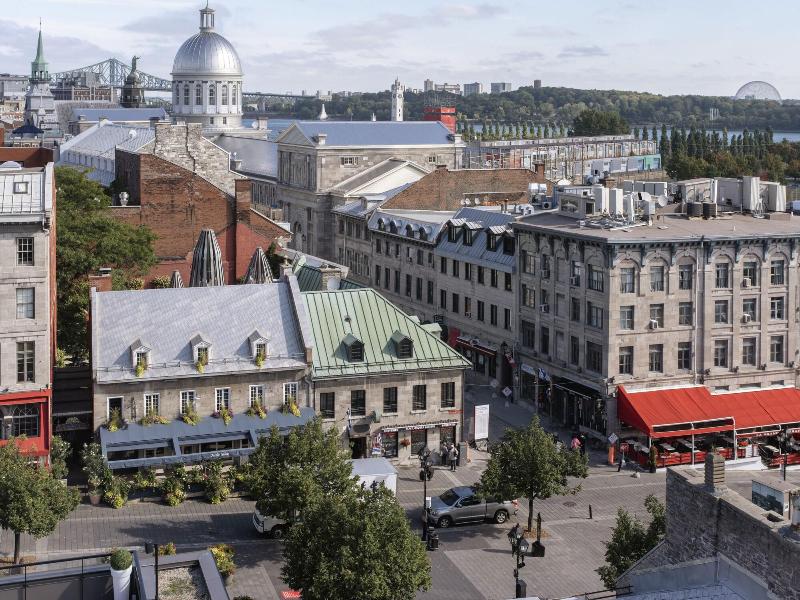
Hotel William Gray
Montreal
Pool · Parking
From £637 a night, taxes incl.2 adults · checked 14 Nov, 20:52

★★★★
DoubleTree by Hilton Montreal
Montreal
Pool · Pets allowed · Parking
From £139 a night, taxes incl.2 adults · checked 14 Nov, 20:52

★★★★★
Fairmont The Queen Elizabeth
Montreal
Spa · Pool · Family-friendly
From £270 a night, taxes incl.2 adults · checked 14 Nov, 20:52

★★★★
Estérel Resort
Quebec
Spa · Pool · Parking
From £197 a night, taxes incl.2 adults · checked 14 Nov, 20:52

★★★★
Aloft Montreal Airport Hotel
Montreal
Pool · Parking
From £122 a night, taxes incl.2 adults · checked 14 Nov, 20:52

★★★★★
The Ritz-Carlton, Montreal
Montreal
Spa · Pool · Family-friendly
From £477 a night, taxes incl.2 adults · checked 14 Nov, 20:52
★★★★
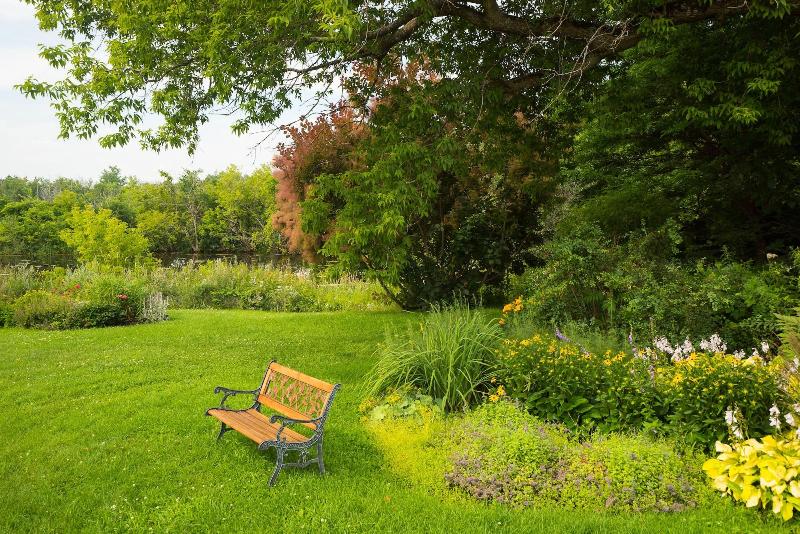
Auberge des Gallant
Sainte-Marthe
Spa · Pool · 41 rooms
See prices and rooms →

★★★★★
Four Seasons Hotel Montreal
Montréal
Spa · Pool · Parking
From £472 a night, taxes incl.2 adults · checked 14 Nov, 20:52
Getting around
Montreal is a walking city with an excellent metro, which covers Downtown, Old Montreal, the Plateau, the Olympic Park and Jean-Talon Market. In the warmer months the public bike-share scheme and miles of cycle lanes make cycling a pleasure. You don't need a car unless you are heading for the Laurentians.
When to go
Summer is festival season, warm and lively, with the jazz and comedy festivals the best known. Autumn brings crisp days and brilliant foliage. Winters are long, snowy and very cold, though the city embraces them with outdoor rinks and winter festivals. French is the main language, and English is widely understood.
Questions about visiting Montreal
- What is Montreal best known for?
- Its French language and culture, the cobbled streets of Old Montreal, Notre-Dame Basilica, Mount Royal, summer festivals such as the jazz festival, and food including bagels, smoked meat and poutine.
- Is Montreal worth visiting?
- Yes. It has a European feel you will not find elsewhere in North America, a superb food scene and distinct, walkable neighbourhoods. It is lively in summer and still rewarding in the snow.
- What is there to do in Montreal with kids?
- The Biodôme and planetarium at the Olympic Park, the science centre and observation wheel at the Old Port, the Botanical Garden, the beach and paths of Parc Jean-Drapeau, and skating or sledging on Mount Royal in winter.
- How many days do you need in Montreal?
- Three days is ideal for Old Montreal, Mount Royal, the Plateau and the markets. Add a day or two for the Olympic Park, the Laurentians or Quebec City.
- Do you need to speak French in Montreal?
- No. French is the official language and a few words are appreciated, but most people working in hotels, restaurants and shops in the centre speak English too.
More guides
- Where to stay in Montreal
- The best things to do in London
- The best things to do in Edinburgh
- The best things to do in Manchester
- The best things to do in York
- The best things to do in Amsterdam
- The best things to do in Birmingham
- The best things to do in Liverpool
- The best things to do in Bristol
- The best things to do in Barcelona
- The best things to do in Budapest
- The best things to do in Cambridge
- The best things to do in Dublin
- The best things to do in Krakow