

Morocco hits every sense at once. There's the smell of cumin and cedar in the souks, the call to prayer rolling across a medina at dusk, the sizzle of food stalls in the great square at Marrakech and the silence of a Saharan dune at dawn. It's a few hours from the UK and feels a world away.
The classic trip strings together the imperial cities of Marrakech and Fez, a blue-washed mountain town, an Atlantic port and a night at the edge of the desert. Pick two or three and give each time. Expect to get lost in a medina, to be offered mint tea more times than you can count, and to eat very well.
Don't miss
Marrakech
The first stop for most visitors, and it earns it.
Jemaa el-Fna
Landmark

Photo: Jakub Hałun, CC BY 4.0 The big square at the heart of the medina is an everyday theatre. By day it's quiet, with orange-juice stalls and cafés around the edge. By evening, smoke from dozens of food stalls drifts across the square, and storytellers, musicians and crowds fill it until late. It's a UNESCO-recognised cultural space, and it's unmissable.
Tip: Take a seat on a café terrace around the edge at sunset for the best view of the square filling up.
The Marrakech souks
Market

Photo: Petar Milošević, CC BY-SA 4.0 North of Jemaa el-Fna, a maze of covered lanes sorted by trade: lanterns and metalwork, leather and slippers, spices, rugs, and colourful dyed wool hung out to dry. You'll get lost, and that's half the fun. Haggle with humour, accept the offer of a glass of tea, and don't be afraid to say no.
Tip: Start early, when it is quieter and cooler, and look at several stalls before you buy.
Jardin Majorelle
Landmark

Photo: Haimed mohamed, CC BY-SA 4.0 A small, serene garden made by the French painter Jacques Majorelle and later saved and restored by Yves Saint Laurent and Pierre Bergé. Cobalt-blue walls, cacti, bamboo and bright pots make a cool contrast to the souks. The Yves Saint Laurent Museum is close by.
Tip: Book ahead if you can and go early. It is small and gets crowded.
Bahia Palace
Landmark

Photo: Val Traveler, CC BY-SA 4.0 A nineteenth-century palace of quiet courtyards, fountains, carved plaster and painted cedar ceilings. Walking through its rooms is a lesson in Moroccan craft, and it's a welcome break from the crowds outside.
Fez and the north
The Fez medina
Neighbourhood

Photo: Petar Milošević, CC BY-SA 4.0 Fez el-Bali, the old city, is one of the largest car-free urban areas in the world and one of the best-preserved medieval cities anywhere. Thousands of lanes, workshops, mosques and fountains are packed into the hills. It's the home of the University of al-Qarawiyyin, founded in the ninth century. Nothing prepares you for it.
Tip: Hire a licensed guide for your first morning, then wander freely.
Chouara Tannery
Landmark

Photo: Jorge Franganillo, CC BY 2.0 Leather is still dyed in stone vats here by hand, a scene that hasn't changed much in centuries. You watch from the terraces of the surrounding leather shops, where you're handed a sprig of mint to hold under your nose. It smells strong, and it's unforgettable.
Bou Inania Madrasa
Landmark
A fourteenth-century Marinid college of carved cedar, stucco and zellige tilework around a courtyard, and one of the finest examples of Moroccan craftsmanship that visitors can enter. Look up, then look down at the intricate mosaic floor.
Chefchaouen
Neighbourhood

Photo: Badr Rachadi, CC BY-SA 4.0 In the Rif mountains, a hillside medina painted in every shade of blue, from pale sky to deep indigo. It's slow, pretty and made for wandering, with steps, doorways and cats at every corner. Climb to the viewpoint near the Spanish Mosque at sunset for the best picture of the town.
Tip: Come early or stay overnight, as day-trippers fill the lanes by late morning.
Coast
Essaouira ramparts and port
Neighbourhood

Photo: Adam Harangozó, CC BY-SA 4.0 A breezy whitewashed town behind old sea walls, with cannons along the ramparts and a harbour full of blue fishing boats and swooping gulls. The Atlantic wind is part of the atmosphere. Wander the medina, browse the galleries and woodworkers, and eat grilled fish straight from the stalls at the port.
Tip: Walk the ramparts at the Skala at sunset, and pick your fish at the port stalls.
Agadir and Taghazout
Beach
Agadir is Morocco's big beach resort, with a long sandy bay and a palm-lined promenade, rebuilt after an earthquake in 1960. Up the coast, Taghazout is the surf village, with good waves and laid-back cafés. Both are easy ways to add sun to a trip.
Hassan II Mosque
Landmark

Photo: SpreeTom, CC BY-SA 4.0 Casablanca's great landmark rises beside the Atlantic, with a towering minaret and a hall big enough for tens of thousands of worshippers. It's one of the few mosques in Morocco that non-Muslim visitors can enter on a guided tour. The craftsmanship inside is extraordinary.
Desert, mountains and kasbahs
Aït Benhaddou
Day trip

Photo: Petar Milošević, CC BY-SA 4.0 A fortified mud-brick village rising from a hillside, a UNESCO site on the old caravan route over the Atlas, and a film location for productions from Gladiator to Game of Thrones. It's usually visited on the road from Marrakech to Ouarzazate and the desert.
The Erg Chebbi dunes
Nature

Photo: Bjørn Christian Tørrissen, CC BY-SA 3.0 Near Merzouga, the Sahara rises in great orange waves, the highest dunes in Morocco. Arrive by 4x4, climb a dune on foot for sunset, then spend the night in a desert camp under a sky full of stars. Wake early, because sunrise over the sand is the whole point.
Tip: It is a long drive from Marrakech or Fez, so allow at least a night in the desert, and bring warm layers for the evenings.
Ouzoud Falls
Day trip
A series of waterfalls plunging into a green gorge in the Middle Atlas, one of the most popular day trips from Marrakech. Walk down the path beside the cascades, have lunch at a terrace café and watch the rainbows form in the spray.
Eat and unwind
Tagine and couscous
Food

Photo: Foodista, CC BY 2.0 A tagine is a slow-cooked stew named for the cone-lidded clay pot it's made in: lamb with prunes, chicken with preserved lemon and olives, or vegetables with spices. Couscous, steamed with vegetables and meat, is the traditional Friday meal. Finish with mint tea, poured from a height into small glasses.
A hammam
Activity
A Moroccan steam bath is part ritual, part scrub: a hot, tiled room, black soap and a vigorous rub with a rough glove. Some riads and spas offer a gentler version. Go to a local one for the real experience, or a hotel one for comfort.
Where to stay in Morocco
Not sure which area suits you? Read our guide: Where to stay in Morocco →
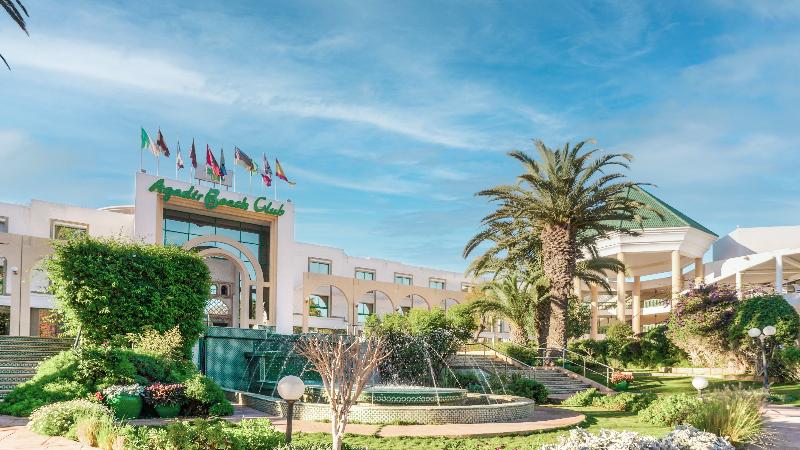
★★★★
Agadir Beach Club
Agadir
Beach 10 m · All-inclusive option · Spa
From £113 a night, taxes incl.2 adults · checked 1 Oct, 17:52
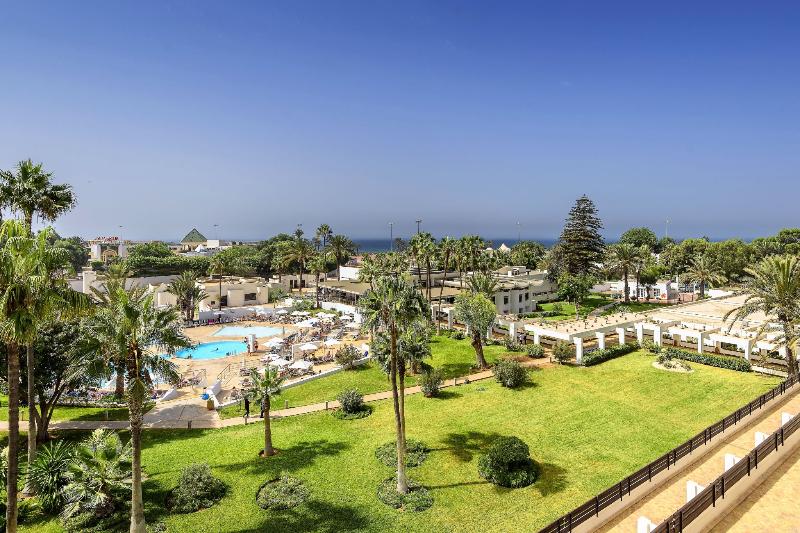
★★★★
Allegro Agadir
Agadir
All-inclusive option · Pool · Family-friendly
See prices and rooms →
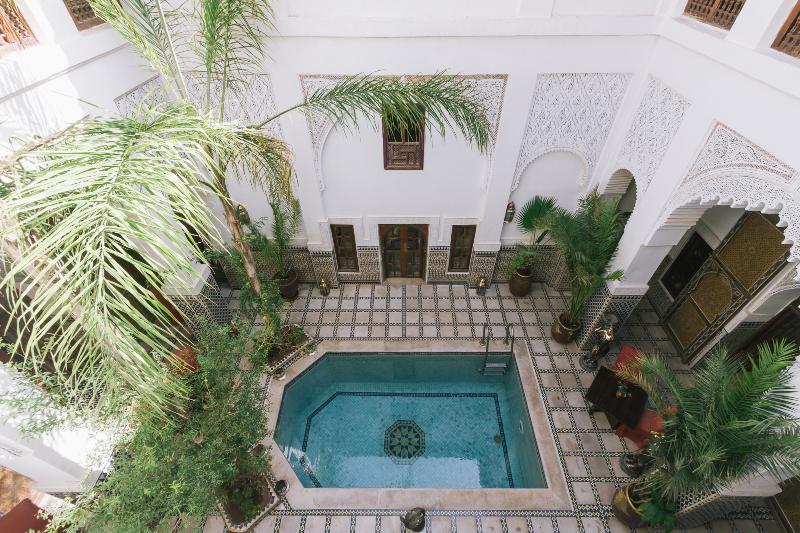
★★★★★
Riad and Spa Esprit Du Maroc
Marrakech
Parking
From £193 a night, taxes incl.2 adults · checked 1 Oct, 17:37
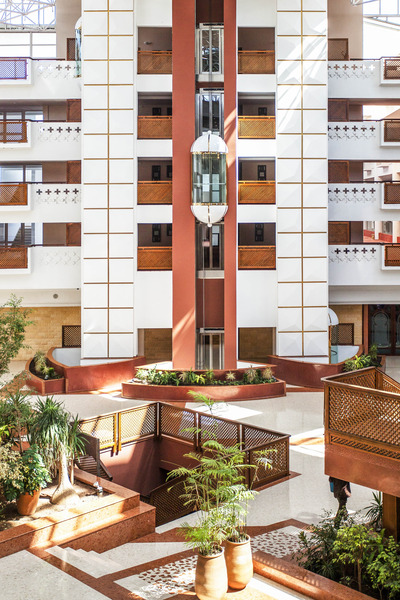
★★★★
Amadil Ocean Club
Agadir
All-inclusive option · Spa · Pool
From £124 a night, taxes incl.2 adults · checked 1 Oct, 17:52
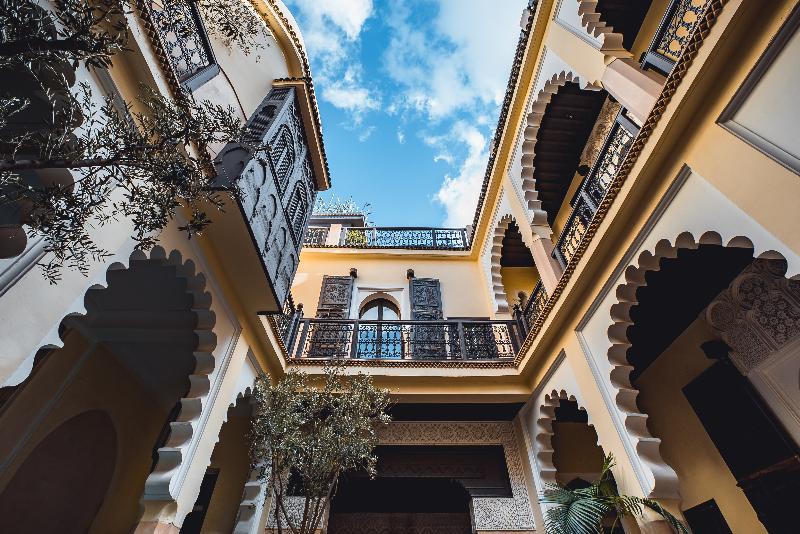
★★★★
Ambre Epices Riad Medina
Marrakech
Spa · Pool · Parking
See prices and rooms →
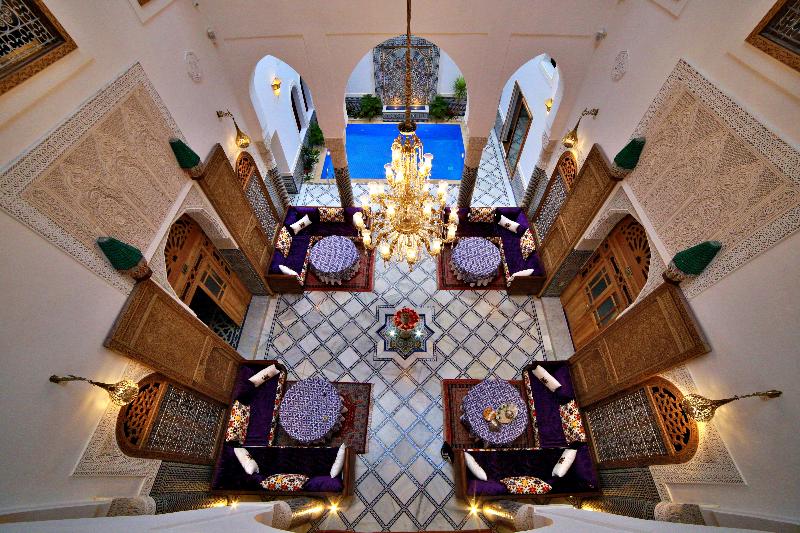
★★★★★
Riad Palais Marjana Suite & Spa
Fez
Spa · Pool · 16 rooms
See prices and rooms →

★★★★
Atlantic Hotel Agadir
Agadir
Spa · Pool · 44 rooms
See prices and rooms →
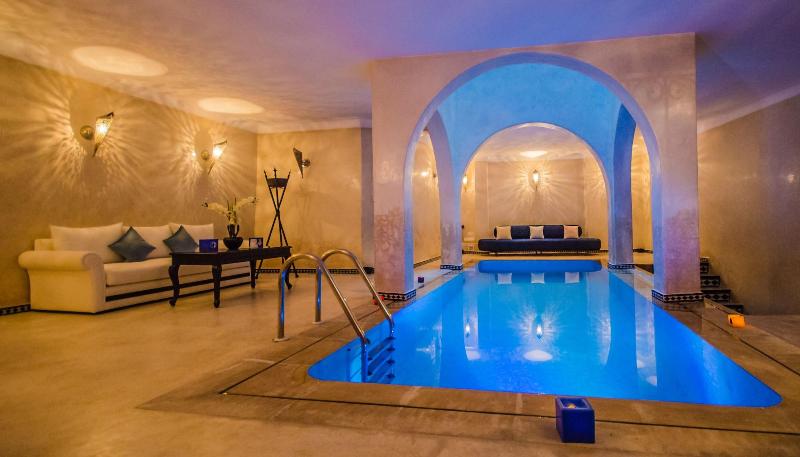
★★★★★
Lina Ryad & Spa
Chefchaouen
Spa · Pool · 17 rooms
See prices and rooms →
Getting around
Trains link Marrakech, Casablanca, Rabat, Fez and Tangier comfortably. For the desert, Chefchaouen and the Atlas, take an organised trip or hire a driver. In medinas, you'll walk. Agree taxi fares before you set off, or ask for the meter.
When to go
Spring and autumn are the most comfortable seasons for the cities and the desert. Summer is very hot inland, so a coastal base like Essaouira or Agadir is a better bet. Winter is mild on the coast and cold at night in the mountains and desert.
Questions about visiting Morocco
- What is Morocco best known for?
- The souks and riads of Marrakech, the medieval medina of Fez, blue Chefchaouen, the Sahara dunes, Atlantic ports like Essaouira and its food, from tagines to mint tea.
- Is Morocco worth visiting?
- Yes. It combines ancient cities, mountain and desert scenery and good beaches in a short flight from the UK, with a culture that feels very different from home.
- How many days do you need in Morocco?
- Three or four days for Marrakech on its own. A week lets you add Essaouira or the desert, and ten days to two weeks covers Marrakech, Fez and the Sahara.
- What is there to do in Morocco with kids?
- Beaches at Agadir and Essaouira, the food stalls of Jemaa el-Fna, Ouzoud Falls, the dunes at Merzouga and exploring the lanes of a medina.
- Do you need a car in Morocco?
- Not for the main cities, which are linked by train and are best explored on foot. For the desert and mountains, an organised trip or a driver is easier than driving yourself.
More guides
- Where to stay in Morocco
- The best things to do in London
- The best things to do in Edinburgh
- The best things to do in Amsterdam
- The best things to do in Barcelona
- The best things to do in Budapest
- The best things to do in Dublin
- The best things to do in Krakow
- The best things to do in Prague
- The best things to do in Berlin
- The best things to do in Lisbon
- The best things to do in Milan
- The best things to do in Paris
- The best things to do in Rome