
Mumbai is India at full throttle. The country's biggest city, its money machine and the home of Bollywood is crammed on to a narrow peninsula in the Arabian Sea, and it never seems to pause. Commuter trains run with their doors open, lunch arrives by bicycle, and at sunset the whole city appears to turn up on the seafront at once.
It is not a city of must-see monuments so much as one of atmosphere. The pleasure is in the Victorian Gothic towers and art deco cinemas of the old Fort district, a boat across the harbour to ancient cave temples, cricket on the maidans and some of the best street food on earth. Start in South Mumbai, where most of the sights are within a short taxi ride of each other.
Don't miss
South Mumbai landmarks
The old colonial city, at the southern tip of the peninsula.
Gateway of India
Landmark

Photo: Ganesh Mohan T, CC BY-SA 4.0 A great basalt arch on the waterfront at Colaba, built to commemorate the visit of King George V in 1911 and finished in 1924. The last British troops to leave India marched out through it in 1948. Today it is the city's meeting point, thronged with families, photographers and balloon sellers, with the domed Taj Mahal Palace hotel standing just behind.
Tip: Come early in the morning for space and soft light. Boats to Elephanta leave from the steps here.
Chhatrapati Shivaji Maharaj Terminus
Landmark

Photo: Joe Ravi, CC BY-SA 3.0 Still known to many as Victoria Terminus, or simply VT, this is one of the most extravagant railway stations ever built: a Victorian Gothic fantasy of turrets, spires, stained glass and stone carvings of peacocks, monkeys and lions, topped with a central dome. It is a UNESCO World Heritage Site and a working station used by millions of commuters.
Tip: See it again after dark, when the façade is lit up.
Fort and Kala Ghoda
Neighbourhood

Photo: Radosław Botev, CC BY 3.0 pl The streets between the station and Colaba hold the finest set of Victorian public buildings in India: the High Court, the university with its Rajabai Clock Tower, and rows of arcaded offices. They face the Oval Maidan, where cricket matches run all day, with a line of art deco apartment blocks on the far side. Kala Ghoda, in the middle, is the art district, full of galleries, cafés and boutiques.
Chhatrapati Shivaji Maharaj Vastu Sangrahalaya
Museum

Photo: Bernard Gagnon, CC BY-SA 4.0 Mumbai's main museum, formerly the Prince of Wales Museum, is housed in a handsome domed building in the Indo-Saracenic style, set in a palm garden in Kala Ghoda. Its collections range from ancient sculpture and Indus Valley finds to delicate miniature paintings, arms and armour. It is well laid out and a good refuge from the midday heat.
Colaba Causeway
Market
The main street of Colaba is lined with pavement stalls selling jewellery, sandals, scarves, antiques of doubtful age and souvenirs, in front of old-established shops and cafés. Bargain hard and cheerfully. Long-running institutions such as Leopold Cafe make it a natural place to stop for a cold drink.
The seafront
Marine Drive
Landmark

Photo: Gannu03, CC BY-SA 4.0 A two-mile promenade sweeping in a perfect arc around Back Bay, from Nariman Point to the foot of Malabar Hill. By day it is lined with one of the world's largest collections of art deco buildings. At dusk half of Mumbai comes to sit on the sea wall, and when the streetlights come on the curve glitters like the string of jewels that gave it its nickname, the Queen's Necklace.
Tip: Walk it at sunset and end at Girgaon Chowpatty for a snack on the beach.
Girgaon Chowpatty
Beach

Photo: Vyacheslav Argenberg, CC BY 4.0 The city beach at the northern end of Marine Drive is for eating and strolling, not swimming. In the evening it fills with families, and stalls sell bhel puri, pav bhaji and kulfi. During the Ganesh Chaturthi festival, vast crowds gather here to immerse statues of the elephant-headed god in the sea.
Haji Ali Dargah
Landmark

Photo: Suraj Digrase, CC0 A white mosque and tomb on a tiny island in the bay off Worli, linked to the shore by a narrow causeway that disappears under the waves at high tide. It holds the shrine of a 15th-century Muslim saint and is visited by people of all faiths. The walk out, with the sea on both sides, is as memorable as the building.
Tip: Access depends on the tide, so check before you set out. Dress modestly.
Bandra and the Sea Link
Neighbourhood

Photo: Arjuncm3, CC BY-SA 3.0 The suburb where the film stars live, north of the centre across the cable-stayed Bandra-Worli Sea Link. Old Portuguese-era bungalows and churches survive in its leafy lanes alongside street art, fashion boutiques and many of the city's best restaurants and bars. Walk the seafront promenades at Bandstand and Carter Road in the evening.
Juhu Beach
Beach
The long, broad beach of the northern suburbs is Mumbai's favourite place to watch the sun go down. It is a carnival at weekends: cricket games, pony rides, toy sellers and a famous cluster of food stalls serving pav bhaji, pani puri and ice gola. Come for the scene and the snacks, not for a swim.
Caves and green spaces
Elephanta Caves
Day trip

Photo: Ingo Mehling, CC BY-SA 4.0 An hour by boat across the harbour from the Gateway of India, an island hides a set of rock-cut temples dedicated to Shiva, carved more than 1,300 years ago. The main cave is a pillared hall lined with huge sculpted panels, the greatest of them a six-metre, three-faced bust of the god. It is a UNESCO World Heritage Site.
Tip: Boats do not usually run in the monsoon, and the caves are closed on Mondays. There are a lot of steps from the jetty.
Sanjay Gandhi National Park and Kanheri Caves
Nature

Photo: Dr. Raju Kasambe, CC BY-SA 4.0 Remarkably, a tract of protected forest lies within the city limits in the northern suburbs, and wild leopards live in it. Most visitors come for the Kanheri Caves, more than a hundred Buddhist cells and prayer halls cut into a basalt hillside over a thousand years, some with fine carved figures of the Buddha.
Hanging Gardens and Malabar Hill
Nature
The city's smartest residential hill has two small parks at its summit: the terraced Hanging Gardens, with their clipped animal topiary, and Kamala Nehru Park opposite, which looks straight down the sweep of Marine Drive. Go in the late afternoon. The ancient Banganga Tank, a stepped pool ringed by temples, is hidden in the lanes nearby.
Markets, food and city life
Vada pav and Mumbai street food
Food

Photo: Sharvarism, CC BY-SA 4.0 Mumbai runs on snacks. The vada pav, a spiced potato fritter in a soft white roll with garlic and chilli chutneys, is the city's own burger and sold on every corner. Then there is pav bhaji, a buttery mash of vegetables with toasted rolls; bhel puri, puffed rice tossed with tamarind and onion; and crisp, water-filled pani puri.
Tip: Choose stalls with a queue, where the turnover is fast and the food is cooked in front of you.
Irani cafés
Food
Opened by Zoroastrian immigrants from Iran a century ago, the Irani cafés of South Mumbai are a fading and much-loved institution: bentwood chairs, marble tables, glass jars of biscuits and stern notices on the wall. Order sweet milky chai with a buttered bun, minced-meat keema pav or berry pulao.
Crawford Market
Market
A Victorian market hall near the main station, with a clock tower and a frieze over the entrance designed by Rudyard Kipling's father. Inside, traders sell mountains of fruit, vegetables, spices and dry goods; in season, come for Alphonso mangoes. The surrounding lanes lead into bazaars for fabric, jewellery and brassware.
Dhobi Ghat
Landmark

Photo: Bernard Gagnon, CC BY-SA 4.0 At Mahalaxmi, the city's laundry is done in the open air. Hundreds of washermen stand in rows of concrete troughs, beating hotel sheets and hospital linen clean, then hang them to dry in great lines of colour. The best view is from the bridge beside Mahalaxmi station, which looks straight down over it.
Mani Bhavan
Museum
A modest house on a tree-lined street near Chowpatty, where Mahatma Gandhi stayed whenever he was in the city between 1917 and 1934. It is now a small, touching museum. His simple room is preserved with its spinning wheel and floor mattress, and there are photographs, letters and a library.
Where to stay in Mumbai
Not sure which area suits you? Read our guide: Where to stay in Mumbai →

★★★★
10650 Hotel Lotus Residency
Mumbai
Spa · 44 rooms · Parking
See prices and rooms →
★★★★
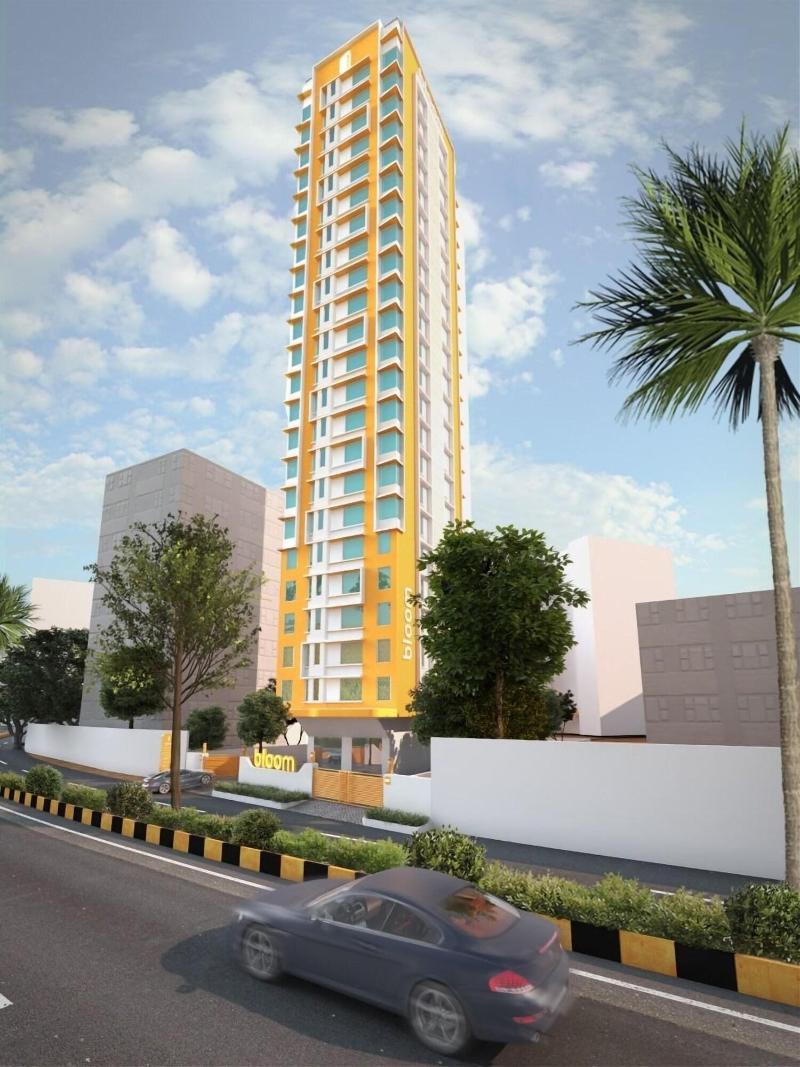
Bloom Hotel - Saki Vihar Powai
Mumbai
See prices and rooms →

★★★★★
The Taj Mahal Palace
Mumbai
Spa · Pool · Parking
See prices and rooms →

★★★★
Country Inn & Suites by Radisson Navi Mumbai
Navi Mumbai
Spa · Pool · Family-friendly
See prices and rooms →

★★★★
Courtyard Mumbai International Airport
Mumbai
Spa · Pool · Family-friendly
See prices and rooms →

★★★★★
InterContinental Marine Drive Mumbai
Mumbai City
Beach 1.5 km · Spa · Pool
See prices and rooms →
★★★★
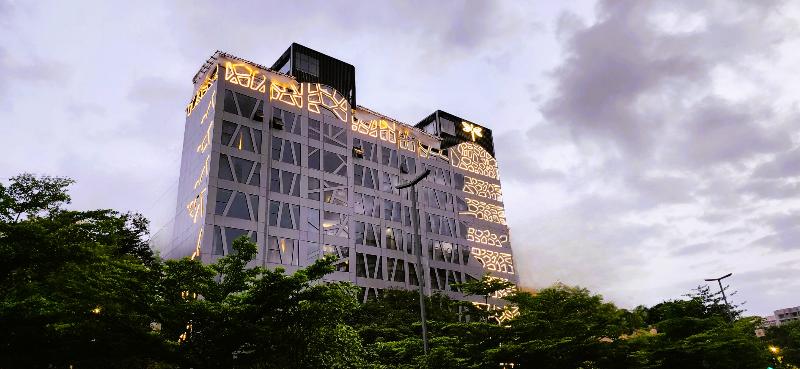
Dragonfly Hotel The Art Hotel
Mumbai
35 rooms · Family-friendly · Parking
See prices and rooms →

★★★★★
St. Regis Mumbai
Mumbai-India
Spa · Pool · Parking
See prices and rooms →
Getting around
Traffic is slow, so plan each day around one part of the city. In South Mumbai the black-and-yellow taxis are metered and plentiful; auto-rickshaws operate only in the suburbs, from Bandra northwards. Ride-hailing apps work throughout. The suburban trains are fast and an experience in themselves, but avoid them in rush hour. New metro lines are making cross-town journeys easier.
When to go
November to February is the pleasant season, dry and warm with cooler evenings. From March it becomes hot and sticky. The monsoon arrives in June and lasts until September, bringing torrential rain, occasional flooding and rough seas, though the city carries on regardless.
Questions about visiting Mumbai
- What is Mumbai best known for?
- It is India’s largest city and financial capital and the home of the Bollywood film industry. Its best-known sights are the Gateway of India, Marine Drive, the Victorian Gothic railway terminus and the Elephanta Caves.
- How many days do you need in Mumbai?
- Two to three days. Spend one on Colaba, Fort and Marine Drive, one on the Elephanta Caves and the markets, and a third on Bandra, Juhu and the northern suburbs.
- Is Mumbai worth visiting?
- Yes. It has fewer set-piece monuments than Delhi, but more energy than anywhere else in India, wonderful architecture and outstanding food.
- What is there to do in Mumbai with kids?
- Take the boat to Elephanta Island, watch cricket on the Oval Maidan, see the topiary animals at the Hanging Gardens and join the evening crowds and snack stalls at Juhu Beach.
- Can you swim at the beaches in Mumbai?
- It is not recommended. The city’s beaches, including Juhu and Chowpatty, are for walking, sunsets and street food. For swimming, use a hotel pool.
More guides
- Where to stay in Mumbai
- The best things to do in London
- The best things to do in Edinburgh
- The best things to do in Manchester
- The best things to do in York
- The best things to do in Amsterdam
- The best things to do in Birmingham
- The best things to do in Liverpool
- The best things to do in Bristol
- The best things to do in Barcelona
- The best things to do in Budapest
- The best things to do in Cambridge
- The best things to do in Dublin
- The best things to do in Krakow