
Munich is a city that takes its pleasures seriously. It has royal palaces, world-class museums and some of the best-engineered cars on the planet, yet what it is proudest of is a litre of beer under a chestnut tree. This is the capital of Bavaria, and it wears the lederhosen without a trace of irony.
The centre is handsome and walkable, rebuilt after the war with its church towers and painted façades intact. Beyond it lies a park bigger than Central Park, where people surf a river in wetsuits, and beyond that, on a clear day, the white line of the Alps. Culture in the morning, beer garden by mid-afternoon: Munich has the balance about right.
Don't miss
The big sights
Squares, church towers and the palaces of the Bavarian kings.
Marienplatz and the Glockenspiel
Landmark

Photo: Dietmar Rabich, CC BY-SA 4.0 Munich's main square has been the centre of the city since the Middle Ages. The whole of one side is taken up by the New Town Hall, a riot of neo-Gothic stonework with a famous Glockenspiel in its tower. When the carillon plays, life-size figures of knights and dancing coopers jerk round in a royal joust, and the entire square stops to look up.
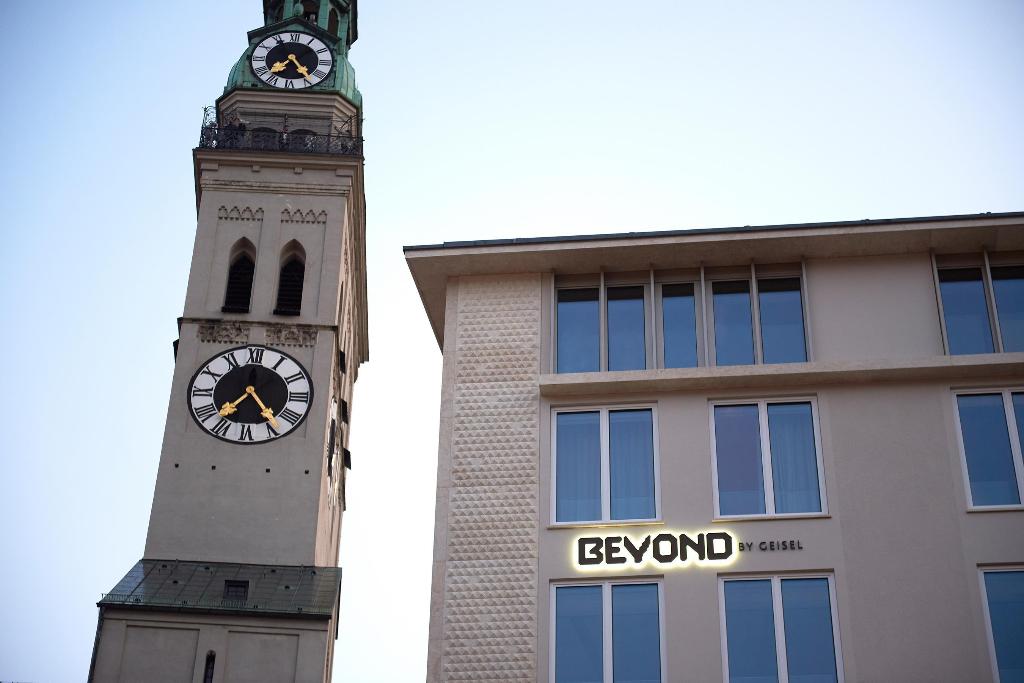
For the best view, climb the tower of St Peter's Church just behind the square. The reward is the whole old town at your feet, and the Alps on a clear day.
Tip: Check the daily chime times before you go, and stand towards the middle of the square for the best view of the figures.
Frauenkirche
Landmark

Photo: Diliff, CC BY 2.5 The twin towers of the Cathedral of Our Lady, each capped with a green onion dome, are the symbol of Munich, and the reason the old town skyline stays so low. The late-Gothic brick church is vast and plain inside, cool and quiet after the bustle of the pedestrian streets. Look for the so-called Devil's Footprint in the floor by the entrance, and ask a local for the legend.
The Residenz
Landmark

Photo: Jebulon, CC0 For centuries this was the city palace of the Wittelsbachs, the family who ruled Bavaria as dukes, electors and kings. It grew into one of the largest palace complexes in Germany, a maze of courtyards and gilded state rooms. The Antiquarium, a long vaulted Renaissance hall lined with busts, is the showpiece, and the Treasury glitters with crowns and jewelled oddities.
Tip: It is enormous. Pick up the audio guide and allow more time than you think.
Nymphenburg Palace
Landmark

Photo: AuHaidhausen, CC BY 4.0 The summer residence of the Bavarian rulers, a long, pale Baroque palace in the west of the city, fronted by a canal with swans. The interiors are suitably lavish, but the park is the real treat: formal gardens giving way to woodland, lakes and a scattering of little pavilions and hunting lodges.
It suits anyone who wants a palace with fresh air attached, and it is an easy tram ride from the centre.
Museums
Deutsches Museum
Museum

Photo: Flocci Nivis, CC BY 4.0 One of the world's great museums of science and technology, on its own island in the River Isar. Aircraft hang from the ceilings, there are historic machines, ships, instruments and whole galleries on subjects from bridges to space flight, many of them hands-on. Children could lose a day here. So could most adults, particularly the sort who read the instructions for fun.
The Pinakothek museums
Museum
Munich's art quarter, the Kunstareal, gathers the city's major galleries within a few streets. The Alte Pinakothek holds the Old Masters, with rooms of Dürer, Rubens and Rembrandt collected by the Wittelsbachs over centuries. The Pinakothek der Moderne, a short stroll away, covers modern art, design and architecture under one bright roof.
BMW Welt and Museum
Museum

Photo: Diego Delso, CC BY-SA 3.0 Next to the company's headquarters in the north of the city, BMW Welt is a swooping glass and steel showroom where you can sit in the latest models and watch new owners collect their cars. Across the road, the silver bowl of the BMW Museum tells the story of the brand through decades of cars, motorbikes and engines. Car lovers should plan a half day.
Parks and the outdoors
English Garden
Nature

Photo: Martin Falbisoner, CC BY-SA 3.0 One of the largest city parks in the world, stretching north from the centre along the Isar. It has meadows, streams, a Greek-style temple on a hill and a beer garden at the foot of a wooden Chinese Tower.
At the southern edge, by a road bridge, the Eisbach stream forms a standing wave, and surfers queue on the bank to ride it in all weathers. It is the best free show in Munich.
Tip: Watch the surfers from the bridge on Prinzregentenstrasse, then walk north into the park.
Olympiapark
Landmark

Photo: Tobi 87, CC BY-SA 4.0 Built for the 1972 Olympic Games, the park is famous for its sweeping tent-like roofs of glass and steel, which still look futuristic half a century on. The stadium and halls now host concerts and events, there is a lake and a grassy hill for views, and the Olympic Tower rises above it all. BMW Welt is right next door.
Eat and drink
Bavaria on a plate, usually with a beer beside it.
Viktualienmarkt
Market

Photo: Dietmar Rabich, CC BY-SA 4.0 A few steps from Marienplatz, this open-air food market has fed Munich for two centuries. Stalls sell cheese, sausages, honey, flowers, spices and mounds of fruit and vegetables, under a tall blue and white maypole. In the middle is a beer garden shaded by chestnut trees, where you can bring your own picnic from the stalls.
Tip: Buy bread, cheese and sausage from the stalls and eat it in the beer garden: bringing your own food is a Bavarian tradition.
Hofbräuhaus
Food

Photo: LBM1948, CC BY-SA 4.0 The most famous beer hall in the world is loud, crowded and unashamedly touristy, and still worth a visit. Under painted vaulted ceilings, a brass band plays, waiters carry fistfuls of litre mugs and strangers share long wooden tables. Order a pretzel the size of a steering wheel and join in. Regulars have their own tankards locked in a rack by the door.
Beer gardens
Food
When the sun comes out, Munich moves outdoors to its beer gardens: gravel yards under chestnut trees, with communal benches and beer served by the litre. The food is simple and hearty, from roast chicken and pork knuckle to Obatzda, a soft spiced cheese spread. The Chinese Tower in the English Garden is the best known, but every neighbourhood has its favourite.
Oktoberfest
Activity
The world's most famous beer festival fills the Theresienwiese fairground each autumn, running from late September into early October. Vast tents run by Munich's breweries seat thousands at a time, with brass bands, roast chicken and a funfair outside. Locals turn out in dirndls and lederhosen, and visitors are welcome to do the same.
Tip: Hotels fill up very early for the festival, so book as far ahead as you can. Weekdays are calmer than weekends.
Day trips
Neuschwanstein Castle
Day trip

Photo: Ximonic, Simo Räsänen (post-processing) & Tauno Räsänen (photograph), CC BY-SA 3.0 King Ludwig II's fantasy castle stands on a crag in the foothills of the Alps near Füssen, all white towers and turrets against the forest. It was built in the nineteenth century as a romantic vision of the Middle Ages, and it is said to have inspired Disney. The view from the Marienbrücke, a footbridge over a gorge behind the castle, is the classic one.
Tip: Entry is by timed guided tour, which often sells out in summer, so reserve ahead or join an organised day trip from Munich.
Dachau Concentration Camp Memorial Site
Day trip
A short train and bus ride north-west of the city, Dachau was the first concentration camp set up by the Nazi regime, in 1933. The memorial site preserves the grounds, with a detailed exhibition in the former maintenance building. It is a sobering and important place, and a visit takes at least half a day. Not suitable for young children.
Salzburg
Day trip

Photo: Jiuguang Wang, CC BY-SA 3.0 Just over the Austrian border and linked to Munich by direct trains, Salzburg is Mozart's birthplace and the setting for The Sound of Music. Its Baroque old town, a UNESCO World Heritage Site, is squeezed between a river and a cliff, with a fortress looking down from above. It is small enough to see comfortably in a day.
Where to stay in Munich
Not sure which area suits you? Read our guide: Where to stay in Munich →

★★★★
Hotel Victory Therme Erding
Erding
Spa · Family-friendly · Parking
From £396 a night, taxes incl.2 adults · checked 14 Nov, 09:22

★★★★
Achat Hotel München Süd
Munich
Pets allowed · Parking
From £68 a night, taxes incl.2 adults · checked 14 Nov, 09:22
★★★★★
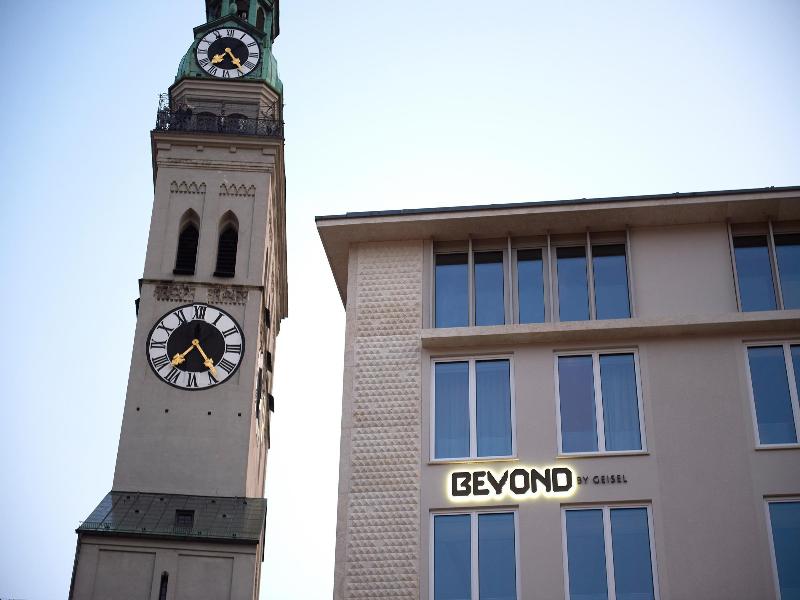
Beyond by Geisel
Munich
19 rooms · Parking
See prices and rooms →

★★★★
Aloft Munich
Munich
Spa · Parking
From £182 a night, taxes incl.2 adults · checked 14 Nov, 09:22

★★★★
Am Moosfeld
Neue Messe
Spa · Pool · Family-friendly
From £73 a night, taxes incl.2 adults · checked 14 Nov, 09:22

★★★★★
Sofitel Munich Bayerpost
Munich
Spa · Pool · Parking
From £200 a night, taxes incl.2 adults · checked 14 Nov, 09:22

★★★★
Ammersee
Herrsching
Spa · 40 rooms · Pets allowed
From £153 a night, taxes incl.2 adults · checked 14 Nov, 09:22

★★★★★
Andaz Munich Schwabinger Tor, By Hyatt
Munich
Spa · Pool · Parking
From £384 a night, taxes incl.2 adults · checked 14 Nov, 09:22
Getting around
The old town is largely pedestrianised and easy to cover on foot. For everything else, the U-Bahn, S-Bahn and trams are quick and reliable, and the S-Bahn runs to the airport. Munich is also a fine cycling city, with paths along the Isar and through the English Garden. You do not need a car.
When to go
Summer is beer-garden season, warm with the odd thunderstorm. Late September brings Oktoberfest and the city's busiest weeks. In December, Christmas markets fill Marienplatz and the squares around it. Winters are cold and often snowy, which suits the museums and the beer halls nicely.
Questions about visiting Munich
- What is Munich best known for?
- Oktoberfest, beer halls and beer gardens, the Glockenspiel on Marienplatz, the English Garden, BMW, FC Bayern and its position as the gateway to the Bavarian Alps and Neuschwanstein Castle.
- How many days do you need in Munich?
- Two days cover the old town, the Residenz, the English Garden and a beer hall. A third allows for Nymphenburg and the museums, and a fourth for a day trip to Neuschwanstein or Salzburg.
- What is there to do in Munich with kids?
- The Deutsches Museum is one of the best family museums in Europe. Children also enjoy the Glockenspiel, watching the surfers in the English Garden, the Olympiapark and BMW Welt, and a day out at Neuschwanstein.
- Is Munich worth visiting outside Oktoberfest?
- Very much so. The beer gardens are open from spring to autumn, the museums and palaces are quieter, hotel rooms are easier to find, and the Christmas markets in December are a highlight in their own right.
- Do you need a car in Munich?
- No. Public transport is excellent and the centre is walkable. Day trips to Salzburg and Dachau are simple by train, and coach tours run to Neuschwanstein.
More guides
- Where to stay in Munich
- The best things to do in London
- The best things to do in Edinburgh
- The best things to do in Manchester
- The best things to do in York
- The best things to do in Amsterdam
- The best things to do in Birmingham
- The best things to do in Liverpool
- The best things to do in Bristol
- The best things to do in Barcelona
- The best things to do in Budapest
- The best things to do in Cambridge
- The best things to do in Dublin
- The best things to do in Krakow