
Nuremberg looks like the Germany of picture books: a castle on a sandstone crag, a ring of medieval walls, half-timbered houses leaning over a slow green river. It was the unofficial capital of the Holy Roman Empire and the home of Albrecht Dürer, and the Old Town still carries itself like somewhere that knows it mattered.
It also has a darker chapter, and the city tells it honestly. The Nazi rally grounds and the courtroom of the Nuremberg Trials are among the most thought-provoking places to visit in Germany. Balance them with finger-sized sausages, gingerbread and a beer in a cellar bar, and you have a city break with real weight to it, small enough to cover on foot in a long weekend.
Don't miss
The big sights
All inside the walls, and all within a short walk of each other.
The Kaiserburg
Landmark

Photo: AlexanderRahm, CC BY-SA 3.0 The Imperial Castle sits on a rock at the top of the Old Town, and for centuries every Holy Roman Emperor stayed here at some point. Climb up through the gates for the best view in the city, a sea of steep red roofs and church spires, then go inside for the imperial chapel, the deep well and the round Sinwell Tower.
It is a stiff walk up from the river, cobbled all the way, so wear proper shoes. The gardens along the ramparts are a peaceful place to get your breath back.
Tip: Come up again at dusk. The castle terrace is where the city goes to watch the sun set over the rooftops.
The Hauptmarkt and the Schöner Brunnen
Landmark

Photo: Aarp65, CC BY-SA 3.0 The main market square is the heart of the Old Town, busy most days with stalls selling fruit, flowers and gingerbread. In one corner stands the Schöner Brunnen, the Beautiful Fountain, a gilded Gothic spire crowded with painted figures. Find the brass ring set into its railings and give it a turn; local tradition says it brings luck. On the east side, the Frauenkirche has a mechanical clock whose little figures parade around the emperor at midday. It draws a small crowd every time.
St Lorenz Church
Landmark

Photo: Robert von Oliva (naruciakk), CC0 The twin towers of St Lorenz dominate the southern half of the Old Town. Inside, this great Gothic church holds two of the finest pieces of late medieval art in Germany: the Annunciation by Veit Stoss, a carved and painted wreath of figures hanging in mid-air above the choir, and a soaring stone tabernacle by Adam Kraft, who carved himself crouching at its foot.
Albrecht Dürer House
Museum

Photo: Ajepbah, CC BY-SA 3.0 de Germany's most famous Renaissance artist lived and worked in this tall half-timbered house under the castle walls from 1509 until his death. It survived the war, which is rare in Nuremberg, and now shows how Dürer lived and how his prints were made. The little square outside, lined with beer gardens, is one of the prettiest corners of the city.
History and museums
Nuremberg faces its twentieth century head on. Give these places time.
Documentation Centre Nazi Party Rally Grounds
Museum

Photo: Fred Romero from Paris, France, CC BY 2.0 South-east of the centre, the Nazi party built a vast parade ground for its annual rallies. Much of it still stands, including the huge, unfinished Congress Hall, and the Documentation Centre inside it explains how the rallies worked and what they led to. Afterwards, walk round the lake to the Zeppelin Field and stand on the grandstand you have seen in the newsreels. It is an unsettling place, and that is the point. Best for adults and older children.
Tip: The site is large and mostly outdoors. Allow half a day and take the tram or S-Bahn out rather than walking from the centre.
Memorium Nuremberg Trials
Museum

Photo: JensKunstfreund, CC BY-SA 4.0 After the war, the surviving Nazi leaders were tried in Courtroom 600 of Nuremberg's Palace of Justice. The exhibition on the floor above tells the story of the trials and how they shaped international law. It is a quiet, sober museum, and a natural second half to a visit to the rally grounds.
Germanisches Nationalmuseum
Museum

Photo: Tuxyso, CC BY-SA 3.0 The largest museum of cultural history in the German-speaking world, and far more fun than that sounds. Its rambling galleries, built around an old monastery, hold paintings by Dürer, medieval armour, musical instruments, toys and the Behaim Globe, the oldest surviving globe of the Earth, made just before Columbus came home. A good choice for a wet afternoon.
Lanes to wander
Weissgerbergasse
Neighbourhood

Photo: Robert von Oliva (naruciakk), CC0 The old tanners' lane is the best-preserved street of half-timbered houses in Nuremberg, a gentle curve of crooked gables painted in ochre, red and green. Today the workshops are cafés, bars and small shops. Carry on to the river for the Hangman's Bridge and the willow-shaded views that end up on most visitors' cameras.
Handwerkerhof
Market
Tucked inside the city walls by the King's Gate, opposite the main station, this little courtyard of timber-framed huts is home to craft workshops: toy makers, leather workers, glass cutters and gingerbread bakers. It is touristy, and nobody minds. It is also a handy first stop for a plate of bratwurst if you have just stepped off a train.
Eat and drink
Nuremberg bratwurst
Food

Photo: Schlurcher, CC BY 4.0 Nuremberg's sausages are famously small, no longer than a finger, seasoned with marjoram and grilled over a beechwood fire. Order them by the half-dozen on a pewter plate with sauerkraut or potato salad, or do as the locals do and ask for Drei im Weggla: three in a crusty roll with mustard, eaten standing up.
Tip: Wash them down with a Franconian beer. The region around Nuremberg has more small breweries than almost anywhere in Germany.
Lebkuchen
Food
The city has been baking spiced gingerbread since the Middle Ages, when it sat on the trade routes that brought spices north. The best kind, Elisenlebkuchen, is soft, nutty and made with almost no flour. You can buy it all year from bakeries around the Hauptmarkt, and the decorated tins make an easy present.
Christkindlesmarkt
Market

Photo: DALIBRI, CC BY-SA 4.0 One of the oldest and best-known Christmas markets in Germany fills the Hauptmarkt through Advent. Rows of red-and-white striped stalls sell mulled wine, gingerbread, sausages and wooden decorations, and the market is opened each year by the Christkind, a golden-robed figure who speaks from the balcony of the Frauenkirche. It is busy, cold and completely magical after dark. Families should look for the separate children's market nearby, with its old-fashioned carousel.
Tip: Go on a weekday afternoon if you can. Advent weekends are shoulder to shoulder.
Days out with the family
Nuremberg Toy Museum
Museum
Nuremberg has been a toy-making city for centuries and still hosts the world's biggest toy trade fair. This Old Town museum tells the story through dolls' houses, tin soldiers, model railways and teddy bears, with a play area for children who would rather join in than look.
DB Museum
Museum

Photo: Matti Blume, CC BY-SA 4.0 Germany's first railway ran from Nuremberg to neighbouring Fürth in 1835, so it is fitting that the national railway museum is here. Expect gleaming steam locomotives, royal carriages, a replica of the Adler, the engine that pulled that first train, and a hands-on section for children. Train-mad adults will be just as happy.
Nuremberg Zoo
Wildlife
Set in forest on the eastern edge of the city, in old sandstone quarries, this is one of the more spacious and attractive zoos in Germany. The wooded paths make it a pleasant walk in their own right, and there are playgrounds along the way for when small legs need a change of scene.
Day trips
Bamberg
Day trip

Photo: Ermell, CC BY-SA 4.0 An easy train ride north, Bamberg is a UNESCO-listed old town that came through the war almost untouched. Its town hall sits on a bridge in the middle of the river, a four-spired cathedral crowns the hill, and a row of fishermen's houses known as Little Venice lines the water. It is also a serious beer town. The local smoked beer, Rauchbier, tastes faintly of bacon and is best tried in one of the old brewery taverns.
Rothenburg ob der Tauber
Day trip

Photo: Diego Delso, CC BY-SA 4.0 The most famous walled town on Germany's Romantic Road is a full day out from Nuremberg and worth the effort. You can walk long stretches of the medieval ramparts, peer down on gabled roofs, and photograph the Plönlein, a fork in the road framed by towers that seems to appear on every German calendar. Stay until evening, when the day visitors thin out.
Where to stay in Nuremberg
Not sure which area suits you? Read our guide: Where to stay in Nuremberg →

★★★★
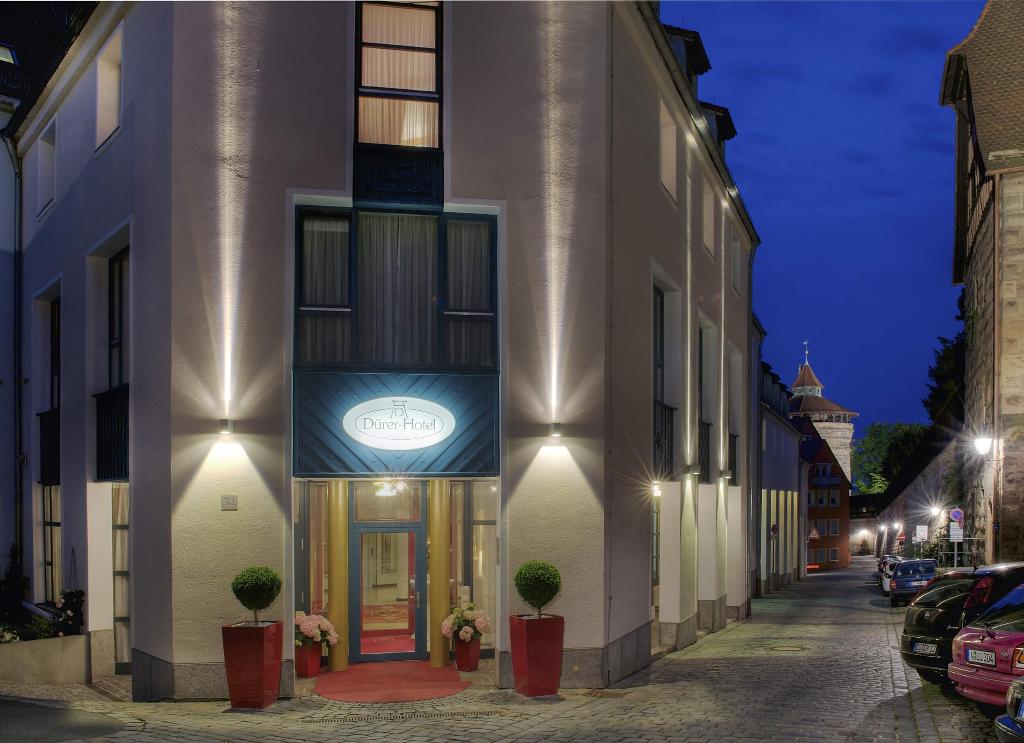
TOP Hotel Duerer
Nurenberg
See prices and rooms →

★★★★
Melter Hotel Apartments
Nuremberg
53 rooms · Parking
See prices and rooms →

★★★★★
Sheraton Carlton Hotel Nürnberg
Nurenberg
Spa · Pool · Parking
From £273 a night, taxes incl.2 adults · checked 14 Nov, 22:07

★★★★
Park Plaza Nuremberg
Nurnberg
Parking
From £220 a night, taxes incl.2 adults · checked 14 Nov, 22:07
★★★★
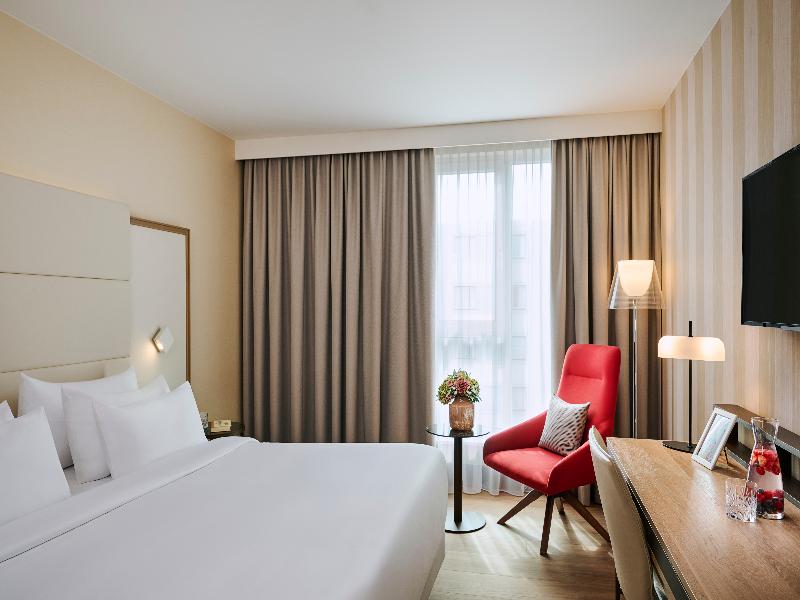
NH Collection Nürnberg City
Nuernberg
Spa · Pets allowed · Parking
See prices and rooms →

★★★★
Congress Mercure Nuernberg
Nurenberg
Parking
From £75 a night, taxes incl.2 adults · checked 14 Nov, 22:07

★★★★
Arvena Park
Nurenberg
Parking
From £114 a night, taxes incl.2 adults · checked 14 Nov, 22:07

★★★★
Derag Livinghotel Maximilian
Nuremberg
Parking
From £90 a night, taxes incl.2 adults · checked 14 Nov, 22:07
Getting around
The Old Town is compact and best explored on foot; almost every sight inside the walls is within a short walk of the others. Trams, the U-Bahn and the S-Bahn cover the rally grounds, the Palace of Justice and the zoo, and regional trains from the main station run to Bamberg. You do not need a car.
When to go
Late spring to early autumn is the time for beer gardens and long evenings on the castle terrace. December is the other high season, when the Christmas market takes over and the city is at its most atmospheric, and its busiest. Winters are cold, so pack for it.
Questions about visiting Nuremberg
- What is Nuremberg best known for?
- Its medieval Old Town and Imperial Castle, its Christmas market, small grilled bratwurst and gingerbread, and its twentieth-century history as the site of the Nazi party rallies and the Nuremberg Trials.
- Is Nuremberg worth visiting?
- Yes. It combines one of the most atmospheric old towns in Germany with some of the country's most important historical sites, and it is small enough to see comfortably in a weekend.
- How many days do you need in Nuremberg?
- Two days covers the Old Town, the castle and the rally grounds. Add a third for a day trip to Bamberg or Rothenburg ob der Tauber.
- What is there to do in Nuremberg with kids?
- The Toy Museum, the DB railway museum and the zoo are the big family favourites, along with climbing up to the castle and, in December, the children's Christmas market.
More guides
- Where to stay in Nuremberg
- The best things to do in London
- The best things to do in Edinburgh
- The best things to do in Manchester
- The best things to do in York
- The best things to do in Amsterdam
- The best things to do in Birmingham
- The best things to do in Liverpool
- The best things to do in Bristol
- The best things to do in Barcelona
- The best things to do in Budapest
- The best things to do in Cambridge
- The best things to do in Dublin
- The best things to do in Krakow