

Okinawa is where Japan goes on holiday. A chain of subtropical islands trailing south-west towards Taiwan, it has coral reefs, white beaches and water in colours the mainland can only dream of. It also has its own history. For centuries this was the Ryukyu Kingdom, a trading nation with its own language, court and castles, and the red-tiled roofs, lion-dog statues and three-stringed sanshin music still set it apart.
Most visitors base themselves on the main island: the city of Naha in the south, the resort coast and the aquarium further north. With more time, short flights and ferries lead on to smaller islands where the beaches are emptier and the sea is clearer still.
Don't miss
Naha and Ryukyu history
The capital of the old kingdom and the gateway to the islands.
Shuri Castle
Landmark

Photo: CEphoto, Uwe Aranas, CC BY-SA 3.0 The hilltop seat of the Ryukyu kings, and a UNESCO World Heritage Site. Its curving limestone walls and ceremonial gates, including the much-photographed Shureimon, show a blend of Chinese and Japanese influence found nowhere else. The vermilion main hall was destroyed by fire in 2019 and has been the subject of a painstaking reconstruction; the walls, gates and views over Naha are a draw in themselves.
Tip: Walk down afterwards along the old stone-paved road of Kinjo-cho, lined with red-roofed houses.
Kokusai Street
Neighbourhood

Photo: 663highland, CC BY 2.5 Naha's main drag runs for about a mile through the centre, lined with souvenir shops, steakhouses, ice-cream parlours and bars with live Okinawan music. It is loud, cheerful and unashamedly touristy. This is the place to try awamori, the local rice spirit, and to buy shisa lion-dogs and brightly dyed bingata textiles.
Makishi Public Market
Market
Just off Kokusai Street, down a covered arcade, is the market known as Naha's kitchen. Stalls are piled with tropical fish in electric blues and reds, every conceivable part of the pig, sea grapes and island vegetables. Buy your seafood downstairs and the restaurants upstairs will cook it for you.
Tsuboya pottery district
Neighbourhood
A short walk from the market, a quiet stone-paved lane has been the centre of Okinawan pottery for more than three centuries. Workshops and small galleries sell chunky, boldly glazed tableware and shisa figures, and a couple of old climbing kilns survive among the houses. It is a peaceful antidote to Kokusai Street.
Okinawa Peace Memorial Park
Landmark

Photo: CEphoto, Uwe Aranas, CC BY-SA 3.0 On the cliffs at the island's southern tip, where the Battle of Okinawa ended in 1945, a wide seaside park remembers the more than 200,000 people who died. Rows of granite walls carry the names of the dead of every nationality, soldier and civilian alike, and a museum tells the story from the islanders' point of view. It is sobering, dignified and important.
The resort coast and the north
Okinawa Churaumi Aquarium
Wildlife

Photo: Jordy Meow, CC BY-SA 3.0 One of the largest aquariums in the world, on the Motobu Peninsula in the north of the main island. Its centrepiece is the Kuroshio Sea tank, a vast wall of water in which whale sharks and manta rays glide past. Other galleries recreate the coral reefs and deep waters around the islands. It sits in Ocean Expo Park, with Emerald Beach alongside.
Tip: It is a long drive from Naha, so make a day of it with Bise and Kouri Island, or stay in the north.
Cape Manzamo
Nature

Photo: CEphoto, Uwe Aranas, CC BY-SA 3.0 A grassy clifftop on the Onna coast, ending in a limestone rock shaped uncannily like an elephant's trunk dipping into the sea. A short path loops along the edge with wide views of the East China Sea. It takes twenty minutes to see and is at its best towards sunset.
Cape Maeda and the Blue Cave
Activity
The most popular snorkelling and diving spot on the main island. Steps lead down the cliff to a reef full of tropical fish, and guided trips swim or boat into the Blue Cave, where sunlight coming up through the water turns everything a glowing blue. Beginners are well catered for.
Tip: Sea conditions decide whether the cave is open, so keep your plans flexible.
Kouri Island
Beach

Photo: CEphoto, Uwe Aranas, CC BY-SA 3.0 A small, round island off the north coast, joined to the mainland by a long bridge across water so clear and turquoise that drivers slow down to stare. There are sandy beaches at the foot of the bridge, a rock formation shaped like a heart on the far side, and cafés on the hill with sea views.
Bise Fukugi Tree Road
Nature

Photo: Abasaa, Public domain Beside the aquarium, the village of Bise is sheltered by thousands of fukugi trees, planted long ago as a windbreak against typhoons. Their dense, glossy leaves form green tunnels over the sandy lanes, with glimpses of the sea at the end. Walk it or hire a bicycle; it is a gentle half hour.
American Village
Neighbourhood
A seaside entertainment district at Mihama in Chatan, in the middle of the island, built with a deliberately American flavour that reflects the nearby military bases. Expect colourful buildings, a big wheel, burger joints, vintage shops and Sunset Beach on the doorstep. It is good fun in the evening, and lively after dark.
Eat and drink
Okinawa soba
Food

Photo: ayustety from Naha, Okinawa, CC BY-SA 2.0 Nothing to do with buckwheat. Okinawa's soba is a bowl of thick, chewy wheat noodles in a clear pork and bonito broth, topped with slices of braised pork belly or stewed spare ribs, fishcake and red ginger. It is the islands' everyday lunch, served in simple canteens all over the place.
Goya champuru
Food

Photo: Jpatokal, CC BY-SA 3.0 The classic Okinawan stir-fry: bitter melon tossed with tofu, egg and pork. The bitterness is an acquired taste and a point of local pride. Look out too for taco rice, a tex-mex mash-up invented here, umibudo sea grapes that pop like caviar, and anything flavoured with purple sweet potato.
Island hopping
The further you go, the better the beaches get.
Kerama Islands
Day trip

Photo: Hashi photo, CC BY 3.0 A scatter of small islands a short ferry ride west of Naha, protected as a national park and known for water so clear it has its own name, Kerama blue. Tokashiki and Zamami are the main ones, with white-sand beaches such as Aharen and Furuzamami, sea turtles in the shallows and humpback whales offshore in winter.
Tip: Fast ferries fill up in summer, so book seats ahead.
Ishigaki and Kabira Bay
Beach

Photo: 663highland, CC BY 2.5 Ishigaki, an hour's flight from Naha, is the hub of the remote Yaeyama Islands. Its most famous view is Kabira Bay, a sheltered inlet of white sand and emerald water dotted with little islands, seen from glass-bottomed boats because swimming is not allowed. Ferries from Ishigaki run to Taketomi, with its preserved Ryukyu village, and jungle-covered Iriomote.
Miyako Island
Beach

Photo: 663highland, CC BY 2.5 Flat, sunny Miyako has no rivers to muddy the sea, and its beaches are regularly counted among the best in Japan. Yonaha Maehama is a long, dazzling strip of fine white sand; Sunayama is reached through a dune and framed by a rock arch. Long bridges link the island to its smaller neighbours and make for memorable drives.
Where to stay in Okinawa
Not sure which area suits you? Read our guide: Where to stay in Okinawa →

★★★★
THE NEST Ishigaki
Ishigaki
Pool · 50 rooms · Parking
From £60 a night, taxes incl.2 adults · checked 14 Nov, 10:52

★★★★
Ana Intercontinental Ishigaki Resort
Ishigaki
Spa · Rooftop pool · Family-friendly
From £103 a night, taxes incl.2 adults · checked 14 Nov, 10:52

★★★★★
Rihga Royal Gran Okinawa
Naha
Parking
From £109 a night, taxes incl.2 adults · checked 14 Nov, 10:52

★★★★
Canopy by Hilton Okinawa Miyako Island Resort
Miyako
Parking
From £134 a night, taxes incl.2 adults · checked 14 Nov, 10:52
★★★★
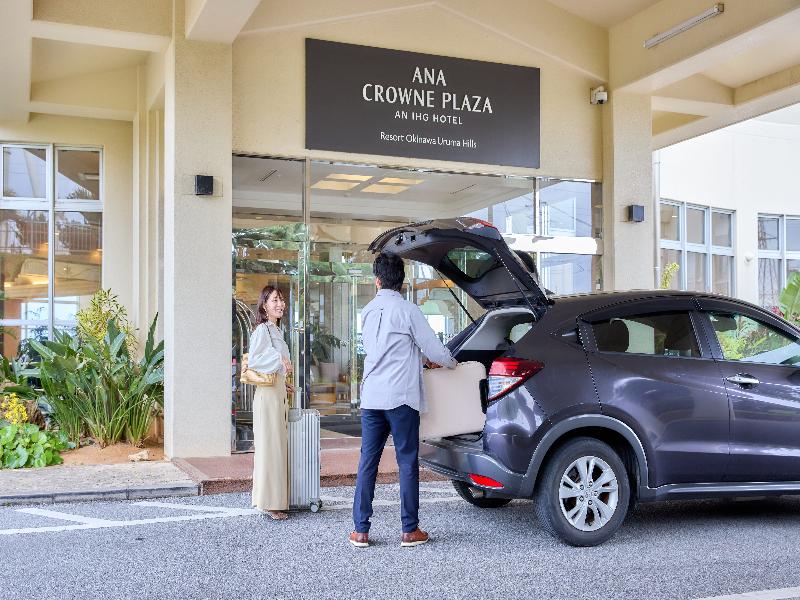
Crowne Plaza Okinawa Uruma Hills, an IHG Hotel
Okinawa Main island
Spa · Pool · Parking
From £58 a night, taxes incl.2 adults · checked 14 Nov, 10:52

★★★★★
Halekulani Okinawa
Okinawa Main island
Spa · Pool · Family-friendly
From £347 a night, taxes incl.2 adults · checked 14 Nov, 10:52

★★★★
Cypress Resort Kumejima
Okinawa
Spa · Pool · Parking
See prices and rooms →

★★★★★
The Busena Terrace
Okinawa Main island
Spa · Rooftop pool · Family-friendly
From £206 a night, taxes incl.2 adults · checked 14 Nov, 10:52
Getting around
In Naha, a monorail links the airport, Kokusai Street and Shuri Castle. Beyond the city, public transport is limited to buses, and a hire car is by far the easiest way to see the resort coast and the north of the main island. They drive on the left. Ishigaki and Miyako are reached by short flights, the Kerama Islands by ferry from Naha.
When to go
Okinawa is warm all year. The swimming season runs roughly from April to October. A rainy season usually arrives in May and June, and typhoons are most likely from July to September, so build in some flexibility then. Winter is mild, quiet and good for whale watching, though too cool for most people to swim.
Questions about visiting Okinawa
- What is Okinawa best known for?
- Subtropical beaches and coral reefs, the Churaumi Aquarium, Shuri Castle and the distinct culture and cooking of the old Ryukyu Kingdom. It is also known for the long lives of its people.
- How many days do you need in Okinawa?
- Allow four or five days for the main island: one or two in Naha, the rest on the resort coast and in the north. Add three more if you want to visit Ishigaki or Miyako.
- What is there to do in Okinawa with kids?
- The Churaumi Aquarium is the big one. Add a glass-bottomed boat or beginner snorkelling trip, the big wheel at American Village and a day on a shallow, sheltered resort beach.
- Do you need a car in Okinawa?
- Not in Naha, where the monorail covers the main sights. For the beaches, capes and aquarium further north, a hire car makes life far easier, although bus tours are a workable alternative.
- Is Okinawa worth visiting?
- Yes. It offers a side of Japan that feels quite different from Tokyo or Kyoto, with warm seas, a relaxed pace and a culture of its own.
More guides
- Where to stay in Okinawa
- The best things to do in London
- The best things to do in Edinburgh
- The best things to do in Manchester
- The best things to do in York
- The best things to do in Amsterdam
- The best things to do in Birmingham
- The best things to do in Liverpool
- The best things to do in Bristol
- The best things to do in Barcelona
- The best things to do in Budapest
- The best things to do in Cambridge
- The best things to do in Dublin
- The best things to do in Krakow