
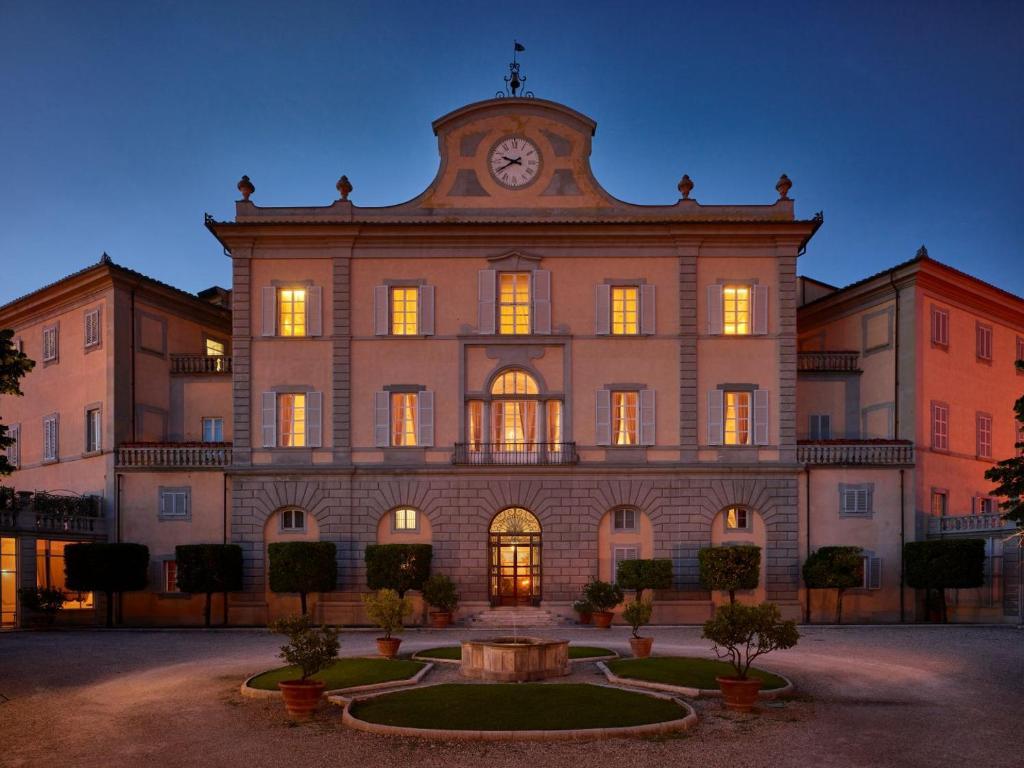
Everyone knows one thing about Pisa. They arrive, pretend to hold up the tower for a photograph, buy a fridge magnet and are back on the coach within the hour. Which is fine, because it leaves the rest of the city to you: a handsome, lived-in university town of ochre palaces along a wide curve of the Arno, where students on bicycles outnumber tourists ten to one.
In the Middle Ages this was a great sea power, a rival to Venice and Genoa, and the money it made went into marble. Give Pisa a full day and a night, not an hour. See the famous square properly, then walk south into the old streets, find a table in a market square and stay for dinner.
Don't miss
The Square of Miracles
Four white marble buildings on a green lawn: one of the great sights of Italy, and a UNESCO World Heritage Site.
The Leaning Tower
Landmark

Photo: John Samuel, CC BY-SA 4.0 It really does lean, and far more than you expect. The bell tower of Pisa's cathedral began to tilt soon after building started in the twelfth century, when the soft ground gave way beneath one side, and the builders spent the next two hundred years trying to correct it as they went up. Look closely and you can see the slight banana curve.
Engineers stabilised it at the end of the twentieth century, so it is safe to climb. The spiral staircase tips you from one wall to the other, and the view from the top takes in the whole city.
Tip: Climbs are by timed ticket and sell out on busy days, so book ahead. Young children are not allowed up.
Pisa Cathedral
Landmark

Photo: Perituss, CC0 The tower gets the attention, but the cathedral it belongs to is the real masterpiece: a huge church of striped grey and white marble, begun in the eleventh century, with a facade of delicate stacked arcades that set the style for churches across Tuscany.
Inside, look for the gilded coffered ceiling, the glittering mosaic of Christ in the apse and, above all, the marble pulpit carved by Giovanni Pisano, crowded with figures and held up by lions.
The Baptistery
Landmark

Photo: Vyacheslav Argenberg, CC BY 4.0 The round, domed building facing the cathedral is the largest baptistery in Italy, Romanesque at the bottom and frothy Gothic at the top. The interior is surprisingly bare, which shows off the great font and a superb pulpit by Nicola Pisano.
Its party trick is the acoustics. Every so often an attendant steps forward and sings a few notes, which hang in the dome and layer into a chord. Climb to the upper gallery for a fine view of the cathedral through the window.
The Camposanto
Landmark

Photo: Luca Aless, CC BY-SA 4.0 Along the northern edge of the square runs a long, plain marble wall. Behind it is the Camposanto, a monumental cloistered cemetery said to have been built around earth brought back from the Holy Land. Its Gothic arcades frame a quiet lawn and are lined with Roman sarcophagi.
The walls were once covered in frescoes; many were badly damaged in the Second World War, but the restored Triumph of Death is still a startling piece of medieval imagination. It is the most peaceful corner of the square.
The old city
Ten minutes south of the tower, the crowds simply vanish.
Piazza dei Cavalieri
Landmark

Photo: Superchilum, CC BY-SA 4.0 The second great square of Pisa was the political centre of the medieval republic, remodelled in the sixteenth century by Giorgio Vasari for the Medici. Its showpiece is the Palazzo della Carovana, the whole front covered in intricate black and white scratched decoration.
It now houses the Scuola Normale Superiore, one of Italy's most prestigious universities, so the square is full of students rather than tour groups. A wonderful place to sit on the steps and take stock.
Borgo Stretto and the Lungarni
Neighbourhood

Photo: PaestumPaestum, CC BY 4.0 Borgo Stretto is Pisa's smartest shopping street, a gently curving lane lined on both sides with medieval arcades, under which you will find old cafés, pastry shops and boutiques. It leads down to the river at the Ponte di Mezzo.
The embankments on either side, the Lungarni, are lined with faded palaces in shades of yellow and terracotta, reflected in the slow water. Walk them in the early evening, when the light turns gold and the city comes out for its stroll.
Santa Maria della Spina
Landmark

Photo: John Samuel, CC BY-SA 4.0 Perched right on the south bank of the Arno is a church the size of a jewel box: a tiny thirteenth-century chapel bristling with Gothic pinnacles, gables and statues. It takes its name from a thorn, said to come from Christ's crown, that was once kept here.
It originally stood closer to the water and was moved up to the embankment, stone by stone, in the nineteenth century to save it from floods. The outside is the point; see it from the opposite bank.
Tuttomondo
Landmark
A few steps from the railway station, on the back wall of a church, is the last thing you expect to find in a medieval Tuscan city: a huge, joyful mural by the American artist Keith Haring. He painted it in 1989, not long before he died, and called it Tuttomondo, the whole world.
Thirty interlocking cartoon figures in bright colours fill the wall, a celebration of peace and harmony. It is one of his last public works and a good first or last stop if you are arriving by train.
The Museo Nazionale di San Matteo
Museum
In a former convent on the riverbank, this is one of the finest collections of medieval Tuscan art anywhere, and one of the least visited. There are great painted crucifixes, gold-ground altarpieces by Simone Martini and others, and sculpture by the Pisano family.
It suits anyone with a real interest in early Italian painting. You may well have rooms entirely to yourself, which after the Square of Miracles feels like a small miracle of its own.
Eat and drink
Piazza delle Vettovaglie
Market

Photo: Illustratedjc, CC BY-SA 4.0 Just off Borgo Stretto, a Renaissance arcaded square has been Pisa's food market for centuries. In the morning, stalls sell fruit, vegetables, cheese and salami, and the surrounding lanes are full of butchers, bakers and delicatessens.
By evening the square changes character. Small bars and trattorias spill out under the arches, and students and locals pack in for a glass of wine and something to eat. It is lively, a little scruffy and the most atmospheric place in town for an aperitivo.
Cecina
Food
Pisa's favourite street snack is a thin, golden pancake of chickpea flour, water, olive oil and salt, baked in a wide copper pan in a wood-fired oven until crisp at the edges and creamy inside. A grind of black pepper and it is ready.
You buy it by the slice from pizzerias and bakeries all over the old town, often tucked inside a piece of focaccia. Cheap, filling and naturally vegetarian.
Beyond the city
Lucca
Day trip

Photo: Myrabella, CC BY-SA 3.0 Half an hour away by train, Lucca is the perfect partner to Pisa. The whole old town is wrapped in massive Renaissance walls, so wide that the top has become a tree-lined park where people walk and cycle the full circuit.
Inside are Romanesque churches with facades like wedding cakes, a tower with oak trees growing on its roof, and an oval piazza built on the footprint of a Roman amphitheatre. It is flat, quiet and best explored by hired bicycle.
Marina di Pisa and Tirrenia
Beach

Photo: Gianni Careddu, CC BY-SA 4.0 Pisa is only a few miles from the sea. Marina di Pisa, at the mouth of the Arno, is an old-fashioned resort with a seafront of Liberty-style villas, pebbly coves behind rock breakwaters and good fish restaurants.
A little further south, Tirrenia has the sand: a long, wide beach backed by pine woods and lined with traditional Italian bathing clubs. Both are a short bus ride from the city, and popular with families from Pisa on summer weekends.
San Rossore Park
Nature
Between the city and the sea lies a large regional park of pine forest, marsh and dunes, once a hunting estate of the Medici and later of the Italian kings and presidents. Fallow deer and wild boar roam the woods and the wetlands are rich in birds.
You can explore on foot, by bicycle or by horse-drawn carriage. It makes a green, quiet contrast to the marble of the city, and is good for families.
Volterra
Day trip

Photo: Etienne (Li), CC BY-SA 4.0 High on a windy ridge in the hills south-east of Pisa, Volterra is one of the most atmospheric hill towns in Tuscany. It was a major Etruscan city long before the Romans arrived, and still has an Etruscan gateway, a Roman theatre and a stern medieval main square.
It is known for alabaster, carved in workshops around the town. The drive up through bare, rolling clay hills is part of the experience. You will want a car.
Where to stay in Pisa
Not sure which area suits you? Read our guide: Where to stay in Pisa →

★★★★
Grand Hotel Duomo
Pisa
Pets allowed
From £88 a night, taxes incl.2 adults · checked 14 Nov, 07:07
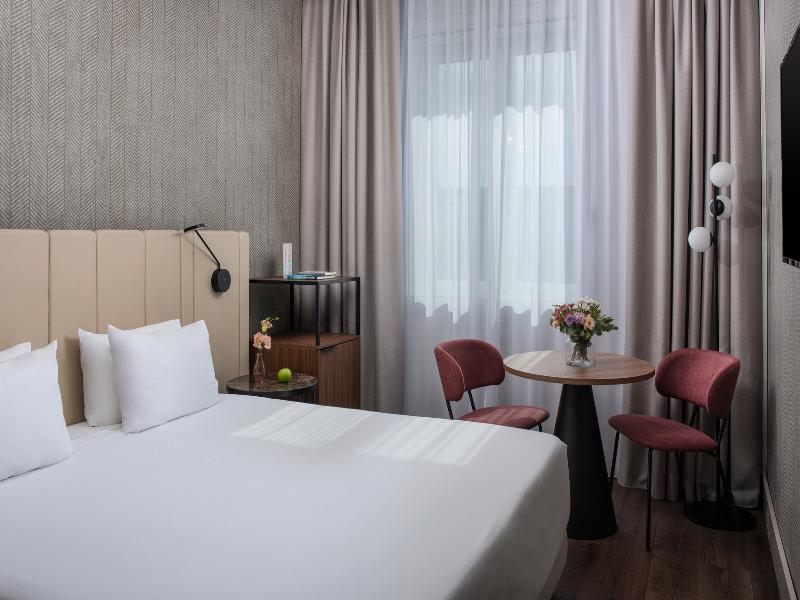
★★★★
NH Pisa
Pisa
Parking
From £105 a night, taxes incl.2 adults · checked 14 Nov, 07:07
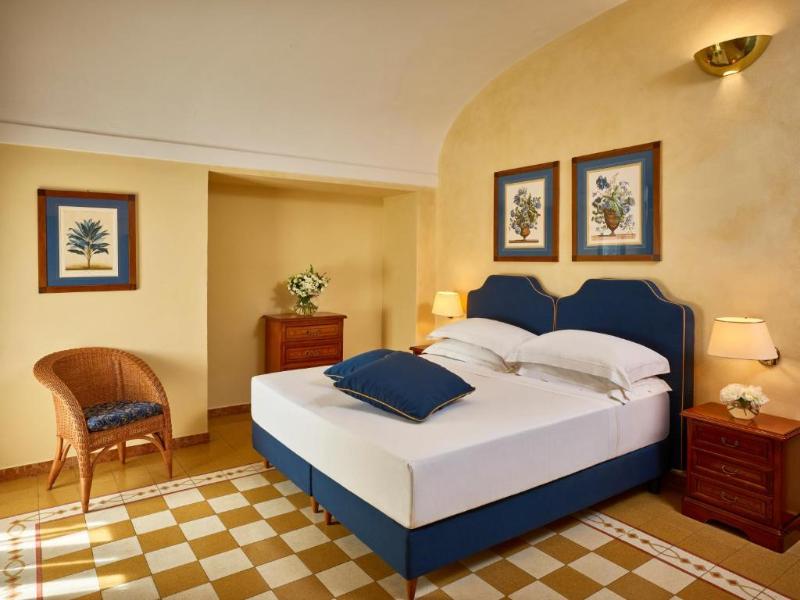
★★★★★
Bagni di Pisa Palace and Thermal Spa
San Giuliano Terme, Pisa
Spa · Pool · 61 rooms
From £258 a night, taxes incl.2 adults · checked 14 Nov, 07:07

★★★★
Grand Hotel Continental
Tirrenia
Beach 20 m · All-inclusive option · Pool
From £107 a night, taxes incl.2 adults · checked 14 Nov, 07:07

★★★★
Hotel La Locanda
Volterra (pi)
18 rooms
See prices and rooms →

★★★★★
Hotiday Room Collection - Livorno Mascagni
Livorno, Pisa
6 rooms · Pets allowed · Parking
See prices and rooms →

★★★★
AC Pisa
Pisa
Parking
From £110 a night, taxes incl.2 adults · checked 14 Nov, 07:07

★★★★★
Hotiday Room Collection - Tirrenia
Calambrone
Pool · 7 rooms · Family-friendly
See prices and rooms →
Getting around
Pisa is small and flat, and the walk from the central station through the old town to the Leaning Tower takes around half an hour. The airport is very close to the city. Trains run to Lucca and Florence, and buses to the coast; a car is only useful for Volterra and the hill country.
When to go
Spring and early autumn are the most comfortable times for sightseeing. Summer is hot and the Square of Miracles is at its busiest, though the beaches are close. In June the city celebrates its patron saint by lighting the riverfront palaces with thousands of candles.
Questions about visiting Pisa
- What is Pisa best known for?
- The Leaning Tower, which stands with the Cathedral, the Baptistery and the Camposanto on the Square of Miracles, a UNESCO World Heritage Site. Pisa is also a historic university city on the River Arno.
- Is Pisa worth visiting for more than a day?
- Yes. Most visitors see only the tower, but the old town, the riverbanks and the market squares are well worth an evening, and Pisa makes a good base for Lucca, the coast and Volterra.
- Can you climb the Leaning Tower of Pisa?
- Yes. Visitors climb the spiral staircase to the top in timed groups. It is wise to book in advance in busy periods, and there is a minimum age for children.
- How many days do you need in Pisa?
- One full day covers the Square of Miracles and the old town. Stay two or three nights if you want to add Lucca, a beach day or a trip into the hills.
- Do you need a car in Pisa?
- Not for the city, Lucca or Florence, which are all easy on foot and by train. A car is helpful for Volterra and the Tuscan countryside.
More guides
- Where to stay in Pisa
- The best things to do in London
- The best things to do in Edinburgh
- The best things to do in Manchester
- The best things to do in York
- The best things to do in Amsterdam
- The best things to do in Birmingham
- The best things to do in Liverpool
- The best things to do in Bristol
- The best things to do in Barcelona
- The best things to do in Budapest
- The best things to do in Cambridge
- The best things to do in Dublin
- The best things to do in Krakow