
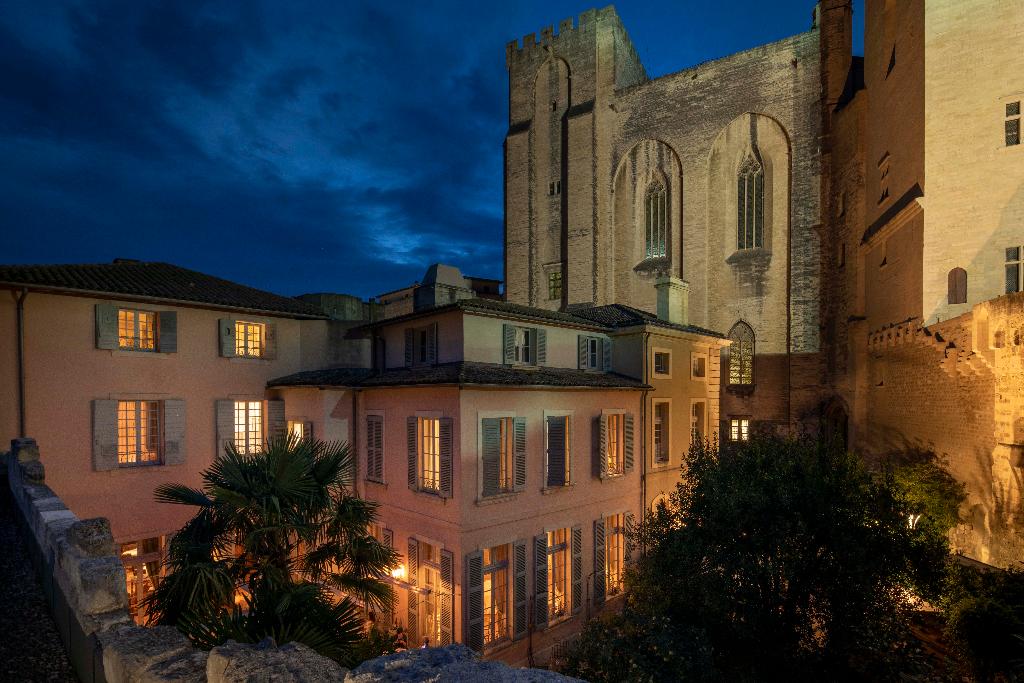
Provence is a landscape you recognise before you arrive: rows of lavender, stone villages perched on hilltops, plane trees shading a village square, and a light that made Van Gogh and Cézanne reach for their brushes. It smells of thyme, rosemary and warm earth, and it tastes of olive oil, tapenade, rosé and goat's cheese.
It's also a region of real history. The popes once ruled from Avignon, the Romans left an aqueduct and an amphitheatre, and Marseille is one of the Mediterranean's great port cities. Hire a car, pick a base in the Luberon, the Alpilles or Avignon, and leave room for the weekly market.
Don't miss
Avignon
The city of the popes, behind a ring of medieval walls.
Palais des Papes
Landmark

Photo: Uoaei1, CC BY-SA 4.0 In the fourteenth century the popes ruled the Catholic world from Avignon, and their fortress-palace, the largest Gothic palace in Europe, still looms over the old town. Vast halls, frescoed chapels and thick walls give a sense of the power that lived here.
Every July the palace courtyard becomes the stage for the Festival d'Avignon, one of the great theatre festivals.
Pont Saint-Bénézet
Landmark

Photo: Rolf Kranz, CC BY-SA 4.0 The famous 'Pont d'Avignon' from the nursery song is a medieval bridge that once spanned the Rhône and now stops halfway, a casualty of floods. Walk out along it for the views of the palace and the river, and look back at the ramparts from the far bank at sunset.
Roman Provence and the Alpilles
Pont du Gard
Landmark

Photo: Marc Ryckaert, CC BY 2.5 A Roman aqueduct bridge of three tiers of stone arches, standing high over the Gardon river, built to carry water to Nîmes. It's a UNESCO World Heritage Site, and one of the best-preserved Roman monuments anywhere.
You can walk along the riverbank beneath it and see the scale of the arches, which were built without mortar.
Arles
Landmark

Photo: PierreSelim, CC BY 3.0 A town of two thousand years of history, with a Roman amphitheatre, a Roman theatre and the cafés and streets that Van Gogh painted. The amphitheatre is still used for events, and the old town is full of squares and small museums.
Les Baux-de-Provence
Landmark

Photo: Christian Ferrer, CC BY-SA 4.0 A ruined fortress village perched on a rocky spur of the Alpilles hills, with views across olive groves and vineyards. The old streets are lined with galleries and craft shops, and the castle ruins give a sense of its medieval importance.
Saint-Rémy-de-Provence
Neighbourhood
A graceful market town of plane-lined boulevards and fountains. Van Gogh painted some of his best-known works at the Saint-Paul de Mausole monastery here, and the Roman ruins of Glanum lie just outside.
The Luberon
Hilltop villages, ochre cliffs and fields of lavender.
Gordes
Neighbourhood

Photo: kallerna, CC BY-SA 4.0 A village of pale stone stacked up a cliff in layers, crowned by a Renaissance château. The view as you approach is one of the most photographed in Provence, and the lanes inside are a maze of tiny squares and galleries.
Nearby you can see bories, the curious dry-stone huts that farmers built.
Tip: Visit early or in the evening, when the day-trippers have gone.
Sénanque Abbey and lavender
Landmark

Photo: Hubert TABUTIAUX, qui a confié à Markus3 (Marc ROUSSEL) le soin de vérifier la c, CC BY-SA 3.0 A twelfth-century Cistercian abbey in a quiet valley near Gordes, where monks still live. In late June and July, rows of lavender in front of the honey-coloured stone bloom purple, creating one of Provence's iconic scenes.
Tip: Go in the early morning for soft light and fewer visitors.
Roussillon
Neighbourhood

Photo: Art Anderson, CC BY-SA 3.0 A village built from ochre, glowing red, orange and yellow among pine trees. The Sentier des Ocres leads through old quarries of coloured earth, with cliffs in vivid tones that look painted.
L'Isle-sur-la-Sorgue
Market

Photo: Josep M. Gracia, CC BY-SA 4.0 A town on the Sorgue river, threaded with canals and old water wheels, and famous for its antiques dealers and its Sunday market. Nearby, Fontaine-de-Vaucluse is the source of the river, a deep spring at the foot of a cliff.
Mont Ventoux
Nature
The bald white peak, known as the Giant of Provence, rises to nearly two thousand metres, with views across the whole region. It's a legendary Tour de France climb and a popular drive or hike.
Tip: It is windy and cold at the top even in summer. Bring a jacket.
Aix, Marseille and the coast
Aix-en-Provence
Neighbourhood
An elegant university city of fountains, plane trees and café terraces along the Cours Mirabeau. Cézanne lived and painted here, and you can visit his studio and see the mountain, Sainte-Victoire, that he loved.
Marseille
Neighbourhood

Photo: Clément Bardot, CC BY-SA 4.0 France's oldest city is a gritty, vivid port with real character. Climb to the basilica of Notre-Dame de la Garde for the view, wander the old Panier quarter, and watch the fishing boats at the Vieux-Port.
The MuCEM museum at the harbour mouth is a modern landmark.
The Calanques
Nature

Photo: Tobi 87, CC BY-SA 3.0 Between Marseille and Cassis, white limestone cliffs plunge into turquoise coves, protected as a national park. You reach them on foot, by kayak or by boat, and En-Vau, with its shingle beach between sheer walls, is one of the most beautiful.
Tip: Access can be restricted in summer because of fire risk. Check before you go.
Cassis
Neighbourhood

Photo: Jean-Christophe BENOIST, CC BY 3.0 A pastel fishing harbour beneath high sea cliffs, with seafood restaurants, a small beach and boat trips to the Calanques. It also makes a crisp white wine, which goes well with the fish.
Eat and drink
Bouillabaisse
Food
Marseille's fish stew was born on the quays, made with Mediterranean rockfish, saffron and fennel and served with rouille and toasted bread. Order it at a traditional restaurant, often a day ahead.
Provençal markets
Market
Almost every town has a weekly market, with olives, tapenade, goat's cheese, lavender honey, sausages and baskets of peaches and tomatoes. Go early, buy a picnic, and eat it under a plane tree.
Calissons
Food
The sweet of Aix-en-Provence: a diamond of almond paste and candied melon on a wafer base, glazed with icing. A box makes a good souvenir.
Where to stay in Avignon
Not sure which area suits you? Read our guide: Where to stay in Provence →
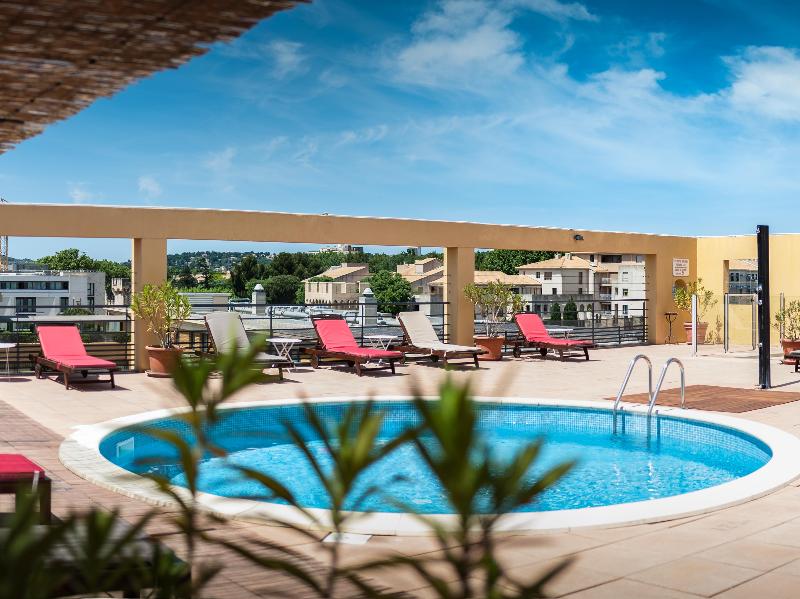
★★★★
Avignon Grand Hotel
Avignon
All-inclusive option · Family-friendly · Parking
See prices and rooms →
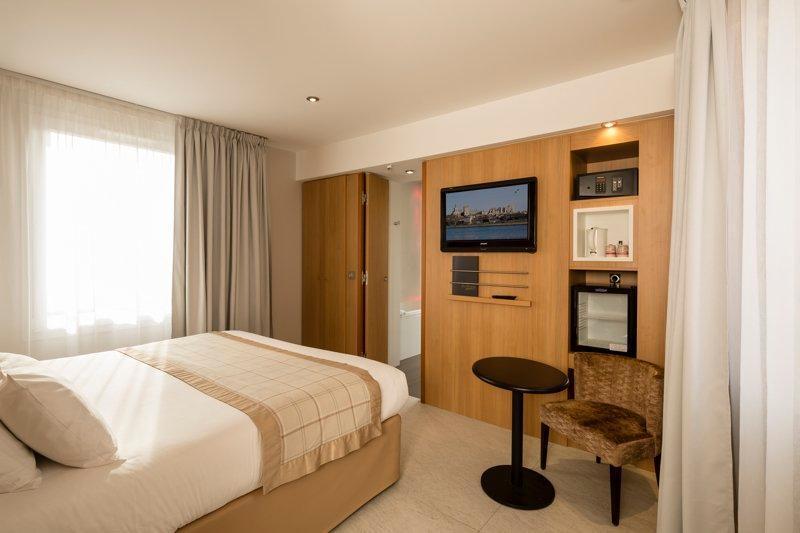
★★★★
Best Western Le Lavarin
Avignon
Pool · 43 rooms · Parking
See prices and rooms →
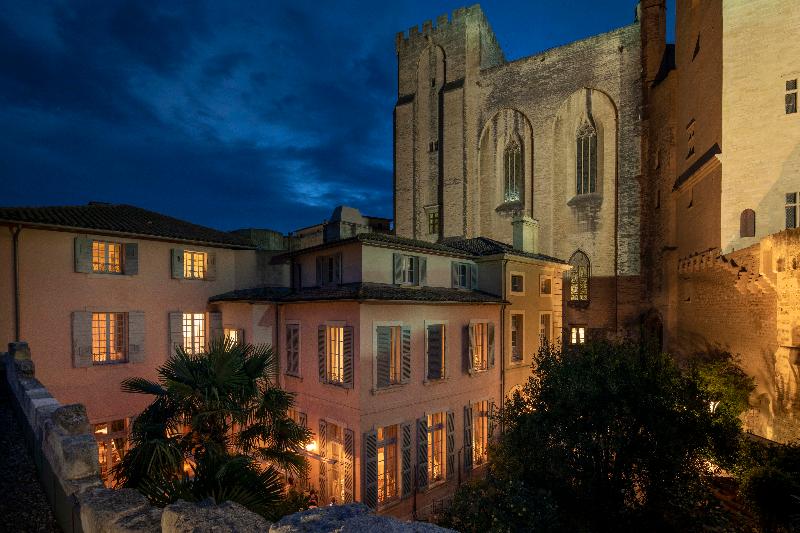
★★★★★
La Mirande Hotel
Avignon
Parking
See prices and rooms →

★★★★
Bristol Avignon
Avignon
75 rooms · Pets allowed
See prices and rooms →
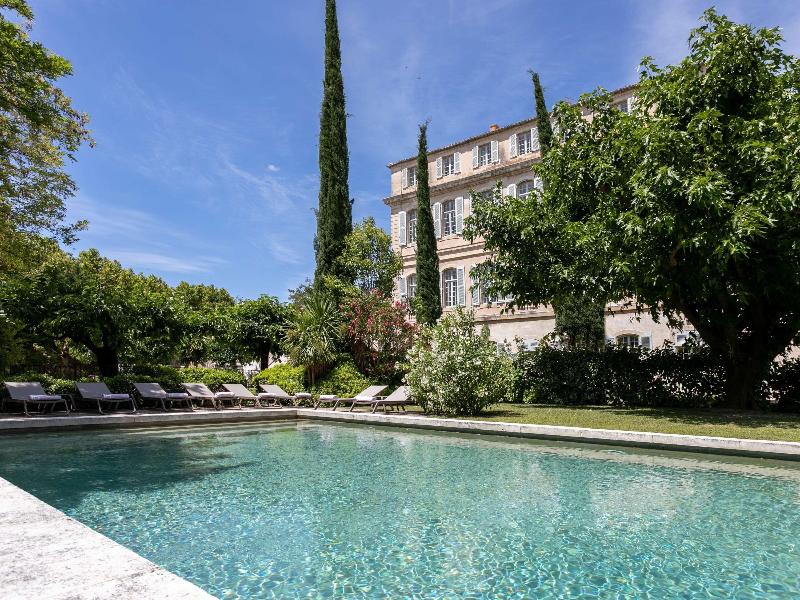
★★★★
Château De Mazan - Handwritten Collection
Mazan
Spa · Pool · 31 rooms
See prices and rooms →

★★★★★
Hotel Le Vallon de Valrugues Spa
Saint-Remy-de-Provence
Spa · Pool · 48 rooms
See prices and rooms →
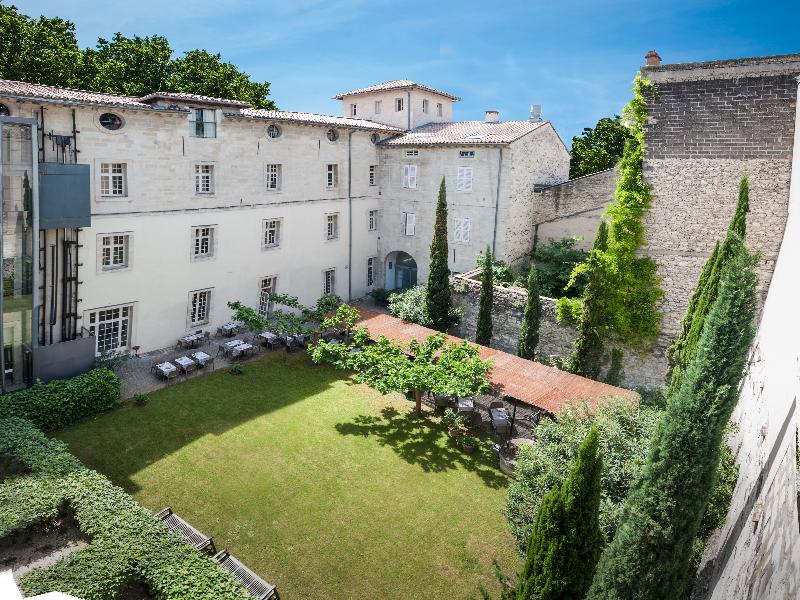
★★★★
Cloitre Saint Louis
Avignon
Parking
See prices and rooms →
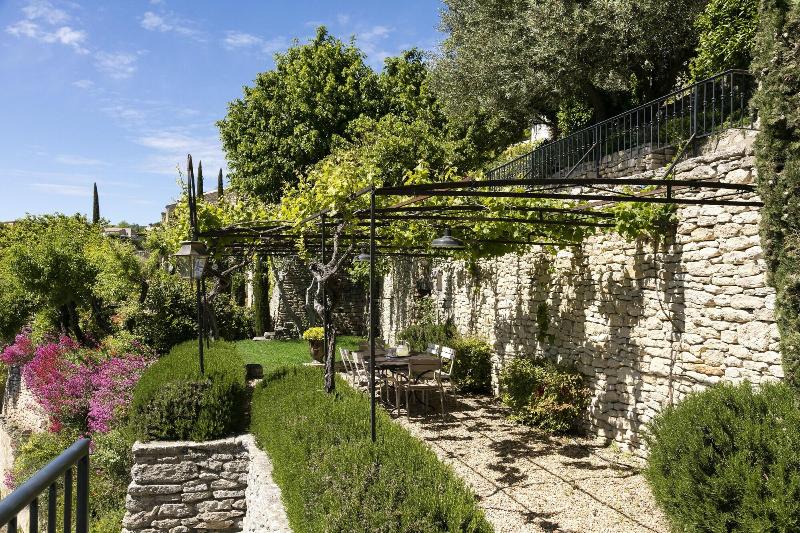
★★★★★
Airelles, La Bastide De Gordes
Gordes
Spa · Pool · 41 rooms
See prices and rooms →
Getting around
A car is the best way to see Provence, especially the Luberon and Alpilles villages, which buses reach only slowly. Avignon, Aix and Marseille have good train links, and you can see them without a car. Park outside the village centres, which are narrow.
When to go
Late June and July bring lavender, and the crowds and heat that go with it. May, June and September are warm and lovely, and autumn has a quiet, golden light. Winter is mild but many small places close.
Questions about visiting Avignon
- What is Provence best known for?
- Lavender fields, hilltop villages, Roman ruins, markets, food and wine, and the landscapes painted by Van Gogh and Cézanne.
- When is the lavender in bloom in Provence?
- Typically from late June to July, depending on the weather and altitude. Sénanque Abbey and the Valensole plateau are popular places to see it.
- Do you need a car in Provence?
- Yes, for the villages and countryside. You can visit Avignon, Aix and Marseille by train.
- How many days do you need in Provence?
- A week lets you see Avignon, the Luberon villages, the Alpilles and a day on the coast at Cassis or Marseille.
More guides
- Where to stay in Provence
- The best things to do in London
- The best things to do in Edinburgh
- The best things to do in Amsterdam
- The best things to do in Barcelona
- The best things to do in Budapest
- The best things to do in Dublin
- The best things to do in Krakow
- The best things to do in Prague
- The best things to do in Berlin
- The best things to do in Lisbon
- The best things to do in Milan
- The best things to do in Paris
- The best things to do in Rome