

Puerto Rico packs a remarkable amount into an island you can drive across in an afternoon. There is a five-hundred-year-old walled city painted in sherbet colours, a rainforest loud with tree frogs, surf towns, coffee hills, and lagoons that glow blue when you trail a hand through the water at night.
Most trips start in San Juan, and plenty never get further than its beaches and its old town. Hire a car for a few days if you can. The east has the rainforest and the ferries to Vieques and Culebra, the south has stately Ponce, and the west coast has the sunsets.
Don't miss
San Juan
The capital is two cities: a Spanish colonial old town and a strip of modern beachfront.
Old San Juan
Neighbourhood

Photo: P. Hughes, CC BY-SA 4.0 The old city sits on its own small island, wrapped in massive stone walls. Inside is a grid of blue-cobbled streets lined with houses in pink, yellow and mint green, wrought-iron balconies overhead and a plaza every few blocks.
It is a place for wandering rather than ticking things off: the cathedral, the city gate, the waterfront promenade of Paseo de la Princesa, then a long lunch. By evening the bars fill and the music starts. It suits everybody, though the hills and cobbles need sensible shoes.
Castillo San Felipe del Morro
Landmark

Photo: Godot13, CC BY-SA 4.0 El Morro is the great fortress on the headland at the tip of Old San Juan, built by Spain over centuries to guard the entrance to the bay. Six levels of ramparts, tunnels, cannon and sentry boxes step down towards the Atlantic, and the views along the coast are superb.
Together with its sister fort, Castillo San Cristóbal, it forms a UNESCO World Heritage Site. The huge lawn in front is the city's favourite spot for flying kites.
Tip: There is very little shade on the ramparts. Go in the morning or late afternoon and take water.
Condado and Isla Verde
Beach

Photo: MJCdetroit, CC BY-SA 3.0 San Juan's two main beach districts line the Atlantic east of the old town. Condado is the smarter, more urban of the two, with a promenade of hotels, shops and restaurants; Isla Verde, near the airport, has the wider, calmer sweep of sand and the big resort hotels.
Both let you combine a proper beach holiday with a city on the doorstep. Families tend to prefer Isla Verde for its gentler water.
Casa Bacardí
Activity
Across the bay from Old San Juan, in Cataño, stands the distillery of the famous rum brand, which has made its rum in Puerto Rico for generations. Visitors can tour the site, learn how rum is made and try their hand at mixing a cocktail.
It is an easy half-day from the capital and a good fallback for a rainy afternoon. The little ferry across the bay from the old town is part of the fun.
Rainforest, caves and glowing water
El Yunque National Forest
Nature

Photo: Šarūnas Burdulis, CC BY-SA 2.0 In the mountains east of San Juan lies the only tropical rainforest in the United States National Forest system. Trails climb through giant ferns and dripping palms to waterfalls and lookout towers, to a soundtrack of coquí, the tiny tree frogs that are the island's unofficial mascot.
It is cooler up here than on the coast and it rains often, which is rather the point. Walkers of all abilities will find a trail to suit, and you can cool off in a river pool afterwards.
Tip: Check whether you need to reserve entry before you go, and bring a waterproof and shoes with grip.
Mosquito Bay
Nature
On the island of Vieques, this sheltered lagoon is famous as one of the brightest bioluminescent bays in the world. Microscopic organisms in the water flash blue-green when disturbed, so every paddle stroke and darting fish leaves a trail of light.
You visit after dark by kayak or electric boat with a guide. Puerto Rico has two other glowing bays, at Laguna Grande near Fajardo and at La Parguera in the south-west, if you can't get to Vieques.
Tip: Aim for a night close to the new moon: the darker the sky, the brighter the water.
Río Camuy Cave Park
Nature

Photo: Per Aspera, CC0 In the limestone hills of the north-west, an underground river has carved out one of the largest cave systems in the Americas. The park opens part of it to visitors, with a huge cavern hung with stalactites and sinkholes thick with jungle.
It makes a memorable stop on a drive towards the west coast, and children love it. The surrounding karst country, all steep green humps, is striking in its own right.
Beaches and islands
Flamenco Beach
Beach

Photo: Breezy Baldwin, CC BY 2.0 On the small island of Culebra, Flamenco is a broad horseshoe of white sand and clear turquoise water, regularly named among the finest beaches in the Caribbean. Green hills close off both ends, and the swimming is calm and shallow.
A rusting old tank at one end, long since covered in graffiti, has become its landmark. Culebra is reached by ferry from Ceiba or by small plane, and the journey keeps the beach from ever feeling built-up.
Vieques
Beach

Photo: U.S. Fish and Wildlife Service Headquarters, Public domain Much of this island off the east coast was once a military reserve, and that kept development away. What remains is a wildlife refuge edged with empty beaches, reached down bumpy tracks, and two small, laid-back towns.
Semi-wild horses wander the roads and nobody is in a hurry. Come for the glowing bay and stay a night or two: Vieques rewards travellers who want quiet rather than nightlife.
Rincón
Beach

Photo: M S, CC BY-SA 2.0 On the western tip of the island, Rincón is Puerto Rico's surf town. Winter swells bring surfers from all over, while summer seas are calmer and better for snorkelling. The mood is barefoot and unhurried, with beach bars and food trucks rather than big resorts.
The sunsets here are the best on the island, and in winter you may spot humpback whales from the lighthouse park.
Cabo Rojo
Nature

Photo: fortherock, CC BY-SA 2.0 The far south-west corner of Puerto Rico ends in dramatic limestone cliffs topped by the Los Morrillos lighthouse. Below them curves Playa Sucia, a wild crescent of pale sand, and behind stretch salt flats that turn pink in the sun.
It feels a long way from San Juan, in every sense. This is a corner for people who like their beaches natural and their afternoons slow.
Tip: There are no facilities at the beach, so bring water, food and shade.
Eat and drink
Mofongo
Food

Photo: The Eloquent Peasant, CC BY-SA 4.0 The island's best-loved dish: green plantains fried, then mashed with garlic and pork crackling into a dense, savoury dome, often filled or topped with prawns, chicken or stewed beef. It is rich, garlicky and impossible to eat quickly.
You'll find it everywhere from beach shacks to smart restaurants in Old San Juan. Order it at lunch and plan nothing strenuous for the afternoon.
Lechón in Guavate
Food

Photo: Geoff Gallice from Gainesville, FL, USA, CC BY 2.0 In the hills south of San Juan, the road through Guavate is lined with lechoneras, open-fronted restaurants roasting whole pigs on spits. You point at what you want, it is chopped with a machete, and you eat it at long tables with rice, pigeon peas and plantain.
At weekends there is live music and dancing, and half of San Juan seems to drive up. It is the island's great Sunday tradition.
Piña colada
Food
Rum, coconut cream and pineapple, blended with ice: the piña colada is Puerto Rico's official drink, and San Juan claims its invention. More than one bar in the capital says it mixed the first, and trying each claimant is a pleasant way to settle the question.
Puerto Rican rum is serious business too, so ask for an aged one neat if cocktails are not your thing.
Day trips
Ponce
Day trip

Photo: Ian Poellet, CC BY-SA 4.0 Puerto Rico's second city, on the south coast, is known as the Pearl of the South. Its historic centre is a showcase of grand nineteenth-century architecture around Plaza Las Delicias, where the red-and-black striped Parque de Bombas, an old firehouse, is the most photographed building in town.
The Museo de Arte de Ponce holds one of the finest art collections in the Caribbean. The drive over the mountains from San Juan is half the pleasure.
Where to stay in Puerto Rico
Not sure which area suits you? Read our guide: Where to stay in Puerto Rico →

★★★★
La Concha Renaissance San Juan Resort
San Juan
Spa · Pool · Parking
From £341 a night, taxes incl.2 adults · checked 14 Nov, 21:07
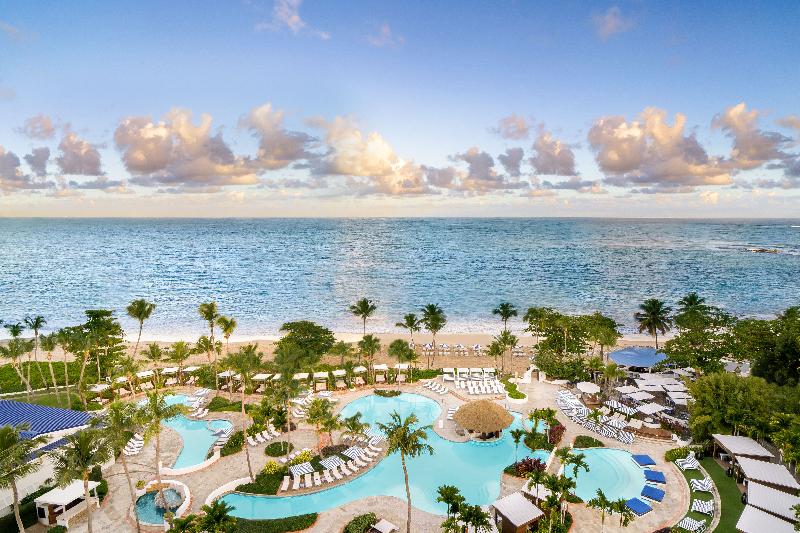
★★★★
Fairmont El San Juan Hotel
Carolina
Spa · Pool · Pets allowed
From £335 a night, taxes incl.2 adults · checked 14 Nov, 21:07

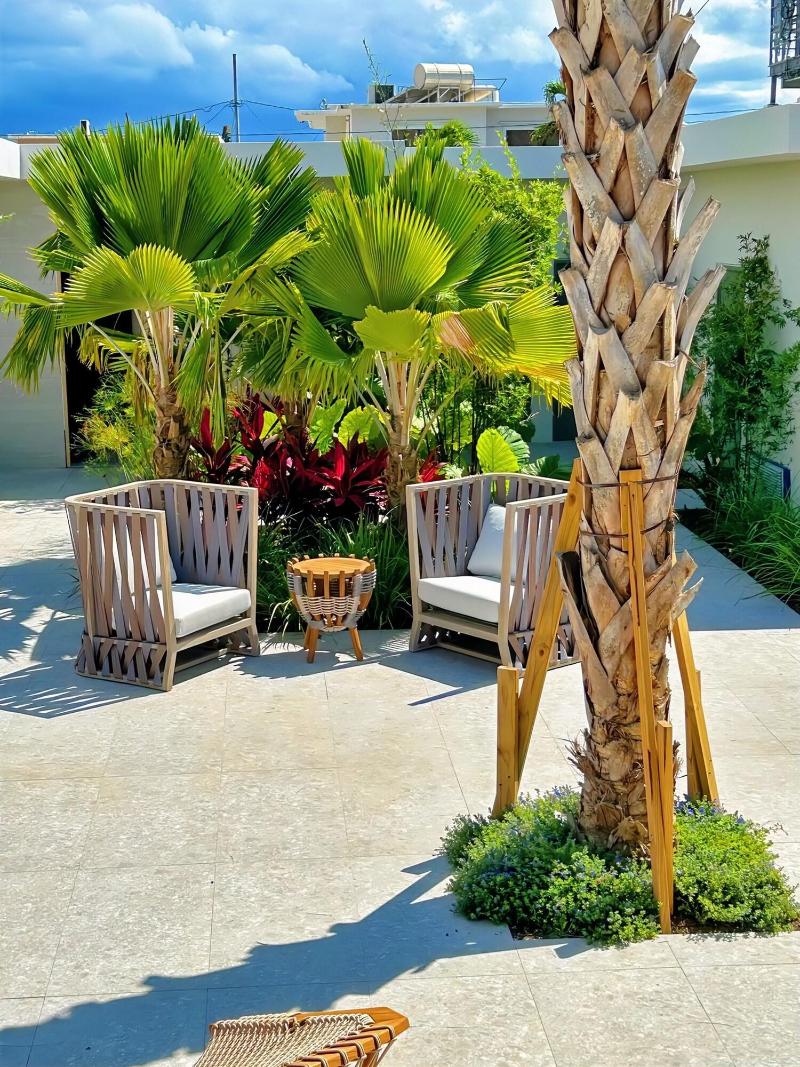
★★★★★
Condado Vanderbilt
San Juan
Spa · Pool · Parking
From £376 a night, taxes incl.2 adults · checked 14 Nov, 21:07
★★★★
Bali Hotel Adults Only Isla Verde
Carolina
Adults only · Pets allowed · Parking
From £128 a night, taxes incl.2 adults · checked 14 Nov, 21:07

★★★★
Hilton Ponce Golf & Casino Resort
Ponce
All-inclusive option · Spa · Pool
From £206 a night, taxes incl.2 adults · checked 14 Nov, 21:07

★★★★★
Dorado Beach A Ritz-Carlton Reserve
Dorado
Spa · Pool · Family-friendly
From £2,255 a night, taxes incl.2 adults · checked 14 Nov, 21:07

★★★★
Boqueron Beach Resort
Cabo Rojo
Rooftop pool · Family-friendly · Parking
See prices and rooms →
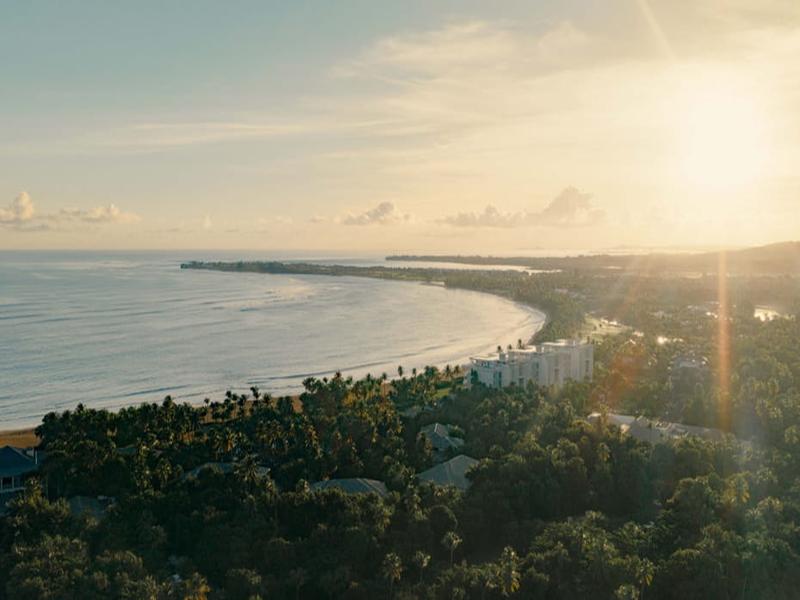
★★★★★
Four Seasons Resort and Residences Puerto Rico
Rio Grande
Spa · Pool · 1 rooms
From £1,024 a night, taxes incl.2 adults · checked 14 Nov, 21:07
Getting around
Old San Juan is walkable and taxis and ride-hailing cover the capital, but public transport beyond it is thin. A hire car is the best way to reach El Yunque, the west coast and the south. Ferries and small planes link the main island with Vieques and Culebra.
When to go
It is warm all year. Winter and spring are the driest and most popular months; summer and autumn are hotter and wetter, and fall within the Atlantic hurricane season, so keep an eye on forecasts if you travel then.
Questions about visiting Puerto Rico
- What is Puerto Rico best known for?
- The colourful streets and Spanish forts of Old San Juan, El Yunque rainforest, bioluminescent bays, Caribbean beaches such as Flamenco on Culebra, and rum.
- How many days do you need in Puerto Rico?
- A week is ideal: three days for San Juan and El Yunque, then time for Vieques or Culebra and the west or south coast. Four or five days is enough for San Juan and the east.
- Do you need a car in Puerto Rico?
- Not for San Juan itself, where walking and taxis are enough. To explore the rainforest, the south and the west coast you really do need one, or a place on an organised tour.
- What is there to do in Puerto Rico with kids?
- Flying kites on the lawn at El Morro, swimming at Isla Verde, river pools in El Yunque, the Camuy caves and a night-time trip to a glowing bay are all family favourites.
More guides
- Where to stay in Puerto Rico
- The best things to do in London
- The best things to do in Edinburgh
- The best things to do in Manchester
- The best things to do in York
- The best things to do in Amsterdam
- The best things to do in Birmingham
- The best things to do in Liverpool
- The best things to do in Bristol
- The best things to do in Barcelona
- The best things to do in Budapest
- The best things to do in Cambridge
- The best things to do in Dublin
- The best things to do in Krakow