
Puglia is the heel of Italy's boot: a long, flat, sunburnt peninsula of olive groves, dry-stone walls and whitewashed hill towns, wrapped in the Adriatic on one side and the Ionian on the other. It has the food of Italy without the queues, and a landscape that feels old and unhurried, studded with beach towns, baroque churches and strange conical houses.
It's a place to wander and eat. Pick a few towns, drive between them on empty country roads, stop at a masseria for lunch and swim from a cliff. Few places in Italy repay slow travel so well.
Don't miss
Whitewashed towns of the Itria Valley
Hilltop villages, trulli and a lot of white paint.
Alberobello
Neighbourhood

Photo: MPhernambucq, CC BY-SA 4.0 Alberobello is the home of the trulli, the round dry-stone houses with conical grey roofs that dot the Puglian countryside. Here hundreds of them climb two hillsides in the Rione Monti and Aia Piccola quarters, and the whole town is a UNESCO World Heritage Site. It looks like a fairytale and is very popular, so come early or stay the night after the day-trippers leave.
Tip: The Rione Monti side is the busiest and most photographed; the quieter Aia Piccola is worth a wander too.
Ostuni
Neighbourhood

Photo: Benjamin Smith, CC BY-SA 4.0 Known as the White City, Ostuni spills down a hilltop in a tumble of whitewashed houses, arches and stairways, with the sea shining in the distance beyond the olive groves. It's a maze for an evening stroll, with a cathedral at the top and plenty of restaurants and bars along the way.
Locorotondo
Neighbourhood

Photo: Benjamin Smith, CC BY-SA 4.0 The name means round place, and the old centre is indeed a spiral of white lanes around a church, with flower-filled balconies and views over the Itria Valley's patchwork of vines and trulli. It's smaller and calmer than Alberobello, and it gives its name to a crisp local white wine.
Cisternino
Food
Another pretty white town, Cisternino is famous for its butcher-restaurants: choose your cuts from the display, have them grilled over charcoal and eat at long tables with wine and bread. It's a bit chaotic and entirely delicious.
Baroque Salento
Lecce
Landmark

Photo: acediscovery, CC BY 4.0 Often called the Florence of the South, Lecce is a city of honey-coloured limestone carved into baroque fantasies. The Basilica di Santa Croce has a facade crowded with animals, flowers and figures, and the Roman amphitheatre sits half-excavated in the main square, Piazza Sant'Oronzo.
Wander the old centre in the evening, when the stone glows, and stop for a coffee and a pasticciotto at a café.
Otranto
Neighbourhood

Photo: Bernard Gagnon, CC0 Right on the eastern tip of the heel, Otranto is a walled harbour town with a clear turquoise sea. Its cathedral has a huge floor mosaic of the tree of life, made in the 12th century, and its old town is a fine place to wander before swimming off the rocks.
Gallipoli
Neighbourhood
The old town of Gallipoli sits on a small limestone island joined to the mainland by a bridge, ringed by walls, with a fishing harbour, a baroque cathedral and a lively waterfront. Beaches stretch along the coast on either side, and the town is at its liveliest on summer evenings.
Coast and sea
Polignano a Mare
Neighbourhood

Photo: acediscovery, CC BY 4.0 A whitewashed old town balanced on a limestone cliff above the Adriatic, with sea caves below and a tiny pebble beach, Lama Monachile, tucked between the rocks beneath an old bridge. It's dramatic and photogenic, and the home of a famous statue of singer Domenico Modugno, who wrote Volare.
Walk the lanes to the clifftop belvederes, then swim off the rocks or take a boat trip to the caves.
Monopoli
Neighbourhood

Photo: MPhernambucq, CC BY-SA 4.0 A working fishing town with a handsome old harbour full of painted boats, a sea castle and a labyrinth of lanes behind the waterfront. It's less polished than Polignano and a good deal calmer, with some of the area's best seafood.
Torre Guaceto
Nature
A protected nature reserve and marine area on the coast near Brindisi, with sandy beaches, dunes, scrub and a watchtower looking over the sea. Clear water makes it a good spot for swimming and snorkelling, and the shore is quieter than the resort coast.
Vieste and the Gargano
Day trip

Photo: Einaz80, CC BY-SA 4.0 Far up on the spur of Italy's boot, Vieste is a whitewashed old town on a headland above the sea. A beach below it's dominated by Pizzomunno, a tall white limestone monolith, and the surrounding Gargano coast is lined with cliffs, caves and forest.
Eat and drink
Orecchiette con cime di rapa
Food

Photo: Florixc, CC0 Little ear-shaped pasta tossed with turnip tops, garlic, anchovy and chilli is the dish of Puglia. Often made by hand, it's simple, bitter and savoury, and exactly right with a glass of local red.
Burrata
Food
Burrata, a fresh cheese with a mozzarella shell and a creamy centre of cream and shreds, comes from Puglia, and eating it here, fresh and with ripe tomatoes and good olive oil, is a revelation. Order it as a starter almost anywhere.
Pasticciotto
Food

Photo: Renano, CC BY-SA 3.0 A little pastry of buttery shortcrust filled with custard, the pasticciotto is the pride of Lecce and the Salento. Eat it warm at breakfast with a coffee, and sample versions filled with cherry jam or almond.
Focaccia barese
Food
Bari's own focaccia is a thick, soft, olive-oil-rich bread, topped with cherry tomatoes and olives, with a crisp base. Eat it hot from a bakery as a snack, and you'll understand why people queue.
Days out
Matera
Day trip

Photo: Jules Verne Times Two, CC BY-SA 4.0 Just over the border in Basilicata, Matera is a UNESCO-listed town of cave dwellings and churches carved into a ravine, known as the Sassi. It's one of Italy's most extraordinary townscapes, and it can be visited in a day from the Itria Valley or Bari.
Tip: Walk the Sassi in the late afternoon and wait for the lights to come on.
Castel del Monte
Landmark

Photo: ParisTaras, CC BY-SA 4.0 A 13th-century hilltop castle built by Emperor Frederick II, a perfect octagon with eight octagonal towers, standing alone above the plain near Andria. Nobody knows exactly what it was for, which only adds to the mystery. It's a UNESCO World Heritage Site.
Bari Vecchia
Neighbourhood
Puglia's capital has a tangled old town where women still make orecchiette by hand on tables in the street, and the Basilica di San Nicola, the shrine of Saint Nicholas, rises in the middle. Bari is also a major transport hub, so it's an easy stop on the way in or out.
Where to stay in Puglia
Not sure which area suits you? Read our guide: Where to stay in Puglia →
★★★★
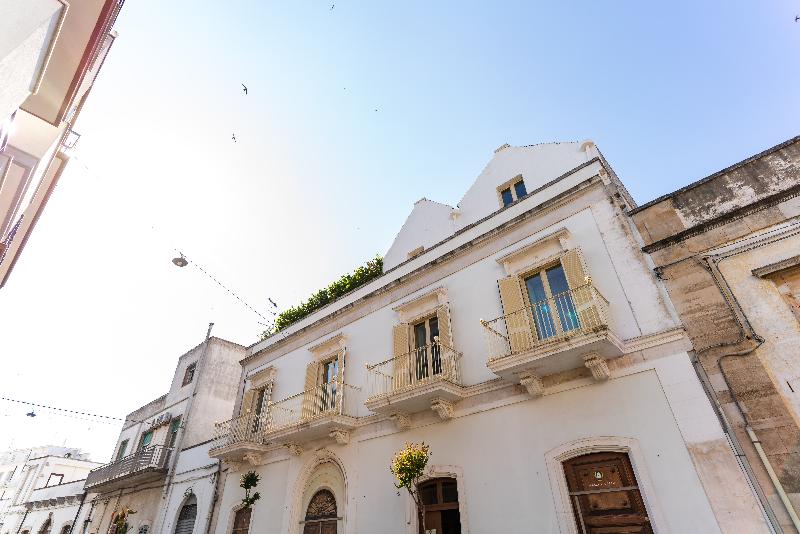
Palazzo Scotto
Alberobello
Adults only · 9 rooms · Pets allowed
See prices and rooms →

★★★★
Conchiglia Azzurra Resort & Beach
Porto Cesareo
Beach 10 m · Spa · 60 rooms
See prices and rooms →

★★★★★
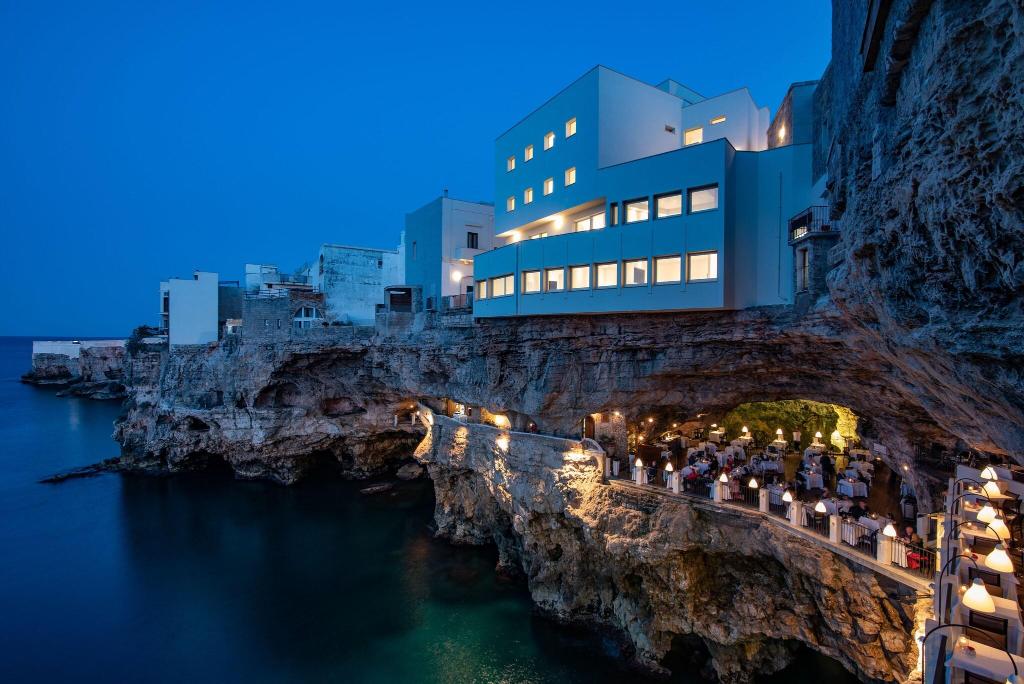
Hotel Grotta Palazzese
Polignano a Mare
Adults only · 15 rooms · Parking
See prices and rooms →
★★★★
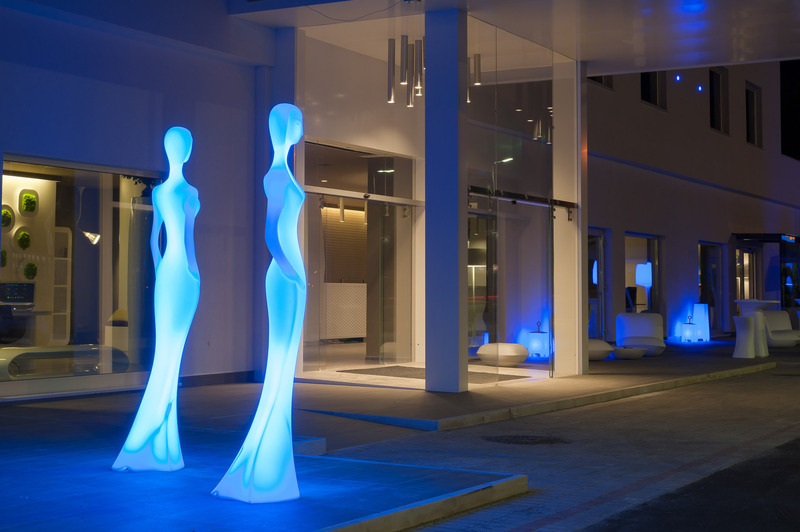
8piuhotel
Lecce
Beach 1.6 km · Parking
See prices and rooms →
★★★★
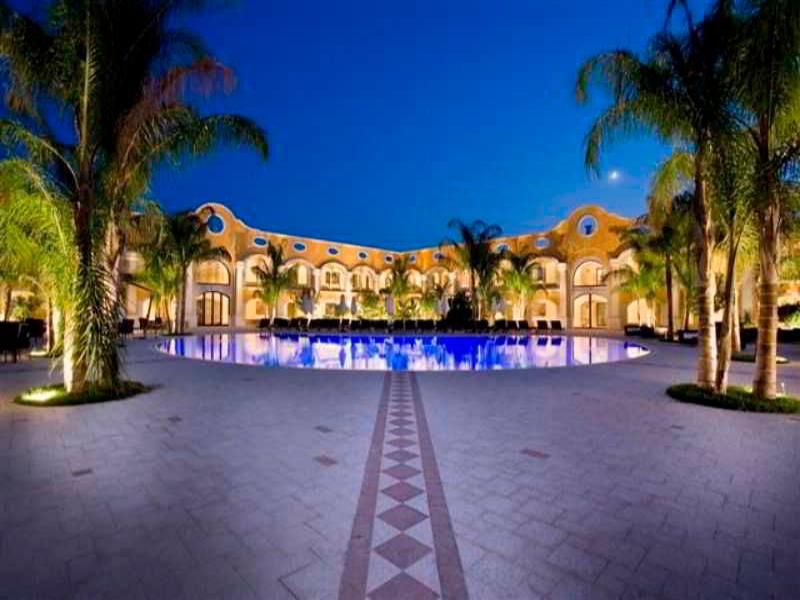
Acaya Golf Resort & Spa
Lecce - Acaya
Spa · Pool · Family-friendly
From £216 a night, taxes incl.2 adults · checked 1 Oct, 22:23

★★★★★
Il Melograno
Monopoli
Spa · Pool · 40 rooms
From £352 a night, taxes incl.2 adults · checked 1 Oct, 22:23
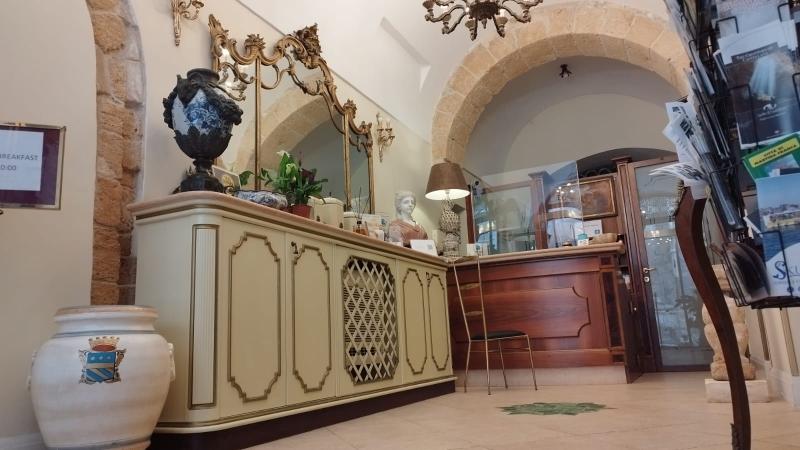
★★★★
Akropolis Museum Hotel
Taranto
Parking
From £127 a night, taxes incl.2 adults · checked 1 Oct, 22:23
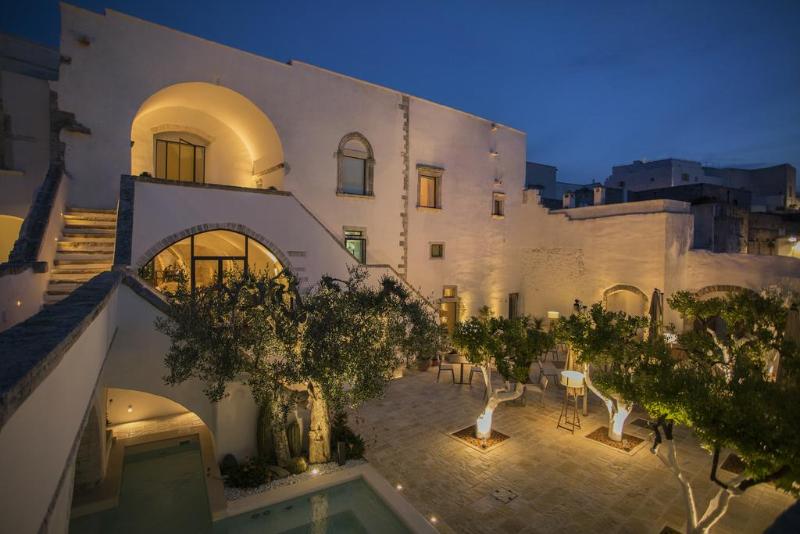
★★★★★
La Sommità Relais & Chateaux
Ostuni
Beach 10 m · Spa · Pool
See prices and rooms →
Getting around
A hire car is the best way to see Puglia: distances are modest and the roads are mostly flat and quiet, but public transport between small towns is limited. Trains link Bari, Monopoli, Lecce and some of the main towns. Park outside old centres, as many have restricted traffic zones.
When to go
Late spring and early autumn are ideal, with warm weather, swimmable sea and quieter towns. July and August are hot and busy, and many beach restaurants close in winter.
Questions about visiting Puglia
- What is Puglia best known for?
- Its whitewashed hill towns, the trulli houses of Alberobello, baroque Lecce, a long Adriatic and Ionian coastline, olive groves and rustic food such as orecchiette and burrata.
- How many days do you need in Puglia?
- A week lets you see Alberobello, Ostuni, Lecce and a coastal town at an easy pace. Ten days adds Matera, the far south and some beach time.
- Do you need a car in Puglia?
- It's strongly recommended. Trains serve the main cities, but the countryside, beaches and smaller towns are much easier to reach with your own car.
- Is Puglia good for beaches?
- Yes. There are sandy beaches around Gallipoli and Torre Guaceto, rocky coves and sea caves around Polignano a Mare and Otranto, and long beaches on the Gargano coast.
More guides
- Where to stay in Puglia
- The best things to do in London
- The best things to do in Edinburgh
- The best things to do in Amsterdam
- The best things to do in Barcelona
- The best things to do in Budapest
- The best things to do in Dublin
- The best things to do in Krakow
- The best things to do in Prague
- The best things to do in Berlin
- The best things to do in Lisbon
- The best things to do in Milan
- The best things to do in Paris
- The best things to do in Rome