
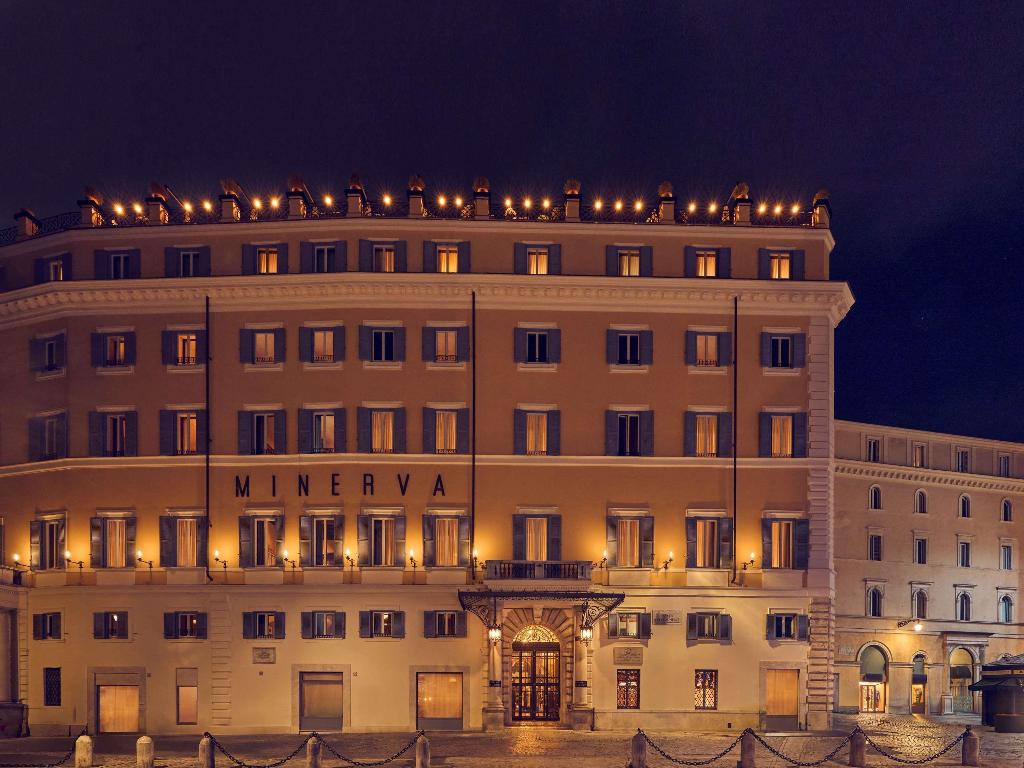
In Rome, history isn't kept behind glass; it's the furniture. You'll eat lunch beside a temple, catch a bus past a 2,000-year-old arena and drink from fountains fed by aqueducts the emperors would recognise. Layer on Michelangelo, Bernini and Caravaggio, Baroque piazzas and some of the best simple food in Italy, and the Eternal City is overwhelming in the best possible way.
Don't try to see everything. Book the Colosseum, the Vatican Museums and the Borghese Gallery before you go, plan each day around one big sight, then let the rest happen: a wander through Trastevere, an espresso at a bar counter, a plate of cacio e pepe, a gelato on the way home. Rome rewards slow travellers.
Don't miss
Ancient Rome
The heart of an empire, still standing.
The Colosseum
Landmark

Photo: Tournasol7, CC BY-SA 4.0 The great Flavian Amphitheatre, opened in the 1st century AD, once held tens of thousands of spectators for gladiator fights and wild-animal hunts. Even in ruins it's staggering: walk the arcades, look down into the maze of tunnels beneath the arena floor and imagine the roar.
Tip: Tickets are timed and include the Roman Forum and Palatine Hill: book online well ahead, especially for the arena floor and underground areas.
The Roman Forum and Palatine Hill
Landmark

Photo: Dietmar Rabich, CC BY-SA 4.0 Next to the Colosseum, the Forum was the centre of public life in ancient Rome: a valley of temples, triumphal arches, law courts and the Senate House, now a field of broken columns and marble. Above it, the Palatine Hill, where Rome was said to have been founded and where emperors built their palaces, gives views over the Forum and the Circus Maximus.
Tip: There is little shade: bring water and a hat in summer, and wear comfortable shoes.
The Pantheon
Landmark

Photo: Rabax63, CC BY-SA 4.0 Nearly two thousand years old and still in use as a church, the Pantheon is ancient Rome's best-preserved building. Step inside and look up: the vast concrete dome opens to the sky through a single round oculus, and a disc of sunlight slides slowly across the walls. Raphael is buried here.
Tip: Entry is now ticketed; book online and go early, before the tour groups arrive.
The Vatican
The Vatican Museums and Sistine Chapel
Museum

Photo: Michelangelo, CC BY-SA 3.0 The papal collections are among the richest in the world: ancient sculpture such as the Laocoön, the frescoed Raphael Rooms, the long Gallery of Maps and, at the end of it all, the Sistine Chapel, where Michelangelo's ceiling and his Last Judgement fill every inch of wall and vault.
Tip: Closed on Sundays except the last Sunday of the month. Book a timed ticket and go first thing; photography is not allowed in the Sistine Chapel.
St Peter's Basilica
Landmark

Photo: Alvesgaspar, CC BY-SA 4.0 The vast basilica at the heart of the Catholic world stands at the head of Bernini's colonnaded St Peter's Square. Inside, find Michelangelo's tender Pietà and Bernini's towering bronze canopy over the altar, then climb Michelangelo's dome for a view over the square and across the city.
Tip: Shoulders and knees must be covered. Expect a security queue; go early in the morning.
Piazzas, fountains and galleries
The Trevi Fountain
Landmark

Photo: Diego Delso, CC BY-SA 4.0 Rome's most theatrical fountain fills an entire small square with Baroque drama: Neptune rides a shell chariot pulled by sea horses as water tumbles over sculpted rocks. Tradition says that if you toss a coin over your shoulder into the water, you'll return to Rome.
Tip: Go early in the morning or late at night; by day the crowds are many deep.
Piazza Navona
Landmark

Photo: Ank Kumar, CC BY-SA 4.0 Built on the outline of an ancient stadium, this long oval piazza is Baroque Rome at its finest, with Bernini's Fountain of the Four Rivers in the middle and Borromini's church of Sant'Agnese in Agone facing it. Café terraces, street artists and buskers keep it lively day and night.
The Spanish Steps
Landmark
The elegant 18th-century staircase sweeps up from Piazza di Spagna to the twin towers of the Trinità dei Monti church. At the bottom, the boat-shaped Barcaccia fountain; all around, the designer shops of Via Condotti.
Tip: Sitting on the steps is not allowed, so enjoy them on the move.
The Borghese Gallery
Museum

Photo: Alvesgaspar, CC BY-SA 4.0 A cardinal's villa in the Villa Borghese park holds a dazzling private collection: Bernini's marble sculptures, including Apollo and Daphne, which seems to turn to leaves before your eyes, along with paintings by Caravaggio, Raphael and Titian and Canova's reclining Pauline Borghese.
Afterwards, walk through the park to the Pincio terrace for a sunset view over Piazza del Popolo.
Tip: Booking is compulsory and visits are timed; reserve well ahead.
Neighbourhoods to wander
Trastevere
Neighbourhood

Photo: trolvag, CC BY-SA 3.0 Across the Tiber, Trastevere is a tangle of ivy-draped lanes, ochre houses and washing lines, where trattorias spill out onto the cobbles. Its centre is the piazza in front of Santa Maria in Trastevere, whose golden mosaics glitter above the fountain. By night it's one of the liveliest corners of the city.
Monti
Neighbourhood
Tucked between the Colosseum and Via Nazionale, Monti is a village within the city, full of vintage shops, wine bars and little restaurants. In the evening, locals gather around the fountain in Piazza della Madonna dei Monti with a drink in hand.
The Jewish Ghetto
Neighbourhood

Photo: Marco Iannantuoni, CC BY-SA 3.0 Home to one of the oldest Jewish communities in Europe, this small, atmospheric quarter by the river has the ancient Portico of Octavia, the Great Synagogue and restaurants serving Roman-Jewish dishes. The star is carciofi alla giudia, whole artichokes deep-fried until they open like crisp, golden flowers.
Eat and drink
Roman pasta
Food

Photo: Blackcat, CC BY-SA 4.0 Rome's four great pastas are simple and sublime: cacio e pepe (pecorino and black pepper), gricia (with guanciale, cured pork cheek), carbonara (guanciale, egg and pecorino, never cream) and amatriciana (with tomato). The traditional trattorias of Testaccio are the place to try them.
Pizza and supplì
Food
Roman pizza comes thin and crisp from a wood-fired oven, or as pizza al taglio, rectangular slices sold by weight. Before your pizza, order supplì, fried rice croquettes with a molten mozzarella centre that stretches into strings when you bite.
Gelato
Food
Eating gelato on an evening stroll is a Roman ritual. Look for a gelateria with natural, slightly muted colours, often kept in covered metal tubs, rather than towering mounds of neon-bright ice cream. Pistachio should be a dull, earthy green. Try classic flavours such as nocciola (hazelnut) and stracciatella.
Day trips
Ostia Antica
Day trip

Photo: Rabax63, CC BY-SA 4.0 Ancient Rome's port is one of the best-preserved Roman towns anywhere: whole streets of shops, apartment blocks, baths, mosaics and a theatre, with far fewer crowds than the Forum. A local train runs there from Piramide station.
Tivoli
Day trip
In the hills east of Rome, Tivoli has two UNESCO-listed treasures: the Renaissance gardens of Villa d'Este, with hundreds of fountains cascading down terraces, and Hadrian's Villa, the emperor's sprawling country retreat of pools, temples and palaces.
Where to stay in Rome
Not sure which area suits you? Read our guide: Where to stay in Rome →
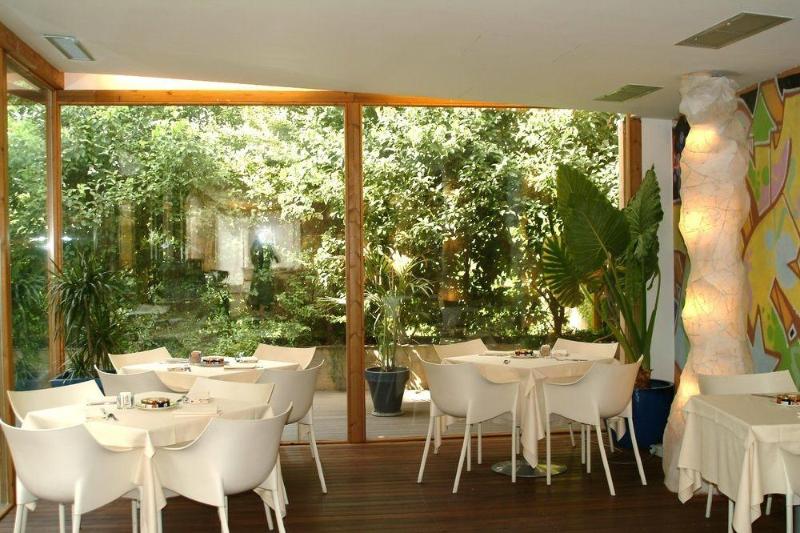
★★★★
Abitart
Rome
66 rooms
See prices and rooms →
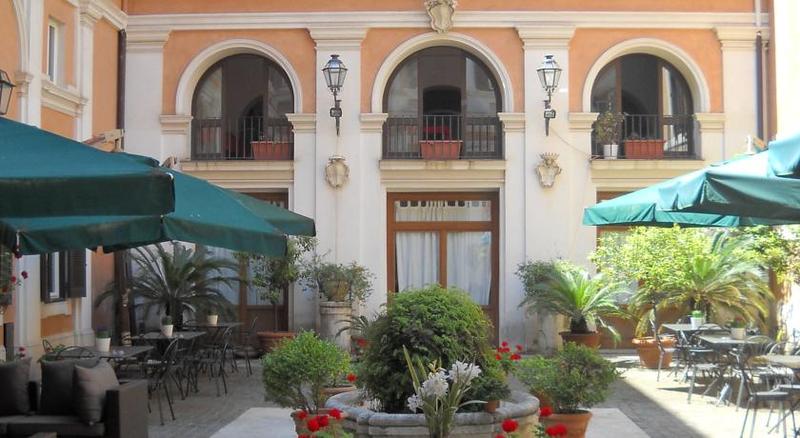
★★★★
Antico Palazzo Rospigliosi
Rome
39 rooms · Parking
See prices and rooms →
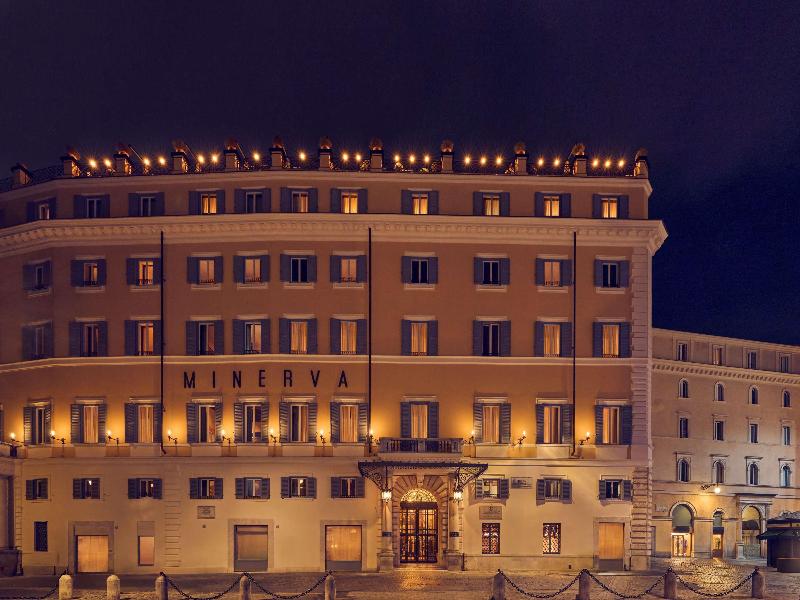
★★★★★
Orient Express La Minerva
Rome
Parking
From £1,290 a night, taxes incl.2 adults · checked 1 Oct, 17:08
★★★★
Ariston
Rome
Parking
See prices and rooms →
★★★★
Artemide
Roma
Spa · Parking
See prices and rooms →

★★★★★
Hassler Roma
Rome
Spa · Parking
From £1,928 a night, taxes incl.2 adults · checked 1 Oct, 17:08

★★★★
Barberini
Rome
35 rooms · Parking
See prices and rooms →
★★★★★
Hotel de Russie
Rome
Spa · Pool · Parking
From £1,999 a night, taxes incl.2 adults · checked 1 Oct, 17:08
Getting around
The historic centre is best explored on foot, and many of the sights are a short walk apart. The metro is handy for the Vatican, the Colosseum and Termini, and buses and trams fill the gaps. Taxis must be taken from official ranks or booked. Don't drive: much of the centre is a restricted traffic zone.
When to go
Spring and autumn are ideal, with warm days and softer light. July and August are hot and crowded, and many locals leave in August. Winter is mild and quieter, a good time for museums.
Questions about visiting Rome
- What is Rome best known for?
- Ancient sites such as the Colosseum, the Roman Forum and the Pantheon, the Vatican with St Peter’s and the Sistine Chapel, Baroque fountains and piazzas, and Roman food.
- How many days do you need in Rome?
- Three days is enough for the Colosseum and Forum, the Vatican and the historic centre. Four or five lets you add the Borghese Gallery, Trastevere and a day trip to Ostia Antica or Tivoli.
- Which Rome sights should you book in advance?
- The Colosseum, the Vatican Museums and the Borghese Gallery, which requires a reservation. Booking the Pantheon ahead also helps in busy months.
- Is Rome good for families?
- Yes. Children love the Colosseum, the gladiator stories, the fountains, pizza and gelato, and the open spaces of the Villa Borghese park, where you can hire bikes and rowing boats.
More guides
- Where to stay in Rome
- The best things to do in London
- The best things to do in Edinburgh
- The best things to do in Amsterdam
- The best things to do in Barcelona
- The best things to do in Budapest
- The best things to do in Dublin
- The best things to do in Krakow
- The best things to do in Prague
- The best things to do in Berlin
- The best things to do in Lisbon
- The best things to do in Milan
- The best things to do in Paris
- The best things to do in Madrid