

Santorini is what is left of a volcano that blew itself apart in the Bronze Age. The result is a crescent of black, red and ochre cliffs curling around a flooded caldera, with white villages balanced on the rim like sugar cubes. It's dramatic, improbable and every bit as photogenic as the postcards promise.
The crowds know it too, so plan around them. See Oia early or late, walk the caldera rim in the morning, take a boat out to the volcano itself and spend your afternoons at the black-sand beaches or in a winery. The island is small enough to see all of it in a few days.
Don't miss
The caldera villages
Whitewashed houses, blue domes and a drop to the sea.
Oia
Neighbourhood

Photo: Navin75, CC BY-SA 2.0 Oia, at the island's northern tip, is the Santorini of the postcards: blue-domed churches, whitewashed houses and cave homes stacked up the cliff, with the caldera and the sea far below. It's also famous for its sunsets, and every evening the lanes and the old castle ruins fill with people.
It's lovely, and it's crowded. See it in the morning when the lanes are quiet, and expect to share sunset with everyone.
Tip: For sunset, claim a spot well before the sun goes down, or watch it from a terrace table.
Fira
Neighbourhood

Photo: Dietmar Rabich, CC BY-SA 4.0 Santorini's capital hangs along the caldera rim with shops, restaurants and a line of balconies looking over the water. A cable car runs down to the old port, and you can ride a donkey or take the stepped path if you prefer. The Museum of Prehistoric Thera is here too, with finds from Akrotiri.
Fira is busier and less pretty than Oia, but it's the island's hub and the best base for transport and nightlife.
Imerovigli
Neighbourhood

Photo: Rebexho, CC BY-SA 3.0 Between Fira and Oia, Imerovigli sits on the highest point of the caldera rim and calls itself the balcony of the Aegean. It's quieter and calmer than its neighbours, and the path out to Skaros Rock, the site of a medieval fortress, is a wonderful short walk.
Pyrgos
Neighbourhood

Photo: Bgabel, CC BY-SA 3.0 Inland and uphill, Pyrgos is one of the island's highest villages, a tangle of narrow lanes climbing to a ruined medieval castle. It has far fewer visitors than the caldera towns, and the view from the top takes in much of the island.
On foot and on the water
The Fira to Oia caldera walk
Activity

Photo: Paul Stephenson from London, CC BY 2.0 A footpath follows the rim of the caldera from Fira through Firostefani and Imerovigli to Oia, passing churches, cliffside houses and endless views of the sea. It takes several hours, and is the best way to understand the shape of the island.
Tip: Start early, wear proper shoes and carry water: there is little shade, and it is hot by midday in summer.
Nea Kameni
Nature

Photo: Norbert Nagel, CC BY-SA 3.0 In the middle of the caldera, the black island of Nea Kameni is the youngest part of the volcano. Boats run out from Fira's old port, and you can walk up to the crater rim, where sulphur vents steam from the ground. Many trips also stop at hot springs in the sea nearby.
Ammoudi Bay
Food

Photo: Winniepix, CC BY 2.0 Below Oia, down a long flight of steps, a tiny fishing harbour sits at the water's edge, lined with seafood tavernas. It's a lovely place for a long lunch of grilled fish, and a swim off the rocks, with the cliffs towering above.
Ancient Santorini
Akrotiri
Museum

Photo: Norbert Nagel, CC BY-SA 3.0 A Bronze Age town was buried under volcanic ash when the volcano erupted, and it has been excavated since the 1960s. Today you walk through its streets under a protective roof, past multi-storey houses, storerooms and traces of wall paintings. Often compared with Pompeii, it's older and just as moving.
Ancient Thera
Landmark
High on the ridge of Mesa Vouno between Kamari and Perissa, the ruins of Ancient Thera cover the remains of a Greek and Roman city, with streets, temples and a theatre looking down on the sea. It's a walk or drive up, and the views are worth it.
Beaches
Volcanic sand in black, red and grey.
Red Beach
Beach

Photo: Sidvics, CC BY-SA 4.0 Near Akrotiri, a pebbly beach sits under towering red volcanic cliffs, a striking sight. It's small and often busy, and rockfalls have at times restricted access, so check before you go.
Perissa and Perivolos
Beach
On the south-east coast, a long strip of black volcanic sand runs beneath the Mesa Vouno ridge, lined with beach bars and sunbeds. It's the most lively and family-friendly beach stretch on the island, and the sand gets very hot in summer.
Kamari
Beach

Photo: Jules Verne Times Two, CC BY-SA 4.0 A long black pebble beach with a waterfront promenade packed with tavernas and shops. It's relaxed and walkable, with easy access to Ancient Thera above it.
Eat and drink
Santorini wine
Food
The island's volcanic soil produces distinctive crisp white wines from the Assyrtiko grape. The vines are trained into low woven baskets on the ground to protect the grapes from the wind, and the sweet Vinsanto dessert wine is a local speciality. Several wineries around the island offer tastings with views.
Fava and tomato fritters
Food
Santorini fava is a silky purée of yellow split peas, served with capers and onions. Tomatokeftedes are fritters made with the island's tiny, intensely flavoured tomatoes. Add a Greek salad and a glass of local white and you have the perfect easy lunch.
Where to stay in Santorini
Not sure which area suits you? Read our guide: Where to stay in Santorini →
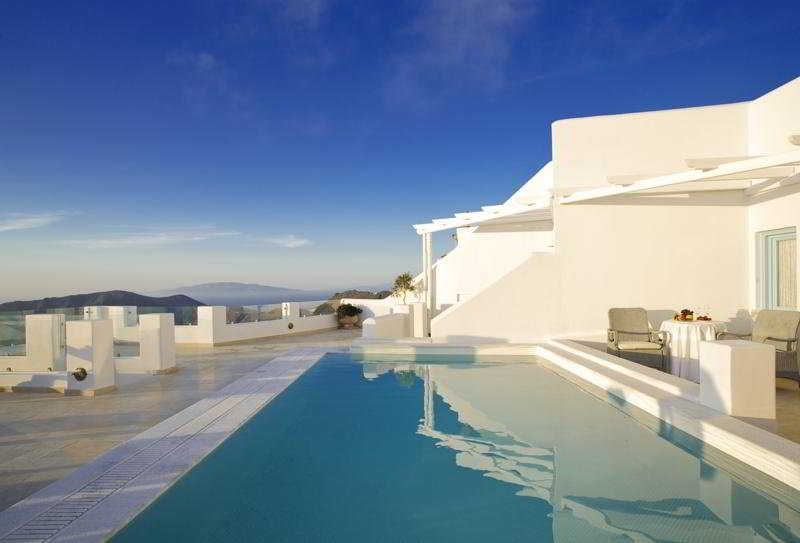
★★★★
Above Blue Suites
Santorini
Adults only · Spa · Pool
See prices and rooms →

★★★★
Absolute Bliss Imerovigli Suites
Imerovigli
Adults only · Pool · 17 rooms
See prices and rooms →

★★★★★
Andronis Boutique
Oia Santorini
Adults only · Spa · Pool
See prices and rooms →
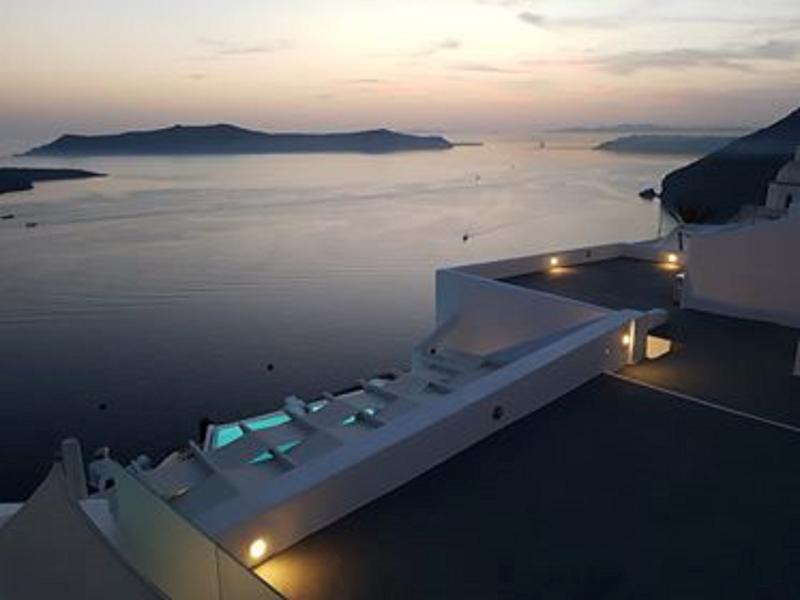
★★★★
Adamant Suites
Fira
Adults only · Pool · 9 rooms
From £201 a night, taxes incl.2 adults · checked 1 Oct, 20:37
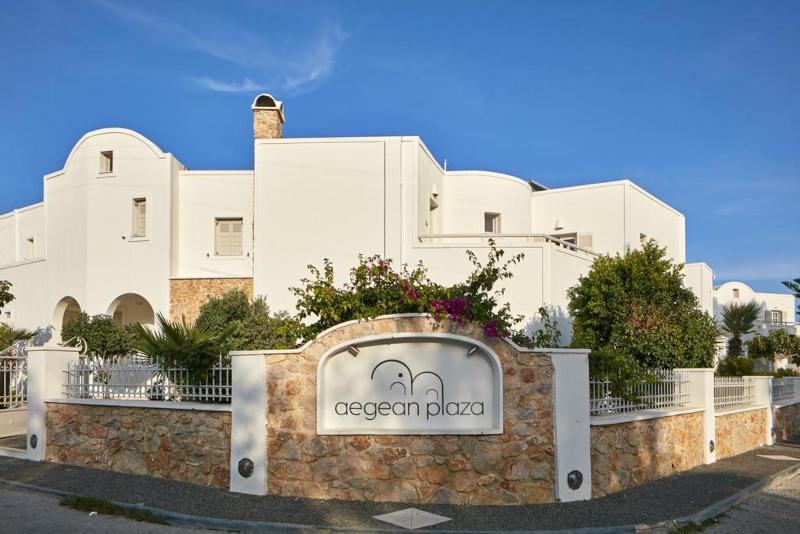
★★★★
AEGEAN PLAZA
Santorini
From £107 a night, taxes incl.2 adults · checked 1 Oct, 20:37
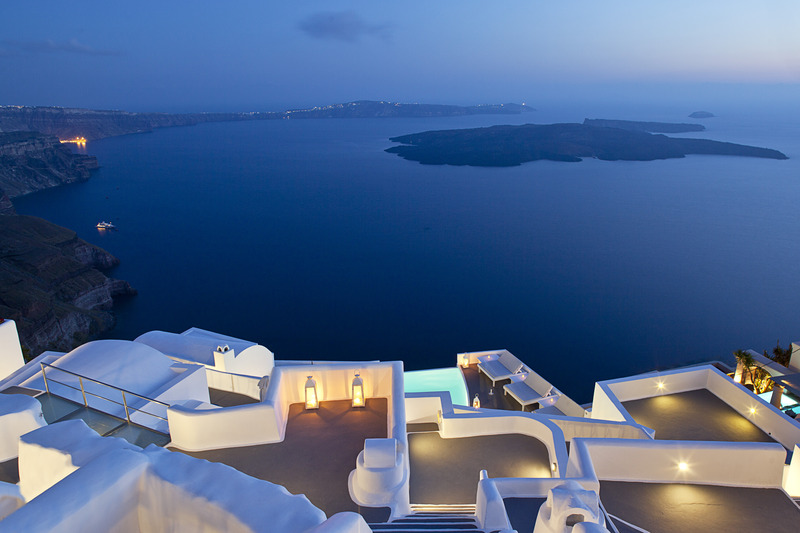
★★★★★
Katikies Chromata Santorini - The Leading Hotels
Imerovigli
Adults only · Spa · Pool
See prices and rooms →
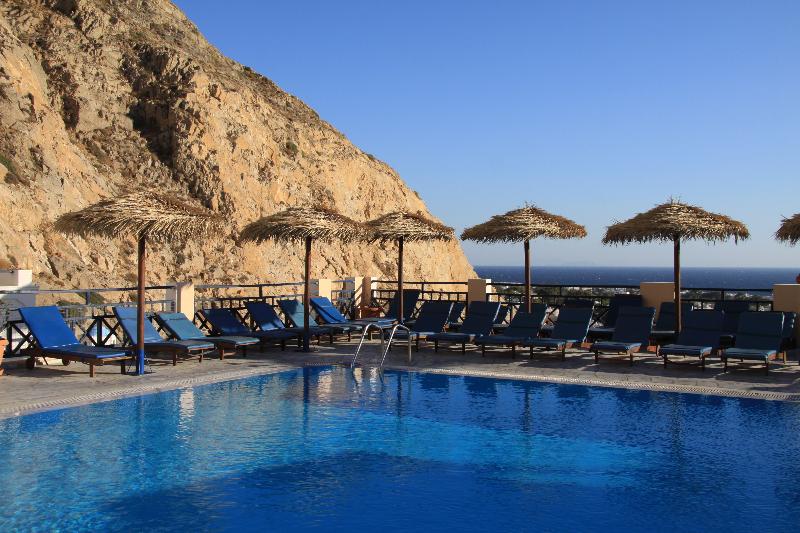
★★★★
Aegean View
Santorini
Beach 400 m · Pool
From £77 a night, taxes incl.2 adults · checked 1 Oct, 20:37
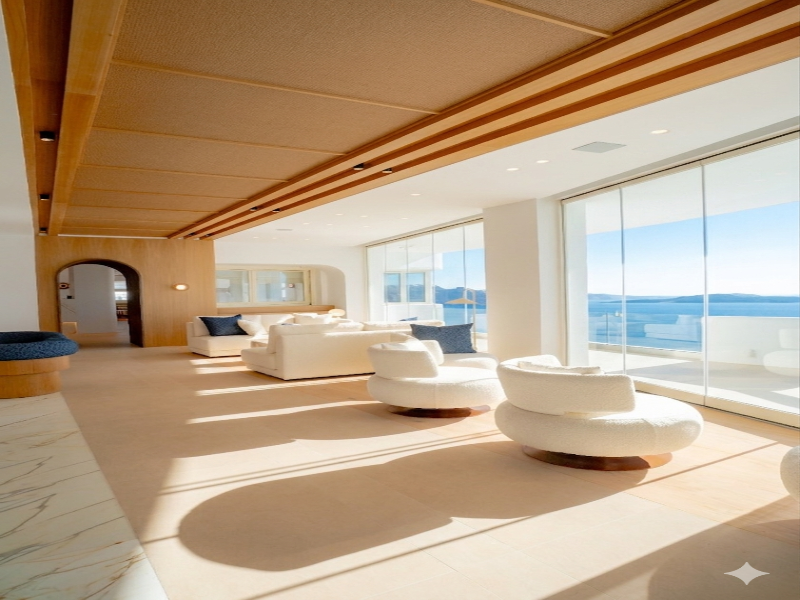
★★★★★
Apeiron Blue Santorini - Apeiron Hotels
Fira
Adults only · Spa · Pool
From £301 a night, taxes incl.2 adults · checked 1 Oct, 20:37
Getting around
Buses link Fira with most villages and beaches, but they are crowded and can be infrequent, so many visitors hire a car or quad bike, or use taxis. Walking the caldera path is the best way between Fira, Imerovigli and Oia. Ferries and flights reach the island from Athens and nearby islands.
When to go
Late spring and early autumn have warm weather, fewer crowds. July and August are hot and very busy, and many places close in the winter months.
Questions about visiting Santorini
- What is Santorini best known for?
- Its caldera views and whitewashed clifftop villages such as Oia and Fira, spectacular sunsets, black and red volcanic beaches and the Bronze Age site of Akrotiri.
- How many days do you need in Santorini?
- Three days covers Oia, Fira, a boat trip to the volcano and a beach. Four or five gives you time for Akrotiri, a winery and the caldera walk without rushing.
- Do you need a car in Santorini?
- Not necessarily. Buses and taxis cover the main villages and beaches, but a car or quad gives more freedom to reach wineries and quieter spots.
- Is Santorini worth visiting?
- Yes, though it's busy in summer. Go outside July and August if you can, see Oia early in the day and base yourself in a quieter village such as Imerovigli.
More guides
- Where to stay in Santorini
- The best things to do in London
- The best things to do in Edinburgh
- The best things to do in Amsterdam
- The best things to do in Barcelona
- The best things to do in Budapest
- The best things to do in Dublin
- The best things to do in Krakow
- The best things to do in Prague
- The best things to do in Berlin
- The best things to do in Lisbon
- The best things to do in Milan
- The best things to do in Paris
- The best things to do in Rome