
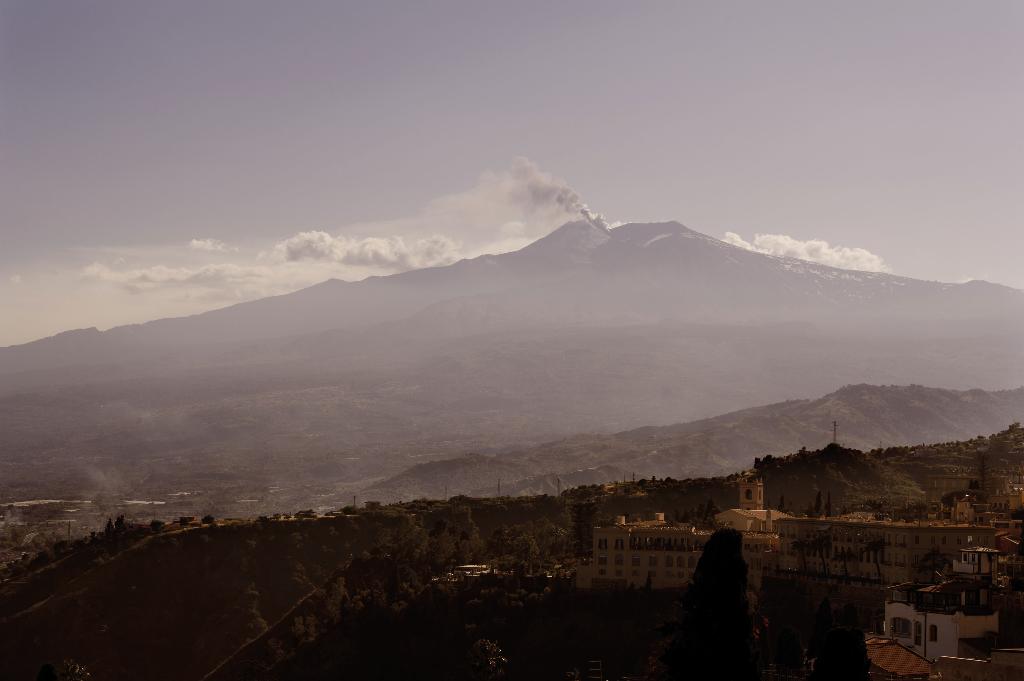
Sicily has been conquered by almost everyone, and each of them left something behind. Greeks built temples that still stand in a field of almond trees. Arabs brought citrus and irrigation. Normans covered their churches in gold mosaics, and the Spanish and Italians rebuilt the south-east in swirling Baroque after an earthquake flattened it. Then there's Etna, smoking over it all.
It's a big island, so don't try to see it in a long weekend. Pick a corner: Palermo and the west for churches, markets and street food; the east for Etna, Taormina and Syracuse; the south-east for honey-coloured Baroque towns. Hire a car outside the cities, and eat everything you're offered.
Don't miss
Volcanoes and islands
Mount Etna
Nature

Photo: DavidMPyle, CC BY-SA 4.0 Europe's most active volcano rules the eastern skyline, and you can get surprisingly close. Cable cars and 4x4 tracks climb from the Sapienza refuge, and guides lead walks across black lava fields, past old craters and, on a good day, to viewpoints over the whole island. Vineyards on the lower slopes make wines that taste of the volcano.
Tip: Conditions and the permitted heights change with volcanic activity, so go with a local guide and take warm layers, even in summer.
Stromboli and the Aeolian Islands
Day trip
Hydrofoils and ferries run from Milazzo to the Aeolian Islands, a chain of volcanic islands off the north coast. Stromboli's cone erupts in small, regular explosions; the best views are from a boat after dark. Vulcano has mud baths and Lipari has a handsome little town and a good museum.
Ancient Sicily
The Valley of the Temples
Landmark

Photo: Cayambe, CC BY-SA 4.0 Outside Agrigento, a ridge of Greek temples looks out to sea over olive and almond groves. The Temple of Concordia is among the best-preserved Greek temples anywhere, and its golden stone glows in the evening light. This is a UNESCO World Heritage site and the single best thing to see on the south coast.
Tip: Late afternoon is cooler, and the golden stone looks its best in the low light.
Segesta
Landmark

Photo: Ludvig14, CC BY-SA 4.0 An unfinished Doric temple stands alone on a hillside in the west, with no town around it, just wind and wild flowers. A short walk uphill leads to a Greek theatre with views over the valley and the sea beyond.
The Greek Theatre at Taormina
Landmark
Taormina perches on a cliff above the Ionian Sea, and its ancient theatre has a view of Etna framing the stage. It's one of the most photographed backdrops in Sicily. Afterwards, stroll Corso Umberto, the main street of this elegant hill town, and find a terrace for an aperitivo.
Palermo and its Norman churches
Sicily’s capital is raw, loud and magnificent.
Cappella Palatina
Landmark

Photo: Liilia Moroz, CC BY-SA 4.0 Inside the Norman Palace in Palermo, a small royal chapel is covered in gold mosaics, with a painted wooden ceiling in Arab style. It reflects the blend of Byzantine, Arab and Norman cultures that made medieval Sicily so unusual. Even if you're not usually a church person, this one is spellbinding.
Tip: Queues build up by mid-morning, so go early.
Monreale Cathedral
Landmark

Photo: Berthold Werner, CC BY-SA 3.0 Above Palermo, the cathedral of Monreale holds one of the largest cycles of Byzantine-style mosaics in Italy, covering the walls in gold. Next door, the cloister has paired columns carved with leaves, animals and tiny scenes. It makes an easy half-day from the city.
Ballarò market
Market

Photo: Archipenzolo, CC BY-SA 3.0 Palermo's oldest street market is a noisy swirl of fruit stalls, fishmongers and food vendors in the old town. Come hungry: it's the best place to try street food such as panelle (chickpea fritters), arancine and sfincione, the thick local pizza.
The south-east and the coast
Ortigia
Neighbourhood

Photo: Ввласенко, CC BY-SA 3.0 The old heart of Syracuse sits on a small island joined to the mainland by a bridge. Lanes of pale stone open onto the Piazza Duomo, where a Baroque cathedral has Greek columns built into its walls, and the sea laps at the edge of the waterfront. Syracuse's Greek theatre and archaeological park are a short ride away on the mainland.
Noto
Neighbourhood

Photo: Berthold Werner, CC BY-SA 4.0 Noto was rebuilt in the 18th century after an earthquake, and the whole town glows the colour of honey. Its grand Baroque cathedral, balconies held up by carved stone figures and Corso Vittorio Emanuele make it one of the most elegant small towns on the island. It's part of a UNESCO listing for the Baroque towns of the Val di Noto.
Ragusa Ibla
Neighbourhood

Photo: Daniele Napolitano, CC BY-SA 4.0 The old quarter of Ragusa clings to a hill, a maze of Baroque churches, steep steps and tiny squares. Wander down from the upper town at dusk when the stone turns gold and restaurants fill the lanes with candlelight.
Scala dei Turchi
Nature

Photo: Carnby, CC BY 3.0 A brilliant white staircase of soft marl cliff dropping into blue water on the south coast near Realmonte. It's a spectacular place to watch the light change at the end of the day, and the sea below is lovely for a swim when it's calm.
Tip: The rock is soft and can be slippery, so go carefully and respect any local restrictions on climbing.
Eat and drink
Arancini
Food

Photo: No machine-readable author provided. Gmelfi assumed (based on copyright claims)., Public domain Golden fried rice balls with a molten centre of ragù and peas, or butter and ham. In Palermo they are arancine and round; in Catania they are arancini and conical, shaped like Etna. Argue about which is better with any Sicilian you meet.
Cannoli
Food

Photo: Stefano Mortellaro from Catania, Italy, CC BY 2.0 Crisp pastry tubes filled with sweet ricotta, sometimes with candied fruit or pistachios. The golden rule is to have them filled to order, so the shell stays crunchy. A good pasticceria is worth a detour.
Modica chocolate
Food
In the Baroque town of Modica, chocolate is made in the old Aztec-influenced way, ground cold so the sugar crystals stay and the texture is grainy and intense. Try it plain or flavoured with orange, chilli or sea salt.
Granita and brioche
Food
The classic Sicilian summer breakfast: a cold, slushy granita (lemon, almond, coffee or mulberry) with a soft brioche to dunk in it. It sounds odd and tastes like the best idea anyone ever had.
Where to stay in Sicily
Not sure which area suits you? Read our guide: Where to stay in Sicily →
★★★★
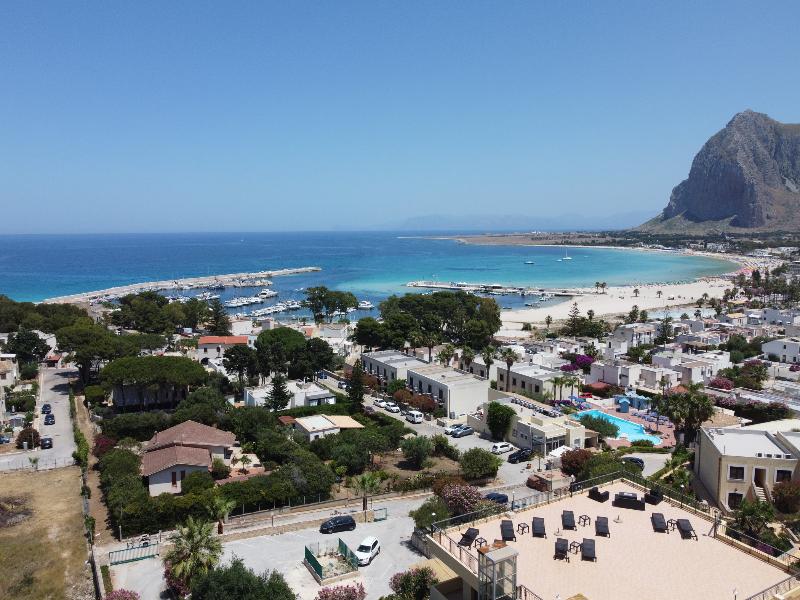
Hotiday San Vito Lo Capo
San Vito lo Capo (tp)
5 rooms · Parking
See prices and rooms →
★★★★
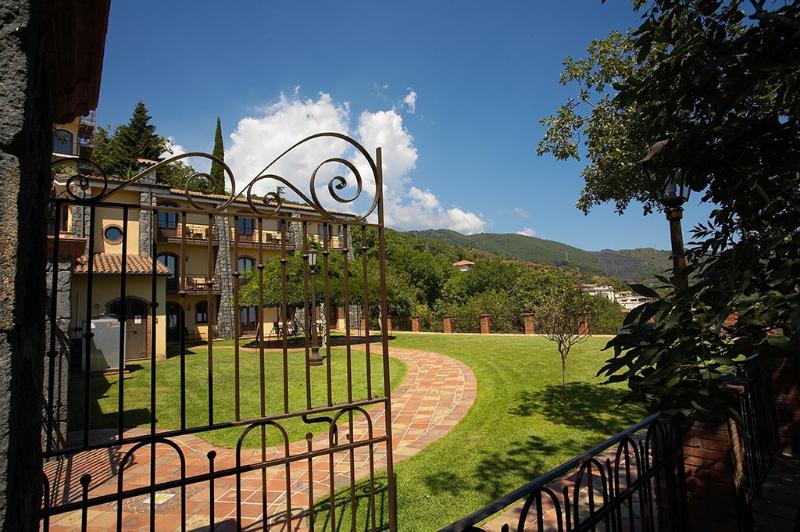
Airone Wellness Hotel
Catania
Pool
See prices and rooms →

★★★★★
Grand Hotel Timeo, A Belmond Hotel, Taormina
Taormina
Spa · Pool · 67 rooms
See prices and rooms →

★★★★
Albatros Beach Hotel - Letojanni
Letojanni
See prices and rooms →
★★★★
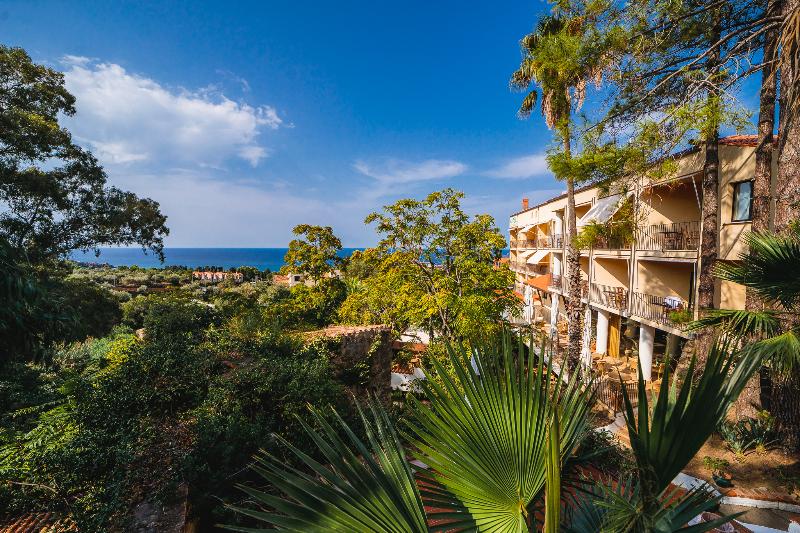
Alberi Del Paradiso
Cefalu
Beach 800 m · Spa · Pool
From £699 a night, taxes incl.2 adults · checked 1 Oct, 17:38
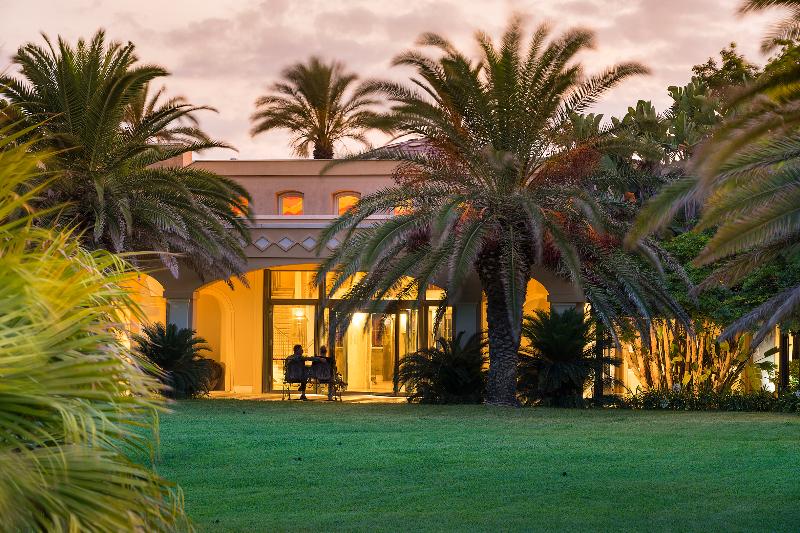
★★★★★
Romano Palace
Catania
Pool · Pets allowed · Parking
See prices and rooms →
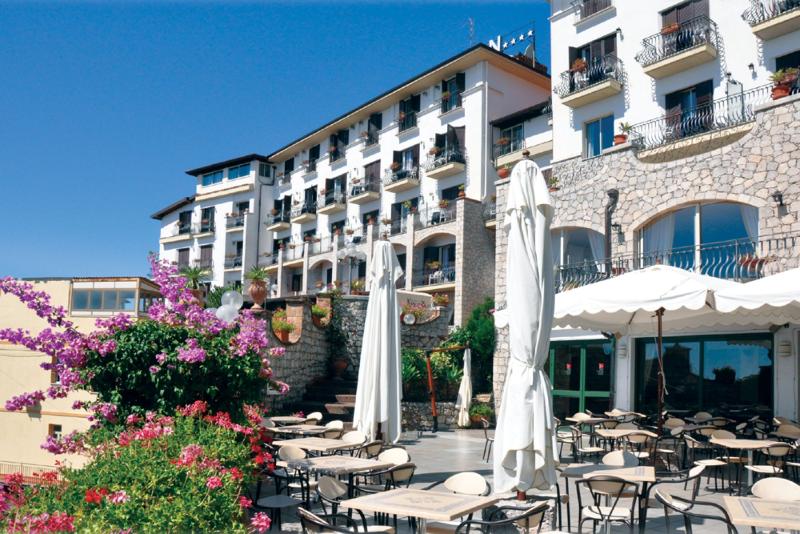
★★★★
Ariston and Palazzo Santa Caterina
Taormina
Beach 500 m · All-inclusive option · Pets allowed
See prices and rooms →
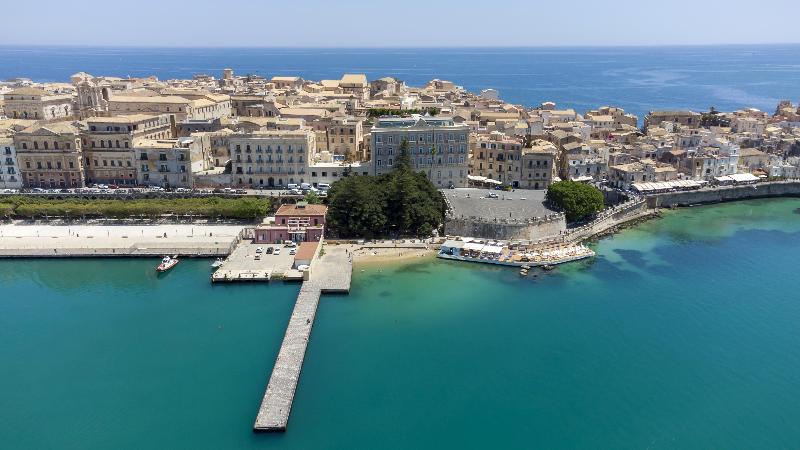
★★★★★
Grand Hotel Des Étrangers
Siracusa
Spa · Pool · 68 rooms
From £701 a night, taxes incl.2 adults · checked 1 Oct, 17:38
Getting around
Cities such as Palermo, Catania and Syracuse are fine without a car, and trains link the main towns on the coast. To reach temples, mountain villages and beaches comfortably, hire a car. Driving in Palermo and Catania can be hectic, so many visitors pick up the car on the way out of town.
When to go
Spring and autumn are the best seasons for sightseeing, with warm days and wild flowers in spring. Summer is hot, and the archaeological sites have little shade, so go early or late in the day. August is when many Italians holiday, so the coast is busy.
Questions about visiting Sicily
- What is Sicily best known for?
- Mount Etna, ancient Greek temples such as the Valley of the Temples, Baroque towns like Noto, Palermo’s Norman churches and a food culture that includes arancini, cannoli and granita.
- Is Sicily worth visiting?
- Absolutely. It combines history, volcanic landscapes, beaches and some of the best food in Italy, and it feels distinct from the mainland.
- How many days do you need in Sicily?
- Ten days to a fortnight lets you see the main regions. If you only have a week, pick two bases, for example Palermo and Taormina or Syracuse, rather than trying to cover everything.
- Do you need a car in Sicily?
- In the cities, no. To see the Valley of the Temples, Segesta, the south-east Baroque towns or Etna at your own pace, a car is the easiest way, though organised tours also cover these.
More guides
- Where to stay in Sicily
- The best things to do in London
- The best things to do in Edinburgh
- The best things to do in Amsterdam
- The best things to do in Barcelona
- The best things to do in Budapest
- The best things to do in Dublin
- The best things to do in Krakow
- The best things to do in Prague
- The best things to do in Berlin
- The best things to do in Lisbon
- The best things to do in Milan
- The best things to do in Paris
- The best things to do in Rome