

Sofia is one of the oldest cities in Europe and wears its age lightly. Roman streets lie open beneath the pavements, a fourth-century church sits in the courtyard of the president's office, and a mosque, a synagogue, a Catholic cathedral and an Orthodox church stand within a few hundred metres of one another. Over the top of it all runs a layer of gold domes, yellow cobbles and hefty socialist-era architecture.
It is not a city of blockbuster sights so much as one that rewards walking about with your eyes open. Prices are kind, the food is fresh and plentiful, and a proper mountain rises straight from the southern suburbs. Few capitals let you ski, or hike, within sight of the parliament.
Don't miss
The big sights
All in the compact centre, and all within a walk of one another.
Alexander Nevsky Cathedral
Landmark

Photo: Pudelek (Marcin Szala), CC BY-SA 3.0 The symbol of Sofia and one of the largest Orthodox cathedrals in the world: a great pile of green and gold domes rising in tiers from the middle of a wide square. It was built in the years around 1900 in memory of the Russian soldiers who died in the war that freed Bulgaria from Ottoman rule.
Inside it is vast, dim and heavy with incense, lit by chandeliers and candles, with marble, onyx and murals on every surface. Stand still for a few minutes and let your eyes adjust.
Tip: The crypt, entered from the side, holds a fine museum of Bulgarian icons.
The Church of St Sofia
Landmark

Photo: Matti Blume, CC BY-SA 4.0 Across the square from the cathedral stands a far older and plainer building, a red-brick basilica from the sixth century. This is the church that gave the city its name, and it is one of the oldest in the capital.
It has been a church, a mosque and a ruin in its time. Beneath the floor is an underground museum of the ancient cemetery it was built over, with tombs and fragments of mosaic. The contrast with its showy neighbour could not be greater.
The Rotunda of St George
Landmark

Photo: No machine-readable author provided. Preslav~commonswiki assumed (based on copyr, Public domain The oldest building in Sofia hides in the last place you would look: the inner courtyard between the presidency and a large hotel. A small, round, red-brick church built by the Romans in the fourth century, it is ringed by the remains of an ancient street and surrounded on all sides by towering modern walls.
Step inside to see layers of medieval frescoes in the dome. Finding it feels like being let in on a secret.
The ruins of Serdica
Landmark
The Romans called the city Serdica, and the Emperor Constantine is said to have been so fond of it that he called it his Rome. When builders dug a new metro station in the centre, they uncovered whole streets of the ancient town.
The remains were left in place and roofed over, so today you walk among paved Roman roads, house walls and early churches on your way to catch a train. It is free, open and one of the most unusual archaeological sites in Europe.
The Banya Bashi Mosque and the mineral baths
Landmark

Photo: Photographer: Unknown / Fotograf: okänd, CC0 Sofia grew up around hot springs, and they still flow. The sixteenth-century Banya Bashi Mosque, the work of the great Ottoman architect Sinan, takes its name from the baths beside it. Behind it stands the old Central Mineral Baths, a wonderfully ornate striped building from the early twentieth century that now houses the city's history museum.
At the public fountains nearby, locals queue with plastic bottles to fill up on warm mineral water straight from the ground. The synagogue and the old market hall are a few steps away.
Streets and squares
The Ivan Vazov National Theatre
Landmark

Photo: Pudelek (Marcin Szala), CC BY-SA 3.0 Sofia's most handsome building is a red and cream neoclassical theatre with a columned portico, twin towers and gilded chariots on the roof. It faces the City Garden, the oldest park in the centre, where fountains play and old men settle in for long games of chess.
On a warm evening this is the loveliest spot in the city. Find a bench, or a table at one of the cafés, and watch Sofia go by.
Vitosha Boulevard
Neighbourhood

Photo: Radosław Botev, CC BY 3.0 pl The city's main pedestrian street runs dead straight through the centre, pointing directly at the mountain it is named after, which closes the view at the far end. It is lined with shops, cafés and restaurants whose tables fill the middle of the street from spring to autumn.
This is where Sofia promenades, flirts and drinks coffee. The southern end opens into the park around the National Palace of Culture, a monumental congress centre from the 1980s.
The Women's Market
Market
Sofia's oldest and biggest open-air market is a long street of stalls a short walk north of the centre. Growers sell tomatoes that actually smell of tomatoes, peppers, cherries, walnuts, jars of honey, bunches of herbs and tubs of olives and white cheese.
It is noisy, unpolished and entirely for locals, which is why it is worth a visit. Go in the morning, and take cash and an appetite.
On the edge of the city
Boyana Church
Landmark

Photo: Aleksander Dragnes, CC BY 2.0 In a garden of tall trees in the foothills of Vitosha stands a tiny medieval church with a very big reputation. Its walls are covered with frescoes painted in 1259 by an unknown master, whose saints and donors have a warmth, individuality and realism well ahead of their time. It is a UNESCO World Heritage Site.
Only a few people are let in at once, and only briefly, to protect the paintings. Those minutes are worth the journey.
Tip: The National History Museum is nearby, so it makes sense to see the two together by taxi.
Vitosha Mountain
Nature

Photo: Apcbg, Public domain The great rounded mountain south of the city is Sofia's playground. Much of it is a nature park, laced with marked trails through pine and beech forest, with mountain huts for soup and tea along the way. The summit, Cherni Vrah, stands well over two thousand metres high.
In winter there is skiing around Aleko; in summer, walkers head for the Golden Bridges, a strange river of huge boulders tumbling through the woods. It suits anyone who needs a day of fresh air.
Eat and drink
Banitsa
Food

Photo: Biso, CC BY 3.0 The Bulgarian breakfast: a warm pastry of thin filo sheets layered with eggs and crumbled white cheese, baked until crisp and golden. You buy it by the piece from bakeries and street kiosks across the city, often before eight in the morning.
The traditional partners are ayran, a salty yoghurt drink, or boza, a thick, sweet, malty brew made from fermented grain. The first is refreshing. The second is an acquired taste.
Shopska salad
Food

Photo: Biso, CC BY 3.0 A simple salad of chopped tomato, cucumber, onion and pepper under a snowdrift of grated white cheese, in the colours of the Bulgarian flag. With ripe summer vegetables it is a revelation. It takes its name from the Shopi, the people of the Sofia region.
It starts almost every meal, usually with a small glass of rakia, the local fruit brandy. Follow it with grilled meats and a pot of Bulgarian yoghurt, which is famous for good reason.
Day trips
Rila Monastery
Day trip

Photo: Pudelek (Marcin Szala), CC BY-SA 3.0 Deep in a forested valley of the Rila Mountains, around two hours south of Sofia, lies the spiritual heart of Bulgaria. Founded in the tenth century by the hermit St Ivan of Rila, the monastery is a UNESCO World Heritage Site and the country's most visited sight.
You pass through a fortress-like outer wall into a courtyard of striped arcades and wooden balconies, four storeys high, with a church in the middle painted inside and out with vivid frescoes of saints and sinners. The mountain setting is glorious.
Tip: Public transport is limited, so most people come on a day tour, often combined with Boyana Church.
The Seven Rila Lakes
Day trip
High in the same mountains, seven glacial lakes are strung down a bare, treeless valley, each with a name that describes its shape: the Eye, the Tear, the Kidney. A chairlift does the first part of the climb, and a well-trodden trail links the lakes from there.
It is one of the most popular walks in Bulgaria and a full day out from Sofia. The path is not technical but it is steep in places, so bring boots, water and layers.
Plovdiv
Day trip

Photo: Jocelyn Erskine-Kellie from London, UK, CC BY-SA 2.0 Bulgaria's second city, a couple of hours east by road or rail, is older than Rome and a good deal more relaxed than Sofia. Its hilltop Old Town is a tangle of cobbled lanes and brightly painted nineteenth-century mansions with overhanging upper floors.
Tucked among them is a Roman theatre that is still used for concerts, and below is Kapana, a quarter of small bars, galleries and craft shops. It is an easy and rewarding day trip.
Where to stay in Sofia
Not sure which area suits you? Read our guide: Where to stay in Sofia →

★★★★
Maria Luisa Sofia
Sofia
Parking
See prices and rooms →

★★★★
Maison Sofia - Mgallery Collection
Sofia
Spa · Pool · Parking
From £74 a night, taxes incl.2 adults · checked 14 Nov, 08:22

★★★★★
InterContinental Sofia
Sofia
All-inclusive option · Spa · Family-friendly
From £141 a night, taxes incl.2 adults · checked 14 Nov, 08:22
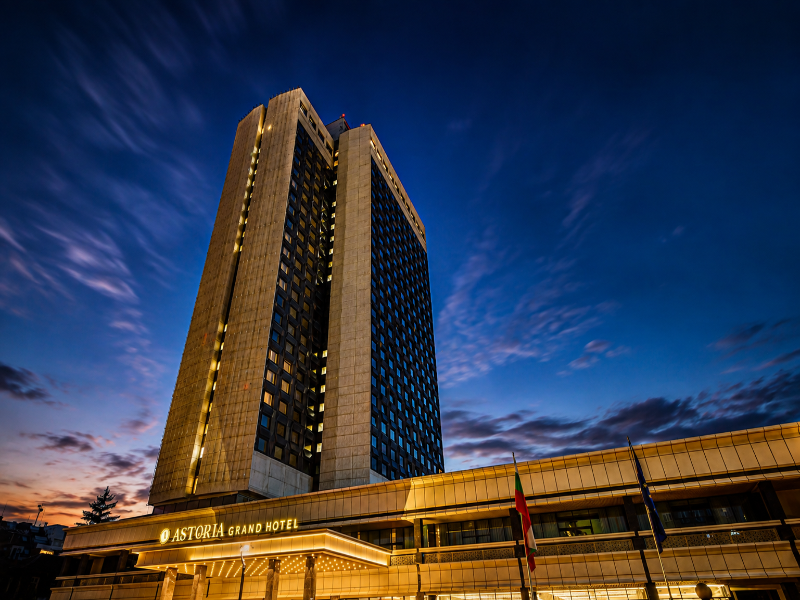
★★★★
Astoria Grand Hotel
Sofia
Pets allowed · Parking
From £119 a night, taxes incl.2 adults · checked 14 Nov, 08:22

★★★★
Avenue Hotel Sofia
Sofia
Parking
From £76 a night, taxes incl.2 adults · checked 14 Nov, 08:22

★★★★★
Sofia Balkan Palace
Sofia
Parking
From £130 a night, taxes incl.2 adults · checked 14 Nov, 08:22

★★★★
B1 Boutique Hotel Sofia
Sofia
31 rooms · Parking
From £69 a night, taxes incl.2 adults · checked 14 Nov, 08:22
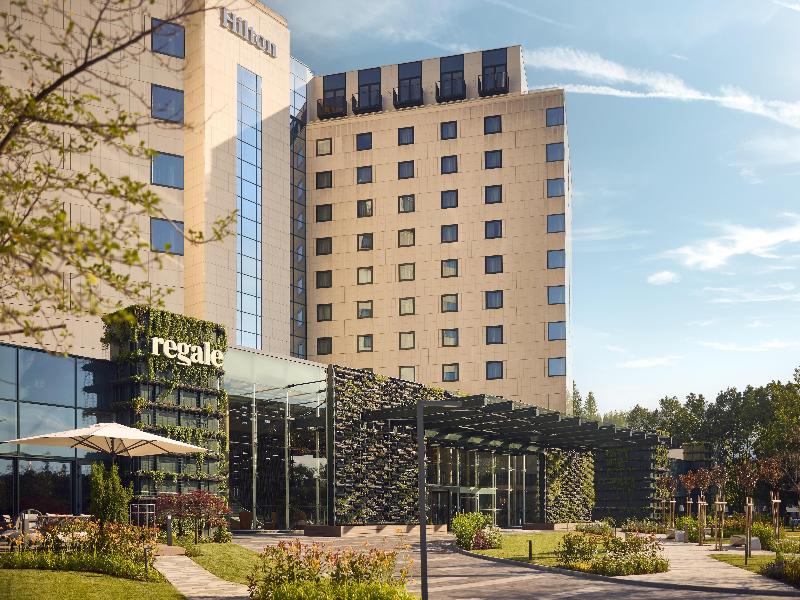
★★★★★
Hilton Sofia
Sofia
Spa · Pool · Parking
From £150 a night, taxes incl.2 adults · checked 14 Nov, 08:22
Getting around
The main sights sit close together in a flat centre and are easily seen on foot. The metro is modern and simple to use, and links the airport with the centre. Take a taxi or bus to Boyana and Vitosha, and a tour, train or hire car for Rila and Plovdiv.
When to go
Late spring and early autumn bring warm days and are ideal for both the city and the mountains. Summers are hot, though Vitosha offers cooler air. Winters are cold and often snowy, which suits skiers and makes the gold domes look their best.
Questions about visiting Sofia
- What is Sofia best known for?
- The gold-domed Alexander Nevsky Cathedral, Roman remains in the middle of the city, medieval frescoes at Boyana Church, natural mineral springs and Vitosha Mountain on its doorstep.
- Is Sofia worth visiting?
- Yes. It is an affordable, walkable capital with two thousand years of history on show, good food and easy access to mountains and to Rila Monastery.
- How many days do you need in Sofia?
- Two days is enough for the centre, Boyana Church and a walk on Vitosha. Allow three or four if you want to visit Rila Monastery and Plovdiv as well.
- Can you visit Rila Monastery from Sofia in a day?
- Yes. It is around two hours each way by road, and organised day tours run from the city, many of them stopping at Boyana Church too.
- Do you need a car in Sofia?
- No. The centre is walkable and the metro is good. For Rila, the Seven Lakes and Plovdiv, a tour, a train or a hire car is the practical choice.
More guides
- Where to stay in Sofia
- The best things to do in London
- The best things to do in Edinburgh
- The best things to do in Manchester
- The best things to do in York
- The best things to do in Amsterdam
- The best things to do in Birmingham
- The best things to do in Liverpool
- The best things to do in Bristol
- The best things to do in Barcelona
- The best things to do in Budapest
- The best things to do in Cambridge
- The best things to do in Dublin
- The best things to do in Krakow