
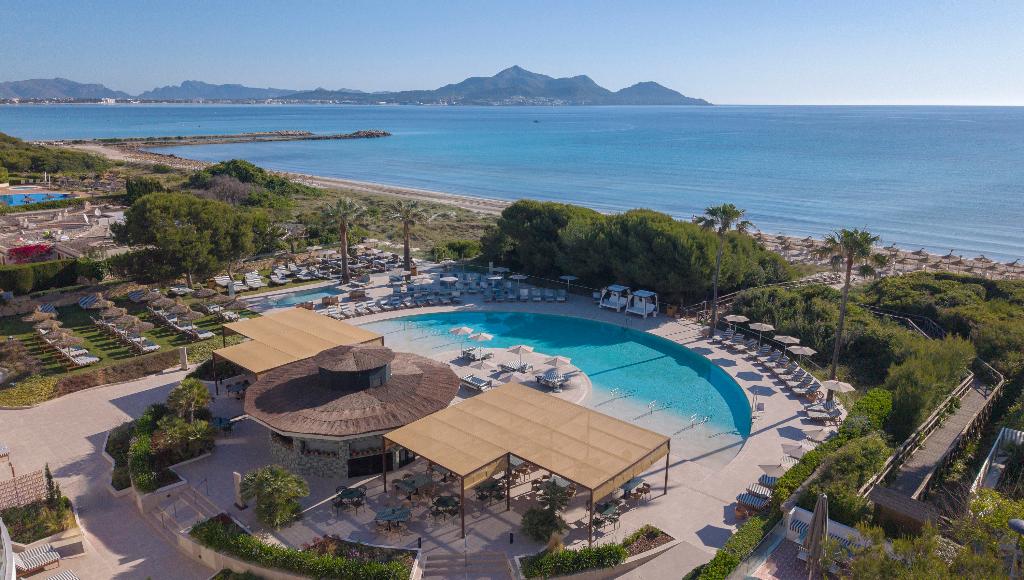
Spain is the country Britain knows best and understands least. Millions of us fly to its beaches every year, and they are excellent. But step back from the sand and there is a Moorish palace that stops conversation, a church that has been under construction since 1882, green Atlantic mountains, volcanic islands and cities that don't think about dinner until ten at night.
It is a big country of very distinct regions, so plan by area. Andalusia for Moorish monuments and flamenco, Barcelona and Catalonia for Gaudí and coves, Madrid for art, the north for food and scenery, the islands for sun at any time of year.
Don't miss
Barcelona and Catalonia
The Sagrada Família
Landmark

Photo: Alvesgaspar, CC BY-SA 4.0 Antoni Gaudí's great basilica has been rising over Barcelona since 1882 and is like no other church on earth. Outside, its towers and façades swarm with carved stone. Inside, columns branch like trees towards the vault and the stained glass floods the nave with colour: cool blues and greens on one side, fiery reds and oranges on the other.
Even people who think they don't care for churches come out silenced. It is the unmissable sight in the city.
Tip: Entry is by timed ticket and slots sell out, so book ahead. Late afternoon gives the warmest light inside.
Park Güell and Gaudí's Barcelona
Landmark

Photo: Isiwal, CC BY-SA 3.0 Gaudí left his mark all over the city. Park Güell, on a hill to the north, is his playful garden: a mosaic lizard guarding the stairway, a hall of leaning columns and a serpentine bench covered in broken tiles, with Barcelona and the sea spread out below.
On the elegant Passeig de Gràcia stand two of his apartment buildings, the dragon-backed Casa Batlló and the rippling stone Casa Milà. Finish in the lanes of the Gothic Quarter.
The Costa Brava
Beach
North of Barcelona the coast turns rugged: pine-covered headlands, small coves of clear water and medieval villages just inland. Tossa de Mar has a walled old town above its beach; Calella de Palafrugell and Llafranc are whitewashed and unhurried; Cadaqués, at the end of a winding road, is the prettiest of all.
This is Salvador Dalí country. His gloriously odd Theatre-Museum in Figueres, topped with giant eggs, is worth the detour.
Andalusia
The south is the Spain of the imagination: Moorish palaces, orange trees and flamenco.
The Alhambra
Landmark

Photo: Jebulon, CC0 On a hill above Granada, with the snowy Sierra Nevada behind, stands the palace-fortress of the last Muslim rulers of Spain. The Nasrid Palaces are its heart: rooms of lace-like carved plaster, honeycomb ceilings and courtyards where water runs through marble channels, including the famous Court of the Lions.
Add the gardens of the Generalife and the old Moorish quarter of the Albaicín opposite, and you have one of the great sights of Europe.
Tip: Tickets are limited and often sell out weeks ahead. Book early and be on time for your slot at the Nasrid Palaces.
The Alcázar and Cathedral of Seville
Landmark

Photo: Jebulon, CC0 Seville's two great monuments face each other across a square. The Royal Alcázar is a palace of tiled halls, carved arches and lush gardens, built for Christian kings by Moorish craftsmen and still used by the royal family. The cathedral is the largest Gothic church in the world and holds the tomb of Columbus.
Its bell tower, the Giralda, began life as a minaret; you climb it by ramps rather than stairs. Afterwards, wander the Santa Cruz quarter and Plaza de España.
The Mezquita of Córdoba
Landmark

Photo: Martinvl, CC BY-SA 4.0 Córdoba was once the greatest city in western Europe, and its Great Mosque shows it. Inside is a forest of more than eight hundred columns carrying double arches striped in red and white, stretching away into the half-light. A Renaissance cathedral was later built right in the middle.
The effect is strange and unforgettable. Outside, the old Jewish quarter is a maze of whitewashed lanes and flower-filled patios. It is an easy day trip from Seville by fast train.
Ronda and the Costa del Sol
Day trip
The Costa del Sol is Spain's sunniest holiday coast, running from Nerja through Málaga to Marbella. Málaga itself, Picasso's birthplace, has become a first-rate city break, with a Picasso museum, a Moorish fortress and a lively old town.
For a day away from the beach, head into the hills to Ronda, a town split by a deep gorge and joined by a spectacular eighteenth-century bridge, with one of the oldest bullrings in Spain.
Flamenco
Activity
Flamenco was born in Andalusia, and it is best seen here: a singer, a guitarist and a dancer in a small room, the heels hammering and the audience close enough to feel it. Seville, Jerez and Granada are its heartlands.
Look for an intimate venue, known as a tablao, or a cultural centre rather than a large dinner show. An hour of the real thing can be the most memorable evening of a trip.
Madrid and the centre
The Prado Museum
Museum

Photo: Carlos Delgado, CC BY-SA 3.0 Madrid's Prado is one of the world's great art galleries, built on the Spanish royal collection. Velázquez's Las Meninas is here, along with Goya's dark and brilliant late paintings, El Greco's elongated saints and Bosch's Garden of Earthly Delights.
It forms a triangle with two other outstanding museums: the Reina Sofía, home of Picasso's Guernica, and the Thyssen-Bornemisza. The Retiro park next door is the place to recover.
The Royal Palace and old Madrid
Landmark

Photo: Diego Delso, CC BY-SA 4.0 The Royal Palace is one of the largest in Europe, a vast eighteenth-century building of state rooms, frescoed ceilings and an armoury, used today for ceremonies. From it, old Madrid unfolds eastwards: the arcaded Plaza Mayor, the Mercado de San Miguel and the Puerta del Sol.
Madrid is at its best after dark. Join the evening stroll, hop between tapas bars in La Latina, and end with churros and thick hot chocolate.
Toledo
Day trip

Photo: Ввласенко, CC BY-SA 3.0 Half an hour from Madrid by fast train, Toledo crowns a rocky hill almost encircled by the River Tagus. It was once the capital of Spain and is known as the city of three cultures, for the Christians, Muslims and Jews who shaped it. Its lanes hold a magnificent Gothic cathedral, medieval synagogues and a former mosque.
El Greco lived and painted here. Cross the river for the classic view of the whole city.
Green Spain and the north
San Sebastián
Food

Photo: Ermell, CC BY-SA 4.0 This elegant Basque resort curves around La Concha, one of the finest city beaches in Europe, a perfect shell-shaped bay between two green hills. But most people come to eat. The bars of the old town pile their counters with pintxos, the Basque answer to tapas, and you move from one to the next with a small glass of wine in hand.
It is a city for food lovers of every budget, with a remarkable number of renowned restaurants.
Guggenheim Museum Bilbao
Museum

Photo: Basotxerri, CC BY-SA 4.0 Frank Gehry's museum, a swirl of titanium, glass and limestone beside the river, transformed Bilbao from an industrial port into a city people travel to see. The building is the main exhibit: walk right around it, past the giant flower-covered puppy and the towering spider sculpture.
Inside is modern and contemporary art on a grand scale. The old quarter, with its own excellent pintxos bars, is a stroll along the riverbank.
Santiago de Compostela
Landmark

Photo: Luis Miguel Bugallo Sánchez, CC BY-SA 3.0 For more than a thousand years pilgrims have walked across Europe to this granite city in Galicia, where the cathedral is said to hold the remains of St James. They still arrive every day, on foot and by bicycle, at the end of the Camino de Santiago, and gather in the great square in front of the Baroque façade.
The old town, all arcades and stone-flagged lanes, is UNESCO-listed. Galician seafood is the reward.
Picos de Europa
Nature
Barely twenty kilometres from the coast of Asturias and Cantabria, a range of limestone peaks rears up above green valleys and stone villages. This was Spain's first national park. The lakes of Covadonga sit high among the pastures, and the Cares Gorge walk follows a path cut into the cliffs.
It is a world away from the costas: cool, lush and made for walkers. Afterwards, drink Asturian cider poured from a height.
The islands
Mount Teide
Nature

Photo: Flocci Nivis, CC BY 4.0 Spain's highest mountain is not on the mainland at all but on Tenerife, in the Canary Islands. Teide is a volcano rising from a huge crater of lava fields and rust-coloured rock, protected as a national park and UNESCO World Heritage Site. A cable car climbs most of the way up.
The Canaries are warm all year, which makes them Spain's winter-sun favourite. On Gran Canaria, the dunes of Maspalomas roll down to the sea like a slice of the Sahara.
Majorca
Beach
The largest of the Balearic Islands is far more than its resorts. Palma, the capital, has a huge Gothic cathedral standing over the harbour and an old town of courtyards and good restaurants. Along the north-west coast runs the Serra de Tramuntana, a UNESCO-listed mountain range with stone villages such as Deià and Valldemossa.
Then there are the beaches: long sandy bays in the north, and small coves of turquoise water in the east and south.
Eat and drink
Tapas
Food
Tapas is less a kind of food than a way of eating: small plates shared at the bar, standing up, before moving on to the next place. Order jamón ibérico, tortilla, croquetas, garlicky prawns and patatas bravas, with a small beer or a glass of sherry.
Every region has its own specialities, and in parts of the south, Granada above all, a tapa still comes free with each drink. Eat late: bars fill from nine in the evening.
Paella in Valencia
Food
Paella comes from Valencia, where the rice is grown in the wetlands just south of the city. The original version has chicken, rabbit and green beans rather than seafood, and it is traditionally eaten at lunchtime, never in the evening.
Valencia rewards a visit in its own right: an old town with a fine central market, a long city beach and the futuristic white buildings of the City of Arts and Sciences.
Where to stay in Spain
Not sure which area suits you? Read our guide: Where to stay in Spain →
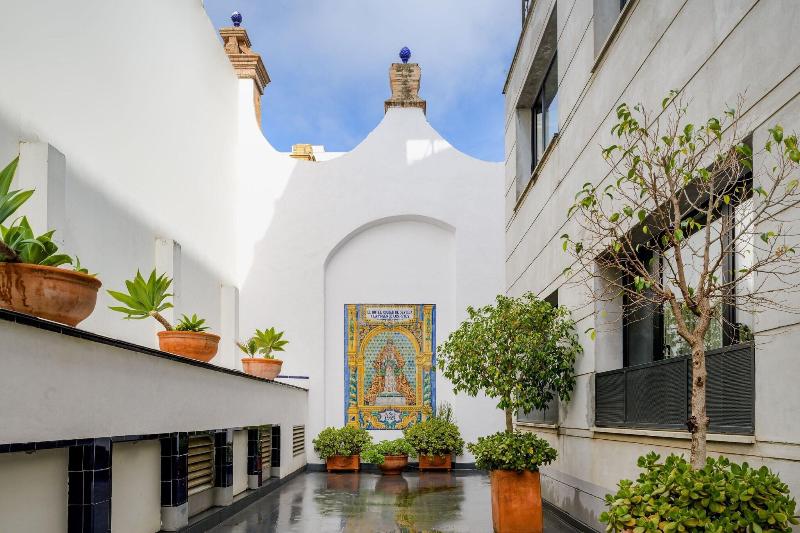
★★★★
AC Ciudad de Sevilla
Sevilla
Pool · Golf · Parking
From £228 a night, taxes incl.2 adults · checked 15 Nov, 13:22

★★★★
Alegria Colonial Mar
Roquetas de Mar
Beach 10 m · All-inclusive option · Pool
See prices and rooms →

★★★★★
Sarena de Muro Resort Mallorca
Playa de Muro
Beach 10 m · All-inclusive option · Spa
See prices and rooms →

★★★★
AQUA Hotel Aquamarina & Spa
Santa Susana
Beach 150 m · All-inclusive option · Spa
See prices and rooms →

★★★★
AR Roca Esmeralda & Spa
Calpe
Beach 30 m · Spa · Pool
From £105 a night, taxes incl.2 adults · checked 15 Nov, 21:37

★★★★★
Alma Barcelona
Barcelona
Beach 1.5 km · Spa · Pool
From £348 a night, taxes incl.2 adults · checked 15 Nov, 17:52

★★★★
Barcelo Fuerteventura Mar
Caleta de Fuste
Beach 100 m · All-inclusive option · Spa
From £162 a night, taxes incl.2 adults · checked 15 Nov, 06:07
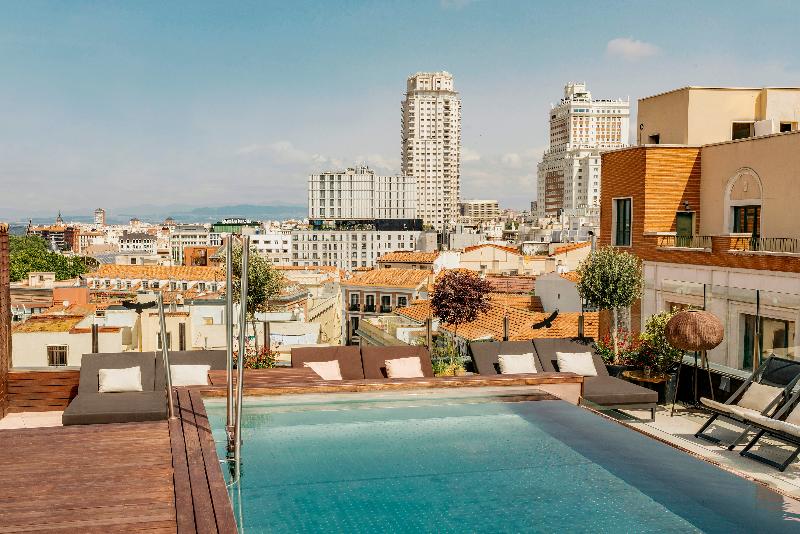
★★★★★
Palacio de los Duques Gran Meliá
Madrid
All-inclusive option · Spa · Rooftop pool
From £348 a night, taxes incl.2 adults · checked 15 Nov, 18:37
Getting around
Spain's high-speed trains are excellent, linking Madrid with Barcelona, Seville, Málaga, Córdoba and Valencia in a few hours. Hire a car for the Costa Brava, the villages of Andalusia and the north coast. The Balearic and Canary Islands are reached by air.
When to go
Spring and autumn are the best times for cities and sightseeing. High summer is very hot inland and in the south, and is best spent on the coasts or in the cooler, greener north. The Canary Islands are warm throughout the winter.
Questions about visiting Spain
- What is Spain best known for?
- Beaches and sunshine, Gaudí's Sagrada Família in Barcelona, the Alhambra in Granada, Seville and flamenco, the art museums of Madrid, tapas and paella, and its islands.
- How many days do you need in Spain?
- Ten days to two weeks allows Barcelona, Madrid and Andalusia by train. With one week, choose a single region, such as Andalusia, or a city break combined with a beach.
- What is there to do in Spain with kids?
- The beaches of Majorca and the Costa del Sol, Park Güell in Barcelona, the cable car on Mount Teide, the City of Arts and Sciences in Valencia and the water parks of the islands.
- Do you need a car in Spain?
- Not for the big cities, which are linked by fast trains. A car is useful for the Costa Brava, rural Andalusia, the north coast and exploring the larger islands.
More guides
- Where to stay in Spain
- The best things to do in London
- The best things to do in Edinburgh
- The best things to do in Manchester
- The best things to do in York
- The best things to do in Amsterdam
- The best things to do in Birmingham
- The best things to do in Liverpool
- The best things to do in Bristol
- The best things to do in Barcelona
- The best things to do in Budapest
- The best things to do in Cambridge
- The best things to do in Dublin
- The best things to do in Krakow