
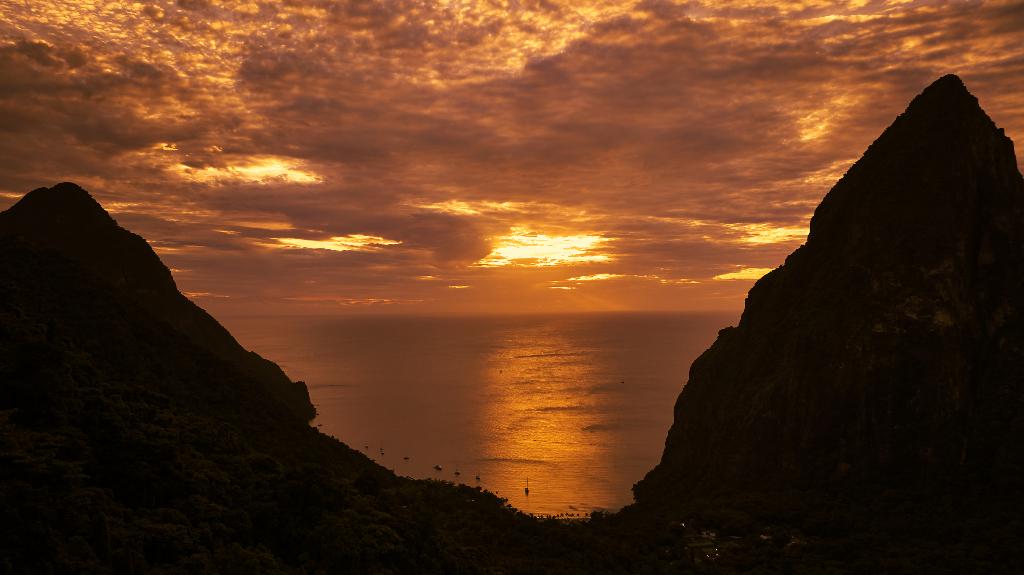
St Lucia is the Caribbean with the volume turned up on the scenery. Two enormous volcanic spires, the Pitons, rise straight out of the sea on the south-west coast. Rainforest tumbles down steep green hills, a drive-in volcano belches sulphur, and cocoa grows on old plantations that now make chocolate.
The island is long and thin, so the sights fall into two camps. The north around Rodney Bay has the beaches, restaurants and nightlife. The south around Soufrière has the drama. Pick a base in one, then spend a day or two in the other.
Don't miss
Soufrière and the Pitons
The south-west is where St Lucia earns its postcards.
The Pitons
Nature

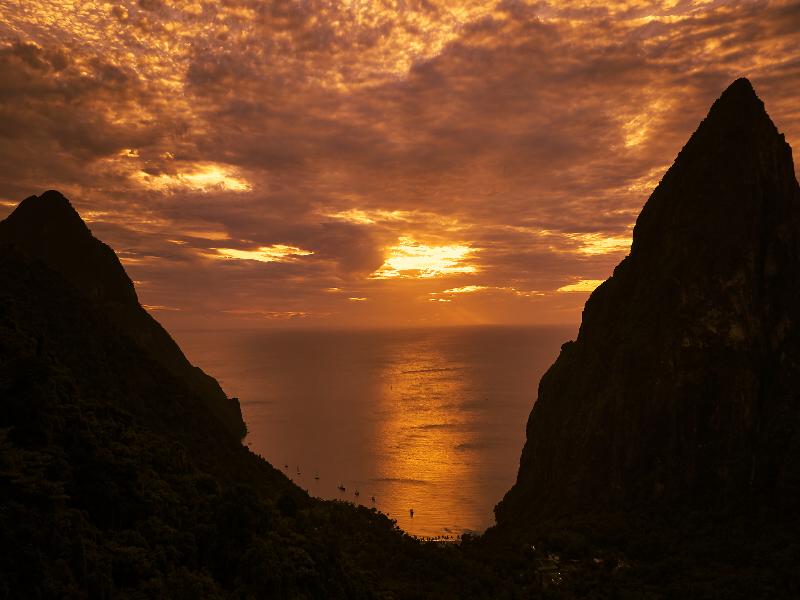
Photo: DavidMPyle, CC BY 4.0 Gros Piton and Petit Piton are twin volcanic cones that soar more than 700 metres almost directly out of the sea. They are a UNESCO World Heritage Site and the symbol of the island. Look at them from a boat, from the beach at Anse des Pitons or from a clifftop terrace, and they never look quite the same twice.
Gros Piton can be climbed, on a steep trail that takes several hours. Local guides lead the way.
Tip: Start the climb very early to avoid the heat, and go with a licensed guide.
Sulphur Springs
Nature
Near Soufrière, a collapsed volcanic crater is still steaming, bubbling and hissing, and the sulphur smell tells you you've arrived. It's often called the world's only drive-in volcano. Walk the boardwalks around the vents with a guide, and ask about the nearby mud baths.
Tip: Wear old clothes and swimwear if you plan to take a mud bath, and bring a towel.
Diamond Falls Botanical Gardens
Nature
A small, tropical garden near Soufrière, planted around a waterfall whose rocks are stained in shades of yellow, green and purple by minerals from the volcano. It's a calm, shady stop after the sulphur, with hibiscus and orchids on the paths.
Toraille Waterfall
Nature

Photo: Aneil Lutchman, CC BY-SA 2.0 A short walk from the road near Canaries, Toraille is a curtain of water falling into a shallow pool. You can stand under the spray for a very cold shower and a very good photo. It's a quick, easy stop on the road between Marigot Bay and Soufrière.
Anse Chastanet
Beach

Photo: Martin Tuchscherer, CC BY-SA 3.0 A beach of dark golden sand in a sheltered cove near Soufrière, with a reef right off the shore. Slip in with a snorkel and you're among corals and tropical fish within a few strokes. The hills behind it are steep, green and quiet.
Rabot Estate cocoa tour
Food

Photo: Hdalby33, CC BY-SA 4.0 Cocoa has grown in the hills above Soufrière for generations, and the Rabot Estate is among the best known plantations. You can walk through the trees, learn how pods become chocolate and, if you wish, make your own bar. It's a good wet-weather option too.
Bays and beaches
Marigot Bay
Neighbourhood

Photo: P. Hughes, CC BY 4.0 A narrow, palm-lined inlet on the west coast, so sheltered that sailors have used it as a hurricane hole for centuries. The 1967 film Doctor Dolittle was shot here, and it's still one of the prettiest sights on the island, with yachts nodding at their moorings and bars along the water.
Tip: A little water taxi crosses the bay to the beach on the far side.
Reduit Beach
Beach

Photo: XeresNelro, CC BY-SA 4.0 The main beach at Rodney Bay is a long, easy crescent of soft sand with calm water, sun loungers and water sports. The restaurants and bars are a short walk away, so it suits anyone who wants a beach and an evening out on the same stroll.
Anse Cochon
Beach
A small, quiet bay south of Marigot, reached by boat or by a steep road. The reef is close to the shore and the water is clear, making it one of the better snorkelling spots on the west coast, with a small beach restaurant for lunch.
The north
Pigeon Island National Landmark
Landmark

Photo: P. Hughes, CC BY-SA 4.0 Once a real island, now joined to the mainland by a causeway at Rodney Bay, this national park is a mix of beach, history and views. The ruins of Fort Rodney crown the hill, and the walk to the top is rewarded with a sweeping view across to Martinique on a clear day.
Tip: Go early or late to avoid the midday heat, and take water for the climb.
Castries Central Market
Market

Photo: Gene93k, CC BY-SA 3.0 In the island's capital, the covered market is a tangle of stalls selling spices, hot sauce, fruit, vegetables, crafts and cocoa sticks. It's a place to wander, taste and haggle gently, and to pick up edible souvenirs.
Tip: Go in the morning, before the heat and the cruise-ship crowds.
Friday night in Gros Islet
Nightlife
Every Friday evening, the fishing village of Gros Islet closes its streets for the weekly street party, known as the Jump Up. Sound systems, smoking grills and rum punch stalls fill the road, and locals and visitors mix. It's loud, friendly and totally unfussy.
Tip: Take cash, travel by taxi, and look after your valuables as you would at any busy street party.
Eat and drink
Green fig and saltfish
Food
St Lucia's national dish: unripe bananas, boiled and tossed with salt cod, onions and peppers. It's filling, tasty and traditionally eaten for breakfast, though you can find it at lunch too. Try it at a local café for the full effect.
Friday fish fry at Anse La Raye
Food
Another Friday-night tradition. The fishing village of Anse La Raye turns its street into an open-air market of grills and stalls selling fresh fish, lobster when it's available, plantain and bakes. It's smaller and more local than the Gros Islet party, and a great place to eat.
Tip: Many visitors reach it on an organised evening tour, which saves driving the coast road in the dark.
Where to stay in St Lucia
Not sure which area suits you? Read our guide: Where to stay in St Lucia →
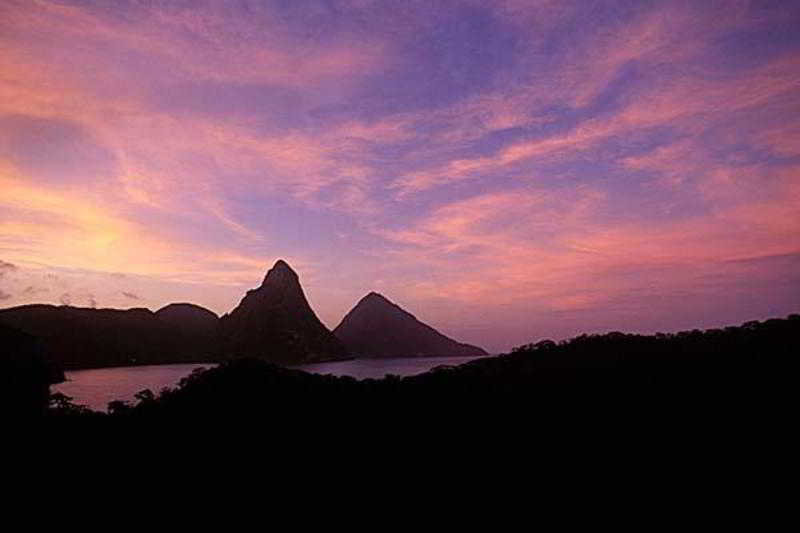
★★★★
Anse Chastanet Resort
Soufriere
Beach 10 m · All-inclusive option · Spa
See prices and rooms →

★★★★
Bay Gardens Beach Resort
Gros Islet
All-inclusive option · Spa · Rooftop pool
From £229 a night, taxes incl.2 adults · checked 1 Oct, 18:22
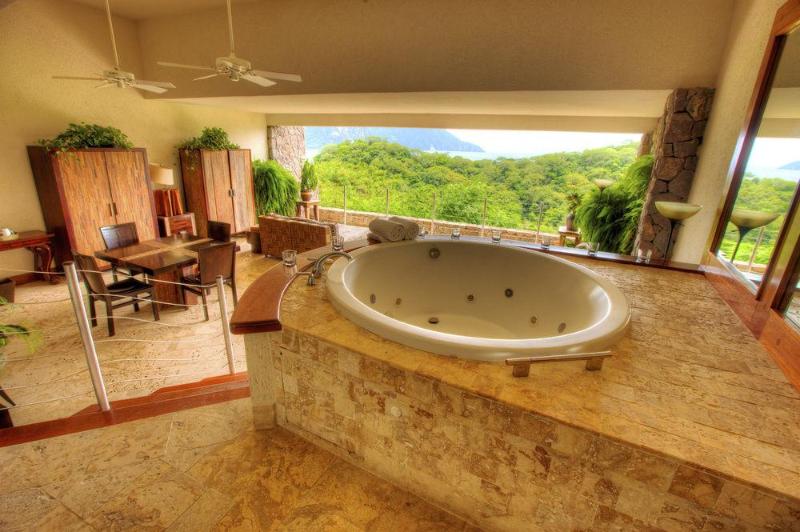
★★★★★
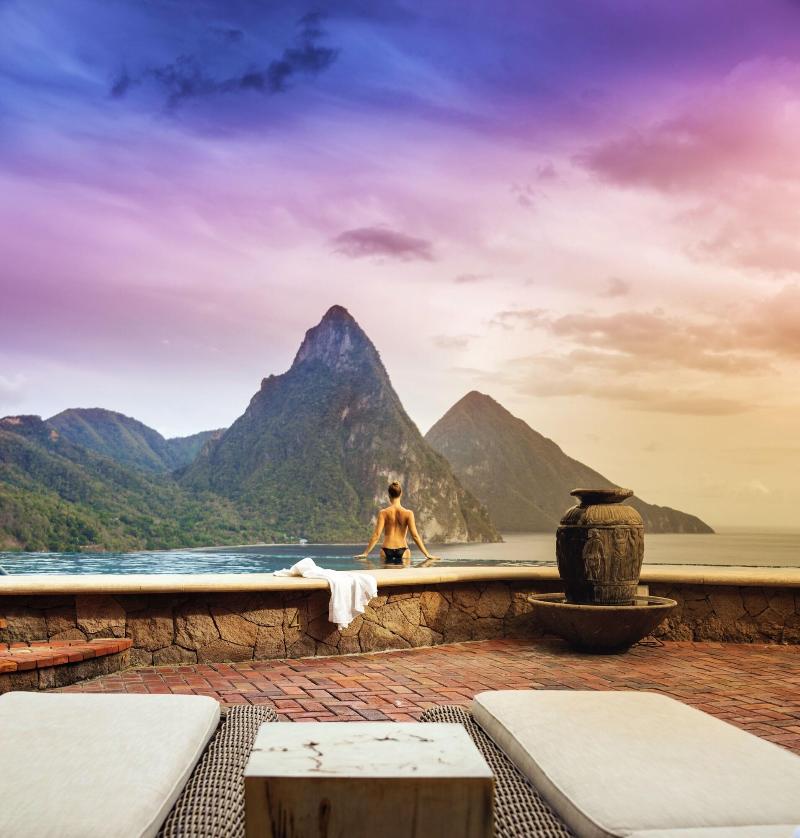
Jade Mountain
Soufriere
Adults only · Spa · Pool
See prices and rooms →
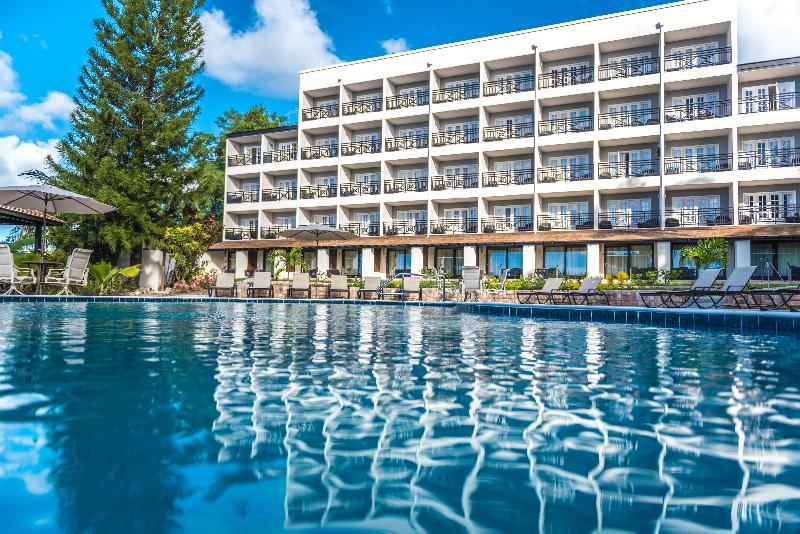
★★★★
Bel Jou Hotel
Castries
Adults only · All-inclusive option · Spa
See prices and rooms →
★★★★
Caille Blanc Villa & Hotel - Adults Only
Soufriere
Adults only · All-inclusive option · Spa
See prices and rooms →
★★★★★
Ladera Resort
Soufriere St Lucia
Beach 1.5 km · Adults only · All-inclusive option
See prices and rooms →

★★★★
Coconut Bay Resort & Spa All Inclusive
Vieux Fort
Beach 500 m · All-inclusive option · Spa
See prices and rooms →

★★★★★
Sandals Grande St. Lucia Spa & Beach Resort
Gros Islet
Spa · Pool
See prices and rooms →
Getting around
St Lucia's roads are narrow, steep and winding, and driving is on the left. Taxis and organised tours are the easiest way to see the sights, and the water taxis and boat trips along the west coast offer the best views. Journeys between north and south can take longer than the map suggests.
When to go
The dry season, from roughly December to May, brings the most sunshine and the least rain. The wetter months, from June to November, are hotter and greener, and overlap with hurricane season. Showers are usually short.
Questions about visiting St Lucia
- What is St Lucia best known for?
- The Pitons, two volcanic spires on the south-west coast, plus rainforest, beaches, Sulphur Springs, cocoa estates and its sheltered bays.
- Is St Lucia worth visiting?
- Yes. It combines beaches with real scenery, from volcanic peaks to rainforest and waterfalls, and it has a lively food and music scene.
- What is there to do in St Lucia besides the beach?
- See the Pitons, visit Sulphur Springs and Diamond Falls, tour a cocoa estate, climb to Fort Rodney on Pigeon Island, snorkel off Anse Chastanet and join a Friday-night street party.
- Do you need a car in St Lucia?
- Not necessarily. The roads are steep and narrow, so many visitors prefer taxis and organised tours to explore the island.
More guides
- Where to stay in St Lucia
- The best things to do in London
- The best things to do in Edinburgh
- The best things to do in Amsterdam
- The best things to do in Barcelona
- The best things to do in Budapest
- The best things to do in Dublin
- The best things to do in Krakow
- The best things to do in Prague
- The best things to do in Berlin
- The best things to do in Lisbon
- The best things to do in Milan
- The best things to do in Paris
- The best things to do in Rome