

Stockholm is built on fourteen islands, and water is never more than a few streets away. Ferries shuttle between quays, church spires are doubled in the harbour, and in summer the light lingers so late that nobody seems to go to bed. It is one of the best-looking capitals in Europe, and it knows it without being smug.
The sightseeing is varied and unusually good. A medieval old town of ochre lanes, a seventeenth-century warship raised whole from the seabed, a museum where you can sing along with ABBA. Then there is the Swedish talent for the good life: strong coffee, cinnamon buns and a boat out to the islands when the sun shines.
Don't miss
The big sights
The old town, the palace and the building where the Nobel banquet is held.
Gamla Stan
Neighbourhood

Photo: Øyvind Holmstad, CC BY-SA 3.0 Stockholm began on this small island, and the old town still has its medieval street plan: narrow cobbled lanes, tall houses in shades of saffron and terracotta, and cellars that are now candlelit restaurants. At its heart is Stortorget, the main square, lined with gabled merchants' houses and home to the Nobel Prize Museum.
The two main streets are busy with souvenir shops. Turn off them into the side alleys, some barely wide enough for two people to pass, and it becomes quiet again within seconds.
Tip: Come early in the morning or on a winter evening, when the lanes are empty and the lamps are lit.
The Royal Palace
Landmark

Photo: Arild Vågen, CC BY-SA 4.0 The official residence of the Swedish monarch fills the northern end of Gamla Stan, a huge Baroque block with several hundred rooms. You can visit the state apartments, the treasury with its crowns and the armoury of royal costumes and carriages. Outside, the changing of the guard brings soldiers and, in the warmer months, a military band to the outer courtyard.
Vasa Museum
Museum

Photo: Jules Verne Times Two, CC BY-SA 4.0 In 1628 the warship Vasa set out on her maiden voyage and sank in Stockholm harbour within minutes, top-heavy with guns. She lay in the mud for more than three centuries before being raised, almost intact, in 1961. Today she stands in her own museum on Djurgården, towering through several floors, her stern covered in carved lions and warriors.
It is one of the most visited museums in Scandinavia, for good reason. Nothing prepares you for the size of her as you walk in.
Tip: Arrive at opening or late in the afternoon in summer, and bring a layer: the hall is kept cool and dim to protect the ship.
Stockholm City Hall
Landmark

Photo: Arild Vågen, CC BY-SA 3.0 A great red-brick building on the waterfront, topped with a tower bearing three golden crowns, the national symbol. Each December the Nobel Prize banquet is held in its Blue Hall, which is not blue at all, and the dancing follows in the Golden Hall, lined with millions of glittering mosaic tiles. The interior is seen on guided tours, and in the warmer months you can climb the tower.
Museums
Several of the best sit together on the green island of Djurgården.
Skansen
Museum

Photo: Chme82, CC BY-SA 4.0 Founded in 1891, Skansen is an open-air museum spread across a hilltop on Djurgården. Historic farmsteads, workshops, a church and whole town streets were brought here from all over Sweden, and staff in period dress bake bread, blow glass and explain how people lived. There are Nordic animals too, and wide views over the city.
It is a full day out for families, and the place to be for traditional celebrations such as Midsummer and the Christmas market.
ABBA The Museum
Museum
A cheerful, interactive tribute to Sweden's most famous pop export, also on Djurgården. The stage costumes, gold records and reconstructed studio are all here, but the fun is in joining in: you can record a vocal, try the dance moves and step on stage alongside holograms of the band. Resistance is useless. You will leave humming.
Fotografiska
Museum

Photo: Julian Herzog (Website), CC BY 4.0 A museum of contemporary photography in a big brick former customs house on the Södermalm waterfront. There is no permanent collection, just a changing run of ambitious exhibitions by major names and new talent. The top-floor café and restaurant has a wall of windows over the harbour, and the museum stays open late, which makes it a good evening option.
Moderna Museet
Museum

Photo: Holger.Ellgaard, CC BY-SA 3.0 Sweden's national museum of modern art, on the small island of Skeppsholmen, reached by a bridge with a gilded crown on its railing. The collection runs from Picasso, Dalí and Matisse to the present day, and there are playful sculptures on the lawn outside. The walk around the island, past old naval buildings and moored boats, is half the pleasure.
Neighbourhoods and views
Södermalm
Neighbourhood

Photo: Esquilo, CC BY-SA 3.0 The big island south of the old town is Stockholm's creative quarter, full of vintage shops, record stores, coffee bars and good places to eat, especially in the streets known as SoFo. Its northern edge is a line of cliffs, and the footpath called Monteliusvägen runs along the top with a sweeping view over the water to the City Hall and Gamla Stan.
Tip: Walk Monteliusvägen at sunset, then drop down into the bars and restaurants behind it.
Djurgården
Nature
Once a royal hunting ground, Djurgården is now the city's green lung, a wooded island a short walk, tram or ferry from the centre. The museums cluster at its western end. Beyond them are oak woods, meadows, waterside paths and café gardens, perfect for a walk or a bike ride when you have had enough culture for one day.
The metro art
Activity

Photo: Andrzej Otrębski, CC BY-SA 4.0 Stockholm's underground is often called the world's longest art gallery. Most of its stations have been decorated by artists, and many are left as raw, cave-like rock painted in bold colours. T-Centralen has blue vines climbing a white vault, Solna Centrum glows red and green, and Kungsträdgården looks like an archaeological dig. All you need is an ordinary ticket.
Eat and drink
Fika
Food
Less a snack than a national institution. Fika means stopping for coffee and something sweet, usually with a friend, and Swedes do it at least once a day. The classic companion is a kanelbulle, a soft cinnamon bun scattered with pearl sugar, or its cardamom cousin. Every neighbourhood has its bakeries and old-fashioned cafés, and nobody will rush you.
Östermalm Market Hall
Market

Photo: Sharon Hahn Darlin, CC BY 2.0 A handsome brick food hall from the 1880s, in the smartest part of town. Under the high iron and timber roof, polished wooden stalls sell smoked fish, reindeer, cheeses, bread and cakes, and counter restaurants serve classic Swedish plates: prawn sandwiches, herring, meatballs with lingonberries. It is the place for a leisurely lunch with a side order of people-watching.
Day trips
The Stockholm archipelago
Day trip

Photo: ArildV, CC BY-SA 4.0 East of the city, the Baltic is scattered with tens of thousands of islands and skerries, some with villages and summer houses, many with nothing but rock and pine. Boats leave from the quays in the centre. Vaxholm, with its fortress and wooden houses, is the closest proper archipelago town and an easy half day.
Go further out and the islands get wilder and quieter. This is where Stockholmers spend their summers, swimming off the rocks.
Tip: Even a short return boat trip to Vaxholm gives you a real taste of it. Sit outside on deck if the weather allows.
Drottningholm Palace
Day trip

Photo: Pudelek, CC BY-SA 4.0 The private home of the Swedish royal family, on an island in Lake Mälaren just west of the city. The seventeenth-century palace, its formal gardens, a Chinese pavilion and a remarkably preserved court theatre together form a UNESCO World Heritage Site. In summer you can arrive in style, by boat from the quay beside City Hall.
Uppsala
Day trip
A short train ride north, Uppsala is Sweden's ancient university city. The twin spires of its cathedral, among the tallest in Scandinavia, rise above a riverside centre full of students on bicycles. Just outside town are the great grass burial mounds of Gamla Uppsala, a royal site from before the Vikings.
Where to stay in Stockholm
Not sure which area suits you? Read our guide: Where to stay in Stockholm →
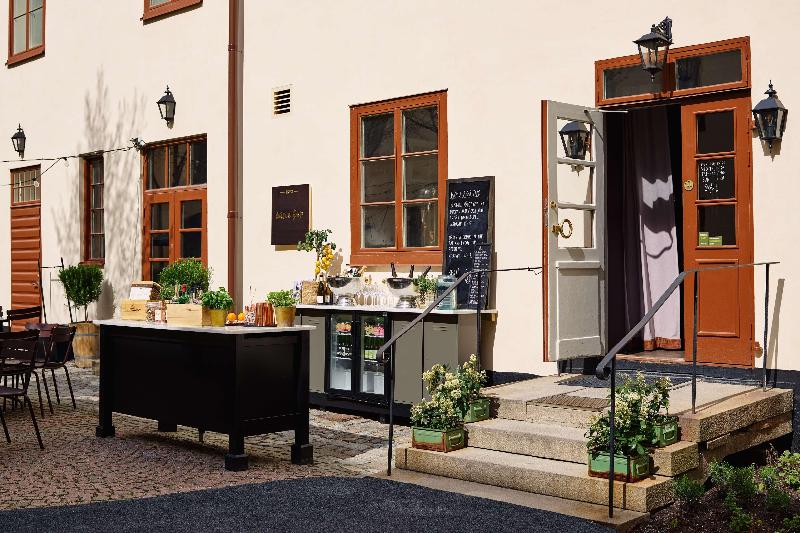
★★★★
NOFO Hotel, WorldHotels Crafted
Stockholm
Beach 2.2 km · Pets allowed · Parking
See prices and rooms →

★★★★
Bergendal
Sollentuna
Pool
See prices and rooms →

★★★★★
At Six
Stockholm
Parking
See prices and rooms →

★★★★
Berns Hotel
Stockholm
Spa · Parking
See prices and rooms →

★★★★
Best Western Hotel at 108
Stockholm
Parking
See prices and rooms →

★★★★★
Reisen Waterfront
Stockholm
Pool · Pets allowed · Parking
See prices and rooms →

★★★★
Best Western Hotel Bentleys
Stockholm
Parking
See prices and rooms →

★★★★★
Grand Hotel Stockholm
Stockholm
Spa · Pool · Parking
See prices and rooms →
Getting around
Central Stockholm is very walkable, with bridges linking the islands. The metro, buses, trams and commuter ferries all run on the same tickets, and the ferry to Djurgården is a sightseeing trip in itself. Sweden is close to cashless, so expect to pay by card almost everywhere. You do not need a car.
When to go
Summer is the prime season, with long light evenings and the archipelago boats in full swing. Winter is cold and dark, with short days, but the city is beautiful in snow and the Christmas markets are atmospheric. Spring and early autumn are quieter and often bright.
Questions about visiting Stockholm
- What is Stockholm best known for?
- Its setting across fourteen islands, the medieval old town of Gamla Stan, the Vasa warship, the Nobel Prize, ABBA, Scandinavian design and the vast archipelago on its doorstep.
- How many days do you need in Stockholm?
- Three days is ideal: one for Gamla Stan and the palace, one for the museums on Djurgården, and one for Södermalm and a boat trip. Add a fourth for Drottningholm, Uppsala or a longer day in the archipelago.
- What is there to do in Stockholm with kids?
- Skansen is the top choice, with historic houses and Nordic animals. The Vasa Museum impresses all ages, ABBA The Museum is great fun, and boat trips and the colourful metro stations keep children entertained between sights.
- Is Stockholm worth visiting in winter?
- Yes, if you dress for it. Days are short and cold, but the museums are excellent, the cafés are cosy, and the old town is at its most atmospheric by lamplight, especially around Christmas.
- Do you need a car in Stockholm?
- No. The centre is compact, public transport and ferries are efficient, and Uppsala, Drottningholm and the archipelago are all reachable by train, bus or boat.
More guides
- Where to stay in Stockholm
- The best things to do in London
- The best things to do in Edinburgh
- The best things to do in Manchester
- The best things to do in York
- The best things to do in Amsterdam
- The best things to do in Birmingham
- The best things to do in Liverpool
- The best things to do in Bristol
- The best things to do in Barcelona
- The best things to do in Budapest
- The best things to do in Cambridge
- The best things to do in Dublin
- The best things to do in Krakow